Most visitors pay upwards of €40 for a guided tour to Pedra de Lume, completely unaware that a local minibus and a quick taxi ride get you to the exact same volcanic crater for under €6. The real challenge isn't getting to these hypersaline pools, but knowing exactly what to pack to avoid the notoriously strict facility charges once you step out of the water.
- Entrance fee: €6 (660 CVE) per person, cash only
- Shower fee: €1 for about 30 seconds of fresh water
- Opening hours: 09:00-17:45 daily
- Best time: Before 09:30 or in the late afternoon, to beat the tour buses
- Bring: Cash, a towel, fresh drinking water to rinse your eyes, and water shoes
What to Expect Inside the Pedra de Lume Crater
You walk through a dark tunnel carved directly into the rock and emerge into a massive caldera. The landscape looks almost lunar. Rusting, oil-stained machinery from the 19th century litters the edges, a stark contrast to the shimmering pink and white salt pans spread across the crater floor.
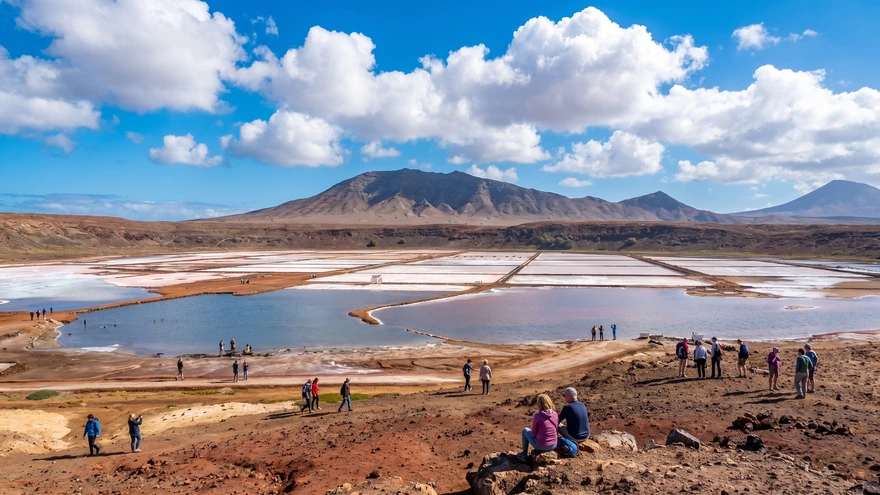
The Floating Experience (and Why You Need Fresh Water)
The water here is 27 times saltier than the ocean, making it second only to the Dead Sea in buoyancy. You literally cannot sink. The moment you lie back, the dense brine pushes you to the surface.
Skip the first muddy pool near the entrance where most tourists congregate. Walk a few ponds further down instead. The water is cleaner, much warmer, and you get the vast, eerie landscape almost to yourself.
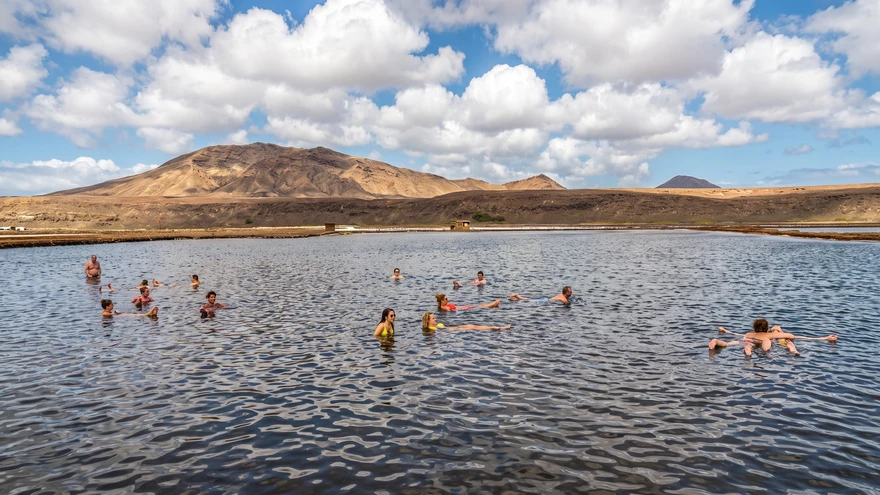
Never dunk your head. Even a single drop of this highly concentrated salt water in your eyes is agonizing. Keep a bottle of fresh drinking water right at the edge of the pool to quickly rinse your face just in case.
Volcanic Mud and the Warm Floor
This isn't just a salt flat, it's a dormant volcano. As you try to stand up in the deeper sections, you feel the distinct geothermal heat radiating from the crater floor beneath your feet.
Scoop up the mineral-rich mud from the bottom and apply it to your skin. The sulfur smell is quite pungent, but the exfoliating effect leaves the skin incredibly smooth once washed off.
How to Get to Salinas de Pedra de Lume (Without a Tour)
Travel agencies in Santa Maria heavily push organized excursions to the salt lakes, and if you'd rather skip the logistics altogether, several of them still run Guided salt lake tours with hotel pickup included. Organizing the trip independently, though, gives you total control over how long you float and keeps the crowds at bay.
Taxi Options from Santa Maria
A direct taxi from Santa Maria to the crater takes about 30 minutes. Expect to pay around €35-€40 for a one-way trip. Always agree on a wait time and a return price before getting in, as finding an empty cab at the crater for the journey back is nearly impossible.
If negotiating a return fare isn't appealing, renting a car lets you Compare rental deals and reach Pedra de Lume entirely on your own schedule.
The Aluguer Minibus Hack for Budget Travelers
The cheapest route requires a simple transfer. Catch a local Aluguer (minibus) from the main bus station or the highway in Santa Maria heading to Espargos. The ride costs roughly €1.20 (120 CVE).
Get off at the main roundabout or bus station in Espargos, then grab a quick taxi to Pedra de Lume for about €4-€5 (400-500 CVE). Total transport cost drops from €40 to just over €6, a difference worth factoring into any realistic Cabo Verde travel budget. Remember to get the Espargos taxi driver's phone number so they can pick you up when you finish.
Entrance Fees and Facilities
The ticket booth is located just before the tunnel entrance. The admission fee is €6 (660 CVE) per person. They strictly do not accept credit cards, so if you arrive without cash, you simply cannot enter.
The infrastructure inside the crater is basic: a small snack bar selling drinks, a souvenir shop offering bags of local coarse salt to take home, and a changing block.
The Strict €1 Shower Rule
Floating in the salt pans leaves a thick, sticky white crust on your skin and clothes the moment the wind dries you off, so rinsing is mandatory.
The onsite freshwater showers operate via a coin slot: you pay exactly €1 for about 30 seconds of water. It's a highly debated fee among visitors, but fresh water is a scarce resource on Sal island. Bring a few coins and don't expect a long, luxurious rinse.
Practical Tips Before You Go
A smooth visit requires a bit of preparation, since the crater floor is rugged and unforgiving.
- Wear water shoes: the bottom of the salt pools is lined with sharp, crystallized salt rocks. Bare feet get cut easily, and the extreme salinity makes even microscopic scratches burn intensely.
- Skip the shave: don't shave your legs or face on the morning of your visit. The salt concentration finds any micro-abrasion and causes severe stinging.
- Bring old swimwear: the high salt and sulfur content can degrade or stain delicate fabrics, so wear a swimsuit you don't mind putting through extreme conditions.
- Take the free hike: if you just want the visual spectacle without the bath, climb the hill along the crater perimeter for free. The panoramic view of the pink lakes against the volcanic rock is stunning from the top.
Pairing this stop with Cabo Verde's best time to visit for calm winds and clear skies also makes the hike up the crater rim far more comfortable.
A Quick Look at the Salt Mining History
The site lacks informational plaques entirely, leaving many visitors unaware of its industrial significance. The salt mining industry, which literally gave the island of Sal its name, began here in the late 18th century.
By the 1920s, a French company installed a 1,100-meter wooden cable car system, whose decaying wooden pylons you still see today, to transport up to 25 tons of salt per hour over the crater rim down to the port. The facility ceased major commercial operations in the late 20th century, transforming from an industrial powerhouse into the island's most unique geological site.
Is Salinas de Pedra de Lume Worth a Visit?
If you expect a polished, luxury spa experience, the rusting machinery and strict 30-second showers might disappoint. But as a purely geological and sensory experience, standing inside a volcanic caldera that sits below sea level and floating weightlessly in hypersaline water is unmatched anywhere else in Cape Verde.
Skip the expensive tours, take the local Aluguer early in the morning, and pack enough cash and water to do it on your own terms. Many visitors combine the trip with a day on one of the best beaches in Cabo Verde near Santa Maria, or add a stop for kitesurfing in Cape Verde if the trade winds are up.