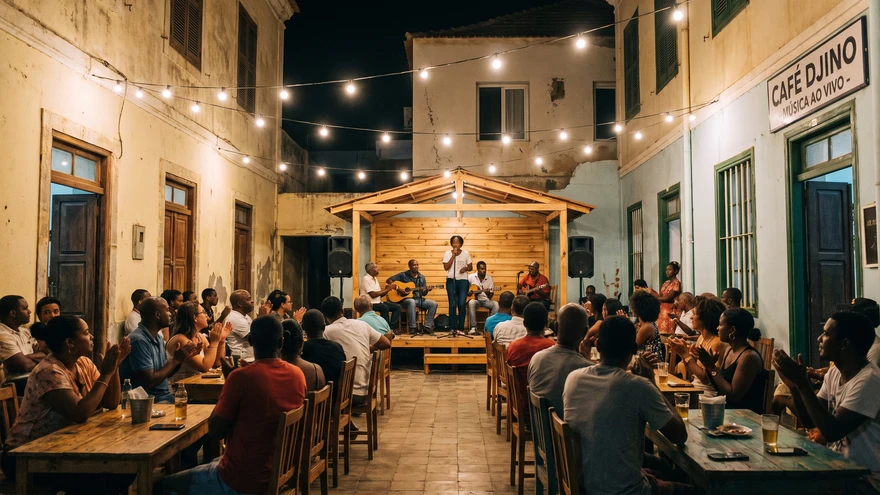
Landing in an archipelago of ten volcanic islands in the middle of the Atlantic Ocean is exhilarating, but if your livelihood depends on a stable internet connection, it can also be slightly nerve-wracking. Whether you need to hop on a sudden video call from a beachside café in Sal, push code from the historic streets of Mindelo, or pull up offline topographical maps before trekking into the dramatic valleys of Santo Antão, having a reliable connectivity strategy matters.
International roaming bills in Cape Verde can quickly spiral out of control, since most foreign carriers treat this destination as a premium zone. Planning your mobile data strategy before your plane touches down is the smartest move you can make, and it costs far less than most travelers expect.
| Connection Type | Estimated Cost | Setup Effort | Speed & Reliability | Ideal For |
|---|---|---|---|---|
| Local Physical SIM | Low, typically 500 CVE (about $5 USD) to 2,500 CVE (about $25 USD) for a full data bundle | Medium (ID usually requested in-store) | Stable 4G LTE across most inhabited areas | Stays of a week or more, heavy data users, multi-island hoppers |
| Prepaid Global eSIM | Moderate, starting around $9.50 USD | Very low, instant download and activation via QR code | Good 4G LTE through a local roaming partner | Shorter stays, nomads who need data the moment they land |
| Public Wi-Fi | Free | High, captive portals and unsecured networks | Highly variable, often congested at peak hours | Casual browsing, light messaging, emergency fallback only |
Cape Verde Mobile Networks: Alou vs. Unitel T+
The telecommunications landscape in Cape Verde is dominated by a duopoly. Understanding the distinct differences between these two primary infrastructure providers will determine how smoothly your remote work setup operates.
Alou (Formerly CV Móvel): Best Footprint for Island Hoppers
Alou is the rebranded identity of CV Móvel, the incumbent operator that merged into parent company Cabo Verde Telecom in 2023. If your itinerary involves stepping off the beaten tourist path and exploring multiple islands, Alou is generally the safer bet.
Because of its history as the legacy provider, Alou carries the widest infrastructure footprint across the archipelago. This advantage becomes especially evident on the less populated or geographically challenging islands like Fogo, Brava, or Santo Antão. Where the competitor's signal drops completely, Alou often manages to hold a functional 3G or light 4G connection. When looking for physical stores or top-up stations, watch for the newer Alou branding, since many older signs on local convenience stores still display the classic CV Móvel logo.
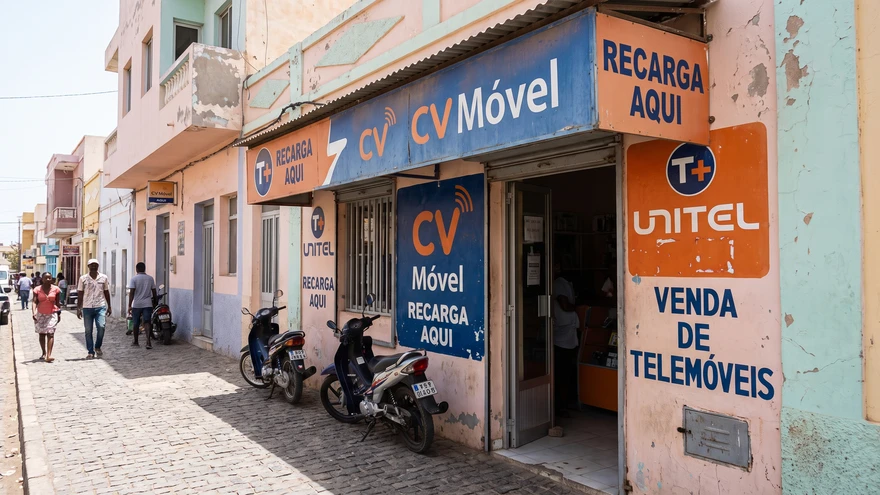
Unitel T+: The Speed Alternative for Urban Hubs
Unitel T+ is the market challenger. What it lacks in deep rural coverage, it makes up for with competitive pricing and strong data speeds in the busiest urban cores.
If your remote work base sits in a major city, such as the capital Praia on Santiago Island, Mindelo on São Vicente, or the resort town of Santa Maria on Sal Island, Unitel T+ frequently delivers slightly snappier download and upload speeds. It also tends to run attractive short-term tourist data promotions with generous allowances for a lower upfront cost. Be aware that its signal can turn patchy or drop to 3G once you venture into the mountainous interior of the larger islands or board an inter-island ferry.
Island-by-Island Internet Reality for Digital Nomads
Network quality in Cape Verde is not uniform. It varies drastically depending on the terrain and economic development of each island, so here is what you can realistically expect as a working professional. If you plan to island-hop between the more remote outposts, it helps to line up your connectivity plan with the ferry and flight logistics beforehand, since some routes only run a few times a week.
Sal and Boa Vista: Remote Work in Resort Zones
As the country's primary tourism hubs, Sal and Boa Vista receive heavy telecommunications investment. In the town centers of Santa Maria (Sal) and Sal Rei (Boa Vista), 4G LTE coverage is stable, widespread, and reliable.
Speeds typically fluctuate between 15 Mbps and 40 Mbps, more than adequate for video calls, streaming, and large cloud backups. Do not rely blindly on hotel or resort Wi-Fi, though. Even at upscale four-star properties, shared Wi-Fi networks frequently suffer from congestion during the evening hours when guests return to their rooms, so keep a local data plan ready to tether your laptop through a mobile hotspot when the local network stalls.

Santiago and São Vicente: Reliable Infrastructure in Praia and Mindelo
These are the cultural and economic heartlands of the country. Praia (Santiago) and Mindelo (São Vicente) offer the most stable digital nomad environments in Cape Verde.
Fixed broadband fiber connections are increasingly common in modern apartments and co-working spaces here, with speeds well above 50 Mbps. Mobile 4G networks are highly optimized, and pockets of 5G testing are rolling out in Praia's commercial center. If you plan to settle down for a month or more while enjoying a vibrant local music and arts scene, these two urban areas provide the most seamless connectivity.

Santo Antão, Fogo, and Brava: Hiking Trails and Known Dead Zones
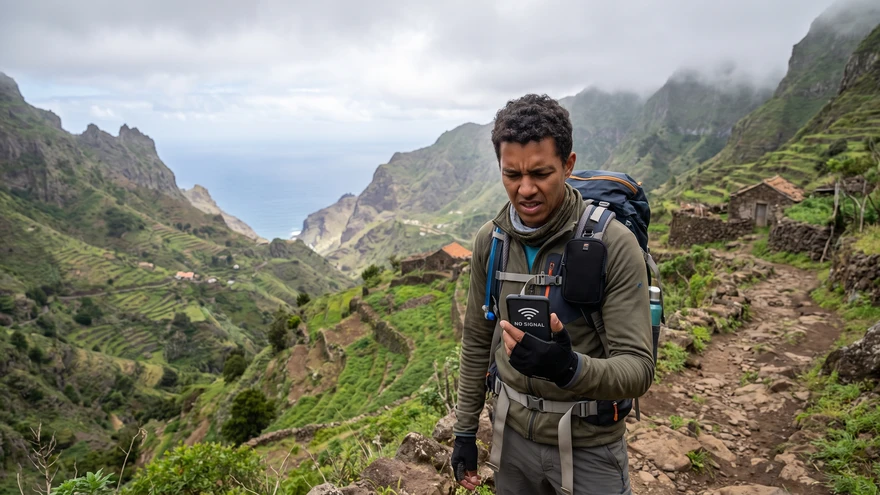
This is where the infrastructure meets the harsh reality of volcanic geography. Santo Antão is a hiker's paradise, but its deep green valleys and towering mountain walls act as natural shields against cellular signals. While the main coastal towns like Porto Novo or Ribeira Grande have functional 4G, stepping onto the interior trekking trails means entering dead zones.
Similarly, on the volcanic island of Fogo, coverage around Chã das Caldeiras (the crater community) fluctuates wildly and can drop to a sluggish 3G or disappear entirely. If you are heading to these islands, finish your heavy client work beforehand, download offline maps through Google Maps or AllTrails, and warn your team that your responsiveness will be sporadic for a day or two.
Buying a Physical SIM Card on Arrival
If you choose the local physical SIM route, the process is affordable and usually takes only a few minutes once you reach the counter.
Airport Kiosks: Nelson Mandela (RAI) and Amílcar Cabral (SID)
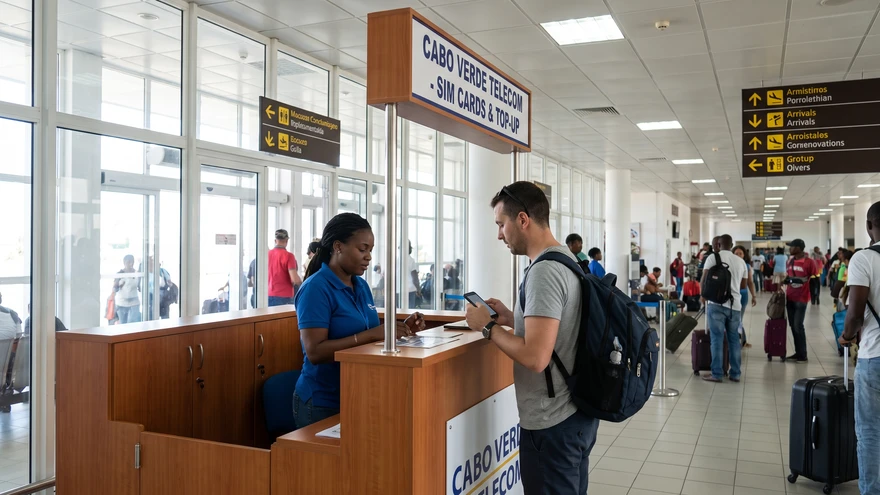
The easiest way to get connected immediately is to buy your SIM card at the international airports on landing. Amílcar Cabral International Airport (SID) in Sal and Nelson Mandela International Airport (RAI) in Praia both have Alou and Unitel T+ stands or authorized retail desks near the arrivals exit, in most cases.
Staff at these locations are used to international travelers, generally speak workable English, and will install and activate the card for you before you walk away. Kiosk staffing is not guaranteed on every late-night arrival, though, so if your flight lands after hours and the counters are closed, plan to visit an official retail store in the nearest town the following morning.
SIM Registration: What to Bring
Cape Verdean operators generally ask for a form of identification, typically your passport, when you register a new SIM card. The shop agent notes your details and links them to the card's unique ICCID before activating your line, and the whole process usually takes about 15 minutes.
Requirements can vary a little between an official corporate store and a small street-side kiosk, so bring your passport regardless. Corporate stores tend to have more reliable access to the registration system, which reduces the risk of activation delays.
Prepaid Data Packages and Estimated Costs
Local data rates in Cape Verde are budget-friendly compared to international roaming fees. Both providers offer tourist bundles and standard prepaid refills. Below is a realistic 2026 breakdown of typical prepaid pricing.
| Package Type | Data Allowance | Validity | Approximate Cost | Best Suited For |
|---|---|---|---|---|
| Light Tourist Bundle | About 1 GB | 7 days | 500 CVE (about $5 USD) | Short trips, basic messaging, light map navigation |
| Standard Nomad Plan | About 5 GB | 30 days | 1,250 CVE (about $12 USD) | Active remote workers using Slack, email, occasional video calls |
| Heavy Data Bundle | About 10 GB | 30 days | 2,500 CVE (about $25 USD) | Long-term nomads, frequent video calls, hotspotting multiple devices |
A blank SIM card itself typically costs 100-200 CVE (about $1-2 USD), on top of whichever data bundle you load onto it. One US dollar is roughly equivalent to 100 Cape Verdean Escudos (CVE), which makes mental conversions easy. Top-ups, locally called "recargas," can be purchased at convenience stores, gas stations, and pharmacies nationwide by simply providing your mobile phone number. If you are also budgeting for the rest of the trip, a realistic day-to-day cost breakdown can help you plan how connectivity fits into the bigger picture.
eSIM Options for Cape Verde: Flexibility vs. Price
For nomads who want to skip the physical swap and the language barrier entirely, an eSIM bought before departure is an attractive alternative.
Top Global Providers (Airalo, Breeze, eSIMony)
Global eSIM marketplaces like Airalo, Breeze, and eSIMony sell data packages built specifically for Cape Verde. These profiles typically route their traffic through Unitel T+'s 4G infrastructure through a roaming partnership, so coverage generally tracks Unitel T+'s urban strength rather than Alou's rural reach.
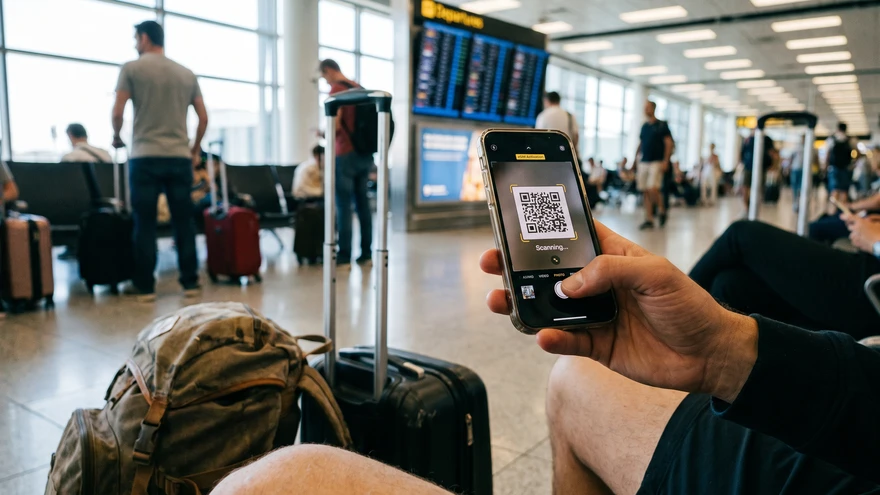
The main advantage is automation: you buy the plan online before you leave home, scan the emailed QR code to install the profile, and your phone latches onto the local network the moment you land. If you would rather not think about it at all, Grab an eSIM before you fly out and skip the counter altogether.
The trade-off is price. On average, a global eSIM plan costs more per gigabyte than a local Alou or Unitel T+ bundle bought in person. Nearly all international tourist eSIM plans are strictly data-only too, so you will not get a local Cape Verdean phone number (+238) for calls or SMS.
Activation Requirements and Dual-SIM Configuration
To use this route, your smartphone needs to be fully network-unlocked by your home carrier and eSIM-compatible, generally true of iPhone XS and newer, Samsung Galaxy S20 and newer, and Google Pixel 3 and newer.
A smart setup for digital nomads is a dual-SIM configuration: keep your primary home SIM active for essential two-factor authentication texts from banking apps, then route your mobile data through the Cape Verde eSIM profile. This keeps you reachable on your regular number while avoiding predatory background roaming charges. Travelers planning a longer stay sometimes pair this setup with Cabo Verde's digital nomad visa and remote work permit, which asks for proof of stable income and health insurance during the application.
Public Wi-Fi Safety and VPN Routing
While digital infrastructure keeps improving, relying entirely on public Wi-Fi in Cape Verdean cafés, town plazas, or hotel lobbies carries real security risk.
Many free public Wi-Fi access points, including the government-sponsored "WiFi-Praça" hotspots installed in central village plazas, are unencrypted and run on shared, unmetered bandwidth. Because these networks are open, they are an easy target for local threat actors running basic packet-sniffing or man-in-the-middle attacks.
If you must connect to a resort network or a café connection to finish a task, running a secure VPN is non-negotiable. A reliable service like NordVPN or ExpressVPN encrypts your data stream and protects sensitive corporate emails, client dashboards, and banking logins.
To keep acceptable speeds while routing through a VPN in the middle of the Atlantic, set your VPN app to connect to servers in nearby European hubs, such as Portugal or Spain. This trims latency overhead and keeps your remote desktop connections or video feeds crisp and responsive.