Navigating the live music scene in Cape Verde often means sifting through overpriced, watered-down hotel shows that lack the true soul of the islands. Finding the authentic, smoky courtyards where locals actually dance to raw funana or weep to a purely acoustic morna requires knowing exactly which street corner to visit.
- Peak Rhythms: Music rarely starts before 9:30 PM; Thursday through Saturday are the most active nights.
- Island Breakdown: Head to Sao Vicente (Mindelo) for acoustic morna, and Santiago (Praia) for high-energy funana.
- Cover Charges: Modest at most venues, and often waived if you reserve a table for dinner.
- Payment: Small venues and door charges strictly require local cash (Cape Verdean Escudo).
What Makes Cape Verdean Music Unique?
Each island in this archipelago carries a distinct sonic signature, shaped by centuries of transatlantic history. You rarely hear just one style during a proper live set.
Morna: The Soulful Melodies of Cesaria Evora
Morna operates as the undisputed heartbeat of the islands. Made globally famous by the Barefoot Diva, Cesaria Evora, this genre relies on slow, acoustic arrangements featuring the cavaquinho (a small four-stringed guitar), violin, and classical guitar.
The lyrics drip with sodade, a profound, untranslatable sense of longing, nostalgia, and melancholy. Dimly lit stages. A lone vocalist pouring absolute heartbreak into the microphone. It requires deep listening rather than dancing.
Funana and Coladeira: The Upbeat Rhythms
When the mood shifts to celebration, the tempo completely transforms. Coladeira acts as the lighter, faster cousin of morna. The lyrics often carry satirical or humorous undertones, instantly pulling couples onto the dancefloor for a tight, swaying two-step.
Funana brings a completely different, sweat-inducing energy. Originating from the rural heartlands of Santiago, this heavily rhythmic style relies on the gaita (diatonic accordion) and the ferrinho (a piece of metal scraped with a knife). Colonial authorities once tried to ban funana due to its raw, sensual dance style. Today, it dominates the late-night club scene.
Batuque: Deep African Roots in Santiago
Batuque strips music down to its most raw, percussive elements. Developed when colonial rulers banned drums to prevent communication among enslaved people, the rhythmic core shifted to everyday objects.
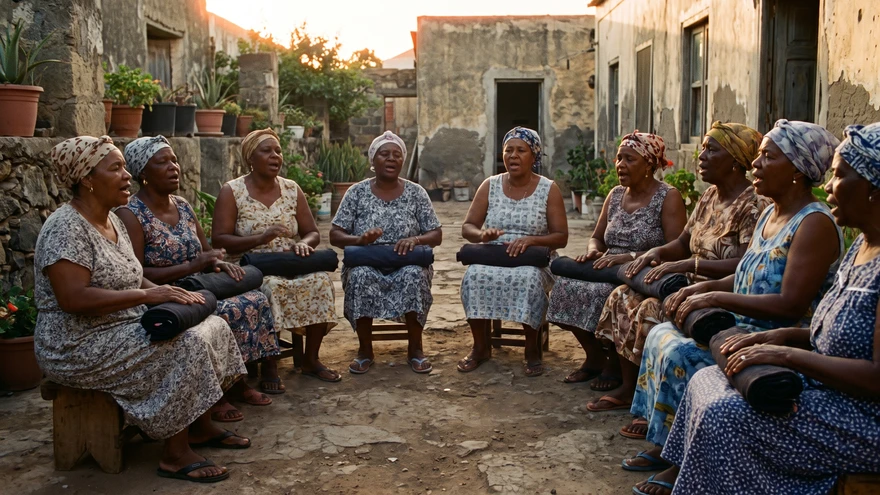
A central circle of women beats polyrhythms onto tightly rolled cloths (called chabeta) held between their legs. The lead singer initiates a powerful call-and-response vocal pattern, steadily increasing the tempo until the entire room vibrates. You feel the heavy, unrelenting bass deeply in your chest.
Best Places to Listen to Live Music in Cape Verde
Walking into the right venue makes the difference between a generic tourist night and a deep cultural immersion.
Live Music Venues in Sao Vicente (Mindelo)
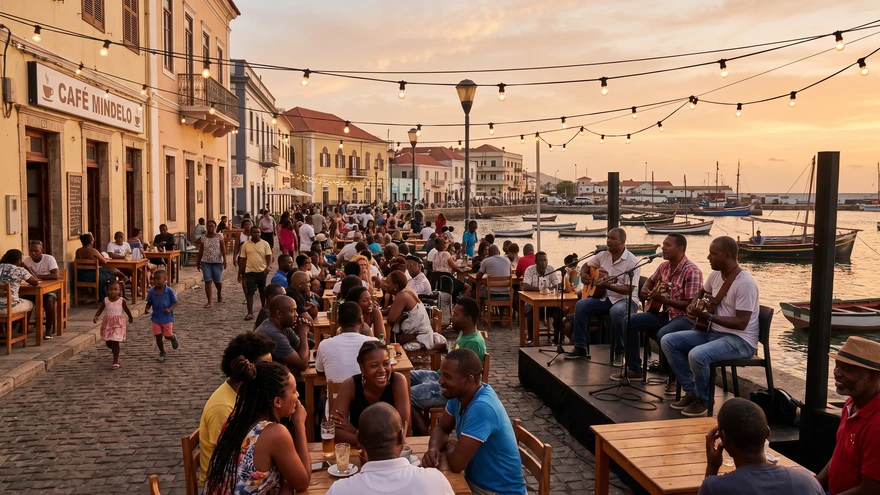
Mindelo claims the title of Cape Verde's cultural capital. The streets around Rua de Lisboa constantly hum with acoustic rehearsals and late-night jam sessions.
Casa da Morna stands out as the premium spot for experiencing traditional acoustic sets. Owned by celebrated singer Tito Paris, who occasionally takes the stage himself, this waterfront venue doubles as a Cape Verdean seafood restaurant by day and hosts live morna every Thursday, Friday, and Saturday evening. The acoustics easily capture the unamplified resonance of the cavaquinho.
For a more rugged, local atmosphere, Livraria Nho Djunga seamlessly blends a daytime bookstore vibe with intense, intimate evening performances, running jam sessions from Thursday through Sunday. Getting a table here requires arriving well before the 10:00 PM showtime, and keep an eye on your tab card; many Mindelo venues track drinks on a paper card that must be stamped and settled before you leave.
Time your trip for the August full moon weekend and you can catch the Baia das Gatas Festival, a free, multi-day outdoor concert held on the beach of the same name, known locally as the Woodstock of Africa. Admission costs nothing, but hotel rooms in Mindelo book out months in advance. If you would rather have a translator and pre-arranged seating handled for you on your first night, you can Book a guided live music and food evening in Mindelo instead of navigating the door policy alone.
Live music is only one layer of Mindelo's appeal, a city that rewards slow wandering between meals and market stalls just as much as it rewards a good playlist.
Live Music Venues in Santiago (Praia)
Praia demands a higher energy level, heavily leaning into funana and batuque.
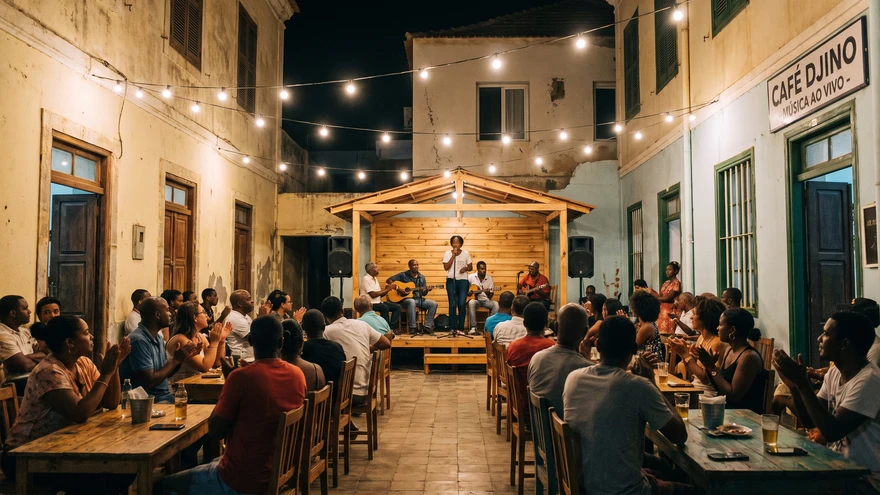
Quintal da Musica in the Plateau district remains the absolute gold standard for live performances in the capital, the very courtyard where Cesaria Evora herself once performed. Famous local acts frequently use this stage to test new material, and the venue draws a devoted crowd of regulars who treat reservations as essential; walk-ins are rarely accommodated once the dinner rush starts. Expect a modest cover charge, occasionally waived with a dinner reservation, and superior sound mixing that makes it non-negotiable for anyone serious about the scene.
Live Music Venues in Sal and Boa Vista
These eastern islands cater heavily to the resort crowd, meaning you have to look slightly harder for unpolished local scenes.
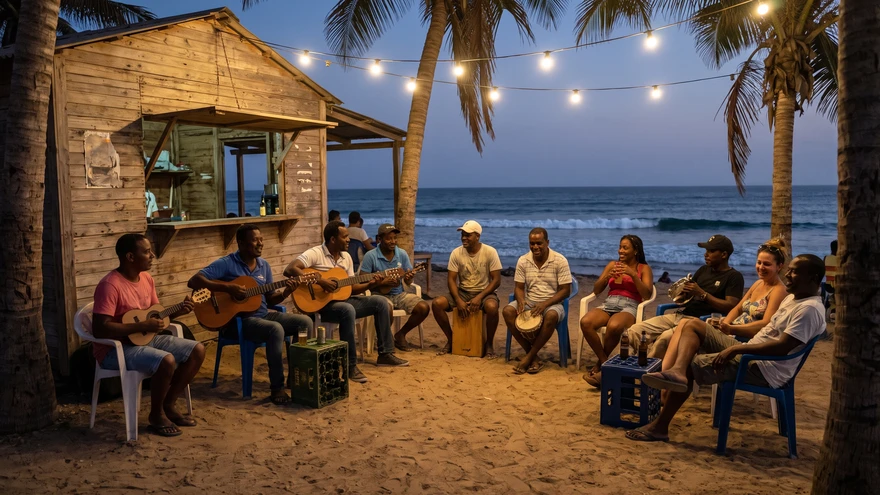
On Sal, Ocean Cafe in Santa Maria provides a reliable transition point, opening nightly around 5:00 PM and blending an international cocktail menu with talented local bands performing morna and coladeira for a mixed crowd of residents and travelers, best enjoyed alongside the island's seafood and grogue cocktails. In Boa Vista, skip the massive all-inclusive hotel stages. Instead, head toward the smaller beachside shacks near Sal Rei on a Friday night, where local musicians plug directly into small amps for raw, impromptu coladeira sets.
Practical Tips for Local Music Nights
- Pacing the Night: Do not expect the headline act to appear early; locals finish dinner around 9:00 PM and only hit the music bars closer to 11:00 PM.
- Table Etiquette: In smaller venues, sharing tables with strangers is standard practice. It immediately breaks the ice and often leads to impromptu dance invitations.
- Tipping Musicians: A small basket or hat often circulates during acoustic sets; a few coins dropped in directly support the artists who keep these independent venues alive.
- Dress Code: Casual is the norm everywhere except the more polished restaurant-venues like Quintal da Musica, where a step above beachwear is appreciated.