Misjudging the Atlantic trade winds can leave you stranded miles out in the open ocean or completely empty-handed during a sudden winter lull. Forgetting to factor in local offshore safety protocols and rescue boat fees before launching turns a dream winter escape into an expensive logistical nightmare. A successful trip requires matching your exact riding level to the island-specific wind lines of Sal and Boa Vista.
| Metric / Detail | Standard Conditions & Costs | Practical Notes |
|---|---|---|
| Peak Wind Season | November to June | Best consistency occurs between January and April. |
| Average Wind Speed | 15 – 25 Knots | Driven by the reliable Northeast trade winds. |
| Water Temperature | 21°C – 26°C | A 2mm shorty or 3/2mm full wetsuit is required. |
| Primary Hubs | Sal (SID) & Boa Vista (BVC) | Direct flights from Europe are available but seasonal. |
| Rescue Boat System | €30 – €50 per individual rescue | Often free if you purchase a school safety pack. |
Best Time for Kitesurfing in Cape Verde
Northeast trade winds dominate the African coast during the Northern Hemisphere winter, creating a highly reliable wind machine. The most dependable window stretches from January to April, when the probability of catching days over 20 knots climbs significantly. Packing a versatile kite quiver ranging from 7m to 11m ensures you stay powered regardless of daily fluctuations.
Air temperatures remain comfortably warm, but the constant ocean breeze introduces a noticeable chill factor.
Water temperatures hover around 22°C in the peak winter months. While local guides occasionally ride in boardshorts, a 2mm shorty is the baseline for comfort. Bringing a 3/2mm full wetsuit is highly recommended if you plan on logging extended four-hour sessions or practicing deep-water restarts.
Kitesurfing in Sal: Spots for Every Level
Kite Beach
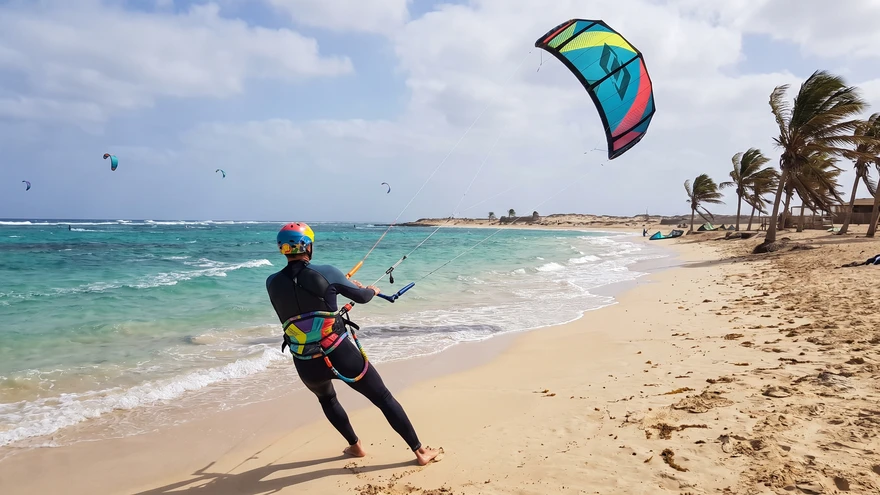
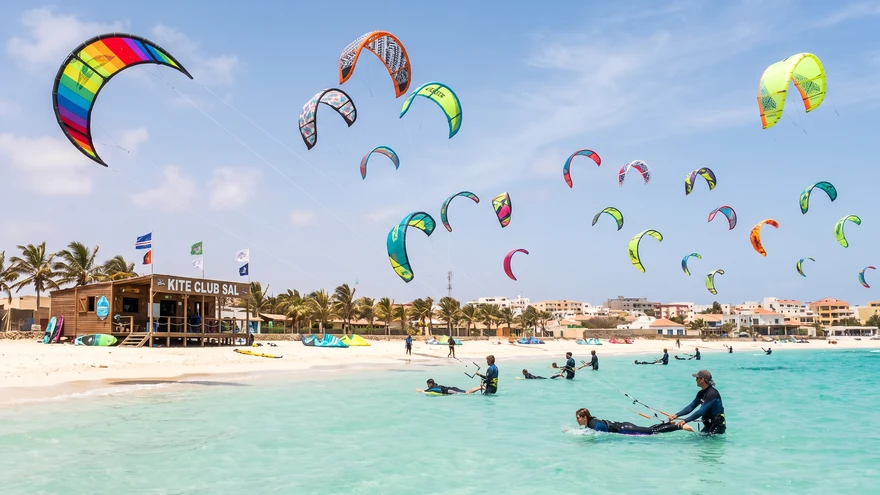
Located on the eastern coast of Sal, this spot delivers the safest environment for progression due to constant side-onshore winds. The water here is predominantly choppy, accompanied by a small to medium shorebreak depending on the tide. A vibrant local kite infrastructure lines the beach, offering secure gear storage, compressor access, and fresh water stations.
Santa Maria Beach
The sweeping southern bay offers jaw-dropping turquoise flat water, but it comes with a massive safety catch: strict offshore winds. Upwind riding ability must be flawless before you even consider launching your kite independently here. Local schools monitor the bay constantly, but dropping your kite or tangling lines means relying entirely on paid rescue boat support to get back to the sand.
Ponta Preta
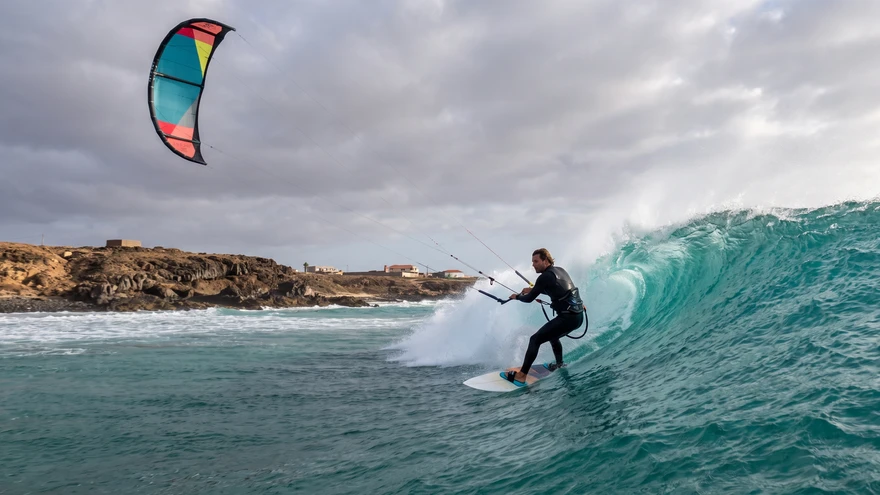
This legendary reef break on the southwest coast is reserved strictly for professional wave riders and highly advanced kiters. A fast, powerful, and clean right-hand wave breaks directly over a shallow volcanic ledge. The wind runs side-offshore, meaning a single mistake can wash your gear directly onto the sharp rocks or drag you out to sea.
Kitesurfing in Boa Vista: Flat Water and Waves
Praia Carlota and Sal Rei
Situated right next to the main town of Sal Rei, this expansive sandy beach serves as the primary gateway to Boa Vista’s wind. The wind close to the shore can turn highly gusty due to inland buildings and sand dunes blocking the airflow. Because of this, the spot shines brightest for hydrofoilers who can quickly cruise past the turbulent zone into the clean, steady air further out.
Praia das Gatas Lagoon
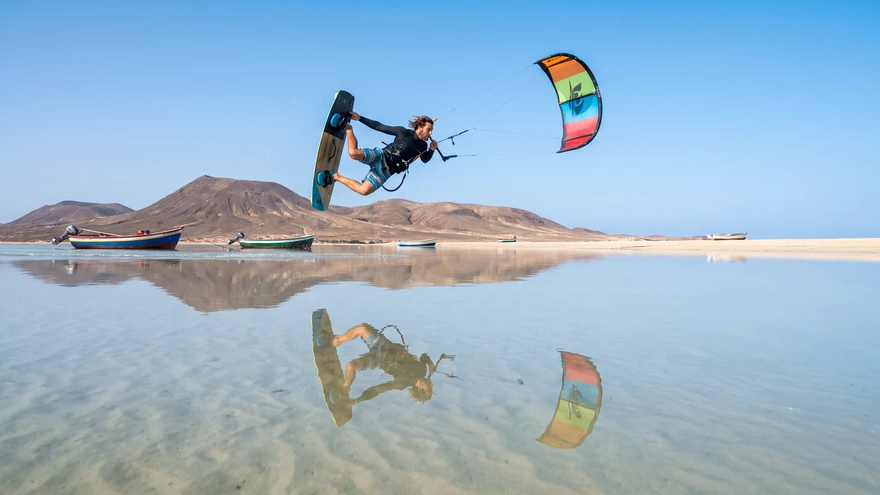
Tucked away on the northeastern tip of the island, this secluded gem features a shallow, completely flat-water lagoon. The outer reef blocks the heavy Atlantic swell, providing mirror-like conditions that are perfect for freestyle riders looking to unhook. Due to the remote location, you must pack your own food, water, and spares, as no formal kite stations operate directly on this beach.
Kite Schools and Gear Rental Logistics
Navigating the local services requires understanding the difference between independent riding and school-supported sessions.
| Service Type | Average Price Range | What It Includes |
|---|---|---|
| 10-Hour Semi-Private Course | €360 – €400 | Full gear, instructor, and safety boat radio tracking. |
| Daily Full Gear Rental | €50 – €70 | Current year kite, bar, board, and harness. |
| Weekly Storage & Safety Pack | €80 – €110 | Compressor use, beach assistance, and rescue boat insurance. |
Bringing your own gear saves money on trips extending past ten days, but it introduces major logistical hurdles during transit. Renting locally allows you to swap your kite size instantly when the trade winds unexpectedly spike from 15 to 28 knots. If you choose to bring your own quiver, always buy a local school’s "safety pack" on day one to avoid paying massive individual fees for a single rescue boat pull.
Travel Logistics and Baggage Policies
International Flights and Kite Bags
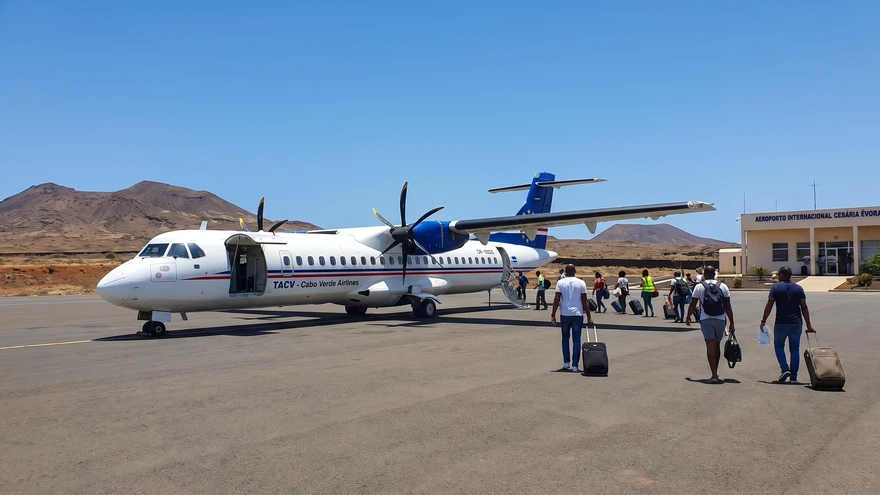
Airlines like TAP Air Portugal and TACV handle the bulk of travel to Sal and Boa Vista, usually routing through Lisbon. You must pre-register your sports baggage online during the booking process. Arriving at the check-in desk with an undeclared 140cm twin-tip bag often triggers immediate excess baggage penalties reaching up to €150 per leg.
Inter-Island Travel Logistics
Hopping between Sal and Boa Vista requires careful coordination due to the strict limitations of regional transport. Internal flights utilize small turboprop aircraft with incredibly rigid weight allowances, meaning oversized kite bags are frequently left behind for the next flight. Utilizing the ferries operated by CV Interilhas costs around €30 per ticket and accommodates heavy gear easily, but you must brace for long travel times and potential cancellations caused by rough winter swells.