Figuring out where to actually swim in Cabo Verde can be tricky, as the archipelago's famous trade winds and strong Atlantic currents can easily turn a relaxing beach day into a battle against the elements. Choosing the right stretch of sand dictates whether you spend the afternoon fighting red flag warnings or enjoying calm, turquoise waters.
| Beach | Island | Best For | Sunbed Cost (Daily) | Water Safety |
|---|---|---|---|---|
| Santa Maria | Sal | Socializing, accessibility | €5-€10 | Mostly calm, green/yellow flags |
| Praia de Chaves | Boa Vista | Nature, solitude, dunes | Free (resort guests) | Stronger currents, red flags |
| Tarrafal | Santiago | Calm swimming, local vibe | €3-€5 | Sheltered bay; watch shore break |
| Praia de Mangue | Santiago | Isolation, black sand | Free (no rentals) | Seasonal seaweed, check timing |
| Praia Baixo | Santiago | Family swimming, turtle nesting | Free (fixed umbrellas) | Calm at low tide; watch high tide surge |
| Praia de Sao Francisco | Santiago | Wild beach near Praia city, easy access | Free | Strong backwash mid-beach; swim at edges |
Understanding Cabo Verde's Ocean Conditions
The Atlantic Ocean surrounding Cabo Verde dictates every aspect of beach life here. Between December and April, the Harmattan trade winds blow in from the Sahara, dropping water temperatures slightly and whipping up excellent conditions for kite surfers. However, this same wind creates intense swells on exposed coastlines.
Always check the beach flags before stepping into the water. A red flag means strictly no swimming due to dangerous undercurrents, which are common on the eastern and northern shores of most islands. If swimming is your priority, heading to south or west-facing bays naturally shielded by volcanic rock formations provides the safest experience.
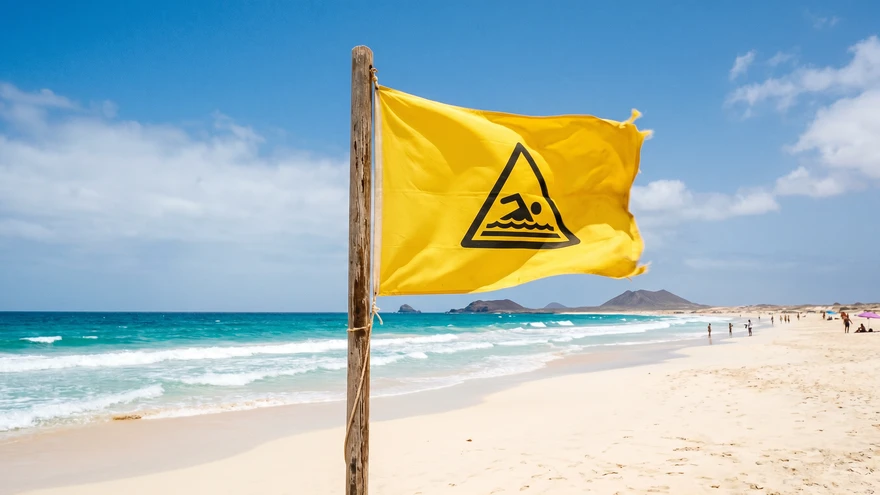
Santa Maria Beach, Sal: The Social Hub
An endless stretch of powdery white sand, vibrant beach clubs, and water clear enough to spot marine life directly from the wooden pier. Santa Maria is the undisputed epicenter of Sal, offering maximum convenience without sacrificing natural beauty.
Swimming and Water Sports
The bay curves gently, offering natural protection from the harshest Atlantic swells. The water near the main pier stays relatively flat, making it an excellent spot for casual swimming and families with young children. The sandy seafloor extends well into the water on both sides of the pier, keeping the footing predictable for those who stay close to this stretch.
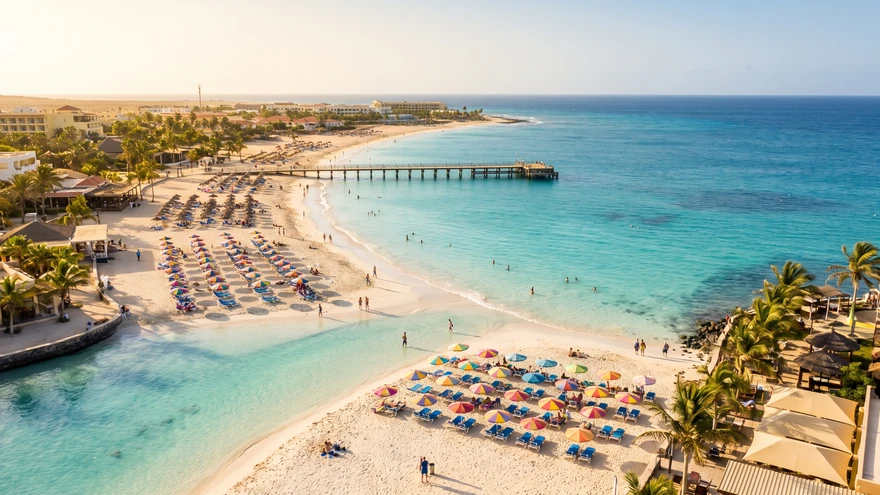
From around 5pm, fishermen cleaning their catch at the pier draw stingrays and occasionally sea turtles directly below the wooden planks. The marine life circles close enough to watch clearly from above without entering the water - one of the more unexpected free spectacles on the island.
Afternoon trade winds strengthen noticeably after midday, and currents near the shoreline build with them. Lifeguards patrol the beach daily, but the calmer morning window before midday offers significantly easier conditions, particularly for children and weaker swimmers. Where the sandy bottom gives way to submerged volcanic rock further along the bay, water shoes are a sensible precaution against sea urchins.
Further down the bay towards Ponta do Sinó, the wind picks up significantly. This transition zone is where the kite and windsurfing schools operate. You can easily book a beginner surfing lesson right on the sand, with local instructors providing all the necessary gear.
Facilities and Sunbed Costs
Convenience is the main draw here. The beachfront is lined with restaurants, cafes, and dive centers.
- Sunbeds: Expect to pay around €5 to €10 for two sunbeds and an umbrella. Many beach clubs waive this fee if you order lunch or a steady stream of drinks.
- Amenities: Public showers are available only at the beach club. Beachfront bars offer restroom access to customers willing to order something.
- Beach vendors: Sellers approach regularly throughout the day and are most active in the morning hours. A polite but firm decline is usually enough.
- Cash: Beach vendors and sunbed operators rarely break a 50 EUR note. Bring smaller bills or pay in local escudo (CVE) to avoid the wait.
- Food: Walk a few steps inland to find local spots serving freshly caught tuna rather than paying a premium right on the sand.
Praia de Chaves, Boa Vista: Sand Dunes and Solitude
Towering, wind-sculpted sand dunes spilling directly into the deep blue ocean. Praia de Chaves offers a raw, untouched aesthetic that feels a world away from the busy resort strips.
How to Get to Praia de Chaves
Located just south of Sal Rei, reaching this beach requires a bit of effort if you are not staying at one of the adjacent all-inclusive resorts. Taxis from the capital take about 15 minutes and cost roughly €10. Alternatively, renting a quad bike or a 4x4 allows you to navigate the sandy tracks independently, offering a massive advantage for exploring further down the coast.
Wind Conditions and Ocean Safety
This coastline faces the full force of the ocean, meaning the waves here hit harder and the undercurrents require serious respect. Red flags fly frequently, especially during the winter months.
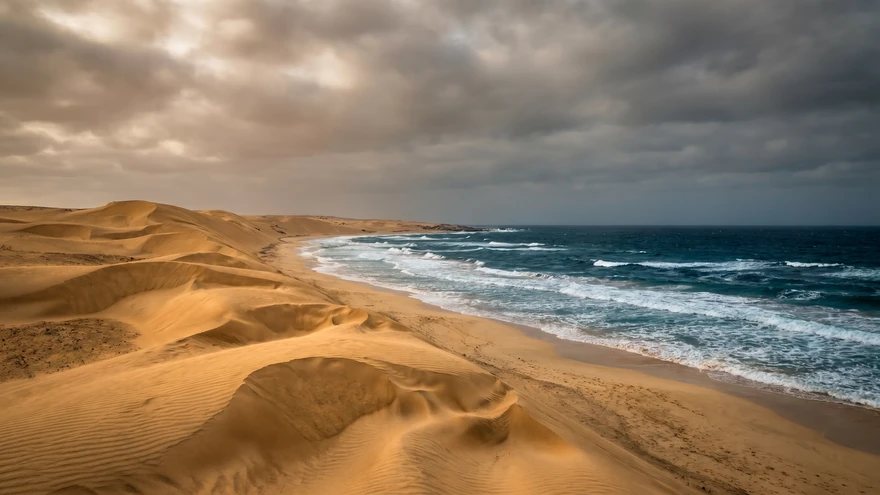
Instead of swimming far out, this beach is better suited for long walks, dune boarding, and nature watching. During the late summer and autumn months, these wide expanses of sand become vital nesting grounds for Caretta Caretta (Loggerhead) sea turtles. Joining a guided nighttime turtle walk here is a spectacular alternative to standard beach lounging.
Chamine de Chaves: The Ruined Ceramics Factory
About 20-25 minutes on foot from the Riu Karamboa and Riu Palace hotels, a tall brick chimney rises from the dunes along Praia de Chaves, marking the ruins of an 18th-century ceramics factory. The brickwork walls have mostly collapsed, but the chimney itself remains intact and visible from a long distance, making it a natural orientation point if you are walking the beach without a guide. A beach bar sits directly in front of the ruins, serving food from 12:30 onward, with drinks and snacks available earlier. Service and pricing are inconsistent by report: some visitors find it reasonably priced with friendly staff and quick food, while others describe drinks and sunbed charges as expensive and poorly disclosed upfront. Card payments are generally accepted. Expect horses roaming the sand nearby and some litter around the ruins that goes uncollected.

Praia das Dunas: The Palm-Lined Stretch Toward Estoril
East of the chimney, Praia de Chaves continues toward Estoril as Praia das Dunas, a kilometers-long run of white sand backed by palm trees and low dunes near the hotel strip. The sand here is finer and the beach noticeably calmer close to the hotels, though waves and an uneven, sometimes rocky seafloor further along make swimming rougher than the western section. Loggerhead turtles nest in the dunes behind the beach during the season, and kite surfers use the windier stretches further from the resorts. A handful of small shops line the beach near the hotels, and the same flag system covering the rest of Praia de Chaves applies here, so check conditions before swimming.
Tarrafal Beach, Santiago: The Local Vibe
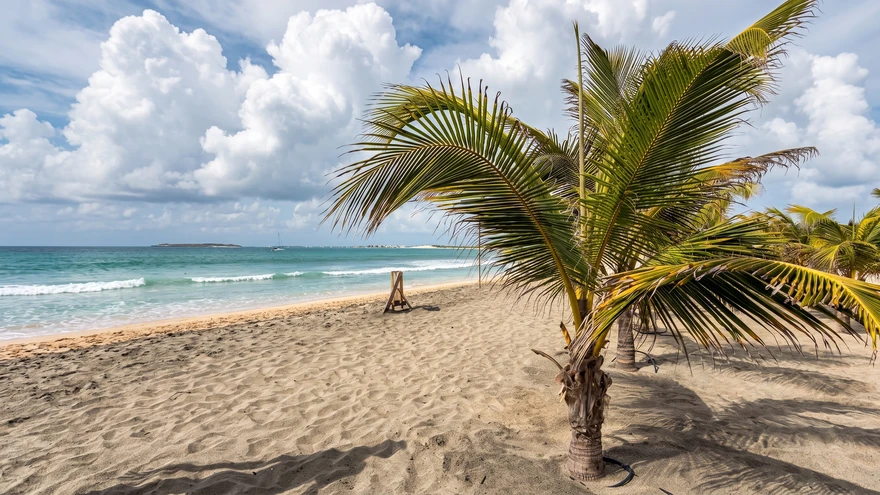
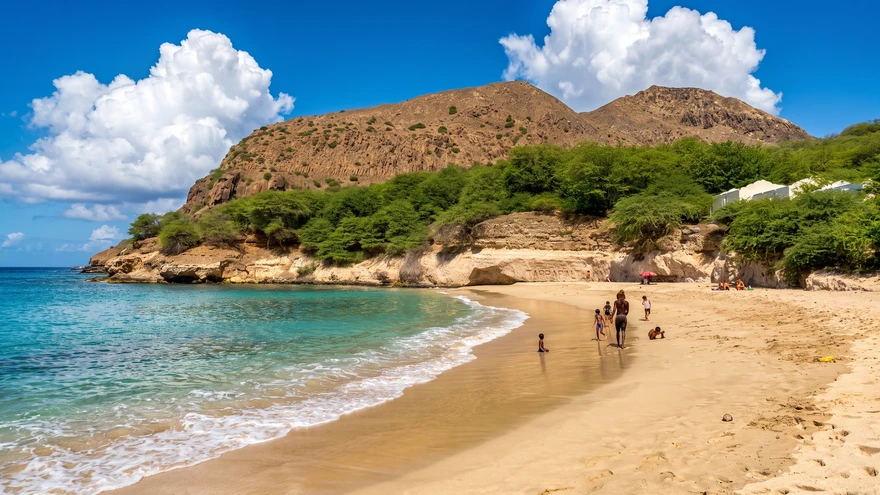
A horseshoe-shaped bay framed by imposing green mountains, swaying coconut palms, and colorful artisanal fishing boats bobbing in the shallows. Tarrafal strips away the mass tourism feel, replacing it with authentic island rhythm.
Why It's the Best Swimming Beach
Unlike the flat, wind-swept islands of Sal and Boa Vista, Santiago's mountainous terrain acts as a massive windbreak. Tarrafal sits sheltered in the north, cutting off most of the Atlantic swells that make swimming dangerous elsewhere in the archipelago.
The shoreline entry still produces rolling waves that can knock swimmers off their feet without warning. Lifeguards are posted and flags are in use, but tourists frequently ignore both - a situation local police have stepped in to enforce. Once past the shore break, the water settles into the clear, calm conditions that make this bay exceptional for swimming.
The rocky left edge of the bay, nearest the fishing boat anchorage, is the most productive snorkeling zone on Santiago island. Moray eels, cuttlefish, schools of tropical fish, and hermit crabs inhabit the reef edges there, in water mostly undisturbed by boat traffic.
Nearby Eats and Amenities
Arriving early means watching the local fishing fleet return to the left side of the bay - small colorful wooden boats unloading the night's catch as the light comes up. Weekends bring a festive atmosphere through the rest of the day, with locals playing volleyball on the sand and gathering at the beachfront bars at sunset.
- Food and Drink: Small kiosks serve grilled catch of the day and shots of local grogue (sugarcane spirit) at a fraction of resort prices. Local women circulate the beach selling fresh coconuts for around €1 - ask them to split and scrape the flesh once the water is finished.
- Shade: Trees scattered along the beach provide shade in patches but coverage is inconsistent. Umbrella rentals are not available, so bring your own or plan around the tree spots.
- Seating: Sunbed rentals are minimal and very cheap (around €3), but most regulars bring a towel and claim a spot under a tree.
- Changing rooms: None on the beach. Arrive in your swimwear or use a restroom at one of the beachfront bars.
- Water shoes: The main sandy section is forgiving underfoot, but the rocky snorkeling zone to the left has submerged stones, fish scraps from the boat landing, and occasional broken glass. Shoes prevent cuts.
- Stray dogs: Packs circulate the beach throughout the day, drawn by food scraps near the fishing area. They are generally docile but avoid feeding them.
Praia de Mangue, Santiago: The Gated Black-Sand Beach
Tucked into Santa Cruz municipality on Santiago's windward coast, Praia de Mangue trades resort infrastructure for genuine isolation. The black volcanic sand and a clear view across the bay to Mount Graciosa make the drive out here worthwhile on its own, even before factoring in the near-total absence of tourists.
Getting There: The Farm Gate Access
A normal rental car struggles on the final stretch, a private track of stone and sand cutting through farmland growing bananas and the sugarcane used for local grogue. The road ends at a locked gate that the farmer who owns the land opens for visitors, sometimes after a short wait if he's out working the fields. Closing the gate behind you on the way out is a hard rule locals ask you to respect, since it keeps livestock and crops from wandering off. Access has tightened in recent years: some visitors now find a padlocked barrier roughly 3km short of the beach itself, with no guarantee the gate will be open on a given day. Asking locally in Santa Cruz before making the drive saves a wasted trip.
What to Expect: Trash and Seasonal Seaweed
The honest downside here is debris. Trash washed in by the sea collects along the shoreline and rarely gets cleared, a recurring complaint even from visitors who otherwise loved the spot. Swimming conditions swing hard by season too: certain months bring thick seaweed into the bay that makes the water unpleasant, so timing a visit outside of bloom season matters more here than at Cabo Verde's more developed beaches. None of that cancels out the appeal for a quiet afternoon of fishing, a weekend escape from Praia, or a group outing away from the crowds at Tarrafal.
Praia Baixo, Santiago: Sao Domingos' Loggerhead Beach
Praia Baixo routinely gets named as the beach that quiets Santiago's reputation for having no real beaches, alongside its neighbor Sao Francisco. A long stretch of black sand facing Maio island, framed by a small coastal village and one restaurant locals travel specifically to eat at.
What to Expect: Calm Bay, Rough Edges
The bay stays generally calm and works well for families and children, though the tide flips the mood fast: waves that feel harmless at low tide turn genuinely rough at high tide, so timing a swim around the tide charts matters more here than the calm reputation suggests. Fixed sun umbrellas run the length of the beach at no charge, and the restaurant on the water's edge draws repeat visitors for both the food and the setting. The catch is there's no signage or lifeguard presence, so sticking to the two ends of the beach for swimming, where the current is more predictable, is the safer call. Loggerhead turtle nests turn up on this stretch in season, one more reason locals treat it as one of Santiago's better-kept beaches rather than a tourist checklist stop.
Praia de Sao Francisco, Santiago: The Paved, Windy Escape
Ten to twenty minutes from Praia city on a well-paved road, Sao Francisco is the most accessible wild beach near the capital, complete with a guarded parking lot and a small bistro that covers snacks rather than a real meal.
Getting There and What to Bring
The paved access road and guardhouse make this the easiest wild beach to reach from Praia, with a large parking area right at the sand. Wind is the defining feature here: fine sand blows constantly, shells occasionally turn up underfoot, and reaching the far left side of the beach is the standard local trick for finding shelter from both wind and Atlantic swell. Since the bistro barely stretches beyond snacks, bringing your own food and water is the norm rather than the exception.
Where Not to Swim
The seabed shifts from soft and muddy in the middle of the beach to rocky further along, with a strong backwash that catches people off guard. Locals swim toward the edges and skip the center stretch entirely. The beach sits mostly unsupervised, so pairing a visit with at least one other person, rather than going alone, is worth the extra planning given how deserted it gets on weekdays.
Best Time to Visit Cabo Verde Beaches
To balance comfortable water temperatures with manageable wind speeds, the shoulder seasons of May to June and October to November are ideal. During these windows, the intense winter trade winds have either died down or not yet begun, leaving the ocean glassy and the sand much more pleasant to lie on. Water temperatures hover around a very comfortable 25°C to 27°C during these months.