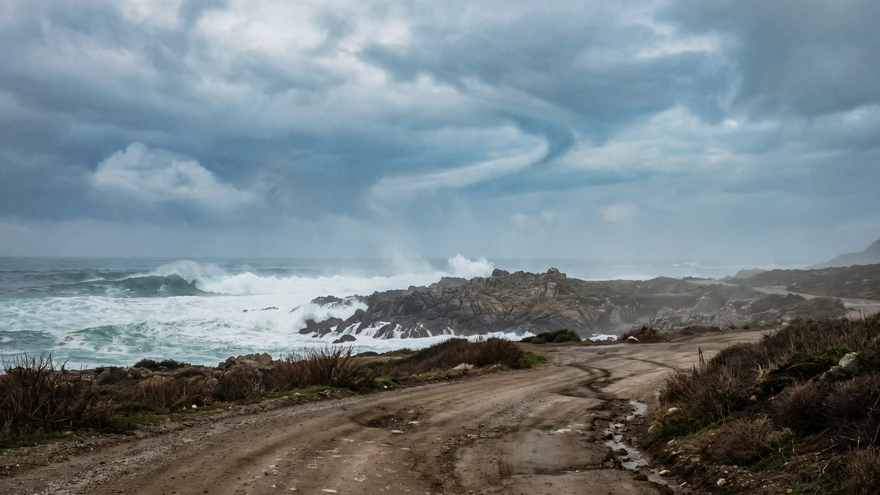
If your idea of a perfect island escape means trading crowded resort beaches for a slice of untouched history, there is a corner of Boa Vista that rarely makes it onto the standard excursion list. Cabo de Curral Velho pairs a windswept, empty beach with the stone ruins of a 17th-century fishing village, and getting there is part of the adventure. This guide covers exactly how to reach it on foot or by 4x4, what you will find among the ruins, and why the water here demands respect rather than a swim.
- Location: Southern coast of Boa Vista, about 43 kilometers (roughly an hour by 4x4) from Sal Rei
- From Hotel Riu Touareg: 1.7 kilometers, about a 30 to 45 minute walk each way
- Access: On foot along the beach or nature reserve path, by 4x4 or quad bike, or by shared aluguer minibus
- Terrain: Deep sand, unpaved tracks, and volcanic rocky cliffs
- Highlights: 17th-century stone ruins, old salt flats, a protected seabird colony, and a near-empty beach
- Safety: Strong undertow, swimming strongly discouraged
Why Visit the Abandoned Village of Curral Velho?
Cabo de Curral Velho is more than a dot on the map, it is a place where the clock seems to have stopped somewhere in the 1800s.
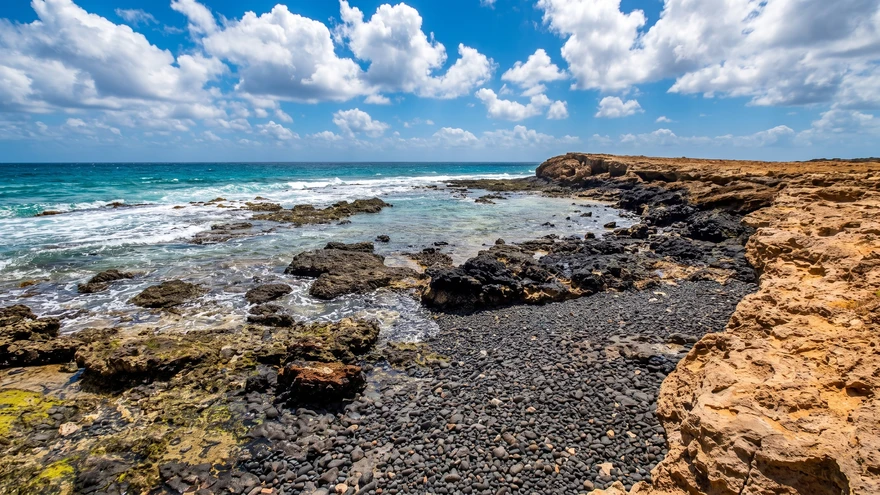
Walking out here strips away nearly every trace of the resort bubble a few kilometers up the coast, and it is one of the few spots on Boa Vista where you are genuinely more likely to see a ghost crab than another tourist. It sits in similar territory to Shark Bay, another stretch of Boa Vista's coastline built around raw nature rather than resort infrastructure.
The 17th-Century Ruins and Salt Flats
Long before Boa Vista became a package-holiday destination, Curral Velho was a working settlement built around fishing and salt. Founded in the 17th century, it grew into the island's oldest village, harvesting the salt flats (salinas) that once supplied trade across the archipelago. Repeated pirate raids and a series of severe droughts eventually pushed the last residents out sometime in the 19th century, leaving the stone walls to the wind.
Today those stone skeletons still stand against the desert backdrop, and walking between them feels closer to visiting a ruin in the Sahara than a Cape Verdean beach town. Just past the walls, the salt flats spread out in a pale, cracked sheet, and nearby you will find a scattering of large, weathered conch shells, left behind by generations of fishermen who worked this coast. Hurricane Fred passed through the region in 2015 and knocked down parts of the remaining structures, so do not expect intact buildings, what is left is fragmentary but genuinely atmospheric.
A Protected Wetland and Nesting Ground
Curral Velho is not only a historical curiosity, it also sits inside a Ramsar-listed wetland, an internationally recognized protection status the site has held since 2005. The small islet just offshore, Ilhéu de Curral Velho, is a breeding site for brown boobies, magnificent frigatebirds, and the Cape Verde shearwater, while the mainland coast attracts Kentish plovers and cream-colored coursers.
The beach itself falls within one of Boa Vista's protected loggerhead nesting zones, and if you are visiting during the loggerhead nesting season, keep well clear of any roped-off sections after dark.
The beach's stark, otherworldly look has not gone unnoticed by Hollywood either, Marvel used this coastline as a filming location for Black Panther: Wakanda Forever in 2022.
How to Get to Cabo de Curral Velho
Because of its remote position on the rugged southern coast, reaching Cabo de Curral Velho takes a bit of planning, and the right approach depends partly on which end of Boa Vista you are staying on. Guests weighing up where to stay in Cabo Verde often pick a Boa Vista resort near the southern beaches specifically for access to spots like this one.
Walking from Hotel Riu Touareg (The Nature Reserve Route)
For guests staying at Hotel Riu Touareg, Cabo de Curral Velho makes a satisfying morning or afternoon walk. The headland sits just over 1.7 kilometers away, a 30 to 45 minute walk each way over sand.
You can follow the shoreline directly. The sand near the waterline is firmer, but it can still be tiring if you are not used to walking on loose coastal terrain.
The better option is the path running along the edge of the nature reserve rather than the open beach. The compacted sand here makes for noticeably easier walking, and the quiet, birdsong-filled reserve adds to the sense of having the coast to yourself.
Access by 4x4 or Quad Bike
If you are exploring independently rather than joining a resort excursion, a 4x4 vehicle or quad bike is not optional, it is the only way in. The roads south are entirely unpaved, rough volcanic rock in places, deep desert sand in others.
Rental agencies in Sal Rei, the island's main town, hire out 4x4 pick-ups specifically for this kind of route, and comparing options through A rental car search before you land is worth the ten minutes, since availability on Boa Vista is limited outside peak season. Whichever vehicle you land on, make sure it has real ground clearance and that you are comfortable with soft sand driving, getting stuck out here means a long, hot wait for help.
From Sal Rei the drive covers roughly 43 kilometers and takes about an hour, heading south past Rabil and Fundo das Figueiras through a landscape of dry riverbeds, baobabs, and date palms that feels more Sahara than Caribbean.
Public Transport and Alternative Routes
A 4x4 rental is not the only way down. A shared aluguer minibus runs from Sal Rei toward the south of the island for a small fare, typically just a few hundred escudos, though services are infrequent and often skip Sundays entirely. From the drop-off point you are looking at a several-kilometer walk to reach the ruins, so this only makes sense if you are comfortable with a longer hike and flexible timing.
Guided tours departing from Povoação Velha and Cabeça dos Tarafes, two small villages closer to the site, are worth checking if your accommodation is on that side of the island rather than near Sal Rei or the Riu Touareg.
Is It Safe to Swim at Curral Velho Beach?
Short answer: no. The view from the cape, waves breaking over volcanic rock, is dramatic, but the water itself is unpredictable and genuinely dangerous.
The southern coast of Boa Vista is known for fierce Atlantic currents and a powerful undertow. Even wading in ankle-deep water near the shore, the backwash can pull your feet out from under you without warning. There are no lifeguards or emergency services anywhere near this stretch of coast.
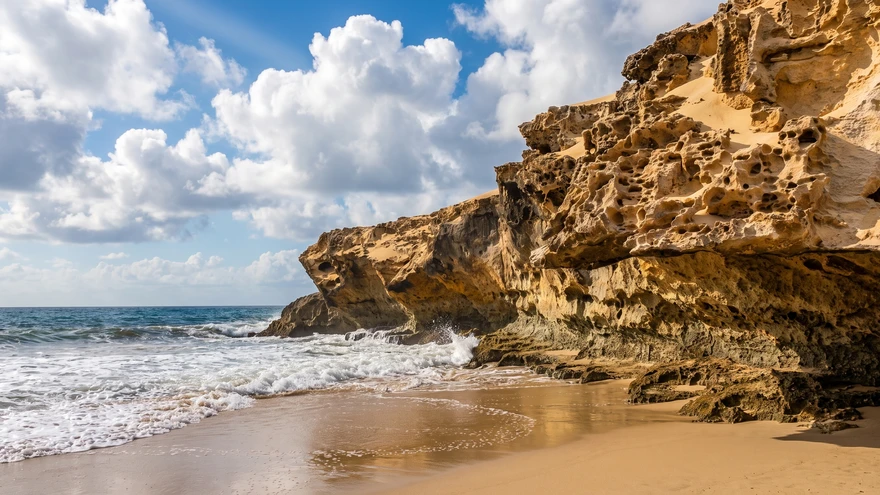
Enjoy the sea breeze, collect shells along the tideline, and photograph the waves hitting the rocks, just save the actual swimming for your hotel pool.
Curral Velho vs. Santa Monica Beach: The Ultimate Solitude Alternative
When people ask about pristine beaches on Boa Vista, Santa Monica usually comes up first, and for good reason, its kilometers of white sand are genuinely stunning. It is also increasingly part of every standard island tour, which means you will rarely have it to yourself.
Curral Velho offers the opposite experience. There are no beach bars, no sunbed rows, no vendors working the sand, most days you will have the entire stretch of coastline to yourself. If you are weighing up Boa Vista's best beaches against each other, this is the one to pick when solitude matters more than convenience.
Best Time to Visit for Photography and Solitude
Timing makes a real difference here, both for comfort and for photos.
Morning light is the best option for most visitors. Going early avoids the worst of the midday heat, and the low sun throws long shadows across the 17th-century ruins, ideal for photography.
If you are arriving by 4x4 or quad tour and do not need to walk back in the dark, staying for sunset is worth the logistics. Watching the sun drop below the Atlantic from the cliffs above the cape is the kind of moment that is easy to remember long after you have left Boa Vista.
What to Know Before You Go
A few practical notes before you set off. Sturdy shoes matter here, the ruins sit on sharp volcanic rock and the sand track can be hard going in sandals. Bring more water than you think you will need, there is no shade and nowhere to buy anything once you leave Sal Rei or the hotel zone.
If a local caretaker asks for a small parking donation near the ruins, typically a few hundred escudos, that is a common but informal practice rather than an official entry fee.