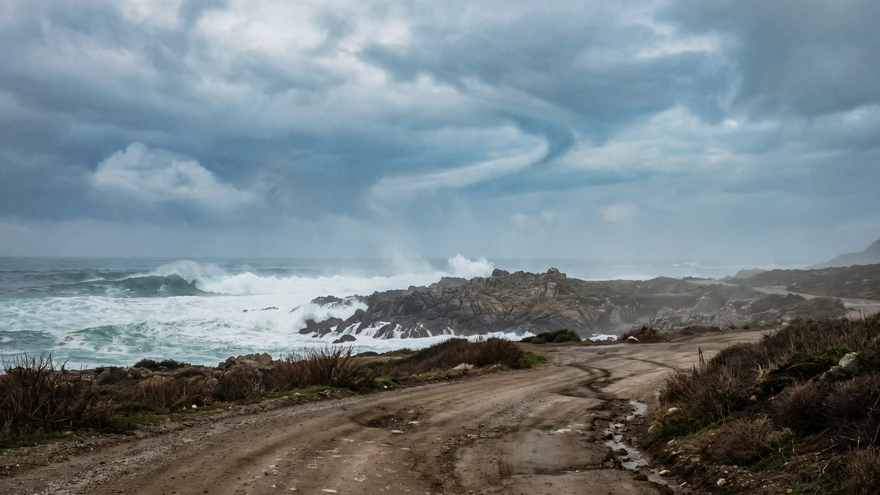
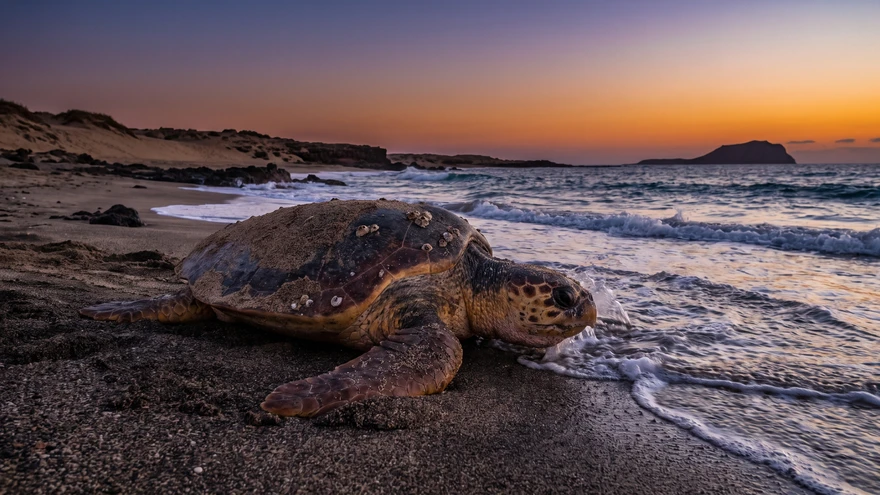
Every year, between June and October, the beaches of Cabo Verde become one of the most extraordinary wildlife stages on the planet. Loggerhead sea turtles - Caretta caretta - drag themselves ashore under cover of darkness to lay eggs on the same sands their ancestors used millions of years ago. Cabo Verde ranks as the third-largest loggerhead nesting site in the world, hosting roughly 15% of the global population. If you time your visit right, witnessing this ritual is one of those travel experiences that stays with you permanently.
When to See Sea Turtles Nesting in Cabo Verde
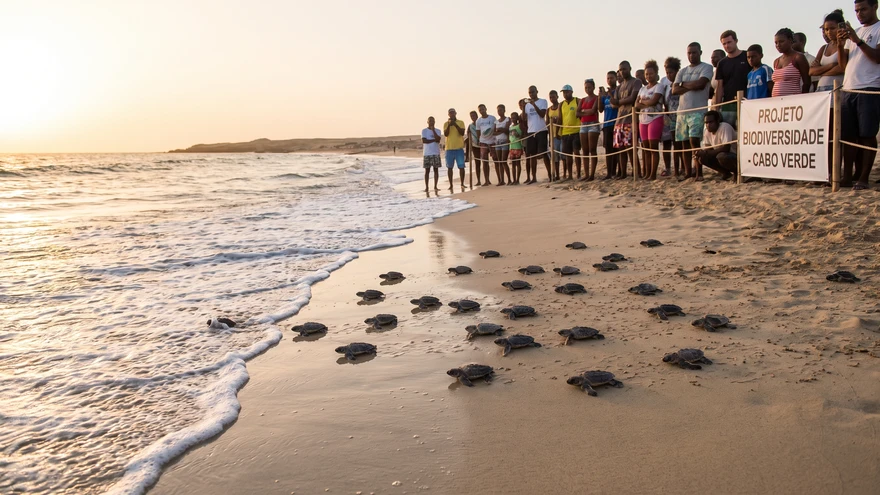
The loggerhead nesting season runs from late June through October, with August consistently being the peak month for observations. That is when the beaches see the highest density of nesting females on any given night - research teams on Boa Vista recorded up to 30 loggerheads per night during peak season. From late August onward, the season enters an extraordinary overlap period where mothers are still arriving to nest while the first hatchlings from earlier clutches are breaking out of the sand and racing toward the ocean.
The hatching season extends from late August all the way through early December. If you prefer to see hatchlings rather than nesting females, November is an excellent window - the nesting crowds thin out, tour groups are smaller, and nest excavations at the hatcheries on Sal are a near-daily event. For the full dual experience - mothers nesting and babies hatching simultaneously - target the period between mid-August and mid-September.
A 2026 study published in Regional Environmental Change flagged an important shift: females are arriving earlier in the season than they did two decades ago, but they are nesting less frequently and producing fewer eggs per clutch. Conservation groups believe this is a climate-related stress response. The turtles are still coming - in record numbers, in fact - but the health of individual nesting attempts requires close monitoring.
The Best Islands and Beaches for Turtle Watching
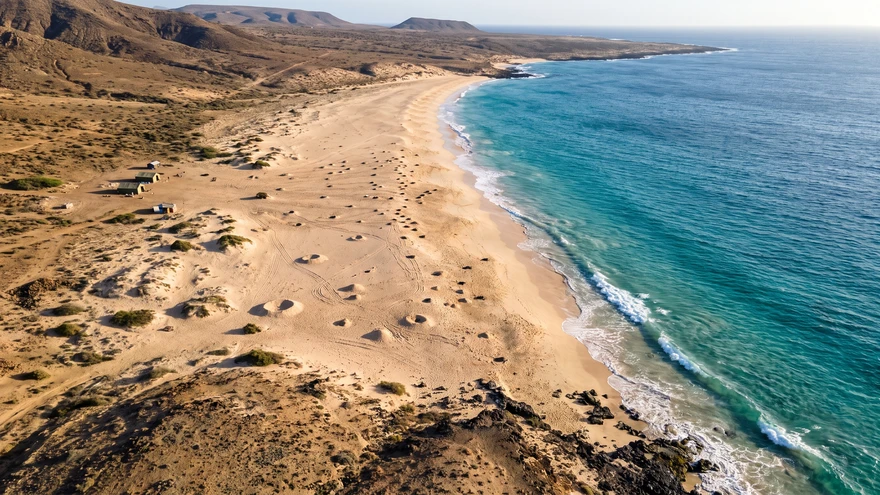
Boa Vista is unambiguously the primary destination. The island hosts 60-70% of all loggerhead nesting activity in the entire archipelago. Most nesting happens on the remote, undeveloped eastern coastline, which falls within the Tartarughe Nature Reserve. The key beaches are:
- Ervatao Beach: The most important single nesting site, accounting for roughly 70% of Boa Vista's nests. It takes about 80 minutes by 4WD from Sal Rei to reach it.
- Curralinho and Joao Barrosa: Secondary beaches in the southeast of the island, also within the protected reserve.
- Pesqueiro Grande: Another significant nesting ground, closer to some resort areas - tours from Sal Rei often head here for a shorter transfer.
Sal Island is the second-largest rookery and significantly more accessible. Project Biodiversity operates on Sal, patrolling beaches around Santa Maria and running a conservation hatchery next to the Hotel RIU Funana. The hatchery opens to visitors daily from 16:30 once hatching season begins, with free admission and a donation box for conservation support. Sal's beaches are under more development pressure than Boa Vista's, but the conservation infrastructure is strong and the hatchery is genuinely impressive.
For something completely different, Sao Vicente offers daytime swimming encounters with sea turtles from Sao Pedro beach. Local boat operators run RIB excursions that bring you face-to-face with turtles in open water - no darkness required, no strict protocols around silence. This is a good family option or a complement to a nighttime nesting tour.
Ethical Turtle Watching: Rules You Must Follow
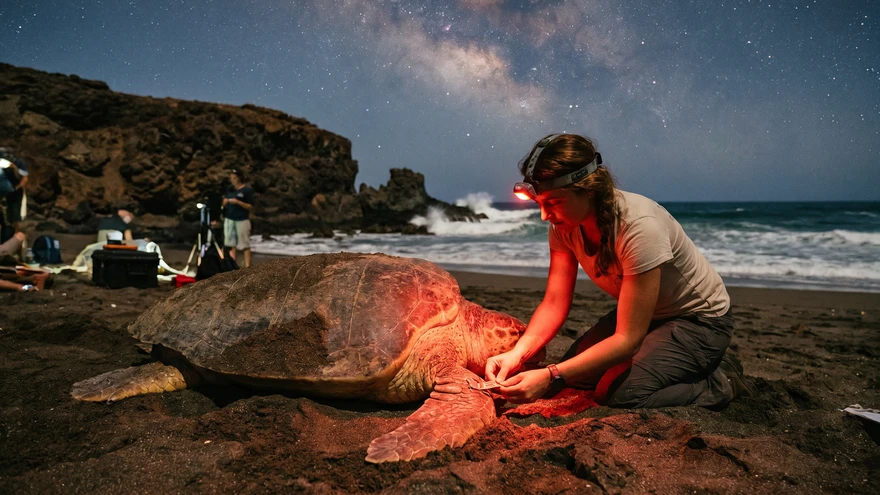
The rules are not suggestions. From June to October, it is illegal to walk on the designated nesting beaches at night without a certified guide. Violations carry fines, and the ecological damage from unsupervised visits - trampled nests, disoriented females - is real and documented. Every reputable tour operator in Cabo Verde follows the same core guidelines:
- Wear dark clothing only - no white, no bright colors, no reflective fabric.
- All light sources off - this means phones, cameras, torches, smartwatches. No flash photography under any circumstances.
- Approach only after egg-laying begins - disturbing a female before she commits to nesting causes her to return to the sea without laying.
- Maximum 10 people per turtle - groups are kept small to minimize stress on the animal.
- No touching - not the turtle, not the eggs, not the hatchlings.
- Keep the path to the ocean clear - hatchlings navigate by moonlight and star reflection. Any artificial light or physical obstruction between nest and sea can be fatal.
- No smoking or strong perfumes - turtles rely heavily on chemosensory signals.
The Turtle Foundation, SOS Tartarugas (Turtle SOS), and Project Biodiversity all operate beach patrols during the season. They use thermal imaging drones to detect poachers and locate disoriented turtles. Supporting a tour run by or affiliated with these organizations puts money directly into that patrol infrastructure.
Joining an Organized Night Tour
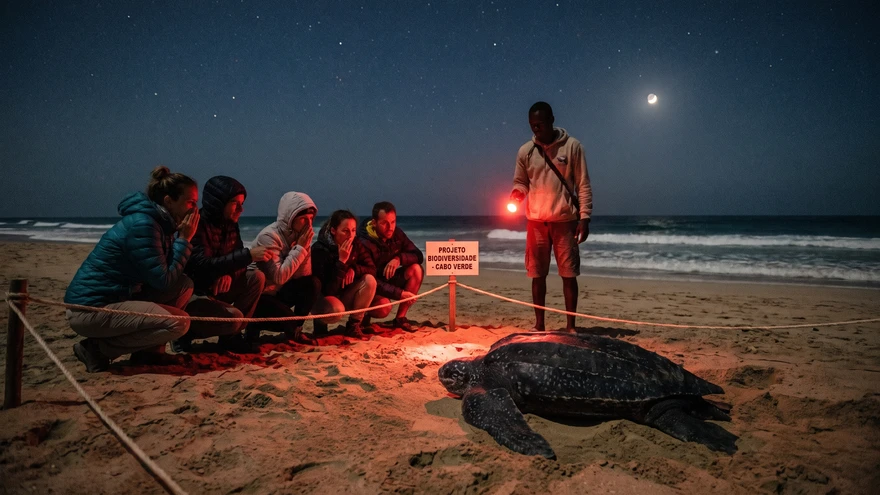
Booking through an organized tour is not just the ethical choice - it is the only legal way to access the nesting beaches after dark. On Boa Vista, night tours depart every evening during the season from hotels in Sal Rei. The journey to the eastern beaches takes 60-80 minutes each way by 4WD off-road vehicle. Tours typically last four hours in total, and prices start from around €60 per adult (with children often half-price).
Operators including Naturalia Ecotours, Cabo Mundo Tours, and KatlantiK specialize in wildlife-focused excursions and work directly with conservation NGOs. Most tours include hotel pickup and return, a certified marine guide, and a briefing on turtle biology and conservation. Group sizes are capped, which keeps the experience genuinely special rather than a crowded spectacle. Book through GetYourGuide or Viator to compare available dates and operators.
On Sal, tours are slightly shorter in transfer time because the nesting beaches are closer to the tourist zone around Santa Maria. The Project Biodiversity hatchery visit is free and runs independently of the guided beach tours - you can attend the 16:30 talk on any day during hatching season without advance booking.
Where to Stay Near the Nesting Beaches
On Boa Vista, most accommodation clusters around Sal Rei, the island's main town. All reputable tour operators offer hotel pickup from Sal Rei, so you do not need to stay in a specific location to access the tours. Options range considerably in price and style:
- Barcelo Marine Boa Vista (Adults Only): Five-star all-inclusive property with a private beach and pool, well positioned for resort guests who want a seamless turtle tour add-on.
- VOI Praia de Chaves Resort: Large resort in Sal Rei with all-inclusive options, frequently partnered with local tour operators for organized excursions.
- Spinguera Ecolodge: A more intimate, eco-conscious option where you can rent a 4WD on-site - useful if you want flexibility to explore the island's remote coastline independently (though beach access after dark still requires a guide).
- Hotel Boa Vista, Sal Rei: Smaller and budget-friendly, within walking distance of Praia de Estoril.
On Sal, the Santa Maria resort strip is the base for most visitors. The Project Biodiversity hatchery is a short drive or taxi ride from any hotel in the area. Book accommodation through Booking.com and filter by Boa Vista or Sal depending on which island you prioritize.
What a 2026 Record Season Means for Visitors
A June 2026 study published by Mongabay revealed an 80-fold increase in loggerhead nesting numbers at three monitored beaches on Boa Vista over 27 years - one of the most dramatic wildlife recovery stories in Atlantic conservation. Night patrol teams reported seeing 30 loggerheads per night during peak 2025 season at Ervatao alone. The three primary Boa Vista beaches reached 22,000 nests per kilometer in 2021.
For visitors, this means the probability of a sighting during a guided tour in August is extremely high. The trade-off is that tour demand has increased significantly - booking ahead, ideally several weeks before your trip, is now essential during peak season. It also means the conservation organizations are working harder than ever: the Turtle Foundation operates nightly patrols across Boa Vista's coast, and the money from licensed tour fees flows directly into that infrastructure.
Swimming with Sea Turtles: A Different Kind of Encounter
If a nighttime nesting tour feels too structured, Sao Vicente offers a daytime alternative that many visitors find equally memorable. Boat excursions depart from Sao Pedro beach on RIBs, reaching open-water feeding grounds where loggerheads surface regularly. Guides from local fishing communities lead these trips, bringing both ecological knowledge and cultural context to the experience.
This is a snorkeling-adjacent encounter rather than a dive - you are in the water alongside free-swimming turtles in their natural habitat, without the darkness and strict silence protocols of nesting tours. GetYourGuide lists operators running these excursions from Sao Vicente. If your Cabo Verde itinerary already includes island hopping, adding a few nights in Mindelo makes the combination of nesting tour on Boa Vista and swimming encounter on Sao Vicente genuinely feasible.
For a broader look at how turtle season fits within Cabo Verde's annual weather and tourism patterns, the guide to the best time to visit Cabo Verde covers seasonal conditions across all islands. If you are planning a multi-island trip, the island hopping logistics guide explains flight and ferry connections between Boa Vista, Sal, and Sao Vicente.