Pico do Fogo sits at 2829 meters and offers no trail markers, no signage, and terrain that shifts underfoot with every step. Most hikers who attempt the ascent without preparation either turn back early or take a wrong route entirely. Getting it right means understanding the fee structure, knowing when to start, and deciding whether a guide is worth the cost before you lace up your boots.
| Detail | Info |
|---|---|
| Guide fee | €35-40 per person |
| Crater entrance fee | €15 |
| Piquinho cone fee | €10 additional |
| Overnight fee | €10 |
| Total hike duration | 3-6 hours round trip |
| Elevation gain | 1100 meters |
| Best start time | 2:00 AM - 6:00 AM |
Do You Really Need a Local Guide for the Ascent?
No trail markers exist anywhere on the volcanic terrain. The path shifts with each season as lava fields crack and ash drifts in unpredictable patterns. Without a guide, you are navigating by instinct on a mountain where the wrong turn puts you on a crumbling ridge with no safe way back. Several hikers each year attempt the summit unguided and either get lost on the descent or end up scrambling down loose rock faces that were never meant to be descent routes.
The guide fee sits between €35-40 per person, adjusted for group size. For solo hikers that cost feels steep; for pairs or small groups it becomes a reasonable safety investment. Your guide also knows which descent route to take through the ash fields, a detail that saves significant time and energy on the way down.
Local guides are hired through the Chã das Caldeiras community at the base of the caldera. Most accommodation providers in the village can arrange this for you the evening before your planned climb. Do not assume you can find a guide at sunrise - book ahead, ideally when you first arrive in the community.
How to Get to Chã das Caldeiras
Fogo island is reached by inter-island flight or ferry from Santiago or Praia. The full breakdown of flight and ferry logistics between Cabo Verde islands covers schedules and current pricing across routes. From São Filipe, the main town on Fogo, it takes roughly 45 minutes by shared taxi or private transfer to reach Chã das Caldeiras inside the crater. Most hikers arriving by ferry from Santiago add this transfer on the day they arrive and spend the first night in the community.
The road into the caldera is one of the more dramatic drives in the archipelago. You descend through old lava flows and arrive at a small farming community that sits directly on the volcano's floor. Spend the night here before your climb - the early start times make a same-day arrival from the ferry impractical.
The Ascent: What to Expect on the Trail
The hike begins with a steep push through dark volcanic rock. In the early morning hours, the landscape is completely silent except for the crunch of loose scree beneath your boots. Your headlamp beam catches the texture of the terrain, a mix of sharp lava chunks and compressed ash that gives way without warning.

The first hour of climbing is steady but relentless. The elevation gain of 1100 meters has no gradual warm-up section - the mountain rises sharply from the caldera floor and maintains that angle for most of the ascent. Your guide sets a pace that accounts for altitude risk and manages the route around the most unstable sections of the trail.
As you gain elevation, the temperature drops and the wind picks up considerably. By the time you reach the upper sections of the mountain, a windproof jacket is not optional - it is the difference between a comfortable summit and a miserable one. The ascent takes between 2.5 to 4 hours of continuous climbing depending on your fitness level.
The views from the crater rim justify the effort immediately. The entire caldera spreads out below, and on clear mornings you can see across to Santiago island in the distance. Starting between 2:00 AM and 6:00 AM gives you the best chance of reaching the rim for sunrise before the midday heat makes the unshaded upper slopes dangerous.

The Final Push to Piquinho Summit
The Piquinho cone is the highest point on Pico do Fogo and requires an additional €10 to access. It also demands a technical scramble in the final approach, where a steel cable is anchored into the rock face. You grip the cable with both hands and work your way up a near-vertical section that rewards you with the summit view. The summit itself is a narrow crest with commanding views across the Atlantic and down into the ash-strewn caldera.

This section separates hikers who feel satisfied at the crater rim from those who want the full elevation. The scramble is manageable for anyone with basic fitness, but the exposure can feel significant on windy mornings. Take your time, maintain three points of contact, and let the cable do the work.
The Descent: Running Down the Volcanic Ash
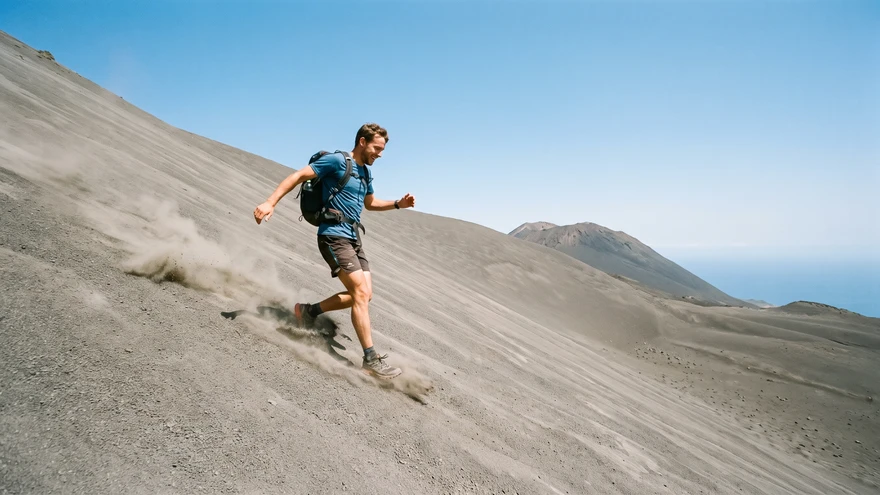
The standard descent route runs west through expansive fields of fine volcanic ash. What takes hours going up takes less than 30 minutes coming down. The ash is deep and soft, which means you are sliding in controlled strides rather than walking step by step down a mountain.
Before you begin the descent, tie your pants tightly around the tops of your boots. Fine volcanic ash works its way into any gap, and a boot full of sharp particles makes the rest of your day genuinely uncomfortable. Your guide demonstrates the technique before you start - the adjustment takes 30 seconds and is worth doing carefully.
The sensation of running down the ash fields is genuinely exhilarating. Your legs sink several centimeters with each stride, and the slope carries you forward faster than feels entirely controlled. Trust the process - the ash absorbs impact well, and your guide has done this descent dozens of times before.
Day Hike vs. Overnight Stay in the Caldera
A day hike from Chã das Caldeiras is the standard approach for most visitors. You start before dawn, summit by morning, descend by midday, and leave the caldera in the afternoon. This schedule works well but compresses the experience significantly.
Staying overnight inside the caldera changes the trip entirely. The Chã das Caldeiras community has a small guesthouse and camping options that sit within the lava-ringed landscape. The ground stays naturally warm from geothermal activity, which is an unusual and striking detail to experience firsthand. You still need a cold-weather sleeping bag because the mountain air at elevation drops sharply after sunset.

The overnight fee adds €10 to your total costs, and accommodation in the community remains inexpensive by Cabo Verde standards. A detailed look at realistic travel expenses across Cabo Verde puts the full Fogo trip in context alongside ferry costs and daily spending. Staying two nights gives you flexibility to time your climb around weather conditions.
Essential Gear for the Volcanic Terrain
Footwear determines the quality of your climb more than any other single item. Sturdy hiking boots with a deep sole profile grip the volcanic rock and provide ankle support on unstable scree. Trail runners are not adequate - the terrain is sharp enough to damage thin-soled shoes and ankle support is critical on loose ground. Many hikers underestimate how abrasive volcanic rock is and regret the decision to bring lighter footwear.
Beyond boots, the non-negotiable items are a headlamp with fresh batteries, a windproof jacket, sunscreen, a hat, and at least 2 liters of water. There is no water source on the mountain. By the time you feel thirsty at altitude, you are already mildly dehydrated.
Pack light but stay warm. Every additional kilogram matters across 1100 meters of vertical gain, but the summit temperature can sit 10 to 15 degrees below the caldera floor. A thin but effective insulating layer over a moisture-wicking base layer keeps you comfortable through the full range of the climb without overloading your pack.
When to Plan Your Climb
The best months for climbing Pico do Fogo fall between November and June, when cloud cover is lower and summit views are most reliable. The rainy season from July to October brings heavier cloud that can completely obscure the crater rim. A full overview of Cabo Verde's weather patterns and best travel windows helps you slot the Fogo climb into a broader itinerary.
Go during weekdays if your schedule allows. Weekend mornings bring larger groups to the mountain, which slows the ascent on narrow sections and adds crowds to the Piquinho scramble. An early start on a quiet weekday morning, with a guide booked the night before, is the closest thing to an ideal Pico do Fogo experience.