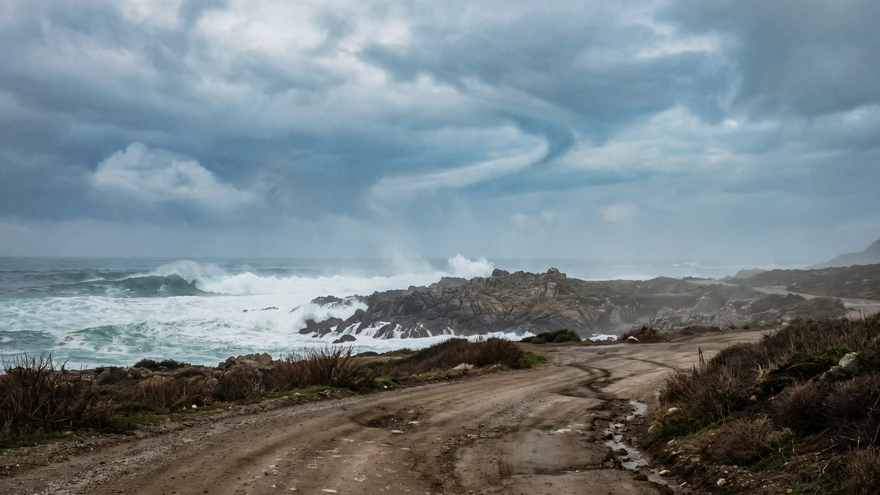
Attempting the trek up Monte Leão without tracking the shifting Atlantic crosswinds can leave you disoriented on a ridge with loose, crumbling rock underfoot. This rugged stretch of Sal's western coastline demands strict self-reliance, since no trail markers or safety barriers exist between the volcanic sands of Praia Preta and the jagged summit overlooking Murdeira Bay. Approach this cluster with the right preparation, and a hazardous scramble turns into one of Sal's most rewarding hikes.
- Location: West coast of Sal, Cape Verde, about 10 km north of Santa Maria
- Praia Preta distance: Around 2 km inland from the Cabocan area
- Hike distance and duration: About 10 km round trip from Murdeira village, 2.5 to 3 hours at a steady pace
- Trail difficulty: Demanding and unmarked, with loose volcanic scree and steep descents
- Essential gear: Sturdy trail shoes, offline GPS maps, high-SPF sunscreen, a windbreaker
- Marine safety: Dense sea urchin colonies and strong tidal currents near the rock formations
The West Coast Cluster: Murdeira Bay, Praia Preta, and Monte Leão
Sal is often pictured as a flat, uniform desert bordered by white-sand resorts. The western coastline breaks that image completely, offering a raw volcanic landscape shaped by relentless ocean swells. Here, Murdeira Bay serves as a calm marine sanctuary, while the imposing silhouette of Monte Leão rises sharply from the water like a sleeping lion.
Just a short distance away, the dark shoreline of Praia Preta introduces a stark visual contrast to the island's typical golden beaches, the kind covered in Sal's most popular beaches. This cluster operates independently from the main tourist hubs. You will not find commercial amenities, paved boardwalks, or tour operators waiting at the site. The entire zone appeals directly to independent travelers who prefer unmanaged natural environments.
How to Get to Murdeira Bay and Monte Leão
Driving Off-Road from Santa Maria or Espargos
Reaching the trailhead or the black sands requires navigating unpaved coastal tracks. If you are driving a rental 4x4 or a sturdy scooter from Santa Maria, head north on the main highway (CV-01) toward Espargos. After roughly 15 minutes, take the signposted exit left toward the coastal settlement of Murdeira.
The smooth asphalt ends immediately at the village edge. From this point, turn left and follow the dirt tracks running parallel to the shoreline toward the base of the mountain. Stones often mark these paths, but deep sand pockets and sharp basalt rocks demand slow, deliberate driving. Booking a Rent a 4x4 ahead of arrival is worth doing here, since standard rental cars struggle once the asphalt runs out.
Taking an Aluguer Minibus or Taxi Options
Public transport offers an affordable alternative for travelers without a private vehicle. Local minibuses, known locally as aluguers, run constantly between Santa Maria and Espargos for around €1 per passenger.
You simply ask the driver to drop you off at the Murdeira junction on the main highway. The walk from the highway drop-off point to the actual coast takes about 15 to 20 minutes along exposed dirt roads. If you prefer a direct route, private taxis from Santa Maria cost €15 to €20 one way. Negotiate the return fare and pick-up time in advance, since empty taxis do not patrol this remote coastal sector.
Exploring Praia Preta (Black Beach) Near Cabocan
Volcanic Black Sand and Coastal Formations
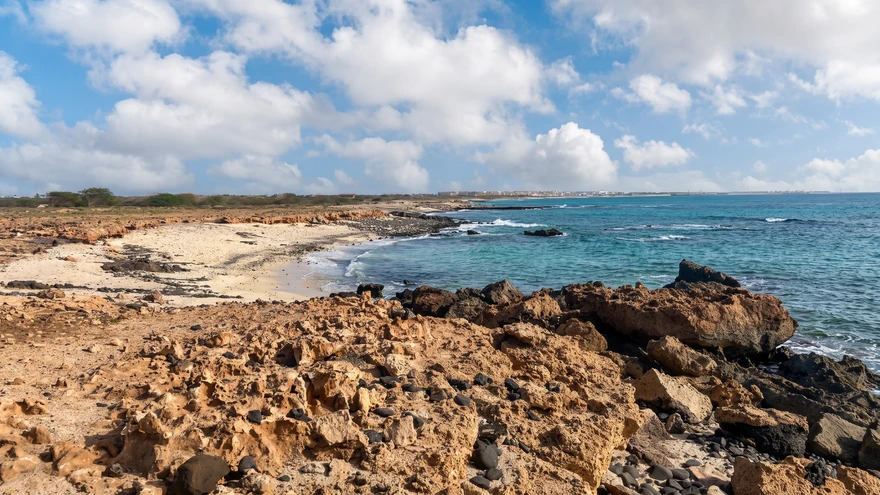
Praia Preta feels entirely disconnected from the rest of Sal. Situated near the Cabocan area, this beach features dark, heavy volcanic sand mixed with pulverized basalt particles. The dark shoreline absorbs the equatorial sun quickly, making the ground hot by midday.
The surrounding cliffs display sharp, layered rock carved out by centuries of heavy Atlantic erosion. Walking along this beach feels solitary and primitive. The dark sand contrasts sharply against the deep turquoise ocean, providing photography opportunities without the interference of crowds.
Swimming Conditions and Tidal Current Realities
Entering the water at Praia Preta requires real caution. The beach lacks protective reef barriers, so open-ocean swells crash directly onto the shoreline with heavy force. Undertows and shifting tidal currents pose a constant risk, even for confident swimmers.
The seafloor drops off sharply just a few meters from the edge, and local rescue services do not monitor this beach. Footwear remains necessary even at the water's edge, since hidden volcanic rocks sit just beneath the sand line.
Hiking Monte Leão (Lion Mountain): The Complete Trail Breakdown
Route Distance, Duration, and Elevation Check
Climbing Sal's iconic landmark involves a 10 km round trip if you start the trek from the center of Murdeira village. Most hikers need 2.5 to 3 hours, depending on their pace and the length of their breaks.
The route breaks down into three rough stages:
- Murdeira village to the base of the gorge: around 3.5 km of flat dirt track
- Base of the gorge to the rocky upper scramble: roughly 1.5 km of steep ascent
- Rocky upper scramble to the summit ridge: a short push through a severe crosswind zone
The elevation gain looks modest on paper, roughly 120 meters, yet the terrain amplifies the physical effort involved. The trail has zero shade structures, exposing you to direct sunlight for the entire hike. If a bigger volcanic climb elsewhere in the archipelago interests you, climbing Fogo's active volcano is a useful benchmark for comparison, though the logistics there are considerably more involved.
Navigating the Unmarked Track from Murdeira
The complete absence of trail signage makes navigation the primary challenge on this route. The path begins informally along the coast, leading toward an internal groove or gorge at the base of the mountain. As you begin the actual ascent, the single track splits into numerous faint footprints left by previous hikers.
Loose scree and shifting rocks cover the upper sections, making the footing unstable. Choosing the wrong gully can lead to dead ends on exposed, crumbling ledges. Downloading an offline topographic map before leaving your accommodation prevents dangerous navigation errors.
Summit Panorama and Wind Hazards
Reaching the crest rewards you with an uninterrupted view stretching across the central plains of Sal all the way to the southern resorts. The "sleeping lion" shape becomes clear from this elevated perspective. The summit, however, is known for violent, disorienting gusts of wind that sweep across the ridge without warning.
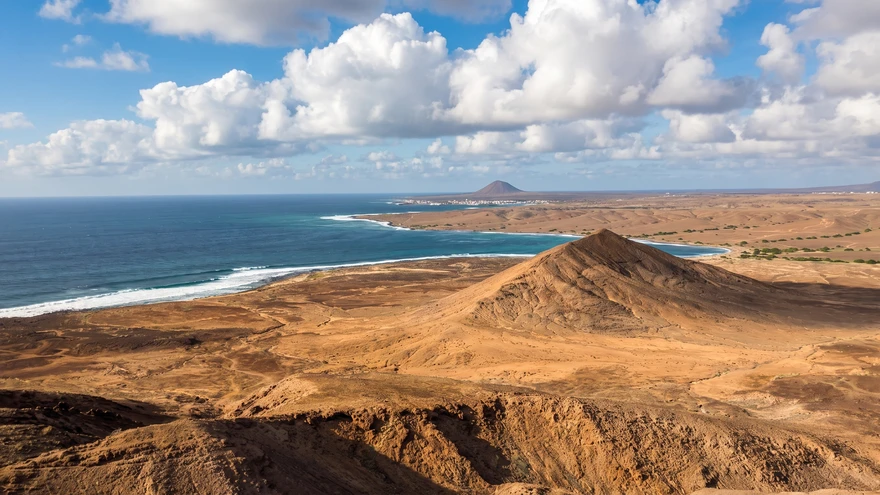
These winds can compromise your balance on narrow paths. Staying well clear of the sheer cliff edges during these gusts is critical for safety. The descent demands even more focus than the climb, since loose volcanic gravel slides easily underfoot, making trekking poles or deeply grooved trail shoes a real advantage.
Snorkeling and Marine Life in Murdeira Bay
Shore Access Safety vs. Catamaran Boat Excursions
Murdeira Bay functions as a protected marine reserve, acting as a nursery for various fish species and, seasonally, nesting sea turtles, a pattern that lines up with the wider turtle nesting calendar across Cabo Verde. You can experience this underwater habitat either through a direct shore entry or through organized catamaran excursions arriving from the port of Palmeira.
Catamarans typically anchor inside the deeper, calmer parts of the bay, allowing for easy, supervised snorkeling over sandy beds further from shore. Accessing the water directly from the shore presents a different challenge. You must navigate a rocky shelf where incoming waves can push you against sharp volcanic ledges.
Sea Urchins and Sharp Rock Warnings
The shallow rock pools lining the inner bay hold a dense population of long-spined sea urchins. These animals wedge themselves into almost every crevice along the shoreline. Stepping on one without heavy-soled water shoes results in a painful injury that can easily derail a trip.
| Feature | Shoreline Access | Catamaran Excursion |
|---|---|---|
| Entry difficulty | High, sharp rock shelf | Low, boat deck stairs |
| Urchin hazard | Critical, dense colonies | Minimal, deep water |
| Marine visibility | Variable, tidal wash | High, protected anchorage |
| Required gear | Hard-soled water shoes | Standard fins and mask |
While Murdeira's reef is a narrow band rather than an extensive system, the surrounding volcanic rock formations still support a diverse range of marine life. Snorkelers regularly encounter schools of parrotfish, sergeant majors, small moray eels, and, less often, Atlantic nurse sharks resting in the underwater volcanic caves. If close shark encounters interest you more than a passive swim, Sal's dedicated lemon shark spot delivers a far more reliable sighting than Murdeira's occasional nurse sharks. Focusing your exploration during low tide gives the safest and most stable conditions for shore-based viewing.