If you are planning your itinerary for Praia, the historic capital of Cape Verde on Santiago Island, you will quickly notice that the city's cultural landscape is relatively compact. Among the handful of formal cultural stops is the Museu Etnográfico da Praia (The Ethnographic Museum of Praia), housed in a restored 19th-century colonial townhouse on the Plateau.
Visitor experiences here are deeply divided: some travelers call it an intimate highlight of their cultural immersion, while others leave disappointed by its size and dated research. Before you adjust your itinerary, here is an honest, boots-on-the-ground review of what to expect, how to actually find the entrance, and whether it is truly worth your time and 200 CVE (~2 EUR).
- Entry Fee: 200 CVE (~2 EUR) for foreign visitors
- Payment: Cash only, local Escudos preferred over Euros to avoid poor exchange rates
- Time Needed: 20 to 45 minutes
- Languages: Portuguese, English, and French exhibition panels
- Best For: A quick cultural stop, rainy days, or families traveling with kids
What to Expect Inside the Museum
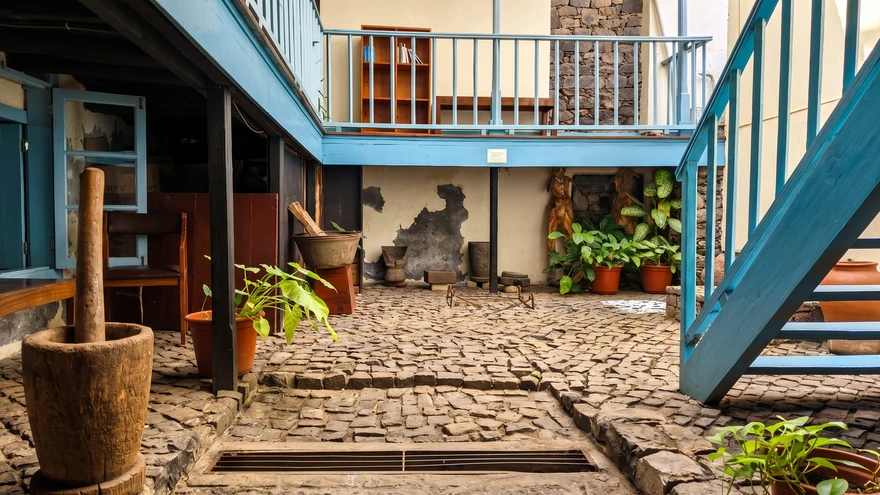
Opened in November 1997, the museum operates on two main levels plus a small basement section, arranged within a historic neoclassical manor house that once occupied a significantly larger portion of the town block. The building's architecture, with its classic stone walls and small courtyard feel, is arguably as much of an attraction as the exhibits inside.
Ground Floor: Creole Identity and Language
As you enter, the ground floor immediately addresses the core of Cape Verdean culture: the Creole language (Kriolu). This section uses a mix of informational panels and a few video screens to explain how the language evolved as a symbol of identity, resistance, and unity across the archipelago.
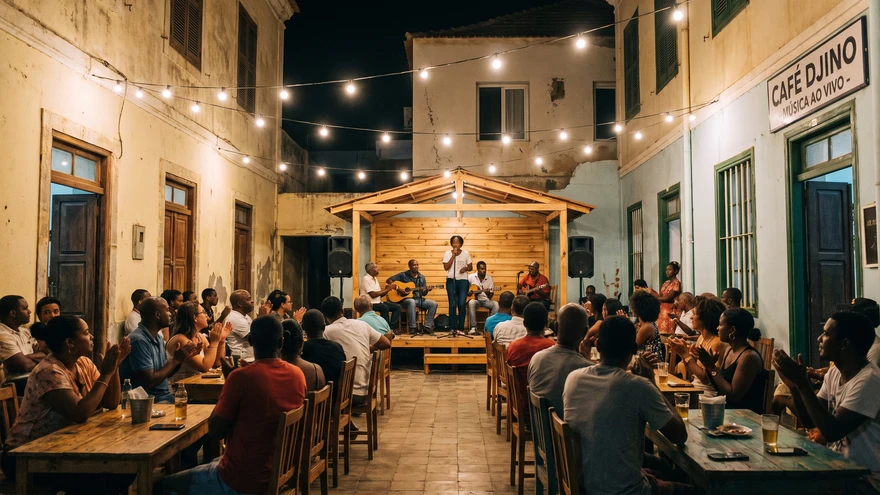
Alongside the linguistic history, you will find displays dedicated to local musical traditions and instruments. It provides a foundational understanding of how music and oral history shape the daily lives of the population.
The Basement: Agriculture and Domestic Life
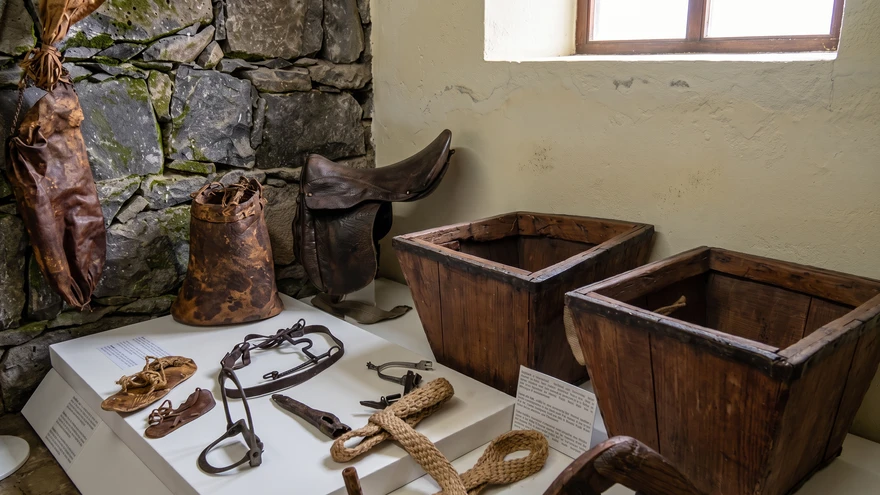
Stepping down into the basement area brings you closer to the tangible, rural history of Santiago and the surrounding islands, including artifacts sourced from Santo Antão, Boavista, and Brava. This area focuses heavily on traditional skills, domestic tools, and survival. The collection includes:
- Traditional pottery, woven basketry, and hand-loomed textiles
- Historic tools used for milling wheat, processing cheese, and churning butter
- Gourds, agricultural implements, and items related to historical cattle breeding and Kankan tobacco consumption
While the everyday items, ranging from antique irons to old sewing machines, evoke a nostalgic look at rural island life, some displays suffer from a lack of deep context. You may notice several labels marked simply as "under research," indicating that a comprehensive historical cataloging is still an ongoing process.
Is the Museu Etnográfico da Praia Worth It?
The short answer is yes, but only if you set your expectations correctly. If you go in expecting a massive, world-class national museum with interactive high-tech displays, you will likely leave feeling underwhelmed. The museum is incredibly compact. Some visitors finish the entire layout in 15 to 20 minutes, and the curation can occasionally feel a bit static, with a few artifacts gathering dust in a way that shows the institution operates on a very limited budget.
However, the museum is absolutely worth a stop if you view it as a 30-minute cultural add-on rather than a primary destination. For a minimal entry fee of 200 CVE (~2 EUR), it offers a quick, accessible window into local heritage, and it barely dents a Cape Verde travel budget. It is particularly great for families traveling with children, since the layout is manageable and not overwhelming for younger minds. Because Praia has very few indoor museums, it also serves as an excellent rainy-day activity or a quiet break from the midday heat of the Plateau.
If you would rather see it as part of a structured itinerary, Guided Praia Plateau walking tours typically include a stop here alongside Camões Square and the old town streets.
How to Find the Museum (Avoiding the Map Confusion)
The biggest challenge of visiting the Museu Etnográfico da Praia has nothing to do with its small size. The real challenge is finding the front door.
The museum is technically located at 45 Rua 5 de Julho (or near Avenue Julio/Av Amílcar Cabral depending on which side of the block you approach), nestled in a shaded alleyway near the vibrant Camões Square.
The Google Maps Issue
Multiple travelers have flagged that the digital pin on Google Maps can be highly confusing or slightly misplaced, showing the building floating between parallel pedestrian streets. You might find yourself walking around the block for half an hour without seeing a single clear sign.
Locals' Tip
Do not rely solely on your GPS. Look for the distinctive 19th-century colonial building with stone elements near Camões Square and the famous Sucupira Market area. If you get turned around, ask a local vendor for the Museu Etnográfico. The community is incredibly welcoming and will gladly point you down the right alleyway.
Best Time to Visit and Practical Tips
To ensure your visit goes smoothly, keep these practical realities in mind.
Watch the Clock: Inconsistent Hours
While official hours are posted, the museum has a well-known reputation for closing early without warning. Visitors have reported turning up an hour before the scheduled closing time only to find staff locking up for the afternoon. It is best to plan your visit for the late morning or early afternoon to avoid being turned away.
Get Cash First
There is no clear digital payment infrastructure at the desk. Stop by an ATM on the pedestrian street to secure local Escudos (CVE) before you approach the entrance.
Combine It with a Plateau Walking Tour
Because the entire visit takes less than an hour, combine the museum with a broader stroll through the historic Plateau district. Pair it with a visit to the Sucupira Market and nearby cafes, local viewpoints, and, if you are staying multiple nights, look into where to stay in Praia options right on the Plateau itself. If you would rather lock in lodging before you land, Check Praia hotel availability for options within walking distance of the museum.