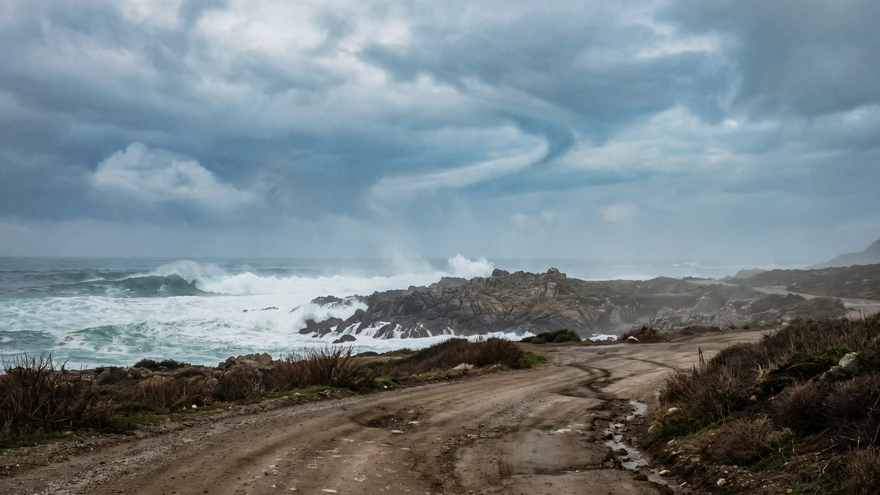
Driving a standard rental car down the unmarked dirt tracks toward Boa Vista's northern coast is the fastest way to get stuck in deep sand. Reaching the rusting remains of the Cabo Santa Maria requires a specialized off-road vehicle or a guided quad bike tour, since standard navigation apps fail to flag how rugged and treacherous these paths really are.
- Location: Praia da Atalanta, north coast (approximately 6 km from Sal Rei)
- Access methods: 4x4 vehicle, quad bike tour, or a 2-hour hike
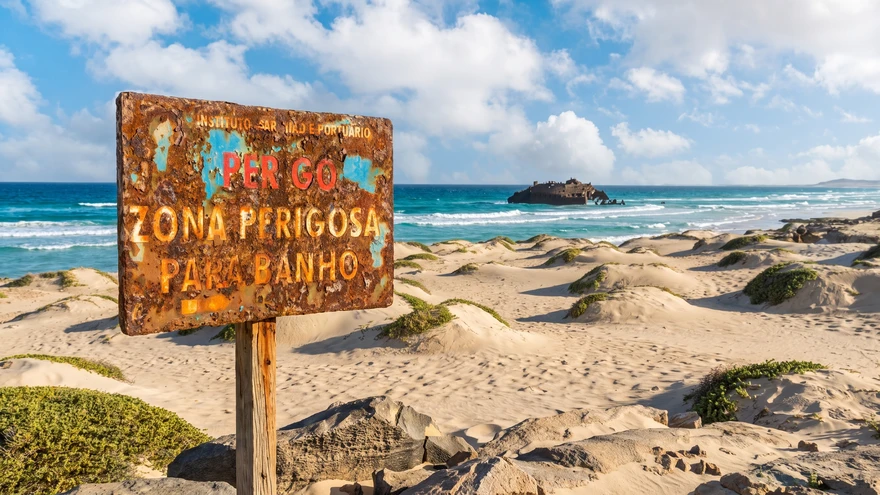
- Swimming: Strictly prohibited (dangerous undertows and sharp underwater debris)
- Facilities: None (no shade, no food, no toilets)
- Best for: Off-road adventure, photography, sea turtle spotting (seasonal)
The Reality of the Cabo Santa Maria Shipwreck
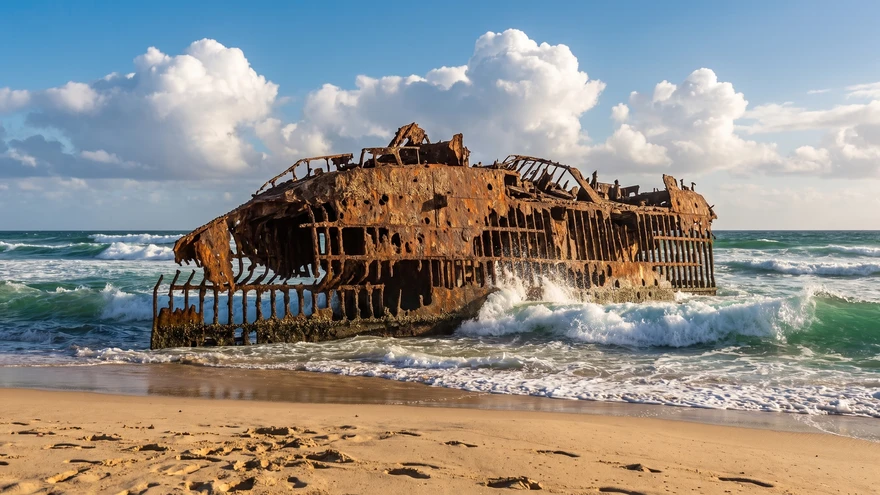
The shipwreck is not the massive, towering structure it once was. Grounded on September 1, 1968, this Spanish cargo ship was carrying food, machinery, and gifts destined for South America when it became permanently trapped on the golden sands of Boa Vista. Among the lost cargo were four church bells meant for the new cathedral in Brasilia, which sank into deep water and were never recovered, forcing the cathedral to open without them. Decades of relentless Atlantic waves and salty winds have heavily corroded its iron skeleton.
Today, only a fraction of the original 130-meter hull remains visible above the water. The wreck shrinks noticeably every few years as the ocean slowly reclaims the metal. Visiting sooner rather than later is essential if you want to see the remaining bulkhead before it disappears entirely.
How to Get to Praia da Atalanta (Without Getting Stuck)
The route from Sal Rei is notoriously rough, dusty, and poorly signposted. Relying purely on standard GPS navigation often leads to dead ends or impassable dunes. The trick is to look out for small rocks marked with painted red arrows pointing toward the beach once you exit the main paved road.
Quad Bike Tours vs. 4x4 Rentals
Renting a standard SUV is a risky move here. You need a proper 4x4, ideally something like a Toyota Land Cruiser or a Suzuki Jimny, along with the knowledge of how to drive in deep sand. Getting stuck without differential lockers, a winch, or an air pump to deflate your tires ruins the day entirely.
Booking a guided quad bike tour is the most reliable method, and the local guides handle the navigation effortlessly over the bone-rattling terrain. Most operators run Guided quad tours to the wreck for around €70-€80 per bike in 2026, which typically includes hotel pickup and about two hours on the sand. The main downside is the strict time limit, since group stops usually last only 25 to 30 minutes. If you want the freedom to stay longer and explore the vast coastline, hiring a 4x4 is worth the investment, provided you have the off-road driving skills to match.
Walking from Sal Rei
Hiking is an option for the highly adventurous, but do not underestimate the desert climate. The trek takes about two hours each way over uneven terrain and impressive sand dunes.
There is no natural shade along the route, so setting out at midday is dangerous. Start your hike early in the morning, wear proper footwear, and carry at least two liters of water per person to handle the intense heat.
Can You Swim at Praia da Atalanta?
The turquoise water crashing against the white sand looks inviting, but swimming here is highly dangerous. Praia da Atalanta is notorious for unpredictable, powerful undertows and massive breaking waves that can easily knock you off your feet.
Furthermore, the ocean floor near the wreck is littered with sharp, rusted metal debris hidden just beneath the surface. Stick to walking along the shoreline and admiring the sheer force of the Atlantic from a safe distance. If you want a swim-friendly stretch of sand on the same island, some of Boa Vista's other beaches further south are a far better bet.
If sunken history is what draws you here, divers can also explore several wreck dive sites scattered around Boa Vista's coastline, where visibility and conditions are far more forgiving than at Atalanta.
Best Time to Visit for Photography
Midday sunlight creates harsh shadows on the rusted metal and bleaches out the vibrant colors of the ocean. Late afternoon is the optimal time for photography, since the sun sits lower on the horizon and casts a warm, golden-red glow across the decaying iron hull.
Arriving later in the day also means avoiding the fleet of quad bike tours that typically crowd the beach during the morning. You get the vast, desolate landscape largely to yourself, allowing for clean, uninterrupted shots of the wreck against the crashing waves.
The Plastic Problem and Sea Turtles
The visual contrast at Cabo Santa Maria is extreme. On one hand, you have a striking historical wreck against a backdrop of golden dunes. On the other, the shoreline suffers heavily from ocean currents bringing in debris from Senegal and passing fishing vessels, so you will encounter plastic bottles, oil cans, and discarded fishing nets washed up on the sand.
Despite the litter, this stretch of coastline remains a vital ecological zone. Between July and October, the beach transforms into a crucial nesting ground for loggerhead sea turtles, which lines up with the turtle nesting season tracked across the archipelago. If you visit during these months, walk carefully and stick to the guided paths to avoid disturbing the fragile nesting sites hidden in the sand.