For scuba divers exploring the Cabo Verde archipelago, the wreck of the MV Pentalina B offers a raw, high-energy dive that intentionally sunk artificial reefs cannot match. This former inter-island ferry ran aground during a storm on June 5, 2014, while carrying 85 passengers toward Praia, and everyone made it off safely with help from villagers on shore.
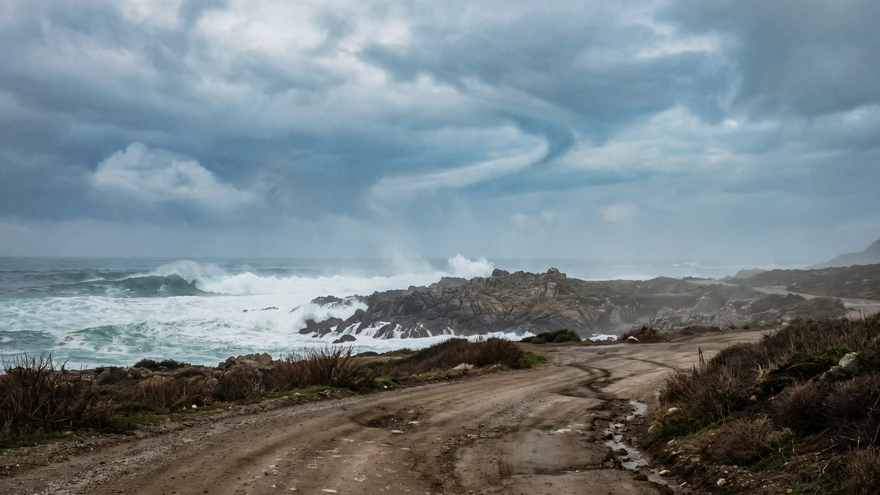
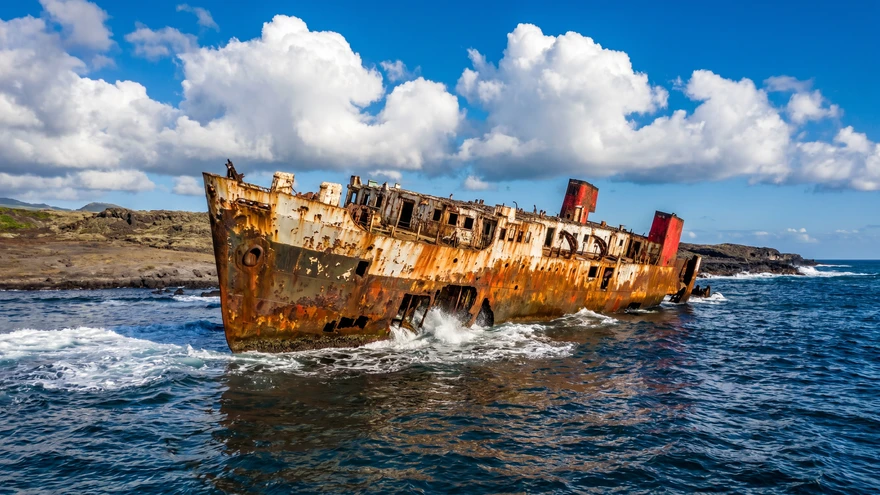
Today the hull rests in the surf zone near Moia Moia, on the rugged eastern coast of Santiago Island, broken open by more than a decade of Atlantic swell.
This guide gives you an objective, safety-first look at the site: dive profile, marine life, access options, and the structural hazards you need to plan around.
| Parameter | Specification |
|---|---|
| Vessel type | Former Ro-Ro ferry (74 m long, 13 m beam) |
| Location | Moia Moia Bay, east coast of Santiago Island (15°1'26"N, 23°26'21.5"W) |
| Depth range | Surface-breaching to 15 meters at the keel |
| Visibility | 5 to 15 meters, depending on Atlantic swell |
| Access mode | Shore entry (advanced) or Zodiac boat drop |
| Required level | Open Water Diver, with strong surge management skills |
| Primary hazards | Corroded hull, collapsing metal, sharp debris, intense surge |
Dive Profile and Underwater Topography
The Pentalina B (originally launched in Scotland in 1970 as the MV Iona) is a massive 74-meter steel structure that dominates the shallow coastal waters of Moia Moia. Because the vessel ran aground close to the shoreline, it does not sit upright on a deep sandy bottom. Instead, it rests on its side, partially exposed to the atmosphere, with the deepest sections of the keel grounding out at approximately 12 to 15 meters depending on the tide.
The dive profile is characterized by excellent ambient light due to the shallow depth, but this is counterbalanced by significant kinetic energy. The underwater topography consists of a shifting sandy seabed interspersed with volcanic rock features, onto which the massive steel hull has settled.
As you navigate the seaward side of the hull, you will notice how the relentless Atlantic waves have broken open the superstructure. The midship and cargo areas create large shadows and swim-bys, but the motion of the water inside the shattered hull requires constant buoyancy adjustments to prevent being thrown against the remaining bulkheads.
Marine Colonization and Local Biodiversity
Despite sinking only in 2014 and sitting in a turbulent location, the Pentalina B has rapidly transformed into a thriving artificial reef. The high-energy surf zone brings nutrient-rich oxygenated water across the site, fueling a dense ecosystem.
Sheltered micro-habitats: The lower portions of the hull, tucked away from the direct smash of the waves, are filled with nooks, crannies, and exposed pipework. These dark recesses have become prime real estate for large Mediterranean moray eels, chain morays, and robust locust lobsters. Arrow crabs and nudibranchs cling to the sheltered steel plates.
The whitewater zone: In the shallower upper sections of the wreck, where the water churns into foam, large schools of sergeant majors, damselfish, and sea bream feed constantly.
Pelagic visitors: Because the wreck sits exposed on the eastern coast, it frequently attracts larger predatory species. Keep your eyes on the blue water away from the hull and you can regularly spot amberjacks, schools of bluefin trevally, and occasional nurse sharks patrolling the perimeter of the bay, a smaller-scale echo of the guaranteed encounters divers get wading with lemon sharks at Shark Bay.
Access Mechanics: Shore Entry vs. Boat Approach
Reaching the Pentalina B requires careful logistical planning and a strict evaluation of real-time sea conditions.
Shore Entry (Advanced / High Risk)
Accessing the wreck from the beach at Moia Moia is physically demanding. Divers must gear up and navigate a rocky shoreline frequently pounded by shorebreaks, then manage heavy undertows and slippery volcanic rocks on the walk out to the vessel. This method should only be attempted during periods of minimal swell, at slack high tide, and after checking Cabo Verde's seasonal wind and swell patterns in advance. A local dive master who knows the rip currents of Moia Moia Bay should always lead the entry.
Boat Approach (Recommended)
The safest and most controlled way to dive the Pentalina B is via a rigid-hull inflatable boat (Zodiac) launched from a regional dive center. Most visitors simply Book a guided wreck diving trip out of Praia rather than arranging a private charter and captain on their own. The boat can drop divers directly on the more stable, seaward side of the wreck, though captains must exercise extreme caution: mooring or anchoring near the vessel is difficult because of shallow rocky shoals and the risk of swell pushing the boat toward the exposed ironwork.
Critical Safety Matrix: Hull Degradation and Penetration Warnings
The Pentalina B is an actively deteriorating wreck. More than a decade of exposure to heavy Atlantic saltwater, intense humidity, and continuous wave action has severely compromised the structural integrity of the vessel.
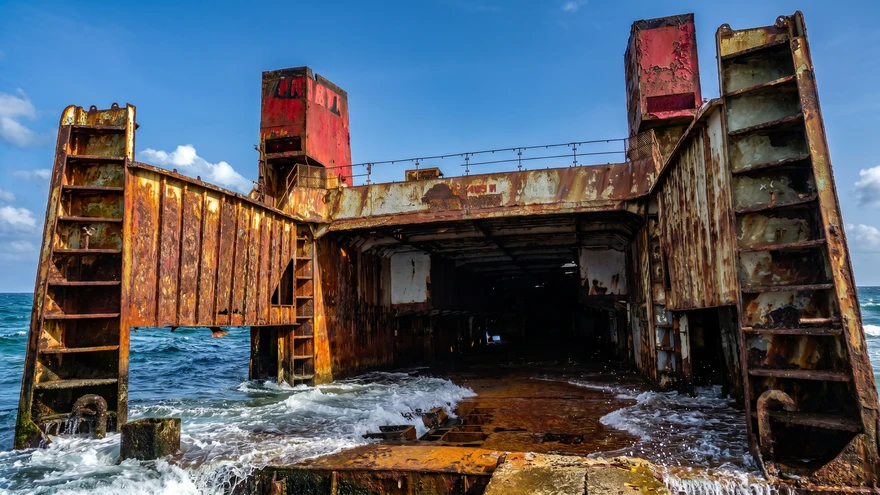
Structural collapse: Major sections of the upper decks and bulkheads are heavily corroded and unstable. Debris, overhead beams, and loose iron plates pose a constant threat of falling or shifting mid-dive, especially when triggered by a heavy surge.
Overhead hazards and penetration: Internal penetration of the Pentalina B is strongly discouraged. The interior pathways are choked with jagged, rusted metal edges, hanging wiring, and tight silt-heavy spaces. Because the wreck is shallow, the surge inside behaves like a washing machine, capable of tossing a diver into sharp structures or destroying visibility within seconds.
Thermal and ingress protection: Cabo Verdean waters run a comfortable 24 to 26°C year-round, but a full 5mm wetsuit and thick gloves are still recommended for this dive, solely to protect against accidental contact with razor-sharp rusted steel.
Comparative Analysis: Pentalina B vs. Other Cabo Verde Wrecks
To understand where the Pentalina B fits into your Cabo Verde diving itinerary, it helps to compare it with the more established wreck sites around Sal and Boa Vista, which anchor most of Cabo Verde's wreck diving scene.
| Sal / Boa Vista wrecks | Santiago: Pentalina B |
|---|---|
| Deeper, roughly 12 to 28 meters | Shallow, 0 to 15 meters |
| Intentionally sunk and cleaned for diving | True maritime accident |
| Intact structures, calm waters | Actively collapsing, high surge |
| Ideal for a classic Wreck Diver Specialty | Demands advanced environmental awareness |
The Sal wrecks (Boris, Santo Antão): The wrecks around Sal typically rest between 12 and 28 meters, sit on calm sandy bottoms, and were intentionally prepared for recreational diving. They offer predictable, stable platforms well suited to completing a Wreck Diver Specialty course.
The Pentalina B reality: The Pentalina B offers the opposite experience: a raw, shallow, high-adrenaline, shore-hugging wreck. It lacks the serene stability of Sal's underwater parks but replaces it with the atmosphere of a genuine maritime accident. It demands far better surge management and spatial awareness, making it a rewarding dive for experienced scuba divers looking for an untamed site on Santiago Island.