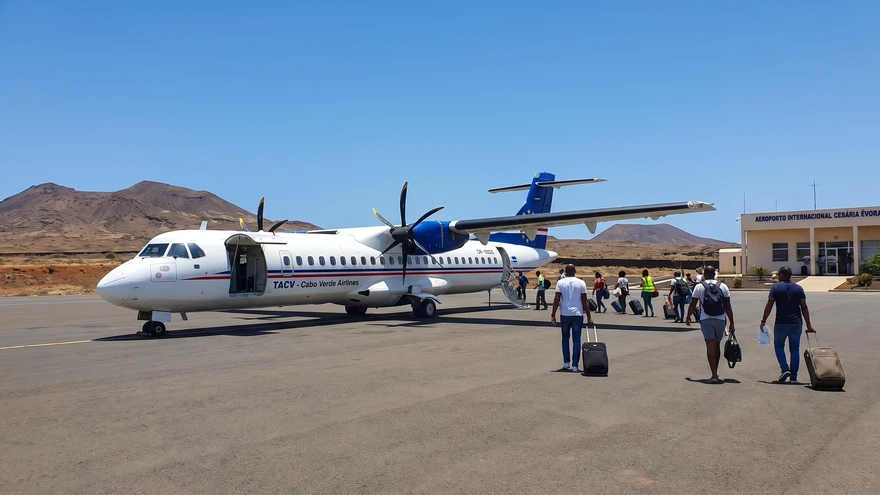
Island hopping in Cape Verde looks seamless on paper, but sudden flight cancellations and fully booked ferries regularly disrupt tight holiday schedules. Relying on a rigid, minute-by-minute itinerary without adding buffer days almost guarantees missed connections and unnecessary stress.
| Quick Transport Info | Details |
|---|---|
| Main Domestic Airline | TACV Cabo Verde Airlines |
| Key Ferry Operators | CV Interilhas, ARPIC |
| Average Flight Time | 30-50 minutes |
| São Vicente - Santo Antão Ferry | ~60 minutes |
| Baggage Allowance (Flights) | 20 kg checked, 5 kg cabin (strictly enforced) |
| Booking Window | Ferries: 1-2 weeks ahead; flights: 1-2 months ahead |
How to Travel Between Cape Verde Islands
Navigating between these ten islands requires a mix of air and sea travel. Domestic infrastructure frequently shifts, making up-to-date local knowledge crucial for a smooth trip.
Domestic Flights: TACV Cabo Verde Airlines
The domestic aviation scene in Cape Verde has seen major shifts recently. BestFly previously handled internal routes but faced severe operational challenges, leading TACV Cabo Verde Airlines to step back in to stabilize inter-island flights.
Flights remain the most efficient way to cross long distances, but the schedule changes often.
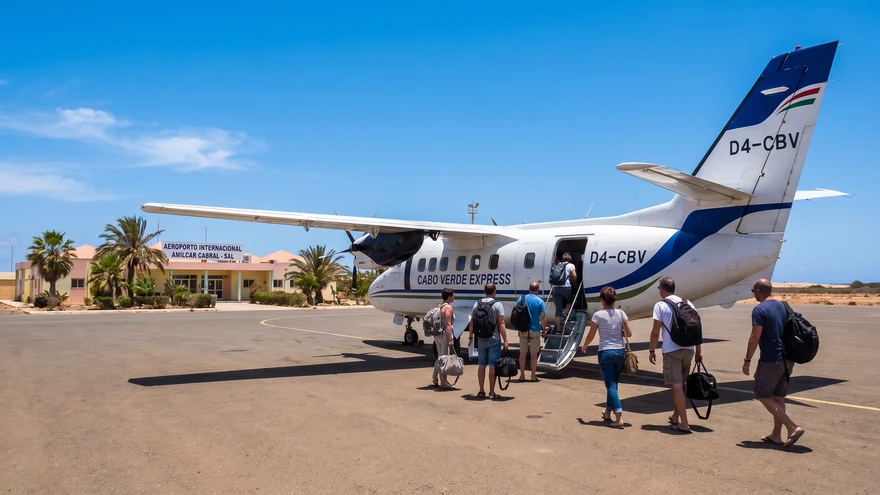
- Hub Connections: Direct flights between every island do not exist. You will frequently need to route through the capital, Praia (Santiago), or Sal to reach your next destination.
- Luggage Rules: Small turboprop planes have strict weight limits. Excess baggage fees apply, and heavy bags sometimes get bumped to the next flight if the cargo hold is full.
- Check-in: Arrive at the airport at least 90 minutes early. Counters close strictly 45 minutes before departure, and local staff show zero flexibility for latecomers.
Flight prices vary by route and season. A one-way economy ticket from Praia to São Vicente runs around ~90 EUR, while the Sal to São Vicente segment costs approximately ~91 EUR. Book directly through caboverdeairlines.com and avoid third-party aggregators, which are slow to reflect schedule changes.
Inter-Island Ferries: ARPIC and CV Interilhas Schedules
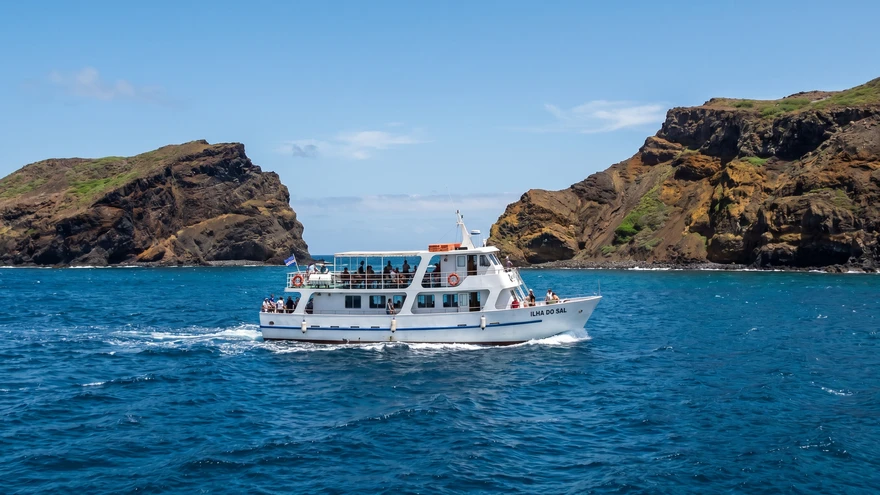
For islands without functional airports - like Santo Antão and Brava - ferries are your only option. CV Interilhas manages the broader national network, covering long distances between the Barlavento (northern) and Sotavento (southern) island groups.
The route between São Vicente (Mindelo) and Santo Antão (Porto Novo) is the most reliable in the country. ARPIC and CV Interilhas run multiple daily sailings here, with departures from Mindelo at 07:00 and 14:00. The crossing takes approximately 60 minutes and costs around ~14 EUR for foreign visitors.
Key ferry facts to know before you sail:
- Sea Conditions: The Atlantic Ocean gets incredibly rough, especially between December and March. Pack sea sickness medication even if you have a strong stomach.
- Ticket Availability: Ferries sell out fast during national holidays and major festivals like the Mindelo Carnival.
- Long Hauls: Taking a ferry from Santiago to São Vicente takes over 12 hours. Use flights for these long jumps unless you have unlimited time.
Planning Your Route: Reliable Connections
Creating a logical route prevents you from spending half your vacation waiting in transit lounges. Grouping your destinations by region minimizes travel friction.
The Northern Route (Sal, Boa Vista, São Vicente)
This is the most straightforward path for travelers. Sal and Boa Vista handle the majority of international flights, making them natural starting points.
Flights between Sal and São Vicente run regularly, allowing a quick transition from beach relaxation to cultural exploration. From São Vicente, the reliable one-hour ferry drops you right into the dramatic hiking trails of Santo Antão. You complete this entire circuit without relying on unpredictable long-haul sea routes. If you need a Rent a car on Sal or São Vicente for day trips between ferry crossings, book in advance as availability is limited on smaller islands.
The Southern Route (Santiago, Fogo, Brava)
The southern islands offer incredible volcanic landscapes and deep historical roots, but they demand high logistical patience. Praia (Santiago) acts as your main launchpad here.
You take a short flight from Praia to Fogo to see the volcano - tickets cost approximately ~85 EUR on similar short hops. Getting to Brava, however, requires taking a ferry from Fogo. The ferry from Santiago to Fogo runs on the Sotavento line and costs around ~41 EUR for a 3-4 hour crossing. The Fogo-Brava channel is notorious for rough waters - the 40-50 minute hop costs approximately ~14 EUR, and local authorities frequently cancel this service on short notice due to safety concerns.

Coping with Delays and Cancellations
Even with perfect planning, weather or technical issues will likely alter your schedule. Knowing exactly how to react saves you time and money.
What to Do When Your Flight is Cancelled
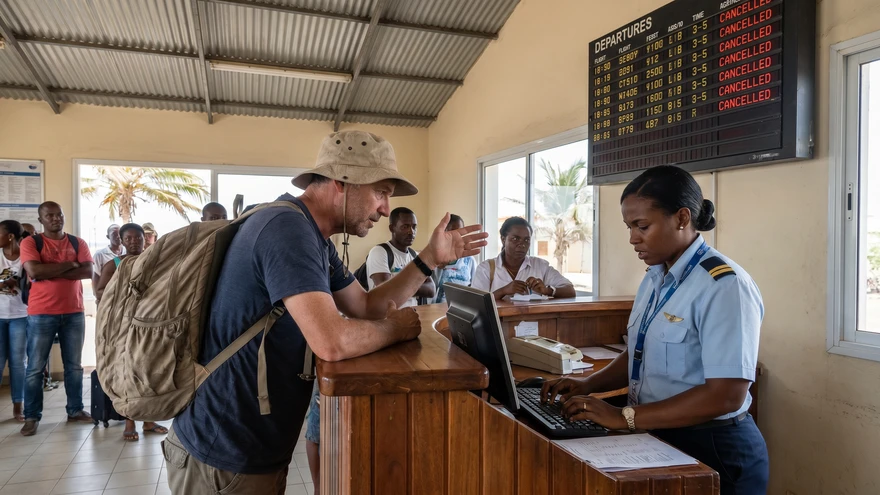
Airline communication systems in Cape Verde often lag behind real-time events. Do not sit in your hotel waiting for an email update that might never arrive.
If a cancellation happens, head directly to the airline's local office or the airport desk immediately. Rebooking is done on a first-come, first-served basis. Those who show up in person secure seats on the next available plane, while those relying on phone calls get left behind.
Booking Flexibility and Backup Plans
Never schedule an inter-island flight on the same day as your international departure. A minor morning delay on a domestic route will cause you to miss your flight back home.
Build a buffer zone into your itinerary. Always plan to arrive on your final island - usually Sal, Boa Vista, or Santiago - at least 24 to 48 hours before your international flight leaves. Securing Find accommodation with flexible cancellation policies gives you a safety net when delays force an unplanned overnight stay.
Where to Buy Tickets (and Avoid Scams)
Purchasing tickets requires using the correct channels to ensure your seat actually exists in the system. Rely completely on the official platforms: caboverdeairlines.com for flights and cvinterilhas.cv for ferries.
Avoid third-party travel aggregators for domestic Cape Verde routes. When schedules change, these third-party sites rarely update you, leaving you stranded at the port with a useless confirmation code. If the official websites glitch - which happens occasionally - visit a local physical travel agency upon arrival to print your physical tickets.
For island hopping in other Atlantic archipelagos, the logistics of How to Island Hop the Grenadines by Ferry share many of the same principles: book early, build buffer days, and always have a backup plan.