Most travelers planning a Cape Verde trip mistakenly treat the archipelago like the Canary Islands, assuming seamless daily ferry hops and perfectly timed domestic flights. The reality is that inter-island travel here is dictated by sudden sea swells, unpredictable winds, and the notorious winter bruma seca, meaning a tightly packed schedule will almost certainly collapse by day three. Building a reliable itinerary requires strategic "buffer days" and an understanding of exactly which islands share reliable transport links.
- Currency: Cape Verdean Escudo (CVE); 100 CVE is roughly €0.90 or $1.10, and ATMs frequently run empty, so carrying cash is essential.
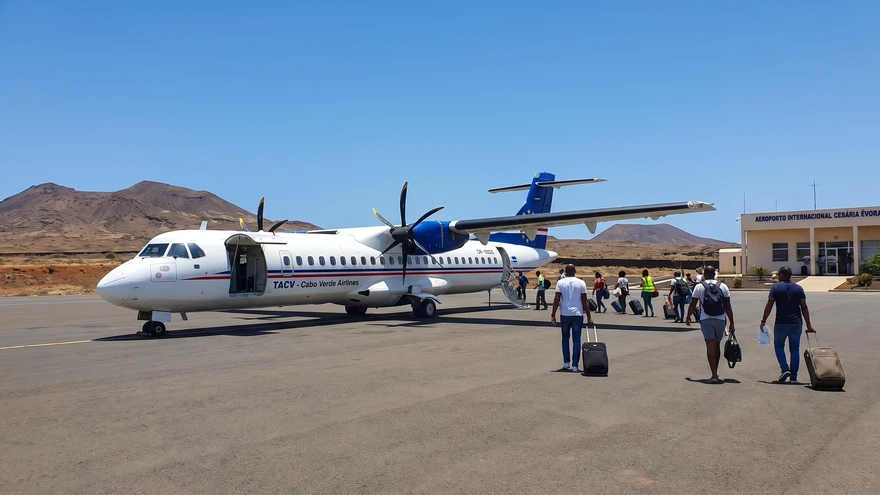
- Domestic Flights: Cabo Verde Airlines holds the monopoly, with fares averaging €60–€120 per leg.
- Ferry Network: Operated by CV Interilhas, highly reliable between São Vicente and Santo Antão (1 hour), but prone to delays elsewhere.
- Local Transit: Aluguers (shared minivans) cost around 100–500 CVE per ride and only leave once full.
- Tourist Tariffs: Dual pricing is standard, and foreigners pay higher regulated rates for inter-island transport than locals.
The Reality of Island Hopping in Cape Verde
Booking a six-island tour in two weeks looks great on paper, but the local infrastructure rarely cooperates. Understanding Cape Verde's flight and ferry logistics before you land makes the difference between a smooth trip and a week lost to cancellations. The archipelago is geographically scattered, and moving between the northern Barlavento and southern Sotavento groups always requires backtracking through the main transport hubs of Praia (Santiago) or Sal.
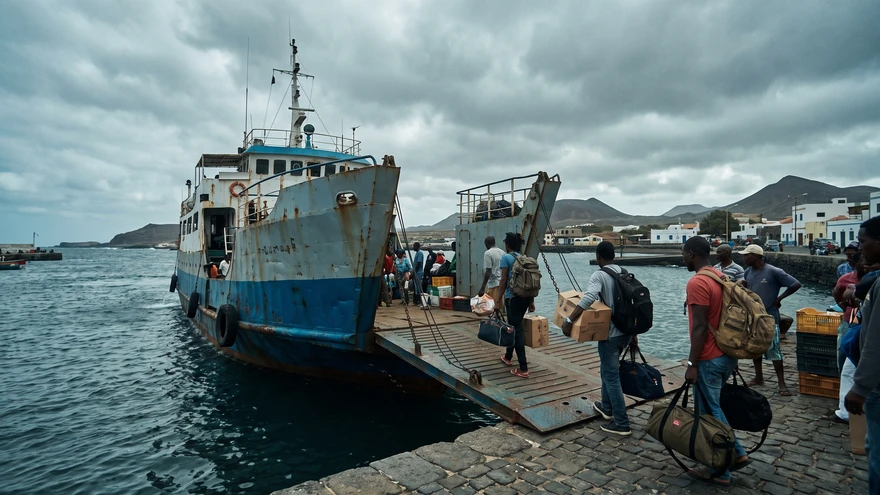
Ferries are cheap but slow. Staying on the open deck is prohibited, and rough Atlantic conditions often lead to abrupt cancellations.
Flights are your main tool for covering distance. Cabo Verde Airlines operates the domestic routes, but schedule changes are frequent. Never book a tight domestic connection on the same day as your international departure flight. A single delay can easily cost you a long-haul ticket home.
7-Day Cape Verde Itinerary: The First-Timer's Route
With only one week on the ground, minimizing transit time is your top priority. Attempting to cross the entire archipelago will leave you exhausted and entirely dependent on flawless flight schedules.
Route A: Sun, Sand, and Resorts (Sal & Boa Vista)
This is the traditional fly-and-flop path, ideal if your main goal is escaping the European winter. Both islands have international airports, meaning you can fly into one and out of the other, connecting them with a quick 20-minute domestic flight.
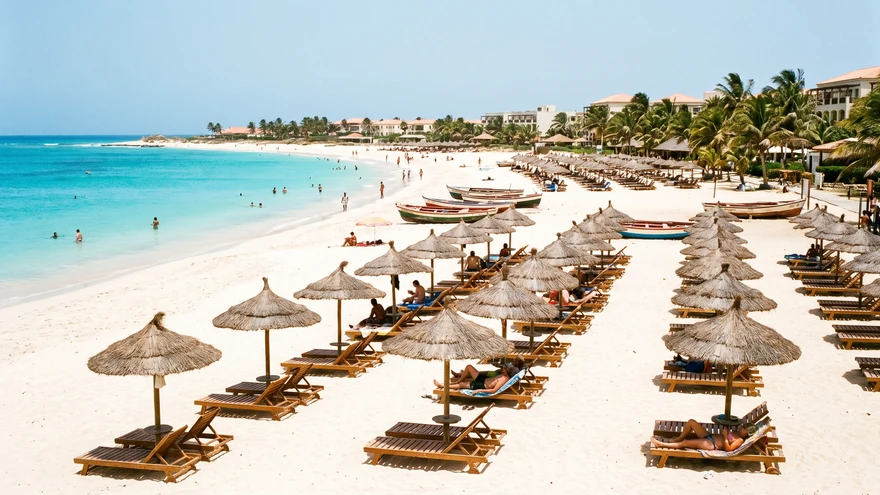
- Days 1-3 (Sal): Base yourself in Santa Maria, a long stretch of white sand, shallow turquoise waters, and consistent sunshine. Allocate a morning for the Pedra de Lume Salt Flats, hypersaline pools inside an extinct volcanic crater.
- Days 4-6 (Boa Vista): A quick flight brings you to Sal Rei, where the pace drops significantly. Renting a 4x4 for the day opens up the Viana Desert, a stretch of Saharan-style dunes and absolute quiet, while Praia de Santa Monica offers 18 kilometers of completely untouched coastline.
- Day 7: Souvenir shopping in Espargos or Sal Rei before your departure.
Route B: Culture and Volcanoes (Santiago & Fogo)
This pairing delivers colonial history and dramatic volcanic landscapes, anchored by the international flight connections in Praia.
- Days 1-3 (Santiago): Skip the administrative center of Praia and head directly to Tarrafal in the north, a protected bay with yellow sand and calm waters. The nearby Serra Malagueta mountains offer excellent half-day hikes.
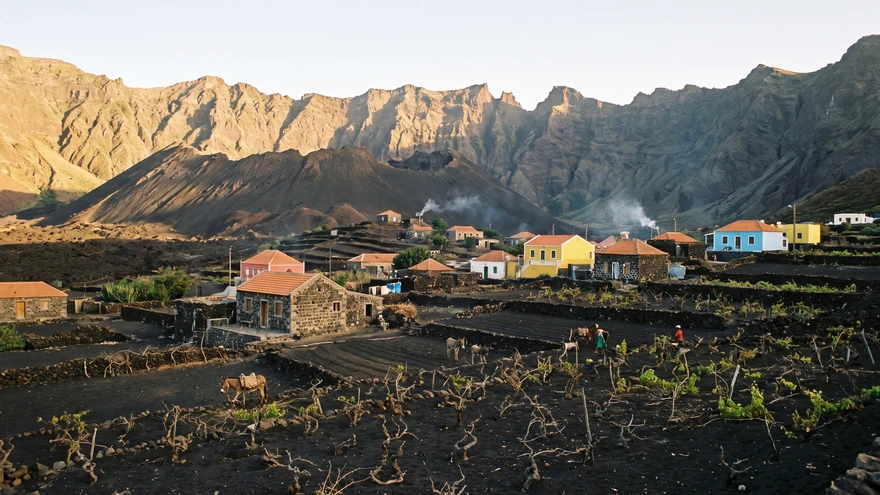
- Days 4-6 (Fogo): A 30-minute flight lands you in São Filipe. The main event is Chã das Caldeiras, a small village directly inside a volcanic crater with black ash fields and local wine produced from the volcanic soil. Book the Guided Pico do Fogo hike in advance. It demands stamina but rewards you with sweeping views of the caldera.
- Day 7: Ferry or flight back to Praia for your journey home.
10-Day Cape Verde Itinerary: The Hiker's Dream
Ten days provide enough breathing room to tackle the dramatic landscapes of the northern islands. This route requires flying into São Vicente, taking the ferry, and dealing with some of the most spectacular, rugged terrain in Macaronesia.
São Vicente to Santo Antão Logistics
Santo Antão does not have a functioning airport. Access is strictly via the 60-minute CV Interilhas ferry from Mindelo (São Vicente) to Porto Novo. This specific ferry route is the most reliable in the country, usually running twice a day on schedule.
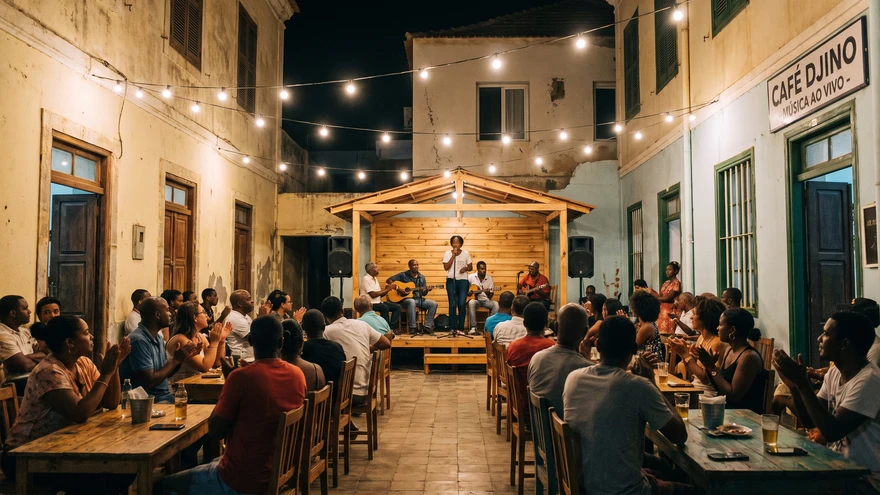
- Days 1-2 (São Vicente): Land at Cesária Évora Airport. Mindelo is the cultural capital of the archipelago, with colonial architecture, vibrant morna music, and a tight seafront promenade.
- Days 3-7 (Santo Antão): Catch the morning ferry and base yourself on the greener northern coast. The Paul Valley, one of the standout stretches on Santo Antão's hiking trails, is mandatory for hikers, with terraced banana plantations, sugarcane fields, and isolated hamlets frozen in time.
- Days 8-9 (São Vicente): Return to Mindelo. Take a day trip to Monte Verde for panoramic views, or relax in the calm waters of Baía das Gatas.
- Day 10: Final morning espresso in Mindelo before flying out.
14-Day Cape Verde Itinerary: The Complete Macaronesia Experience
Two full weeks allow you to cross the Barlavento/Sotavento divide, mixing the deep cultural roots of the south with the dramatic nature of the north. This route combines Santiago, Fogo, São Vicente, and Santo Antão. The secret to making it work is a two-day buffer in the middle of your trip.
- Days 1-3 (Santiago): Colonial ruins at Cidade Velha and the vibrant Sucupira Market in Praia.
- Days 4-6 (Fogo): Connect via flight or the notoriously choppy ferry, then tackle the demanding climb up Pico do Fogo and sample the crater-grown wine.
- Day 7 (Transit Buffer): Fly back to Praia, then catch a connecting flight to São Vicente. Delays here are common, so leave this day entirely open for travel adjustments.
- Days 8-12 (Santo Antão): Take the ferry from Mindelo to Porto Novo for five days of intense trekking along the coastal cliffs of Fontainhas and the lush Paul Valley.
- Days 13-14 (São Vicente): Ferry back to Mindelo for fresh seafood and live music before your international departure.
Essential Safety and Weather Warnings
Cape Verde is consistently ranked as one of the safest countries in Africa, but the natural environment demands strict respect.
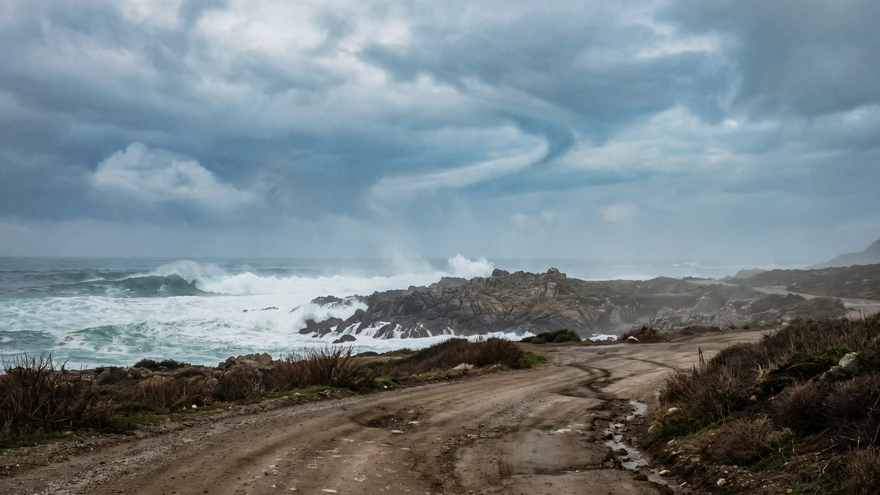
The winter months (December to February) bring the bruma seca, intense sandstorms blowing off the Sahara. When these hit, visibility drops to zero, and flights into Boa Vista and São Vicente in particular face immediate grounding until the dust clears.
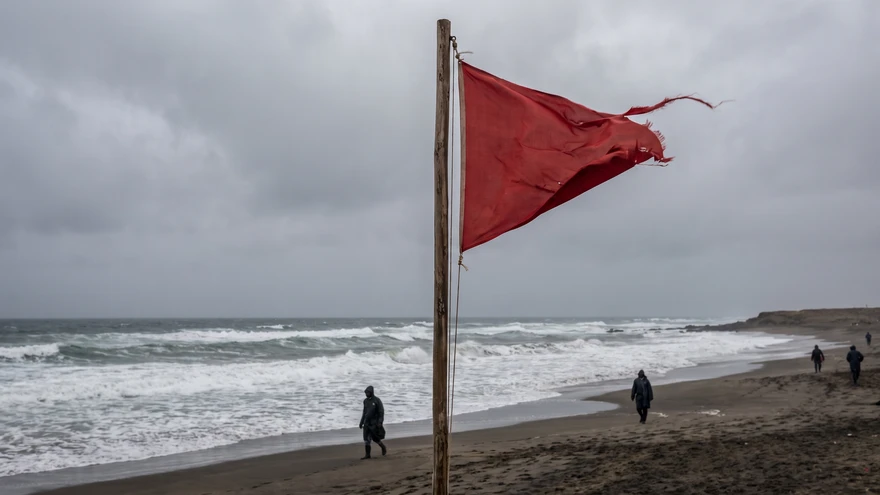
Ocean currents around the archipelago are fiercely strong, and the Atlantic swell creates powerful undertows even in shallow water. Never swim on unsupervised beaches, and always follow the local flag system: red means stay entirely out of the water, yellow allows wading, and green signals safe swimming conditions.