Walking past the concrete gates of Tarrafal without preparing for its heavy, oppressive atmosphere will leave you staring at empty stone barracks instead of connecting with the history of political resistance it represents. This former political prison asks you to read between the lines, look past the peeling paint, and understand the trauma embedded in its soil. Visiting the site well takes some practical foresight, since local logistics can catch unprepared travelers off guard.
- Entrance Fee: 200 CVE for international visitors, 100 CVE for Cape Verdean nationals; free for national children under 12, students, and seniors
- Opening Hours: Daily, 9:00 AM to 5:00 PM (reduced to 1:00 PM on public holidays; closed January 1, January 15, May 1, and December 25)
- Time Needed: 1 to 1.5 hours for a complete walk-through
- Transport from Praia: around 600 CVE per person via shared minibus (aluguer) from Sucupira Market
- Location: Chão Bom, approximately 1.5 km south of Tarrafal village center
- Facilities: Basic restrooms on-site; no shops or water vendors inside
What Was the Tarrafal Concentration Camp?
The origins of this site trace back to 1936, established under the right-wing Estado Novo dictatorship of Portuguese ruler António de Oliveira Salazar. Designed deliberately in a remote location on Santiago Island, it earned the infamous moniker Campo da Morte Lenta, the Camp of Slow Death. The fascist regime used this space to isolate, torture, and break the spirit of those who dared to speak out against the government.
The camp operated in two distinct, brutal phases.
During the first phase, which lasted from 1936 until its temporary closure in 1954, the prison held over 340 Portuguese anti-fascists, communists, and trade unionists. The conditions were engineered to kill without execution. Intense, scorching heat, dry winters, complete isolation from the local population, and a lack of clean drinking water made survival a daily battle.
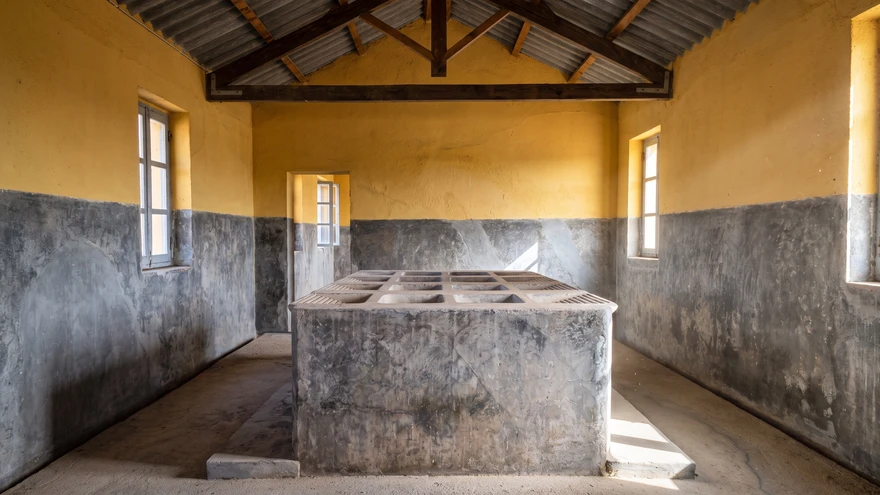
Diseases like malaria, tuberculosis, scurvy, and dysentery ran rampant through the barracks. When inmates protested their health conditions, doctors sent from Lisbon dismissed their symptoms as mere malingering. By 1954, at least 34 political prisoners had lost their lives here.
The second phase began in April 1961, driven by the outbreak of colonial wars across Portugal's African territories. Reopened under the name Chão Bom Labour Camp, the facility became the primary detention center for nationalist freedom fighters from Angola, Guinea-Bissau, and Cape Verde. Between 1961 and 1974, the regime incarcerated 226 activists here, including 106 Angolans, 100 Bissau-Guineans, and 20 Cape Verdeans. Three of them, one Angolan and two Guineans, died from disease and mistreatment during this period.
Some of the men held here became known well beyond the camp walls. The Angolan writer Luandino Vieira spent eight years at Chão Bom, from 1964 to 1972, secretly filling notebooks with the short stories later published as Luuanda. Decades earlier, in the camp's first phase, Bento Gonçalves, general secretary of the Portuguese Communist Party, had died at Tarrafal in 1942. The camp finally shut its doors on May 1, 1974, a week after the Carnation Revolution in Lisbon ended the Estado Novo dictatorship.
What to Expect at the Resistance Museum Today
Since 2009, the former prison has operated as the Museum of Resistance, preserved much as it was left. The entire complex still carries a stark, haunting ghost-town atmosphere: high stone walls, deep perimeter trenches, and elevated corner watchtowers immediately remind you of the camp's original, inescapable design. The air feels completely silent, broken only by the rustle of knee-high yellowed grass growing between the derelict structures.
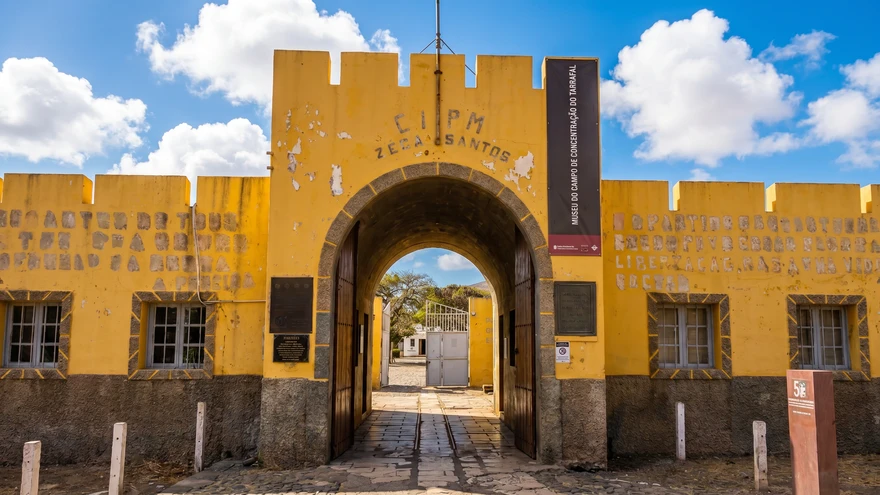
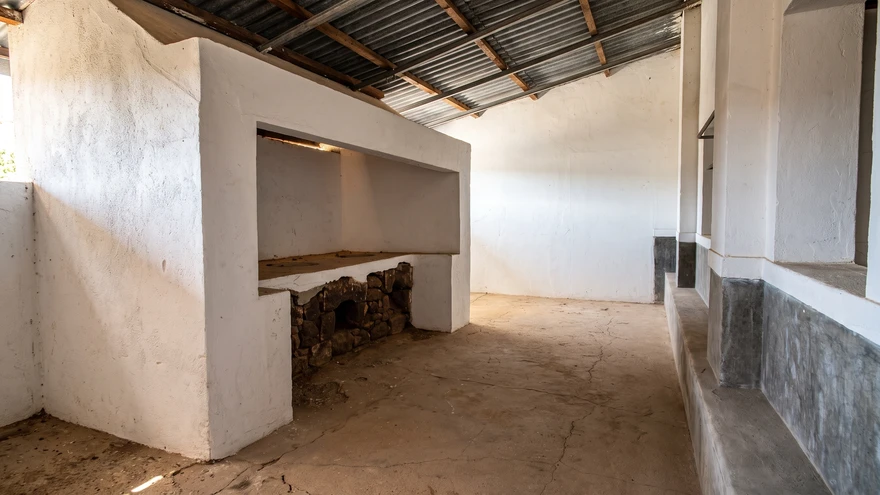
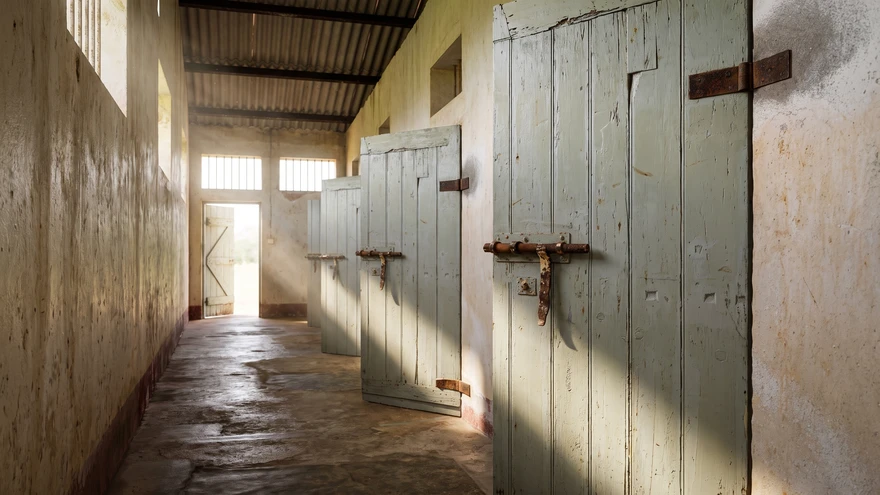
You can walk freely through the main cell blocks, the kitchens, the laundry facilities, and the solitary confinement cells. The interiors remain entirely empty, stripped of furniture or contemporary decoration to preserve the raw reality of the past. One central stone building stands out with a cross on its gable, marking the former prison hospital and pharmacy where sick inmates were systematically neglected.
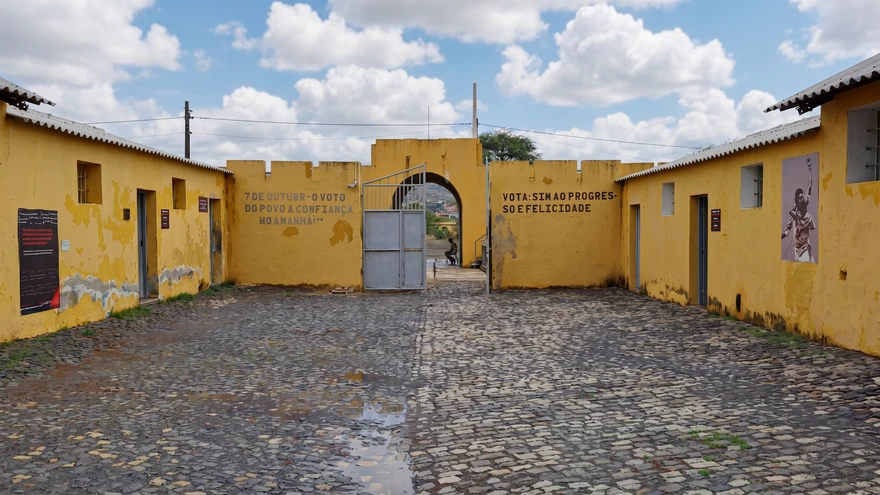
The main historical exhibitions occupy one of the larger cell blocks. Over 30 thematic panels display photographs, historical documents, and timelines detailing the rise of European fascism, everyday camp life, and the African liberation movements.
The museum features trilingual signage, with clear explanations in English, French, and Portuguese outside cell doors and on the primary display boards. Some deeper archival documents and older photographs, however, remain untranslated.
How to Get to Tarrafal Concentration Camp
Reaching the museum from the capital city of Praia is straightforward and affordable if you use local transport, and the fare fits comfortably into most travelers' Cabo Verde trip budget.
Head to Sucupira Market in Praia's Plateau district, the city's main hub for shared minibuses known locally as aluguers. Look for a Toyota Hiace marked for Tarrafal and expect to pay a cash fare of around 600 CVE per seat. Drivers leave only once the vehicle fills up, so waits of an hour or more are common, though early morning and late afternoon departures tend to move faster. If you would rather skip the wait, several operators offer Guided Santiago Island tours that include Tarrafal and round-trip transport from Praia.
The scenic, winding journey through the craggy inland mountains takes roughly 1 hour and 45 minutes. Ask the driver to drop you at Chão Bom, right outside the museum entrance.
If you are already staying in Tarrafal village, the camp makes for an easy detour. It is a 15-to-20-minute walk southward from the village center along the main road.
The walk follows a dusty, uninspiring stretch of highway, so taking a quick local taxi is a viable alternative. For those driving a rental car, a free asphalt parking lot sits directly in front of the main prison gate. Travelers deciding where to base themselves on Santiago Island can weigh hotels and guesthouses across the islands using this Cabo Verde accommodation breakdown.
Essential Tips for Your Visit
A few practical adjustments will keep your visit seamless and respectful.
Pay close attention to the clock when planning your arrival. While online mapping services often list the closing time as 5:00 PM, staff frequently shut the main gates and ticket office an hour earlier. To avoid arriving to locked doors, plan to be on the property by 4:00 PM at the latest.
Hydration is another critical factor. The climate in Chão Bom is intensely hot, dry, and entirely exposed to the midday sun. The museum property has no gift shop, cafe, or vending machines selling refreshments. Bring your own reusable water bottle, since buying liquids on-site is impossible.
Finally, prepare for the immediate surroundings outside the gates. The museum sits next to a modest residential neighborhood, and local children sometimes approach visitors in the parking lot asking for change or sweets. A polite but firm refusal is perfectly acceptable if you would rather walk past without engaging.
Petty begging aside, most of Santiago Island's south coast remains calm for visitors, and the wider safety picture for Cabo Verde skews reassuring for first-time travelers. Once inside the museum grounds, the atmosphere shifts into a place of quiet reflection, honoring the price paid for the freedoms that followed.