Getting a severe stomach bug from tap water or unwashed salads is the fastest way to ruin your Cape Verde holiday. Safely enjoying the local gastronomy requires knowing exactly how to handle fresh produce, which market stalls to trust, and where to find the authentic island stews hidden behind overpriced tourist menus.
| Daily Food Budget | Tap Water | Tipping Culture | Must-Try Dish | Signature Drink |
|---|---|---|---|---|
| €30 - €50 | Unsafe (Drink bottled) | 10% in restaurants | Cachupa Refogada | Grogue |
What to Eat in Cape Verde?
The archipelago's cuisine heavily relies on what the dry volcanic soil can grow and what the Atlantic Ocean provides. You will quickly notice a strong Portuguese influence running through the cooking techniques, deeply intertwined with West African ingredients like corn, cassava, and sweet potatoes.
Cachupa: The National Stew (Rica vs. Pobre)
Every authentic culinary experience here starts with Cachupa. This slow-cooked stew forms the absolute backbone of Cape Verdean daily life, built on a heavy base of hominy corn, beans, and root vegetables. Restaurants usually serve it in two distinct variations depending on the ingredients used.
Cachupa Pobre: The "poor" version relies strictly on vegetables and beans. It serves as a cheap, hearty, and highly nutritious vegetarian option.
Cachupa Rica: The "rich" version includes heavily marinated pork, local chorizo, or chunks of fresh fish.
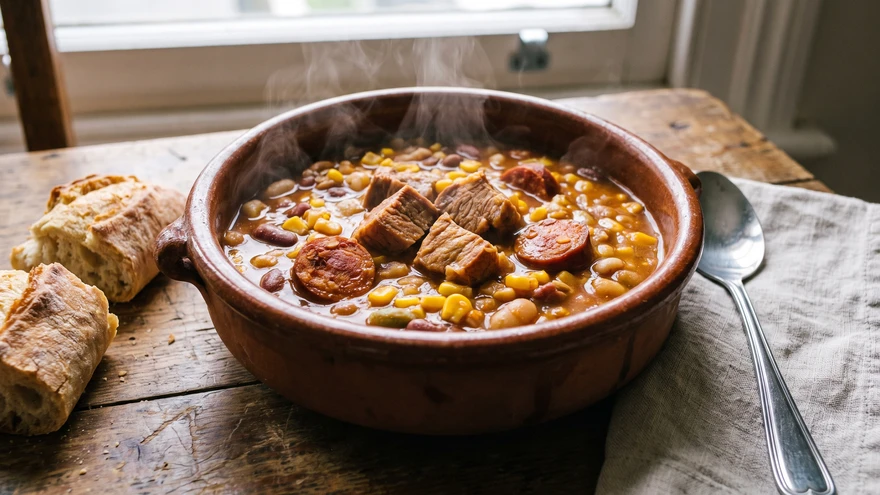
Ordering Cachupa Refogada for breakfast is a brilliant move. Locals take the leftover stew from the night before, fry it in a pan with onions and garlic, and serve it topped with a fried egg and local sausage.
Fresh Tuna and Catch of the Day
Living surrounded by the Atlantic means seafood costs a fraction of European prices while delivering unmatched freshness. Yellowfin tuna dominates the menus across Sal, Boa Vista, and Santiago. Instead of heavy sauces, chefs prefer to grill thick tuna steaks (bife de atum) over open coals, dressing them simply with olive oil, garlic, and sea salt.
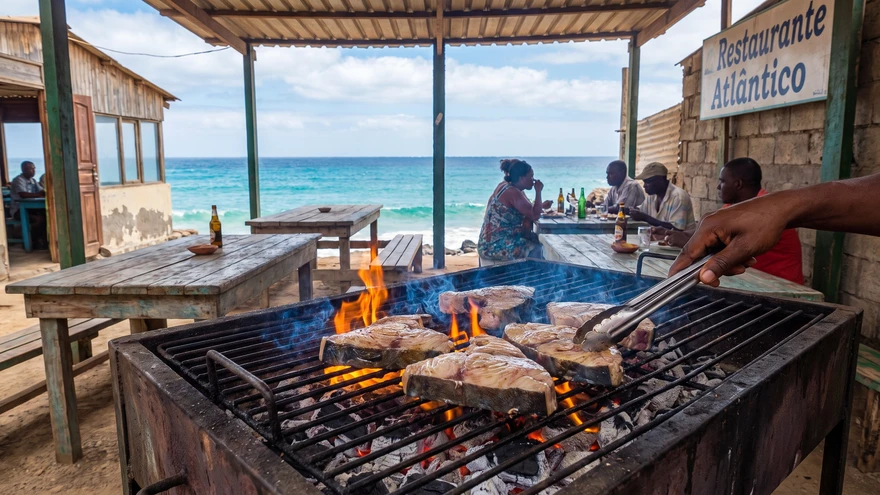
If you visit a seaside restaurant, always ask for the catch of the day. You will frequently find Wahoo, swordfish, and grouper served alongside a generous portion of rice and chips.
Búzio, Percebes and Seafood Delicacies
For a deeper dive into the coastal flavors, skip the standard fish fillets and look for shellfish stews. Búzio is a traditional stew made from limpets (sea snails), cooked down with soy sauce, garlic, and chili until tender.
Goose barnacles (percebes) are another highly prized delicacy, especially on the rocky shores of São Vicente and Santo Antão. Eating them requires a bit of effort, you have to twist and pull the tough outer skin to reveal the briny, sweet meat inside.
Traditional Cape Verdean Drinks
Hydration takes on a different meaning once the sun sets. The islands produce some surprisingly robust fermented drinks, heavily utilizing the local sugar cane plantations and volcanic microclimates.
Grogue and Pontche
Grogue acts as the undisputed king of Cape Verdean spirits. This clear, fiery rum comes directly from distilled sugar cane juice, packing a serious alcoholic punch (often around 40% ABV). The purest grogue hails from the green valleys of Santo Antão, where traditional distilleries (trapiches) still operate using wooden presses. The Santo Antão hiking trails route you directly through the Paul Valley distillery region.
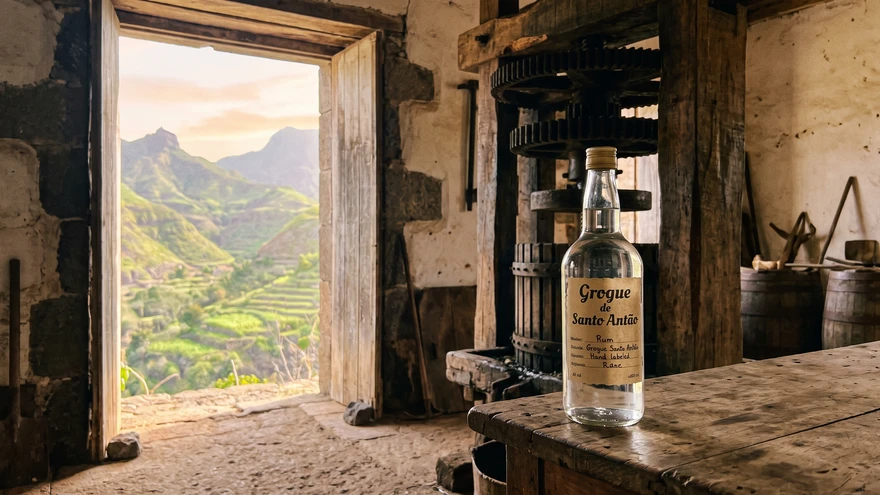
If straight grogue feels too harsh, order a glass of Pontche. Bartenders cut the harshness of the rum by mixing it with molasses, citrus juice, and cloves. The result is a smooth, dangerously drinkable liqueur that pairs perfectly with a warm evening.
Fogo Island Volcanic Wines
Despite the arid climate across most of the archipelago, the island of Fogo harbors a thriving wine industry right inside the caldera of an active volcano. Chã das Caldeiras produces distinct, mineral-rich wines using grapes grown directly in the black volcanic ash.
The white wines (brancos) carry a crisp, citrus-forward profile that cuts beautifully through heavy seafood dishes. The reds (tintos) are full-bodied and robust, holding their own against a rich plate of Cachupa Rica or grilled meats.
Food Safety and Hygiene in Cape Verde
Recent data from health agencies highlights occasional outbreaks of gastrointestinal infections like Shigella and Salmonella linked to tourist resorts. The Cape Verde vaccines and health requirements page lists the recommended vaccinations and pharmacy options on each island. Protecting your stomach requires strict adherence to a few non-negotiable rules.
Is Tap Water Safe to Drink?
Tap water in Cape Verde comes largely from desalination plants and is generally not safe for consumption. Consuming it, even in small amounts, often leads to severe traveler's diarrhea.
Drink exclusively from sealed, bottled water.
Use bottled water to brush your teeth.
Explicitly ask bartenders to hold the ice in your cocktails, as ice is frequently made from untreated tap water.
Avoiding Stomach Bugs
Hotel buffets pose a hidden risk, especially when food sits out under the tropical heat for hours. Choose dishes that are freshly prepared, fully cooked, and served piping hot.
When buying fresh fruit from street vendors, only purchase items with a thick peel, like bananas, mangoes, or papayas. Avoid pre-cut fruit salads or leafy green salads in local eateries, as they are often washed in local tap water. Carrying oral rehydration salts in your daypack saves vital time if you do catch a bug.
Local Market Tips and Etiquette
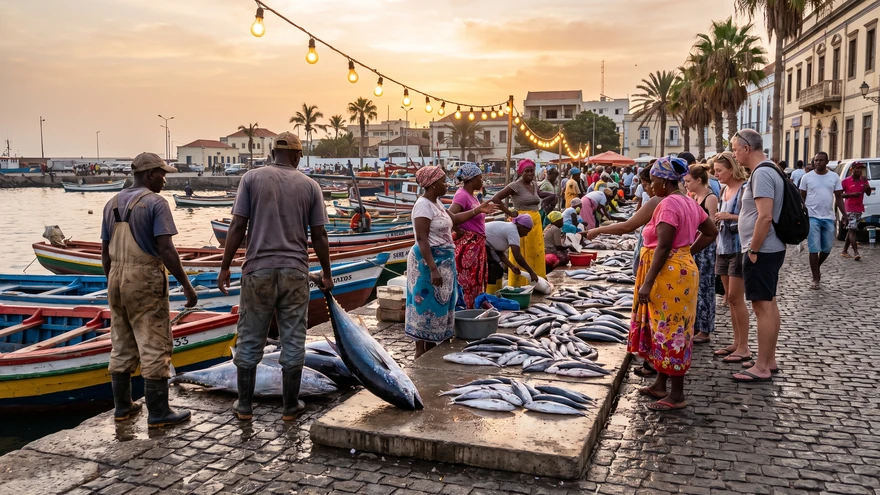
Stepping away from the all-inclusive resorts and diving into the municipal markets (Mercado Municipal) provides the rawest glimpse into Cape Verdean food culture. The markets in Praia (Santiago) and Santa Maria (Sal) operate as chaotic, colorful hubs of daily commerce.
Best Markets in Sal and Santiago
Timing dictates the quality of your market experience. Arriving before 8:00 AM guarantees access to the freshest tuna hauls and the best selection of tropical fruits. The Cabo Verde travel cost breakdown gives realistic per-day food budgets for each island. By midday, the heat sets in, the best produce disappears, and the remaining fish stalls quickly become unhygienic under the sun.
How to Buy Fresh Produce and Spices
Vendors heavily import goods from Portugal and Brazil, driving up prices for items like apples or grapes. To save money and get better flavor, stick strictly to locally grown produce.
Look for locals: Buy from the older women (rabidantes) selling directly from large plastic basins on the ground.
Negotiation: Haggling is acceptable but keep it respectful. A 10-15% discount is reasonable for larger purchases, but aggressively fighting over a few escudos on a bunch of bananas is frowned upon.
Spices: Pick up small bags of local chili peppers (malagueta) and dried hibiscus leaves (bissap) to take the island flavors home. Organized food and culture tours in Cape Verde give market access with a local guide who handles the negotiation.