Reaching Malta means flying into a single small airport or arriving by sea from Gozo or Sicily, and the gap between landing and actually getting to your hotel is where most first-timers lose time and money. Pick the wrong bus and you will drag a suitcase down a packed city aisle, or pay a white-taxi premium when an app would have cost half. This guide walks you through every arrival route, from the MLA terminal to the Ċirkewwa ferry queue, so you move from runway to door without friction.
- Main airport: Malta International Airport (MLA) in Luqa, just 5 km from Valletta
- Airport buses: X-routes €2.50 summer, €2.00 winter; Tallinja Direct €3.00
- 7-Day Explore Card: €25 for unlimited standard day and night routes
- Taxis: fixed-fare white cabs, or ride-hailing (Bolt, eCabs, Uber) which usually costs less
- Gozo: Gozo Channel ferry from Ċirkewwa (cars and passengers) or Gozo Highspeed from Valletta (foot passengers)
- Sicily: Virtu Ferries catamaran, Pozzallo to Valletta in 1 hour 45 minutes
Flying into Malta International Airport (MLA)
Airlines and Direct European Connections
Your journey to the Maltese archipelago will almost certainly begin at Malta International Airport (MLA), the only commercial airport serving the country. It sits in Luqa, just 5 km southwest of Valletta, and it is exceptionally well-connected. MLA is the primary hub for KM Malta Airlines and hosts low-cost carriers like Ryanair and easyJet, so direct flights of under three hours are available from most European hubs.
Navigating the Terminal: Arrivals and Luggage Realities
Malta International Airport is compact and efficient. Once you clear passport control and collect your bags, you step straight into the Welcomers' Hall.
Here is a practical tip that saves time: if you plan to use the buses extensively, do not queue at the manned Malta Public Transport office inside the hall. Step just outside the terminal entrance instead, where 24/7 automated machines sell the 7-Day Explore Card and 12-Journey cards on the spot. For a single trip, you can simply tap a contactless card or phone on the reader when you board.
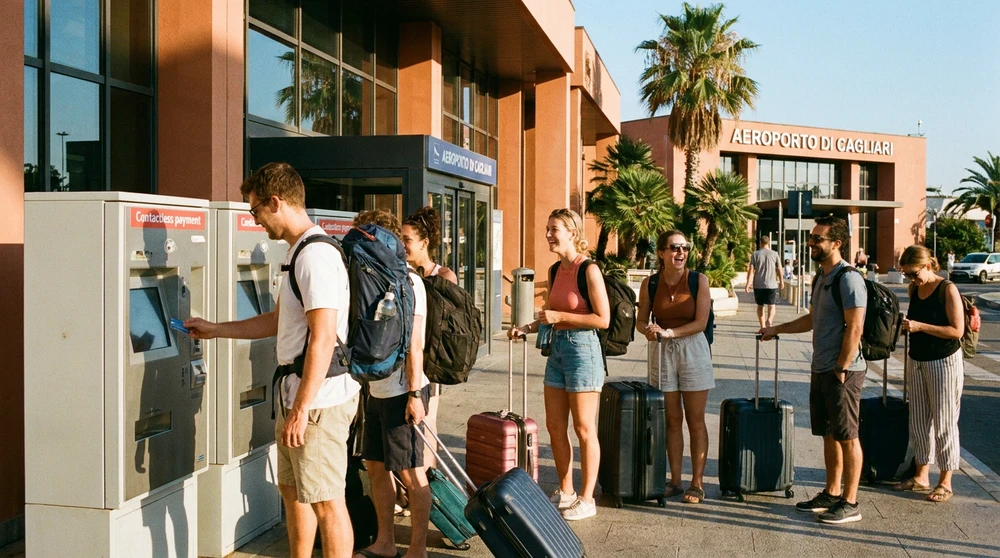
The same machines spare you the indoor crowds that build up the moment a few flights land together. Your choice of base also shapes which bus or ferry route you need, and where to stay in Malta breaks the main hubs down side by side.
Getting from Malta Airport to Your Destination
Express Buses, X-Routes and Tallinja Direct: Fares and Luggage
Public transport is the cheapest way to leave the airport, but knowing the difference between the bus types before you board matters more than the fare itself.
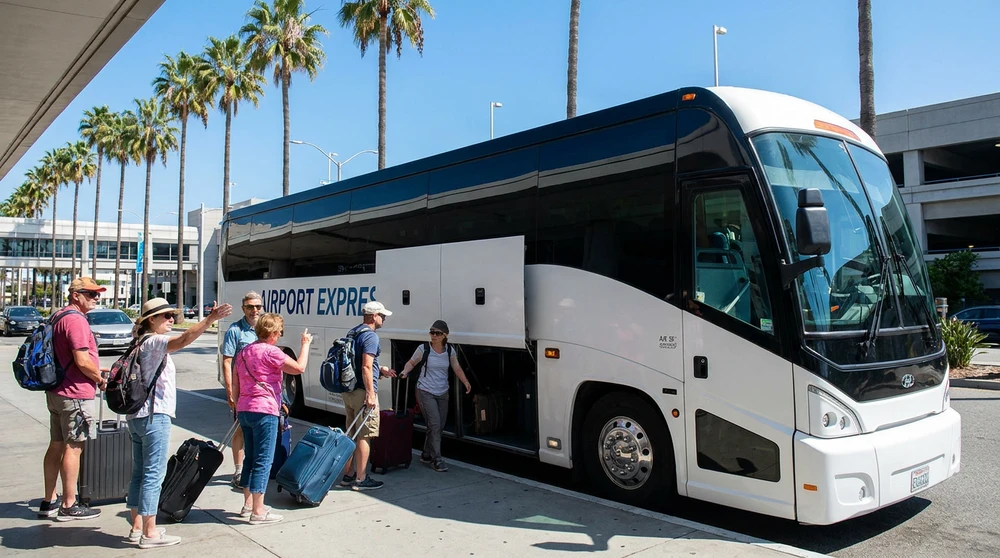
- X-Routes (X1, X2, X3, X4): Standard airport routes with dedicated luggage racks. X1 runs to Buġibba and Mellieħa, X4 links straight to Valletta. Fare is €2.50 in summer and €2.00 in winter.
- Tallinja Direct (TD2, TD3): Faster, express routes built for transfers. TD2 serves St. Julian's and TD3 serves Sliema, both with luggage space on a first-come basis. Fare is €3.00 per journey.
- Local routes (119, 201): These stop at the airport too, but they have no luggage compartments. You will haul suitcases down a narrow city-bus aisle, which is impractical if you are travelling heavy.
Routes, the Tallinja Card and the night-bus network deserve their own read before your first full day, and getting around Malta by bus covers them in detail.
Taxi Apps vs Official White Cabs: Avoiding the Premium
If you want a direct ride to your door, you have two options right outside the terminal.
Official White Taxis wait at the rank just beyond Arrivals, 24/7. They run on a fixed-tariff system: you pay a flat rate at the booth before getting in, which removes any risk of being overcharged. The catch is price. Ride-hailing apps usually undercut them by a wide margin, for example, a fare to Mellieħa runs around €33 by white taxi but closer to €22 on Bolt.
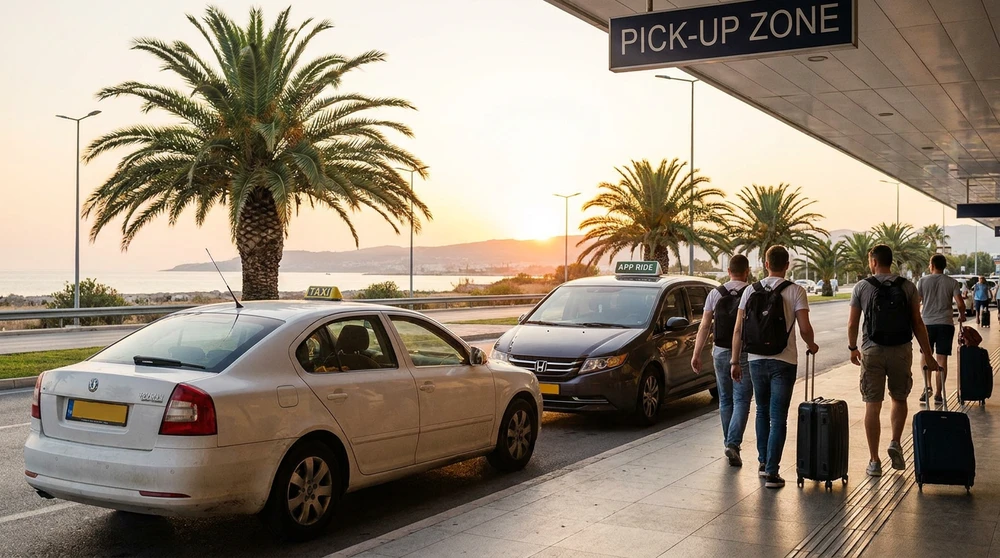
Ride-hailing apps (Bolt, eCabs, and Uber) are all fully active in Malta. You can book the moment you grab your bags, and the pickup zone sits a one-minute walk across the road from the main exit, near the parking area. One honest warning: app rates are dynamic, so they surge when several flights land at once. If your arrival is late or you want a guaranteed price, you can Book an airport transfer in advance and skip the queue entirely.
On-Site Car Rentals and Left-Hand Driving Rules
If you want the freedom to reach hidden coves and inland temples on your own schedule, renting a car is a strong option. Major international agencies (Avis, Hertz, Sixt) and local providers have desks inside the Welcomers' Hall, and you can Compare rental cars before you land to lock in a better rate.
Before you drive off, remember the golden rule of Maltese roads: driving is on the left. Malta's narrow village streets, one-way systems and steep hills can be stressful if you are not used to it. The speed limit is generally 50 km/h in urban areas and 80 km/h on open roads. Parking, restricted zones and the quirks that catch visitors out are worth knowing in advance, and driving and renting a car in Malta walks through each one.
Malta to Gozo Ferry Routes
If your final destination is the sister island of Gozo, you have several routes depending on whether you are driving or travelling on foot.
Gozo Channel Ferry from Ċirkewwa: Cars and Passengers
The traditional route is the Gozo Channel ferry, leaving from the Ċirkewwa terminal at the northern tip of Malta and arriving at Mġarr harbour in Gozo. The crossing takes about 25 minutes and runs 24/7.
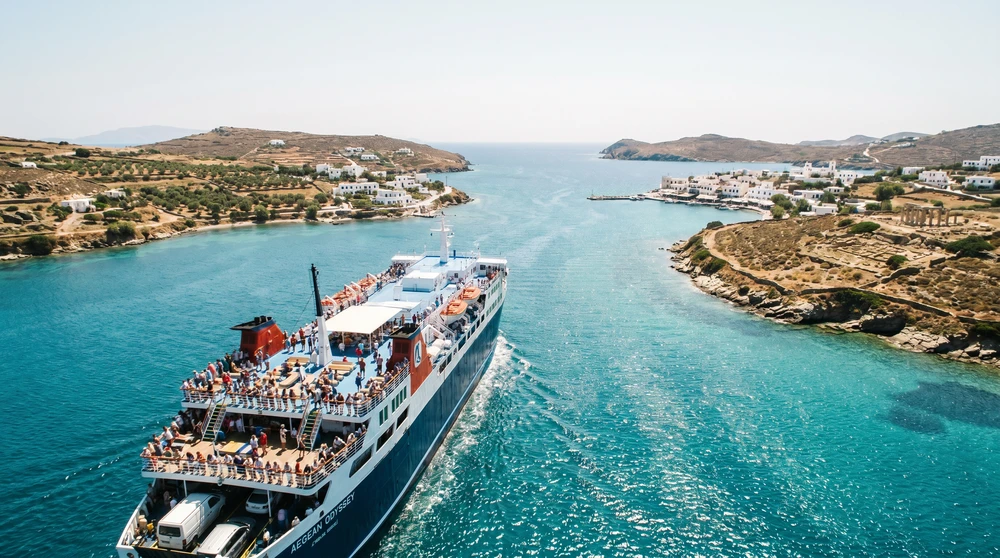
Here is the part that confuses people: you only pay on the way back. Boarding from Malta to Gozo is free, and you buy your ticket at Mġarr when you return. The foot-passenger return fare is €4.65.
If you rented a car at the airport, you drive north (roughly 45 minutes to an hour from MLA) and roll straight onto the ferry. Car queues and peak-hour waits have their own rhythm, and the Malta to Gozo ferry explains how to time your crossing around them.
Gozo Highspeed Fast Ferry: Foot Passengers
If you are travelling without a car, the Gozo Highspeed catamaran is a game-changer. It connects the Grand Harbour in Valletta directly to Mġarr in just 45 minutes, with a return fare around €12 (cheaper if you hold a Tallinja card or book online).
From the airport, take the X4 bus to Valletta, walk or ride the Barrakka Lift down to the Grand Harbour, and catch the fast ferry. The service also runs direct passenger routes from the Sliema Strand, stopping at Buġibba, so if your hotel is in Sliema you no longer need to cross the island to reach a ferry.
Reaching Comino: Local Boat Operators
To visit the Blue Lagoon on the tiny island of Comino, you switch to smaller local boats. Operators like Ebsons Ferries and Comino Ferries run frequent trips from the Ċirkewwa and Marfa terminals on mainland Malta, or from Mġarr in Gozo, with a crossing of 15 to 25 minutes. Timing matters here: reaching the Blue Lagoon on an early boat is the difference between a quiet swim and a packed cove.
Ferry Routes from Sicily to Malta
Pozzallo to Valletta Catamaran: Schedules and Vehicle Boarding
If you are combining Italy with your Maltese trip, arriving by sea is a spectacular experience. The most reliable route from Sicily runs out of Pozzallo, a seaside town in the province of Ragusa.
Virtu Ferries operates a high-speed catamaran connecting Pozzallo directly to the Grand Harbour in Valletta. The crossing takes about 1 hour 45 minutes, with 1 to 3 sailings per day depending on the season. The catamaran carries both foot passengers and vehicles, and you can even bring pets on board.
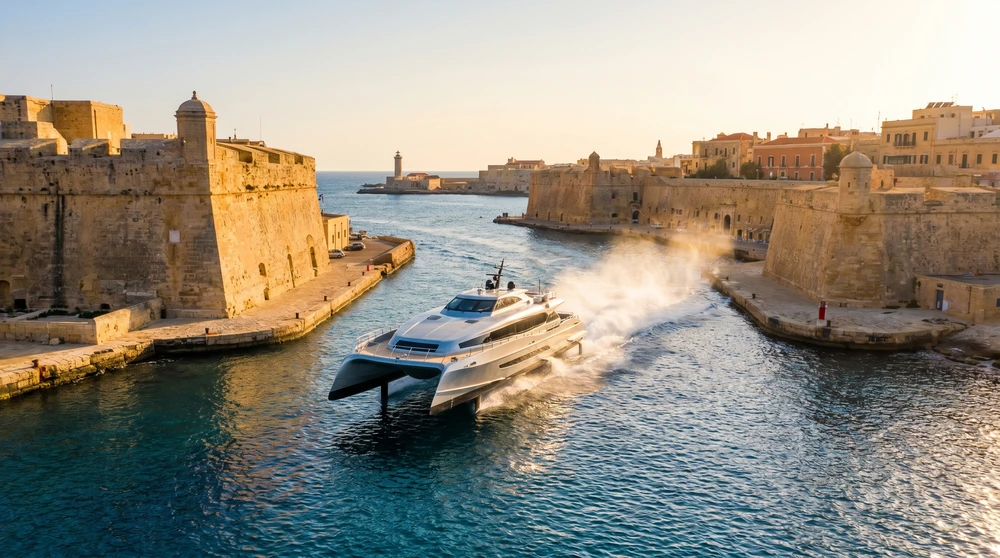
Book ahead in the busy summer months, because this route fills up fast. A Malta to Sicily day trip is realistic with the right timings, though the sailing schedule decides how much of Ragusa you actually get to see.
Sort your arrival route before you fly, and the rest of the trip falls into place. Our Malta travel essentials overview pulls the when, where and how together for first-timers. Tap a contactless card on an X-route, pre-book a transfer for a late landing, or queue the car at Ċirkewwa, and you trade the usual airport stress for an extra hour on the water or at the beach.