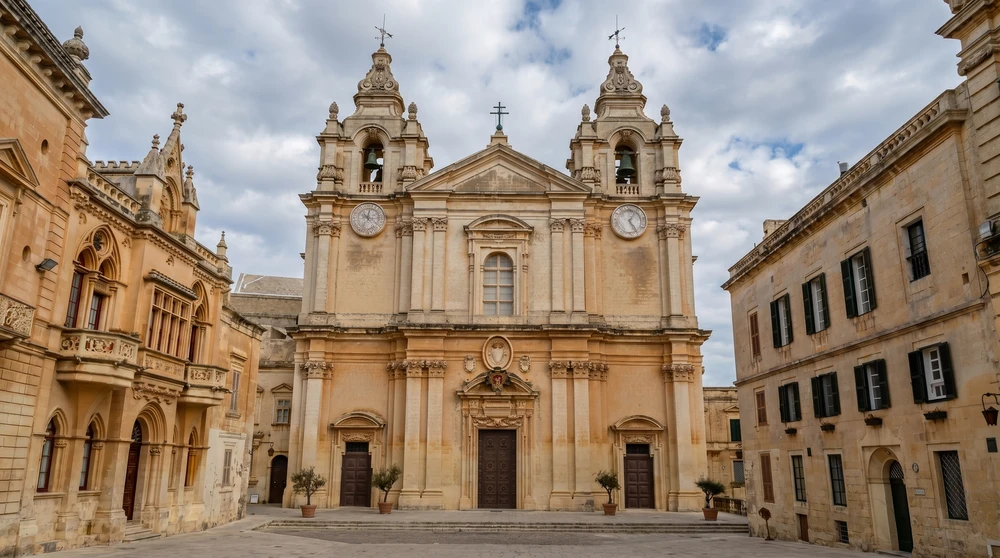
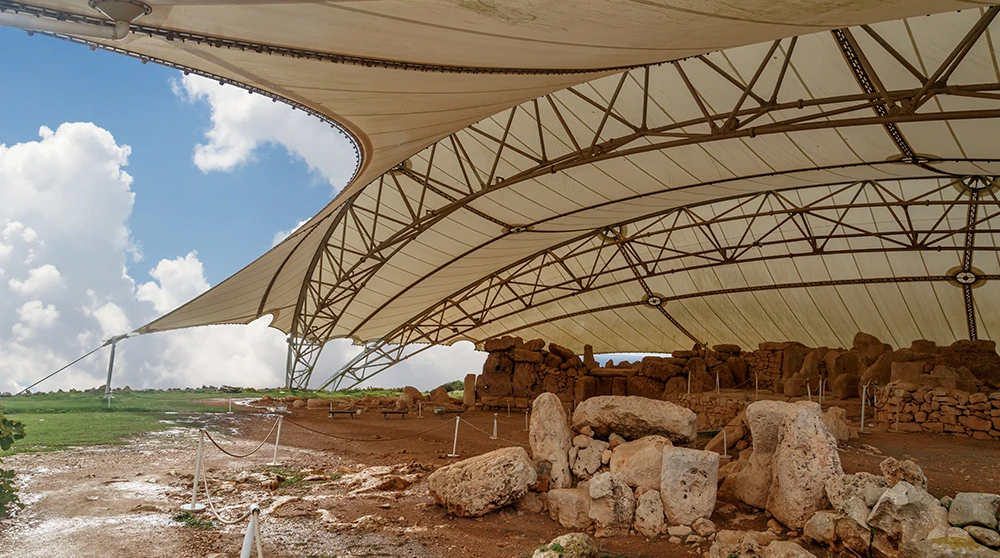
Arriving at the Domus Romana at midday means fighting heavy glare on the glass floors and squeezing past large tour groups spilling over from neighbouring Mdina. Plan your visit between 09:00 and 11:00 and you secure the best low-angle natural light to appreciate the 3D optical illusions of the micro-tesserae mosaics. That early slot also gives you the quiet space this 1st-century BC archaeological site needs for proper observation. The whole visit takes 45 to 60 minutes, so it slots neatly into a half-day around Mdina and Rabat.
Tickets, Hours and the Rabat Combo
The museum sits on the Museum Esplanade in Rabat, a two-minute walk from the Mdina Main Gate, and opens 09:00 to 17:00 daily with last entry at 16:30. It closes on a handful of public holidays, including 24, 25 and 31 December, 1 January and Good Friday.
- Adult (18-59): €6
- Youth (12-17), seniors 60+, students: €4.50
- Children (6-11): €3.50
- Infants (1-5): free
- Family ticket: €15
A single €6 entry covers only the Domus Romana. If you plan to explore the wider area, that flat fee can be a mathematical mistake. Heritage Malta sells a €8-€14 Rabat Combo Ticket that bundles the Domus Romana with the nearby St Paul's Catacombs and the National Museum of Natural History, and the pass stays valid for 30 days from first use. For a half-day archaeological circuit it saves money and streamlines entry across all three sites.
If your trip covers more of the island, the broader Heritage Malta options are worth weighing up, and the heritage-malta-pass-vs-discount-card breakdown compares the multisite pass against the discount card on real numbers. You can pick up tickets at the desk or book ahead online, and securing entry in advance with A skip-the-line combo ticket keeps the Rabat morning moving.
Roman Domus vs Country Villa: The Architecture of Wealth
The distinction between a villa and a domus matters when you understand this site. A villa was a rural estate built around agro-industrial activity, while a domus was a high-status urban townhouse. This particular residence sat right inside the ancient walls of Melite, the sprawling Roman city that once covered both modern-day Mdina and large parts of Rabat.
What survives is the preserved ground plan of a first-class private home, not a provincial outpost. The property worked as a display of immense wealth and political power. The rooms centre around a classic peristyle, a continuous colonnaded porch surrounding an internal courtyard. That layout gave the owner a private, highly decorated space to conduct business, entertain prominent guests and manage civic affairs.
The engineering beneath the floorboards reveals the living standards of the Roman elite in Malta. Archaeologists uncovered traces of a hypocaust system, an underfloor heating mechanism that pushed hot air from wood fires through empty spaces below the floors. It warmed the rooms above during the damp Mediterranean winters, a comfort few homes outside the imperial core could afford.
The Mosaics of Ancient Melite
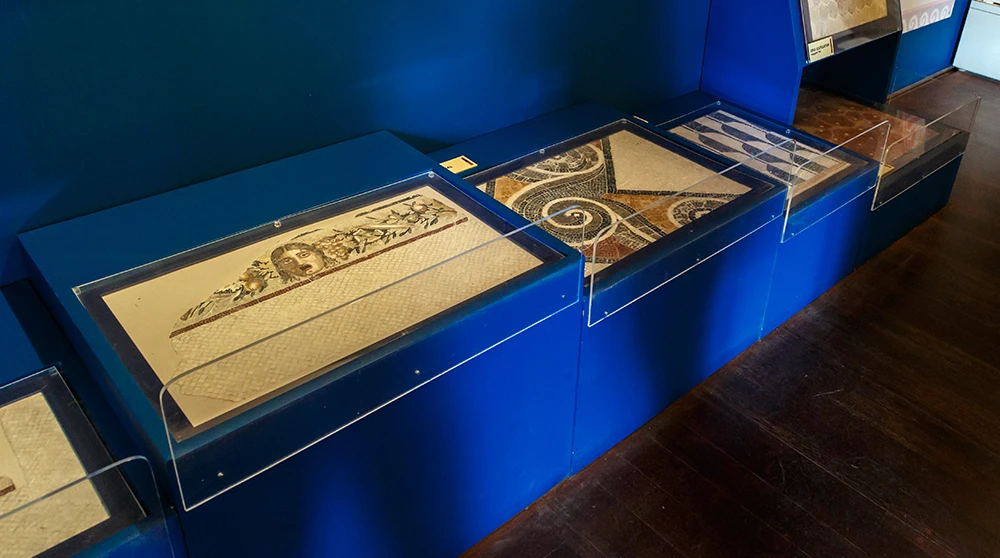
The polychrome floor panels are the primary reason to visit. They survive in remarkably good condition, proving that the craftsmanship in Melite rivalled the skilled work found in wealthy homes in Pompeii or Carthage. Many visitors call them among the finest Roman mosaics in the Mediterranean, and the small scale of the site means you stand much closer to them than you would in a larger museum.
The central courtyard mosaic is the standout. It features the Drinking Doves of Sosos, one of the most famous and most replicated motifs of antiquity. The true mastery lies in the intricate border framing the birds, a complex geometric pattern that creates a striking 3D optical illusion.
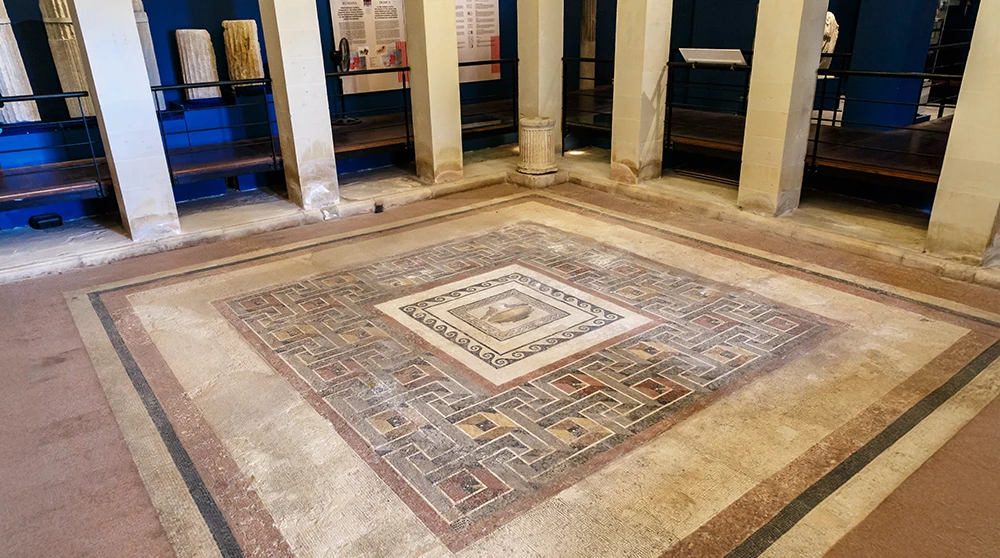
The tesserae, the individual mosaic tiles, are exceptionally small here. Smaller tiles mean higher quality work, allowing smooth colour gradients and sharp, lifelike detail.
Another celebrated panel depicts a mythological scene, widely interpreted as a portrait of the Athenian general Alkibiades. Get low and view the tesserae at a slight angle and the texture and depth that upright viewing misses suddenly appears. A smartphone macro lens or a small magnifying glass pulls out the finest facial detail.
Imperial Statues Inside a Private Home
It is exceptionally rare to find full-scale imperial statues inside a private dwelling. These monumental pieces were usually reserved for public squares, basilicas or temples, which makes the Domus collection unusual.
During the first excavations in 1881, workers unearthed a larger-than-life marble statue of Emperor Claudius alongside a bust of his daughter, Claudia Antonia. Having the imperial family looking down on your peristyle courtyard sent a clear message: the homeowner held high-level political connections to Rome and the means to commission top-tier sculptors.
Beyond the grand marble, the side display cases hold the intimate details of daily Roman life in Melite. You will find bone hairpins, delicate glass perfume bottles, terracotta theatrical masks and weaving bobbins. An intricately carved marble head of a maenad, showing a complex ancient hairstyle, points to the refined tastes of the household.
The 11th-Century Muslim Cemetery Layered Above
The Domus Romana holds physical evidence of a major cultural shift in the Mediterranean. The site does not just tell a Roman story; it is a layered archaeological map. Malta fell under Arab rule between 870 and 1091 AD, and centuries after the Roman townhouse collapsed, the new rulers repurposed the area.
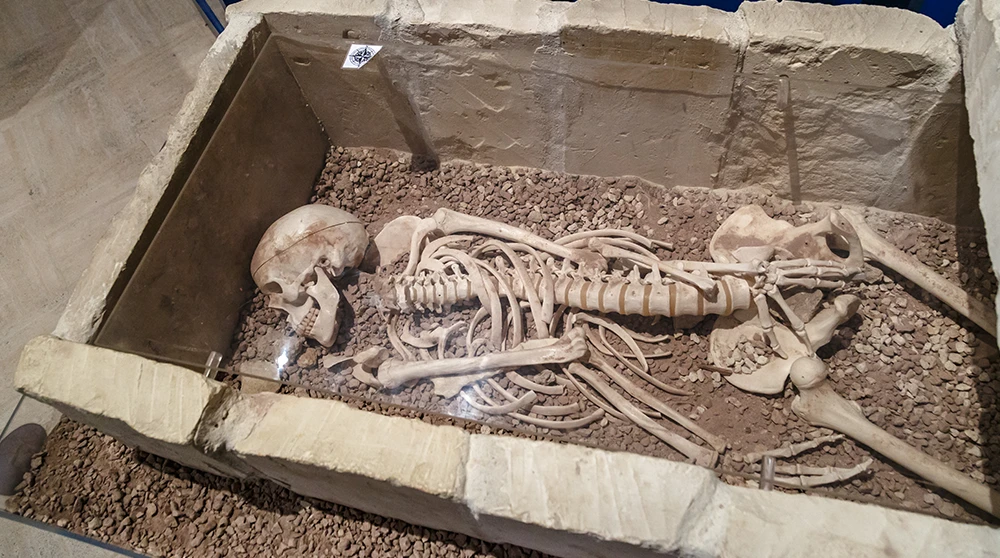
The Muslim administration built the fortified walls of the medina, now Mdina, and turned the outer area of Rabat into a suburb. Directly over the ruins of this aristocratic Roman home, an 11th-century Islamic cemetery took shape. The museum displays several limestone tombstones from that burial ground, carrying clear, elegant Naskh and Kufic inscriptions.
Between 1922 and 1925, the prominent Maltese archaeologist Sir Temi Zammit led the excavations that properly documented this Islamic layer. He unearthed numerous skeletons alongside silver personal effects and ceramics. Finding medieval Islamic burials physically layered on top of classical Roman mosaics captures Malta's complex, overlapping timeline in a single building.
How to Get to Rabat and Visit Time
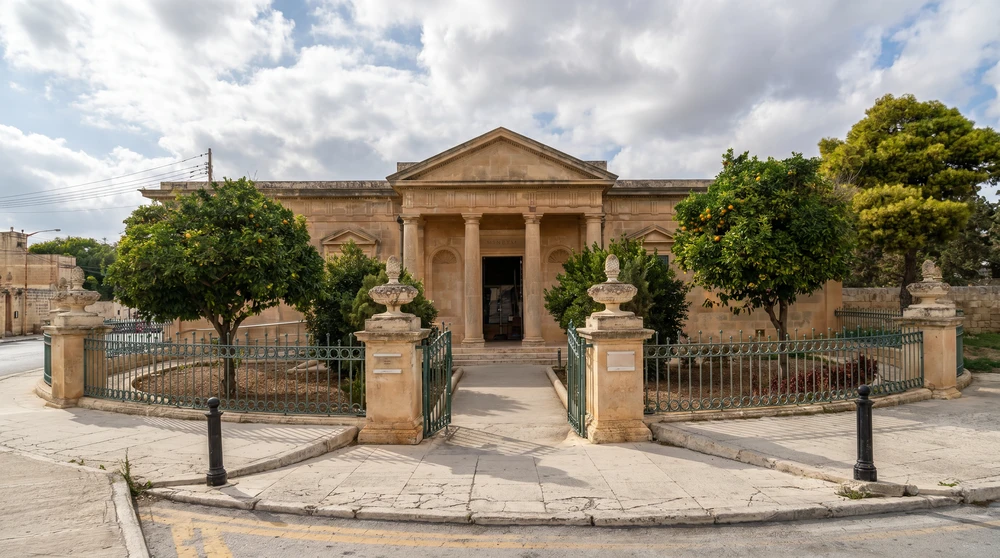
The museum sits right on the invisible border separating the medieval walls of Mdina from the busy streets of Rabat, and the museum building is itself history. Inaugurated in 1882, it was the first purpose-built structure in Malta meant solely to protect an archaeological site.
Rabat is a major transit hub, so reaching it is straightforward.
- From Valletta: routes 51, 52 or 53, around 35 minutes depending on traffic
- From Sliema or St Julian's: routes 202 or 203, slower at up to an hour
- Drop-off: the main Rabat interchange, a flat two-minute walk from the museum across the park from the Mdina ditch
The modern protective building uses skylights over the main courtyard. Between 09:00 and 11:00 the sun sits low and casts a softer, directional light across the floors, bringing out the vibrant reds, ochres and deep blacks in the stone. By 13:00 the flat midday sun washes out the colours and reflects harshly off the protective glass.
Group your stops logically and the Rabat area rewards you. Start at the Domus Romana at opening for the mosaics, then walk 10 minutes south to St Paul's Catacombs before the underground tunnels warm up, where the St Paul's Catacombs in Rabat reveal an early Christian burial complex right next door. Save the late afternoon for the walled city itself, since the wider sweep of things to do in Mdina and Rabat fills easily once the cruise-ship groups have returned to the harbour.