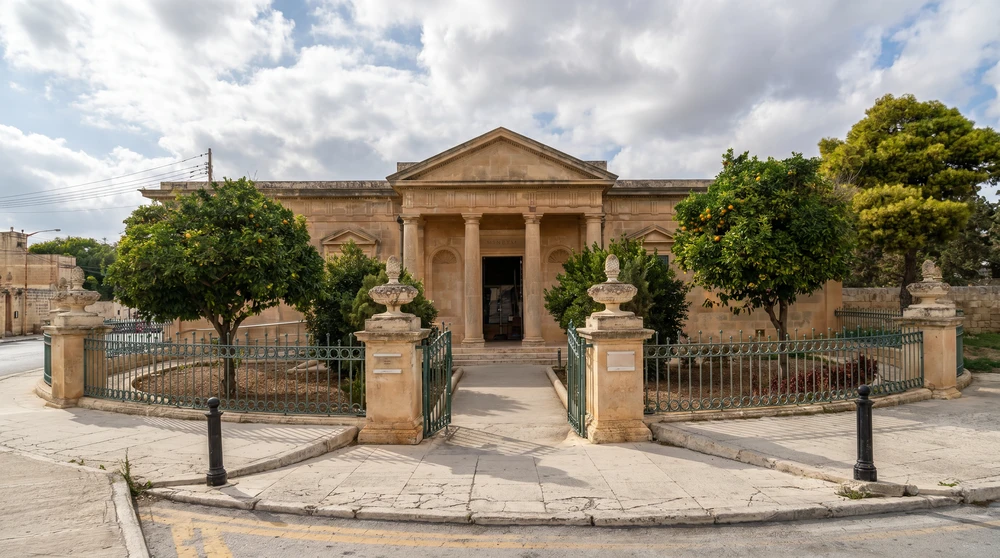
Most visitors arrive at the ticket desk around noon, only to discover the 500-meter walk between the two temples offers absolutely zero shade from the intense Maltese sun. Planning your arrival time and knowing about the €1 golf cart shuttle makes the difference between an exhausting trek and a brilliant exploration of structures 1,000 years older than Stonehenge.
A single Heritage Malta combined ticket covers both temples and the visitor centre, and the ticket desk runs on a strict card-only policy. The site opens daily at 9:00 AM, closing at 6:00 PM in summer and 5:00 PM in winter, so build the timing into your plan before you set out.
Arriving at the Visitor Centre: Tickets and the 4D Cinema
Your visit begins indoors, which offers a great chance to escape the heat and understand exactly what you are about to see. The ticket desk operates on a strict card-only policy, so keep your physical cash tucked away. Once you secure your combined ticket, costing €10 for adults, €7.50 for seniors, students, and youths, and €5.50 for children, do not rush straight out to the ruins.
Scan the QR code at the desk to download the free audio tour straight to your phone. Bring your own headphones, since listening to the commentary while navigating the ancient stones provides crucial context. Before stepping outside, spend seven minutes watching the 4D introductory movie. The visual reconstruction helps you visualize the original roofed structures, making the bare ruins outside much easier to comprehend.
If you are carrying heavy backpacks, drop them in the on-site lockers to free up your shoulders for the walking ahead. For a half-day of sightseeing on Malta's southern coast, the nearby Blue Grotto boat trip pairs naturally with the temples and sits only a few minutes down the road. If you would rather not drive, a guided combination is easy to arrange through A Malta day tour.
Exploring Hagar Qim: The 57-Ton Megaliths
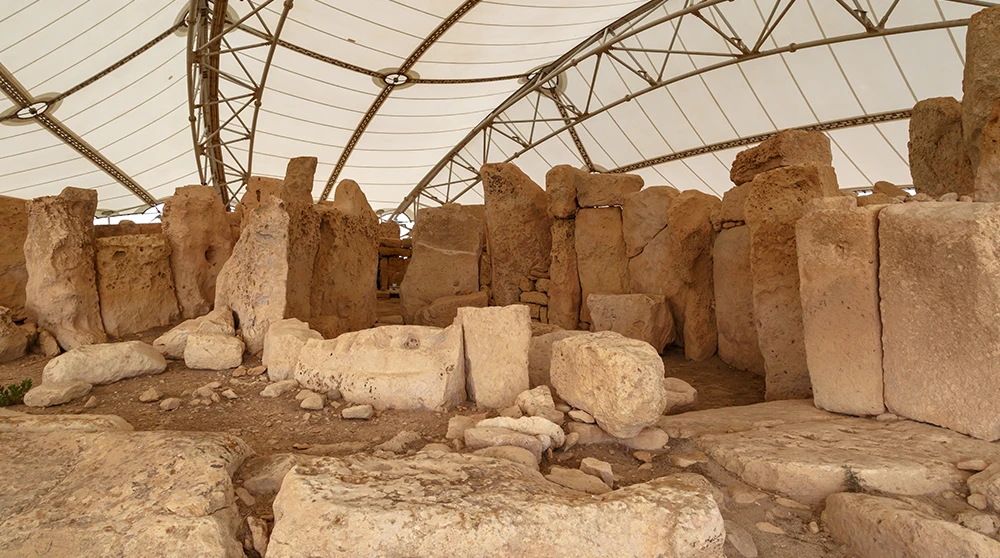
Stepping out of the visitor centre, you immediately encounter the massive protective canvas tents shielding Hagar Qim from the coastal winds and rain. Built around 3600 BCE from soft Globigerina limestone, this complex showcases prehistoric engineering that continues to baffle archaeologists.
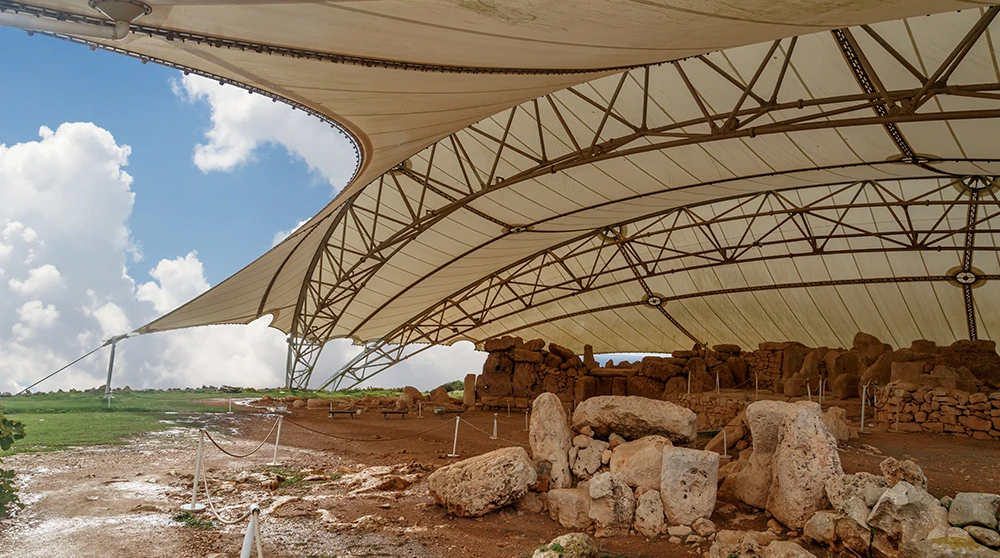
The scale here is staggering. Walk along the outer wall to spot the largest megalith on the site, a single block of stone stretching 6.4 meters long and weighing an estimated 57 tons. The builders maneuvered these colossal weights without the wheel or metal tools.
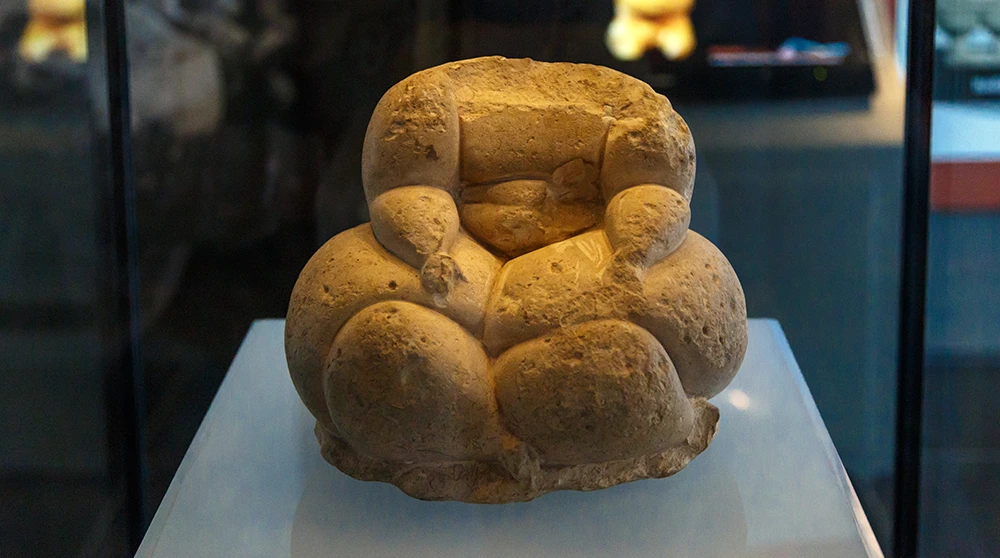
Inside, a paved wooden walkway leads you through the central corridors and apses. Keep an eye out for the small oracle hole carved into the stone and the copies of the famous fat lady fertility statues. The delicate originals safely reside in the National Museum of Archaeology in Valletta, which you can fold into a wider day of sightseeing covered in our walk through things to do in Valletta.
The 500-Meter Coastal Walk to Mnajdra
A steep, paved path links the two ancient sites. The walk from Hagar Qim to Mnajdra takes about 10 to 15 minutes and sweeps downhill toward the Mediterranean Sea. The landscape here is stunning, offering uninterrupted views of the uninhabited Filfla Island resting on the horizon. Look closely in the surrounding scrub, and you might spot a few resident cats lounging in the dry grass.
This path is entirely exposed to the elements. During the peak summer months, the midday heat reflects harshly off the pale limestone, so carry water and wear a hat with good coverage.
Walking down to Mnajdra is easy, but the steep hike back up to the exit leaves many visitors breathless. Fortunately, a small golf cart runs back and forth between the two temples. Handing over €1 for a ride back up the hill is the smartest investment you can make on a 35°C afternoon.
Mnajdra Temples: Solstice Alignments and Sea Views
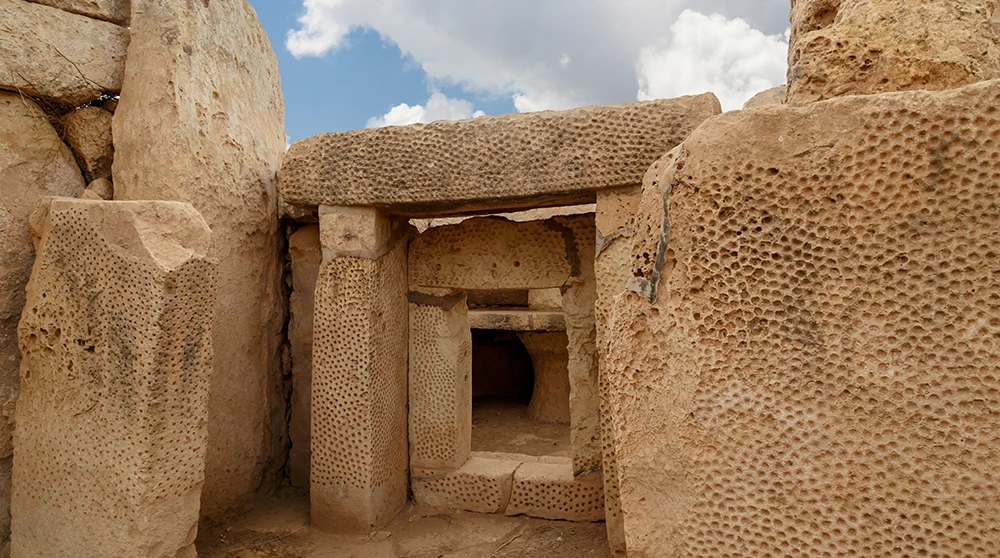
Tucked into a natural hollow right above the cliffs, Mnajdra feels significantly more isolated and serene than its hilltop neighbor. The builders constructed these three distinct temples using harder Coralline limestone, giving the walls a slightly pinkish hue and better resistance to millennia of coastal weathering.
Mnajdra is famous for its precise astronomical design. The South Temple features a flawless summer solstice alignment. During the solstices and equinoxes, the rising sun shoots a concentrated beam of light directly through the main entrance, illuminating specific decorated stone altars deep within the inner chambers.
Even on a standard Tuesday afternoon, standing in a space engineered with such absolute cosmic precision 5,500 years ago is a humbling experience.
How to Get to Hagar Qim and Mnajdra
Navigating to the southern coast is straightforward, whether you rely on public transport or rent a car. If you plan to hop between several sites in a day, the route options in getting around Malta by public transport are worth a quick look before you set out.
- By Bus: Catch bus 74 from Valletta's main terminal. It runs roughly every 30 minutes during peak hours, and the journey takes about 45 minutes. The bus drops you off directly at the archaeological park's entrance.
- By Car: The site sits just 15 kilometers from Valletta, with free parking for around 50 cars. Arrive right at 9:00 AM to secure a spot before the large tour buses claim the lot by mid-morning.
- Hop-On Hop-Off: The popular South Route tourist buses include a dedicated stop right outside the temple gates.
Comparing Malta's Megaliths: Hagar Qim vs. Tarxien and Ggantija
If your itinerary only allows for one prehistoric site, choosing between Malta's heavy hitters comes down to the surrounding environment.
The Tarxien Temples boast the most intricate stone carvings and spiral reliefs, but they sit entirely surrounded by a modern, dense urban neighborhood. The Ggantija Temples on Gozo claim the title of the absolute oldest, yet they lack a dramatic backdrop.
Hagar Qim and Mnajdra offer the ultimate balance. You get the colossal 57-ton architecture combined with an untouched, sweeping Mediterranean landscape that looks almost exactly as it did when the first stones were laid in 3600 BCE. If you intend to visit several Heritage Malta sites, it is worth weighing a multi-site option, which our breakdown of the Heritage Malta pass versus discount cards lays out in full.