Malta packs stunning coastlines, thousands of years of history, and a buzzing food scene onto islands you can cross in under an hour. The catch is the traffic. Narrow streets and heavy peak-hour congestion can make a short hop feel slow, so it pays to understand your options before you arrive. The good news is that Malta has an extensive public transport network reaching almost every corner of both Malta and Gozo, and a few smart choices at the airport will save you both money and time.
This guide walks you through the bus system, the Tallinja travel cards, ferry crossings, and ride-hailing, so you can get from the arrivals hall to your hotel and around the islands without stress.
How to Get from Malta Airport to Your Hotel
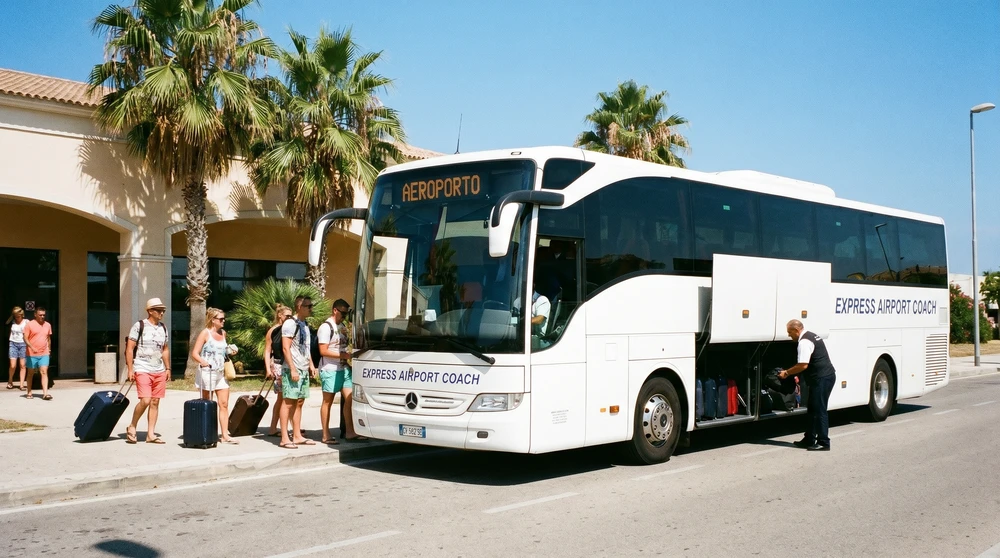
Malta International Airport (MLA) in Luqa is the only airport serving the islands. Once you collect your bags and step into the Welcomers' Hall, you have three realistic ways to reach your accommodation: an express airport bus, a standard route bus, or a ride-hailing app.
The Fastest Option: Tallinja Direct (TD) Buses
Malta Public Transport runs Tallinja Direct (TD) express coaches built with travellers in mind. They offer air conditioning, comfortable seating, and dedicated luggage space, and they skip minor stops to reach the main tourist hubs faster. Note that the old X1 to X4 airport routes were withdrawn in April 2025 and folded into the TD network and regular numbered routes, so any older guide mentioning X-buses is out of date.
The four express lines cover the key areas:
- TD1: airport to Rabat, Buġibba, Mellieħa, and Ċirkewwa (for the Gozo car ferry).
- TD2: airport to St. Julian's and Pembroke.
- TD3: airport to Gżira, Sliema, and St. Julian's.
- TD4: airport to Valletta and the Gozo Fast Ferry terminal.
Each TD journey costs a flat €3.00 per passenger. Critically, TD routes are not covered by the Explore unlimited card, so you pay this fare separately even if you hold a 7-day pass.
The Budget Route: Standard Public Buses
If you want to save every euro, regular numbered routes also serve the airport for the standard single fare rather than the €3.00 express price. The trade-off is time. Standard buses stop frequently and wind through villages, which can easily double your travel time during the morning (07:00 to 09:00) and evening (16:00 to 18:00) rush hours.
For most visitors heading to Sliema, St. Julian's, or Valletta, the small premium for a TD coach is worth it on arrival day when you are tired and carrying luggage.
Taxis and Ride-Hailing Apps in Malta
If you are travelling with family, carrying heavy bags, or landing after the buses stop, ride-hailing is the practical choice. Malta does not rely on street-hailed taxis the way some cities do. Instead, download an app before you fly: the local favourite eCabs, plus Bolt and Uber, all operate here.
A ride from the airport to Sliema or Valletta typically runs €12 to €20 and takes roughly 20 to 30 minutes depending on traffic. Uber does work in Malta, but its fleet is small, so during busy periods waits can be longer than you might expect, and eCabs or Bolt often pull up faster. For a guaranteed meet-and-greet with a fixed price and a driver waiting at arrivals, a pre-booked private transfer removes the guesswork entirely.
Understanding the Tallinja Card: Which One Do You Need?
Buying a single cash ticket every time you board gets tedious, and Malta Public Transport sells several cards aimed at visitors. You can pick one up at the official Sales Outlet in the airport's Welcomers' Hall, at the Valletta terminus, or from automated dispensing machines in popular tourist zones.
The right choice comes down to how long you are staying and how often you plan to ride.
Explore Card (7-Day Unlimited)
Priced at €25 for adults and €7 for children (ages 4 to 10), the Explore Card gives you unlimited travel for 7 consecutive days (168 hours) on all standard day and night routes across Malta and Gozo. In summer it pays for itself after about 10 journeys, and in winter after roughly 13. The one limitation worth remembering is that it does not cover the TD express airport buses, which still cost €3.00 each.
Explore Flex Card
The Explore Flex is a non-expiring, pay-as-you-go card that lowers your per-journey fare to about €1.50 off-peak (€2.00 peak). You link the physical card to the Tallinja App via a QR code, top it up by credit card, and can buy 4-day or 7-day bundles that combine bus travel with a Gozo Highspeed return or a harbour cruise. It suits travellers who ride occasionally rather than constantly.
12 Single Day Journeys Card
For €19 you get 12 discounted journeys, and the real advantage is that this card is shareable. A couple or family can tap the same card multiple times on the reader, and it stays valid for 6 months. It is the most flexible option for small groups who will not ride enough to justify a full unlimited pass.
A quick note on the Personalised Tallinja Card: free travel on this card is a welfare scheme reserved for Maltese residents with a local address and ID. It is not a tourist product, so do not plan your trip around it.
Navigating Malta by Public Bus
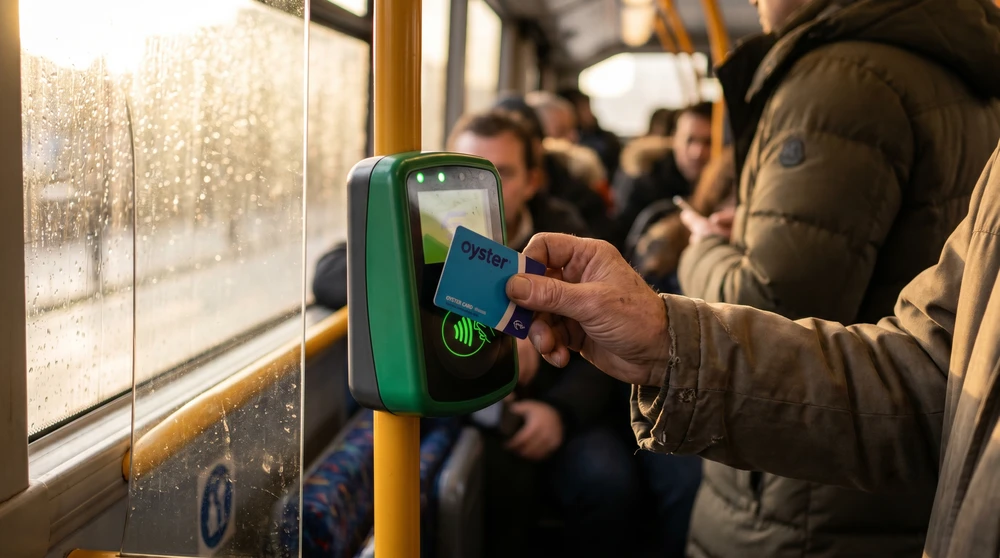
Once you have a ticket or card, boarding is simple. Always board through the front door and tap your card or contactless payment against the electronic reader. A green light and a beep mean you are good to go. A red light signals insufficient credit or an invalid card, and you will need to pay the driver directly.
Current Ticket Prices and Contactless Payments
If you would rather not buy a dedicated card, you can pay on board with a contactless credit card, smartphone, or smartwatch. Cash is still accepted, but drivers strongly prefer exact change. Hand over a €20 note and you may be refused if the driver has no change.
The standard single fares for 2026 are:
- Single journey (winter, 19 Oct to 13 Jun): €2.00
- Single journey (summer, 14 Jun to 18 Oct): €2.50
- Night and TD Direct journeys: €3.00
Every single-journey ticket is valid for exactly 2 hours, letting you transfer across as many connecting buses as you need within that window without paying twice.
Why You Should Download the Tallinja App
Printed timetables at Maltese stops are not worth relying on. With so many cars on the road, buses can run late, especially in summer. The Tallinja App (on the App Store and Google Play) is essential: a live map tracks buses in real time, shows the minutes until the next arrival at your exact stop, and plans routes for you.
Insider tip: on busy coastal routes in peak season, if the app shows two buses approaching close together, let a packed one pass. The bus trailing right behind it is usually far emptier.
Alternative Ways to Get Around Malta
Buses are great, but they are still stuck in the same traffic as everyone else. When you are moving between coastal cities, taking to the water can be faster and far more scenic.
Valletta Ferry Services (Sliema and Three Cities)
If you are based in Sliema or the Three Cities and want to reach Valletta, skip the slow bus through traffic and take the ferry. The crossing takes only 7 to 10 minutes and boats run roughly every 15 to 30 minutes through the day.
Adult fares are €3.00 single and €5.00 return, rising slightly to €3.50 single and €5.20 return on the night service after 19:30. These ferries are run by Valletta Ferry Services, independently of the bus network, so the standard Explore card is not accepted on board.
Exploring Gozo: The Fast Ferry Connection
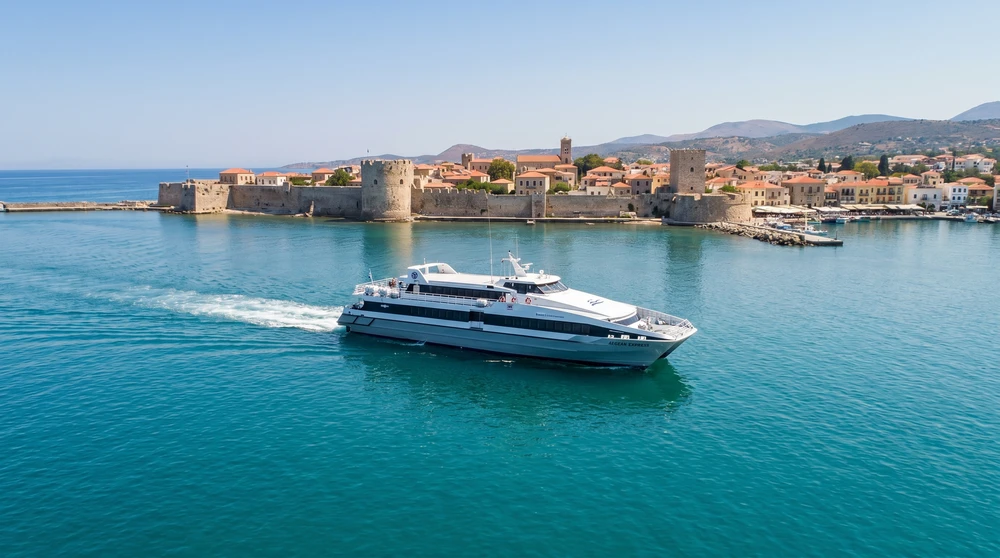
No trip to Malta is complete without its sister island, Gozo. You can ride the route 222 bus north to Ċirkewwa for the traditional car ferry, but pedestrians have a quicker option. Take the TD4 bus from the airport (or reach the terminal in Valletta) and hop on the Gozo Fast Ferry, a high-speed passenger boat that reaches Mġarr Harbour in under 45 minutes, skipping the long road journey north entirely.
Renting a Car for Flexibility
If your plans involve quiet villages, the cliffs of Dingli, or exploring Gozo at your own pace, a rental car gives you freedom the bus map cannot. Just remember that Malta drives on the left and town centres are tight, so comparing rates early helps you lock in a small, easy-to-park model.
Hop-On Hop-Off Sightseeing Buses
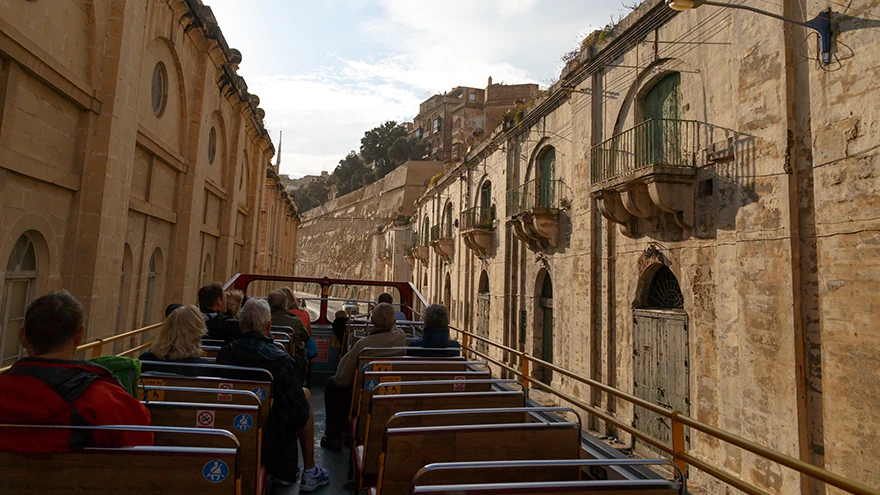
If you would rather not piece together routes on a first visit, the open-top hop-on hop-off buses give you a guided overview of the island. Two loops, a northern and a southern route, depart from the Sliema ferry area and Valletta and string together the headline sights like Mdina, Mosta, and the Three Cities, with recorded commentary along the way. A ticket is valid all day, so you can step off at any stop and catch a later bus, which makes it a low-effort way to get your bearings before exploring on your own.
By planning routes through the Tallinja app, choosing the right travel card at arrivals, and using ferries to dodge urban traffic, you can keep your Maltese holiday relaxed, affordable, and efficient. Enjoy the islands.