Many visitors walk straight up to the heavy wooden doors of the cathedral expecting to buy a ticket, only to be turned away and sent back across the square. To save time and frustration, head directly to the Cathedral Museum on the right side of the plaza first to grab your combined entry pass, since tickets are not sold inside the cathedral itself.
This guide covers everything you need before you go: the combined ticket and current prices, opening hours, the strict dress code, and the Baroque masterpieces waiting inside. It also clears up the most common visitor mix-up, the persistent myth that Mdina's cathedral holds a Caravaggio.
- Tickets: €15.00 for adults (combined pass covering both the cathedral and the Cathedral Museum); seniors aged 60 and over and students with valid ID pay €10.00, and children under 12 enter free.
- Opening Hours: Monday to Saturday 9:30 AM to 4:30 PM (last admission 30 minutes before closing); Sunday visiting is limited to 3:00 PM to 5:00 PM around mass.
- Mass Times: Weekdays at 9:00 AM, with additional services on Saturday and Sunday.
- Dress Code: Strictly modest. Shoulders and knees must be covered, and stiletto heels are discouraged to protect the marble floor.
- Accessibility: Wheelchair ramps are available at the main entrance.
The combined pass is non-transferable and carries a validation date, so plan to use it the same day. Tickets are bought from the museum desk a few metres to the right of the cathedral facade, not at the church doors.
From Ruin to Masterpiece: Lorenzo Gafa and the 1693 Earthquake
According to local tradition, the cathedral stands on the exact spot where Roman governor Publius met St Paul following his historic shipwreck in 60 AD. The original Norman-Aragonese church that occupied this site was nearly leveled by the devastating 1693 Sicily earthquake, and only the apse and a few minor sections survived the tremors.
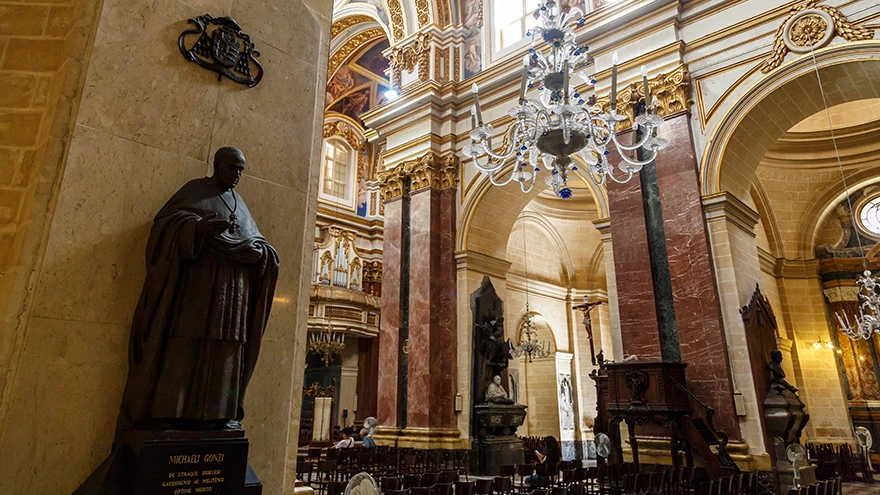
Maltese architect Lorenzo Gafa took charge of the reconstruction. Between 1696 and 1705, he transformed the ruins into a defining example of Maltese Baroque architecture.
The result is a striking facade with twin bell towers and an octagonal dome that dominates the Mdina skyline. The exterior is deliberately restrained compared to the visual explosion waiting inside, a design choice that heightens the impact of entering the nave.
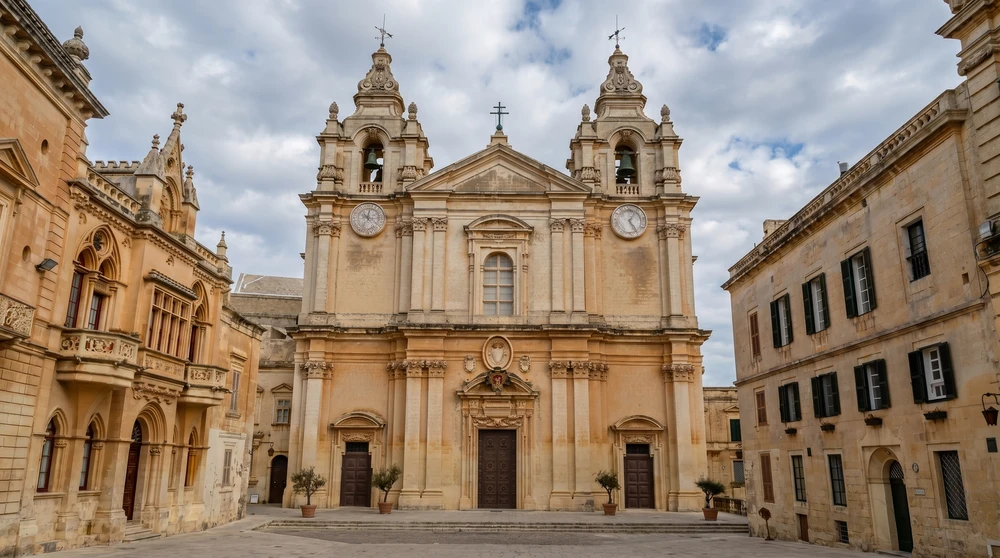
Inside Mdina Cathedral: Art, Vault Frescoes and Inlaid Marble
Mattia Preti's Apse and the Manno Brothers' Vault Paintings
A common misconception circulating online is that this cathedral houses works by Caravaggio. Those famous paintings actually reside in St John's Co-Cathedral in Valletta. Here in Mdina, the artistic spotlight belongs entirely to Mattia Preti and the Sicilian Manno brothers.
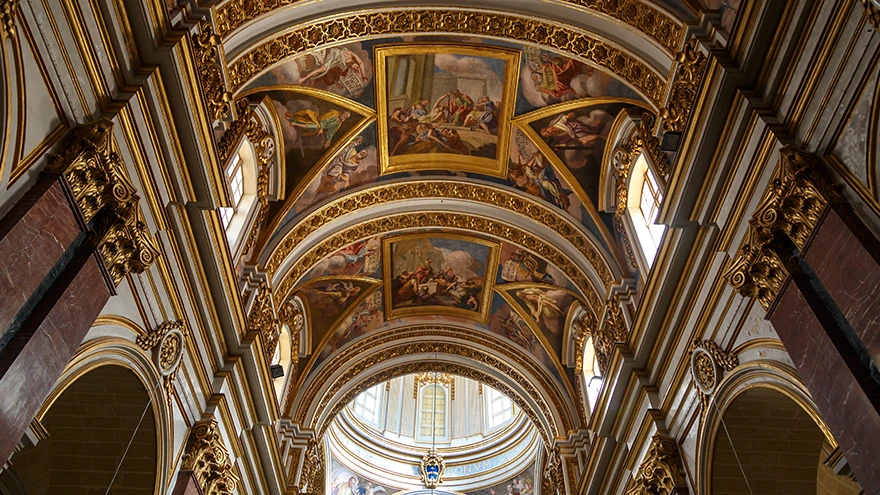
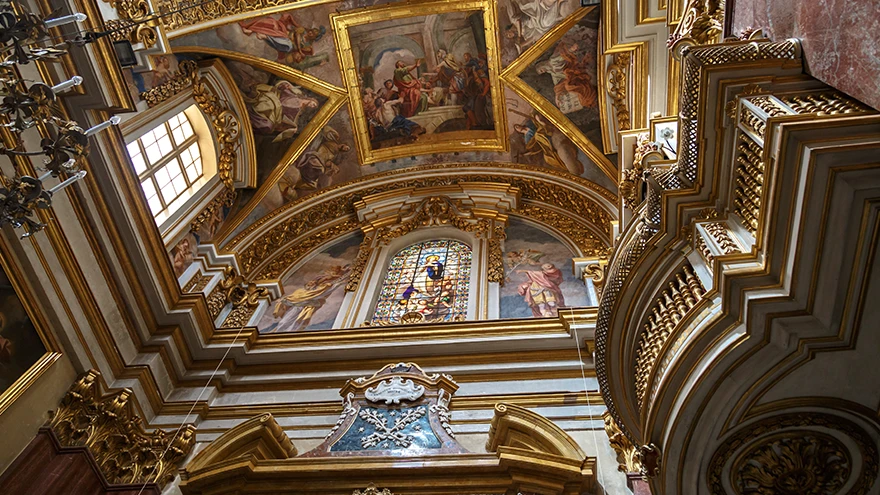
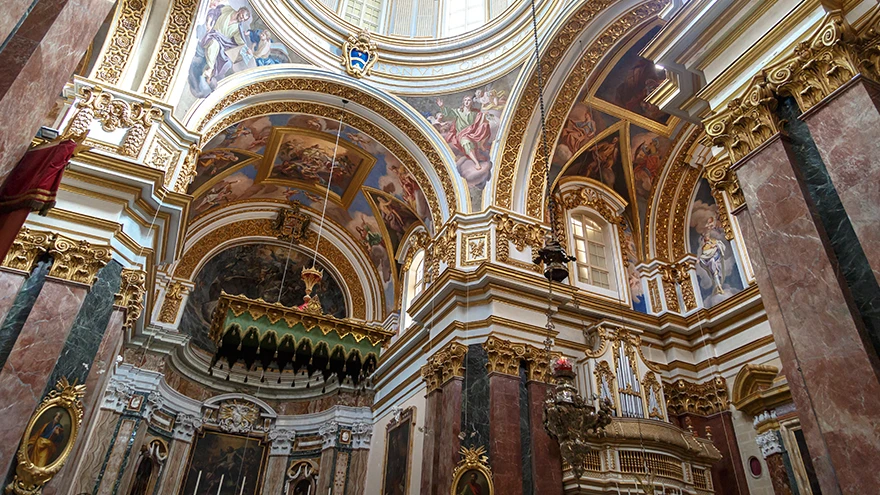
Preti's monumental titular altarpiece, the Conversion of St Paul, and his apse fresco of the Shipwreck of St Paul are rare survivors from the pre-earthquake era. Above the main nave, the Manno brothers executed a series of breathtaking ceiling frescoes detailing the life and trials of St Paul. The vibrant colors and dynamic compositions draw the eye upward the moment you step through the doors.
The Cosmatesque Colored-Marble Tombstone Floor
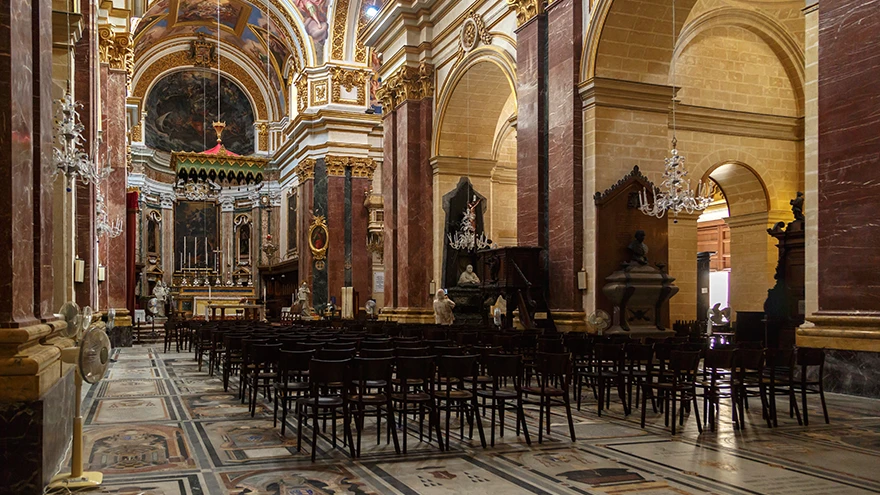
The floor of St Paul's Cathedral is an intricate mosaic of death and legacy. Hundreds of inlaid marble tombstones cover the ground, each one commemorating a noble family member or a high-ranking cleric. Skulls, coats of arms, and religious insignia crafted from multicolored marble create a dazzling visual effect.
Cleverly, the cathedral often uses transparent perspex chairs for the congregation. This ensures the brilliant Cosmatesque stonework remains visible, allowing you to appreciate the artistry without heavy wooden pews blocking the view.
The Combined Ticket: Maximizing the Cathedral Museum Visit
Because you are required to purchase a combined ticket, skipping the Cathedral Museum across the square means wasting half of your admission fee. Housed in a lavish 18th-century Baroque seminary, the museum holds several unexpected treasures.
Inside, you will find an extensive collection of Albrecht Dürer prints, bequeathed by Count Saverio Marchese centuries ago. The museum also safely houses Malta's oldest bell, Petronilla, cast in Venice in 1370, which survived both major earthquakes and hung in the cathedral belfry until 2008.
Essential Practical Info for Visitors
Opening Hours, Mass Times and Modest Dress Code
Sightseeing hours generally run from 9:30 AM to 4:30 PM Monday to Saturday, with Sunday access narrowed to the late afternoon, but the cathedral is an active place of worship. Mass is held on weekdays at 9:00 AM. Attending a service is free, yet wandering around to examine the art during this time is not permitted.
The dress code is enforced at the door. Sleeveless shirts, short shorts, and skirts above the knee will result in denied entry. Carrying a lightweight scarf in your bag to drape over your shoulders easily solves this issue, and shawls are also available at the entrance.
Accessibility, Photography Rules and Bag Restrictions
The main entrance is fitted with ramps, making the nave accessible for wheelchair users. Photography is permitted throughout the building, provided you turn off your flash to protect the delicate pigments of the frescoes.
Large backpacks are generally discouraged inside the tight confines of the cathedral. If you are carrying heavy luggage, the staff at the Cathedral Museum across the square are often accommodating and may allow you to leave your bags at the desk while you explore.
How to Integrate St Paul's Cathedral into an Mdina Itinerary
Timing your visit dictates the entire atmosphere of your experience. Arriving right at 9:30 AM allows you to explore the cathedral before the large tour groups arrive from Valletta and St Julian's.
Once you finish with the cathedral and the museum, the layout of Mdina naturally funnels you toward the bastion walls. The immediate surrounding alleys, devoid of heavy foot traffic, offer the true "Silent City" aesthetic that makes the former capital so captivating. Pair the cathedral with the rest of Mdina and Rabat to fill a half day, and history fans can continue to the early Christian St Paul's Catacombs and the Roman mosaics of the Domus Romana a short walk away in Rabat. To see the Caravaggio canvases that Mdina is so often confused with, head to St John's Co-Cathedral in Valletta.