Booking a flight to Funafuti International Airport is only half the battle. The real challenge is coordinating the exact days so the International Date Line does not cause you to miss your hotel reservation entirely. Getting to the world's least-visited country requires treating your itinerary like a strict military briefing rather than a casual island getaway.
- Flights: Exclusively operated by Fiji Airways from Nadi or Suva, with around five weekly rotations as of 2025.
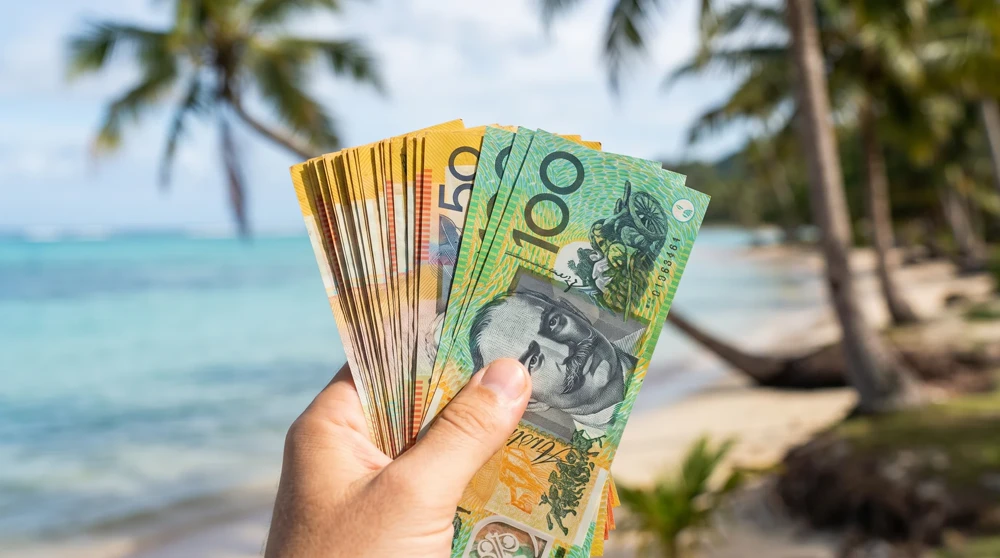
- Currency: Australian Dollars (AUD) only, in physical cash format.
- Infrastructure: No working ATMs for tourists, zero credit card acceptance at hotels.
- Local Transport: No official taxi network; locals frequently offer rides from the airport.
- Connectivity: Very limited internet; local SIM cards provide basic access.
How to Get to Tuvalu (Fiji Airways Logistics)
Fiji Airways holds a complete monopoly on the airspace here. Flights are infrequent and the schedule serves as the definitive clock for the entire island. Your flight information display system is quite literally the sky. Booking a standard round-trip from North America or Europe directly to Tuvalu will trigger immense logistical headaches.
As of late 2025, Fiji Airways operates five flights per week to Funafuti - two from Nadi (Monday and Friday) and three from Suva (Tuesday, Thursday, Saturday). The route was boosted in August 2025 with the addition of a second weekly Nadi departure, giving slightly more flexibility. Round-trip fares start from around AUD 730 from Fiji.
For a deeper look at how Pacific country collectors approach back-to-back island logistics, the Nauru for Country Collectors guide covers the same strategic mindset applied to Tuvalu's closest competitor for the title of hardest Pacific nation to reach.

Suva vs. Nadi Departures
The route connects through Fiji, with departures split between Nadi and Suva. Suva generally offers slightly more frequency, but Nadi serves as the primary international hub. Always build a buffer day into your Fiji layover. Missing the single connection from Nadi on a given day means waiting until the next scheduled rotation, which could be several days away.
Many travelers find it useful to compare Tuvalu against its nearest Pacific neighbor before committing. The Nauru vs Tuvalu breakdown covers which tiny Pacific nation makes more sense depending on your travel schedule and country count priorities.
The International Date Line Trap
Crossing the Pacific Ocean to reach these atolls involves a massive time zone shift. Many travelers depart their home country on a Sunday, fly for over 30 hours, and arrive on Tuesday morning. Monday completely vanishes. Map out your arrival day meticulously on a calendar before emailing guesthouses, or you risk paying for nights you spend mid-air.

This is not a minor inconvenience. Country collectors who have already handled the Nauru visa and invitation letter process will recognize the same obsessive pre-departure planning energy required here.
Cash and Currency: Why You Must Bring AUD
Tuvalu operates entirely as a cash society. The official currency is the Australian Dollar (AUD). Do not make the mistake of withdrawing excess Fiji Dollars during your layover, as they are completely useless once you land in Funafuti.
There is reportedly an ATM behind a curtain at the airport, but it remains non-operational for international cards. Hotels, guesthouses, and local grocery stores do not own credit card machines. Calculate your daily cash burn rate and bring extra. You must carry enough physical AUD to cover your accommodation, all meals at local open-air restaurants, and emergency transport.
Budget roughly AUD 100 per day as the immigration baseline for sufficient funds, but realistic daily costs - including a basic guesthouse room, meals, and the occasional boat charter - will run significantly higher. Carry at minimum AUD 500 to 700 per week beyond your accommodation pre-payments.
Visa on Arrival: What to Expect at Immigration
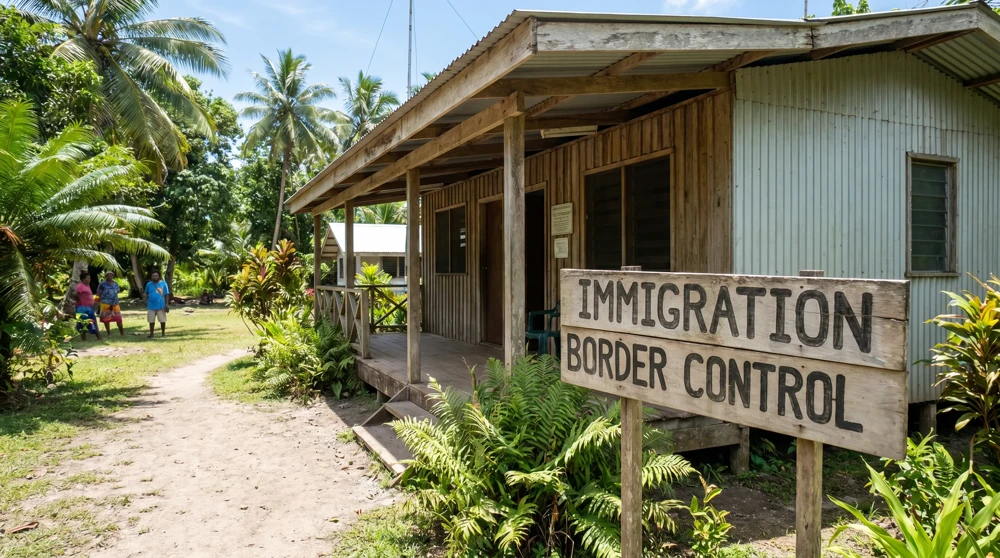
Most nationalities, including citizens of the United States, United Kingdom, Canada, Australia, New Zealand, and EU member states, receive a visa on arrival valid for up to 30 days. The fee is AUD 100 paid in cash at the airport. Schengen area passport holders may qualify for 90-day visa-free entry.
You must present at immigration: a valid passport (minimum 6 months validity remaining), proof of onward or return travel, accommodation confirmation, and sufficient funds. Extensions up to 3 months total can be applied for in Funafuti at immigration's discretion for approximately AUD 50.
Funafuti Infrastructure and Accommodation
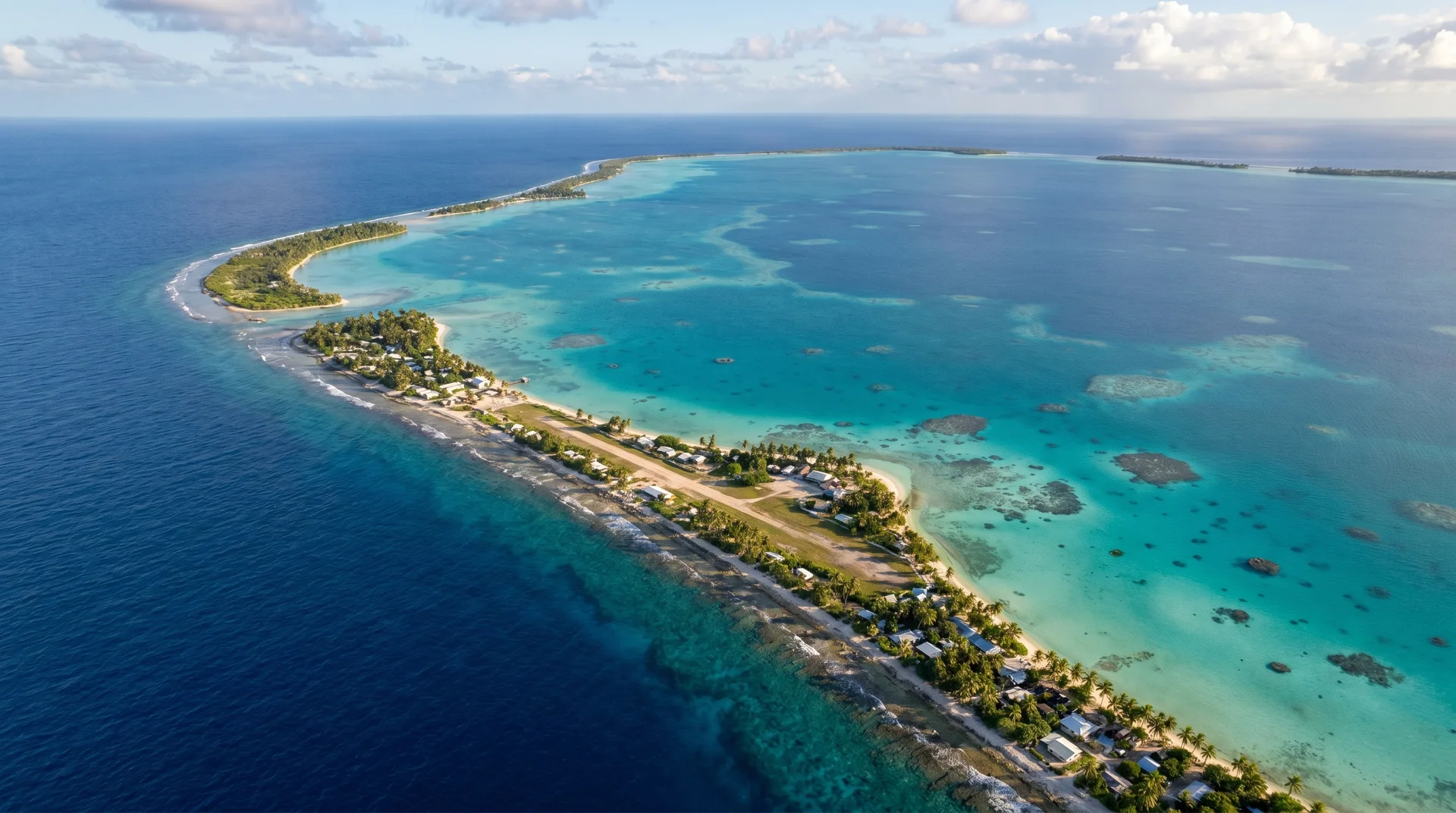
The main island of Funafuti covers less than a square mile of land. Hotel inventory is exceptionally scarce and standard booking engines are largely useless. You must email independent lodges weeks in advance to secure a room. The where to stay in Tuvalu guide lists every guesthouse on the island with direct contact details.
Tourists compete for these few available beds with international construction crews. These workers remain stationed on the island for the Tuvalu Coastal Adaptation Project, a phenomenon explained in detail in the Tuvalu climate change guide, pumping sand to combat erosion. Expect basic amenities, simple air conditioning units, and no guaranteed airport pickups unless directly negotiated with your lodge owner beforehand.
As part of your pre-travel planning, backpacker travel insurance that covers medical evacuation is non-negotiable on an island this isolated. The nearest proper hospital is a flight away.
The Runway: Funafuti's Daily Community Hub
The airport tarmac runs straight through the center of the atoll. The airstrip functions as a massive public park when flights are absent. The concrete remains filled with locals playing volleyball, riding bikes, and gathering in the late afternoon heat.

The transition from playground to active runway is highly efficient. A loud siren sounds across the island before an aircraft approaches. Authorities quickly deploy cones and clear the area of stray animals and pedestrians. Watching the plane land from your guesthouse balcony is a core part of the island experience.
Climate Change and the Falepili Union Treaty
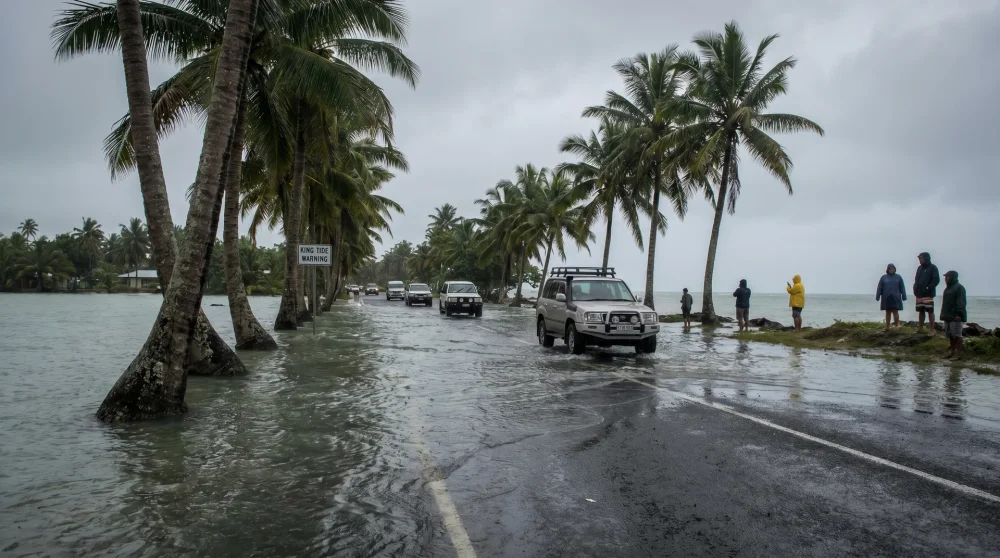
Rising sea levels pose an existential threat to this microstate. Tuvalu covers just 26 square kilometers with an average elevation of 2 meters above sea level. Even a modest storm surge pushes seawater directly into the streets. NASA estimates the sea level around Tuvalu is rising 1.5 times faster than the global average, and projections suggest that by 2050, half of Funafuti could be underwater.
The nation is actively preparing for unprecedented geographical shifts. The Falepili Union Treaty, signed with Australia in November 2023, is the world's first bilateral climate mobility agreement. It allows up to 280 Tuvaluans per year to move to Australia to live, work, and study on an indefinite basis, while Australia explicitly commits to recognizing Tuvalu's continued statehood even as its physical territory disappears.
The government is also building a digital clone of the country in the metaverse to preserve their songs, customs, and heritage before the physical land becomes uninhabitable. Visiting now means being a witness to a country confronting its own disappearance in real time.
Funafuti Conservation Area
Escaping the heat of the main strip requires chartering a small boat to the protected marine reserve. These uninhabited islets sit under an hour away and offer pristine coral reefs right off the beach. Keep your electronics in dry bags, as torrential squalls roll over the lagoon without warning.
The contrast between the dark ocean and the bright turquoise lagoon is incredibly sharp. Swimming in clear water next to rusted metal remnants from WWII creates a surreal landscape. The jungle canopies here remain lush, offering genuine isolation just a short boat ride away from the main runway.