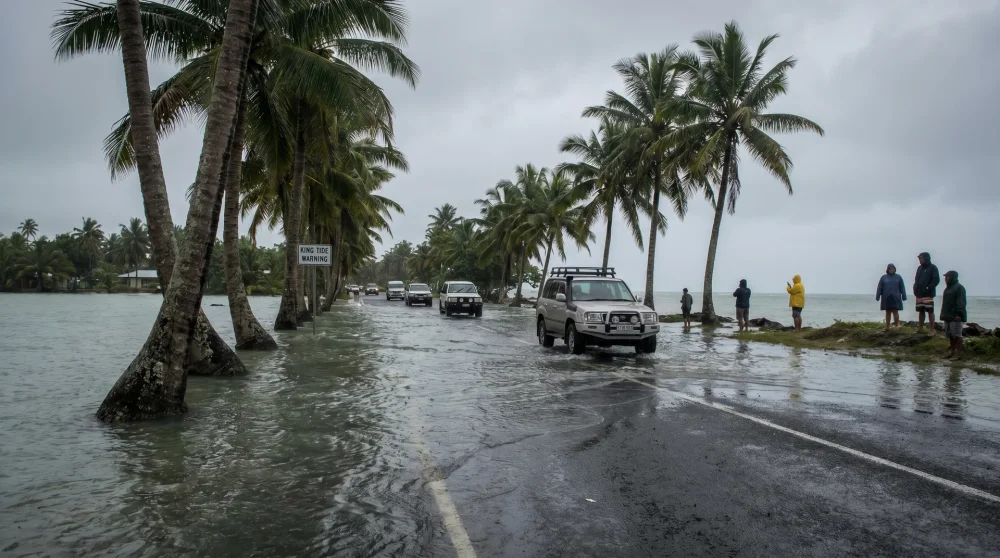
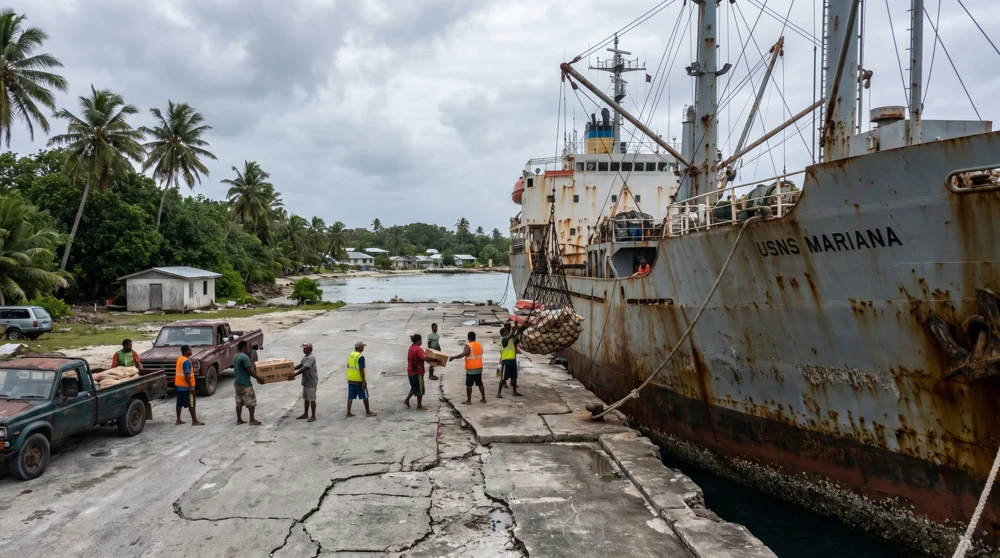
Funafuti is unlike any capital city you have ever visited. The main road doubles as an active international airport runway, the entire island is narrow enough to cross on foot in under five minutes, and the nearest major city is a two-and-a-half-hour flight away across open ocean. Getting the most out of your time here means understanding how the atoll actually works - its rhythms, restrictions, and the handful of genuinely rewarding experiences it offers visitors who make the effort to reach it.
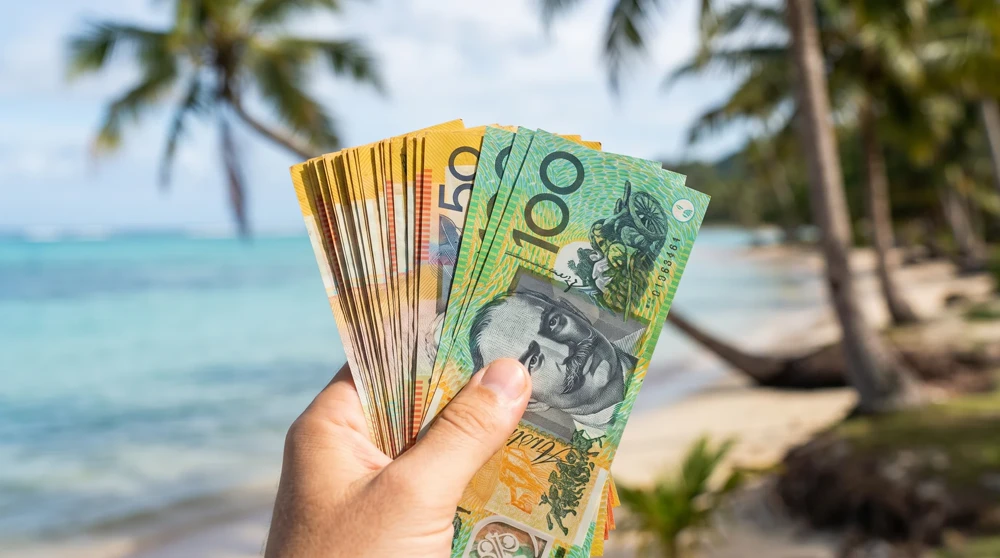
Before diving into the activities, a few logistics matter. The Australian Dollar (AUD) is the only currency accepted, and the single ATM at the National Bank of Tuvalu runs out of cash before most weekends. Bring enough physical currency for your entire stay. Motorbike rentals are the most practical way to explore, available informally through guesthouses at around AUD 10 to 20 per day - no signboards, just ask at your accommodation.
Connectivity is extremely slow across the atoll, so download offline maps and reading materials before you land. And pay close attention to two time-sensitive rules: a daily worship curfew from roughly 6:45 PM to 7:00 PM requires you to stop wherever you are - police will enforce it - and Sundays bring near-total closures of shops, transport services, and recreational activities. Stock up on water and supplies on Saturday.
If you are planning a trip, our guide on flying to Tuvalu covers the limited airline options and booking logistics in detail.
Walk the Funafuti Airport Runway
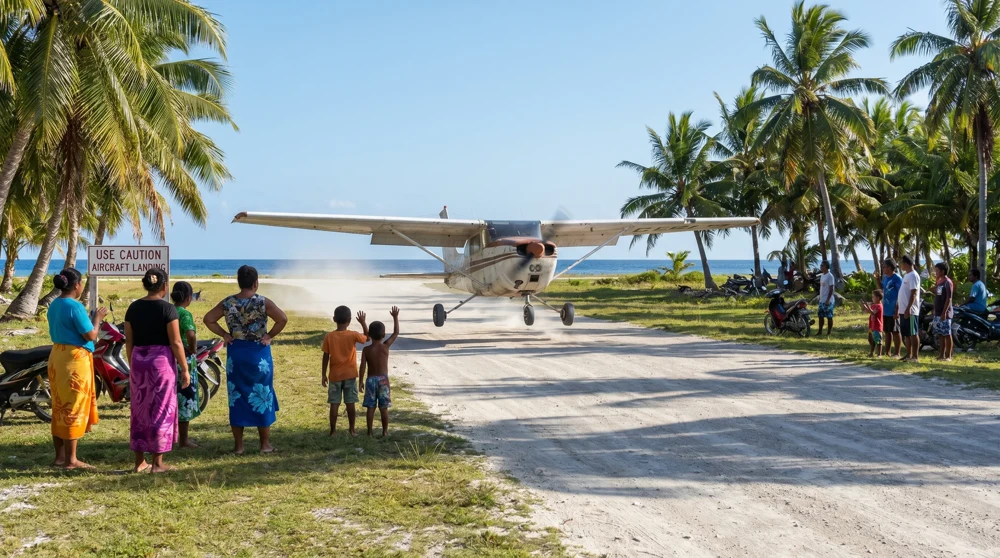
Twice a week - currently on Tuesdays and Thursdays - a Fiji Airways flight lands at Funafuti International Airport, and then the runway transforms into something entirely different. Within minutes of the plane departing, locals pour onto the tarmac to play rugby, cycle, fly kites, and gather with neighbors in the cooler evening air.
Watching a group of teenagers kick a football across an active international runway while the sun drops toward the lagoon is one of those genuinely disorienting travel moments that stays with you.
A loud siren signals whenever an aircraft is approaching. When you hear it, clear the strip immediately - everyone does, without exception. Outside of flight operations, the tarmac is entirely public. Walking the full length at sunset gives you a clear sense of daily life here: the government buildings on one side, the lagoon glittering on the other, and the whole community using the most improbable public space in the Pacific.
For context on how rare this situation is and why flights are so infrequent, see our flying to Tuvalu article.
Snorkel the Funafuti Conservation Area
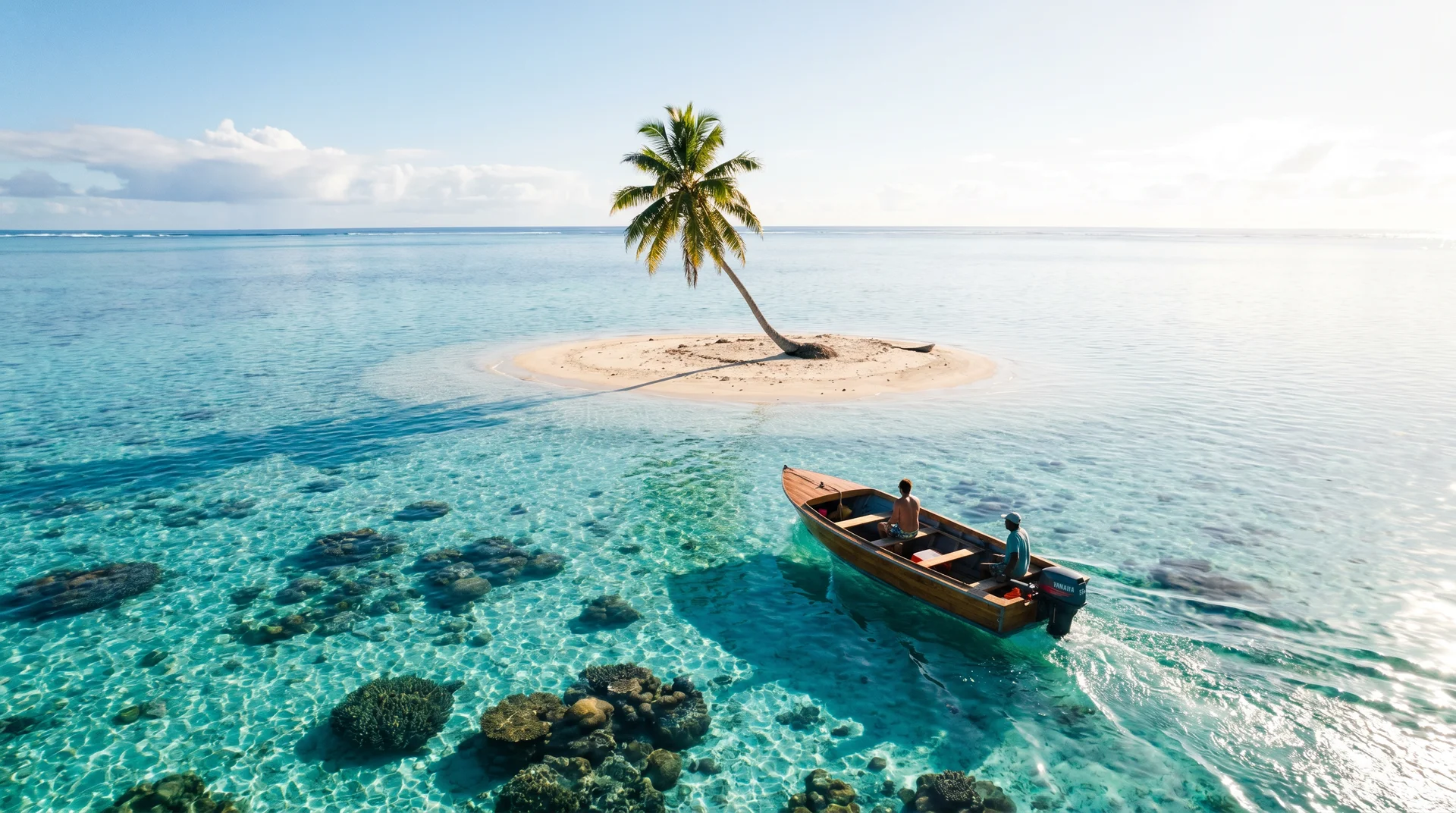
The western side of the atoll is protected as a 33-square-kilometer marine conservation zone covering six uninhabited islets and some of the healthiest reef in the central Pacific. This is the top natural attraction in Funafuti, and rightly so - the visibility is exceptional, the coral is largely intact, and the wildlife ranges from sea turtles and reef tip sharks to manta rays and enormous shoals of reef fish.
There are no scheduled ferries. Reaching the conservation area means arranging a private boat charter through your guesthouse or by negotiating directly with local boat operators near the main jetty. The crossing itself is part of the experience - a fast ride across the flat lagoon with low islets shimmering in the distance. Entry fees are modest and typically include the boat transfer when booked through accommodation.
Bring your own quality snorkeling gear - rental options are limited and unreliable. Reef shoes or thick water shoes are essential; the coral formations at the drop-offs are sharp and unforgiving. The conservation area generally operates during daylight hours, so plan an early-morning departure to maximize time on the water before afternoon winds pick up.
For timing your visit around the best sea conditions, our best time to visit Tuvalu guide breaks down the seasonal patterns.
Rent a Motorbike and Explore Fongafale
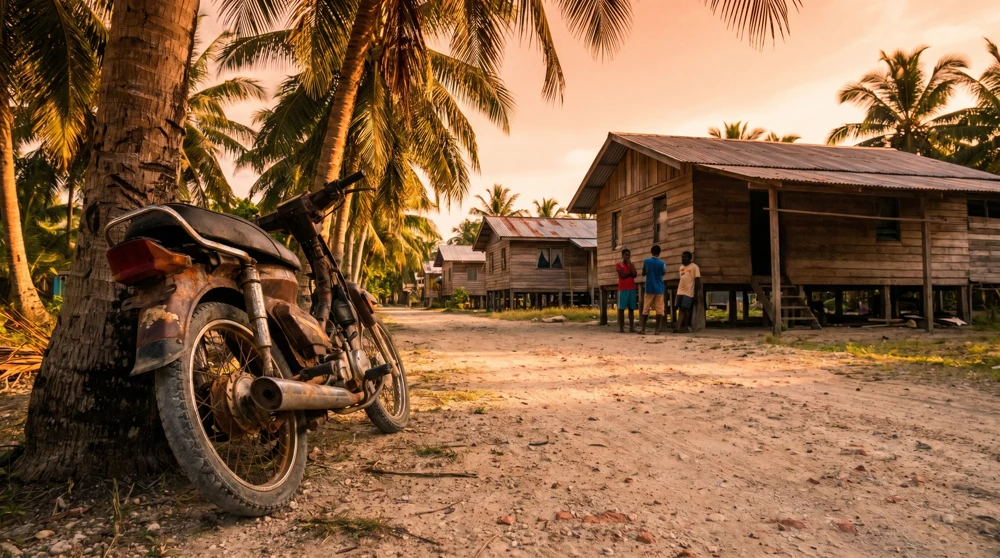
Fongafale islet - the main land mass of Funafuti - runs roughly eight kilometers from north to south but is rarely wider than 400 meters. A single road connects the whole island, which means getting lost is genuinely impossible. A motorbike gives you the freedom to stop wherever the view catches you: a gap between two houses where the lagoon flashes blue, a cluster of older men playing cards in the shade, a stretch of beach with no one on it.
Rentals cost approximately AUD 10 to 20 per day and are arranged informally - ask at your guesthouse or have the owner point you toward a local who hires out their personal bike. You pay cash upfront, receive a full tank, and are expected to return the bike with fuel.
No paperwork, no helmet law enforcement in practice, though riding carefully on a narrow atoll with pedestrians, children, and wandering chickens in the road is simply sensible.
The drive from the airport area to the southern tip takes under 30 minutes. The drive north to the quieter residential end of the island reveals a slower, less-visited side of Fongafale that most day-trippers miss entirely.
Discover the Beaches of Funafuti
South End Beach
At the southern tip of Fongafale, the islet narrows to just a thin strip of land. Standing at the very end, you can see the open ocean on one side and the calm lagoon on the other - a physically striking reminder of how precarious life on a low-lying atoll actually is. The lagoon water here is clear and shallow, excellent for an afternoon swim. The ocean-facing side carries strong currents and no supervision, so stay in the lagoon for swimming. There are no facilities, no shade structures, and no other tourists.
NOYON Beach
Located further up the islet, NOYON Beach is slightly more sheltered and popular among local families, particularly on weekday evenings. The sand is a mixture of crushed coral and shell fragments, so walking barefoot requires some care. The water is calm and the setting is informal - expect local kids, parked motorbikes, and occasional volleyball games rather than a manicured resort beach. It functions as a quiet alternative when the main village area feels busy.
Falauniufatu and Tefonufala Beaches
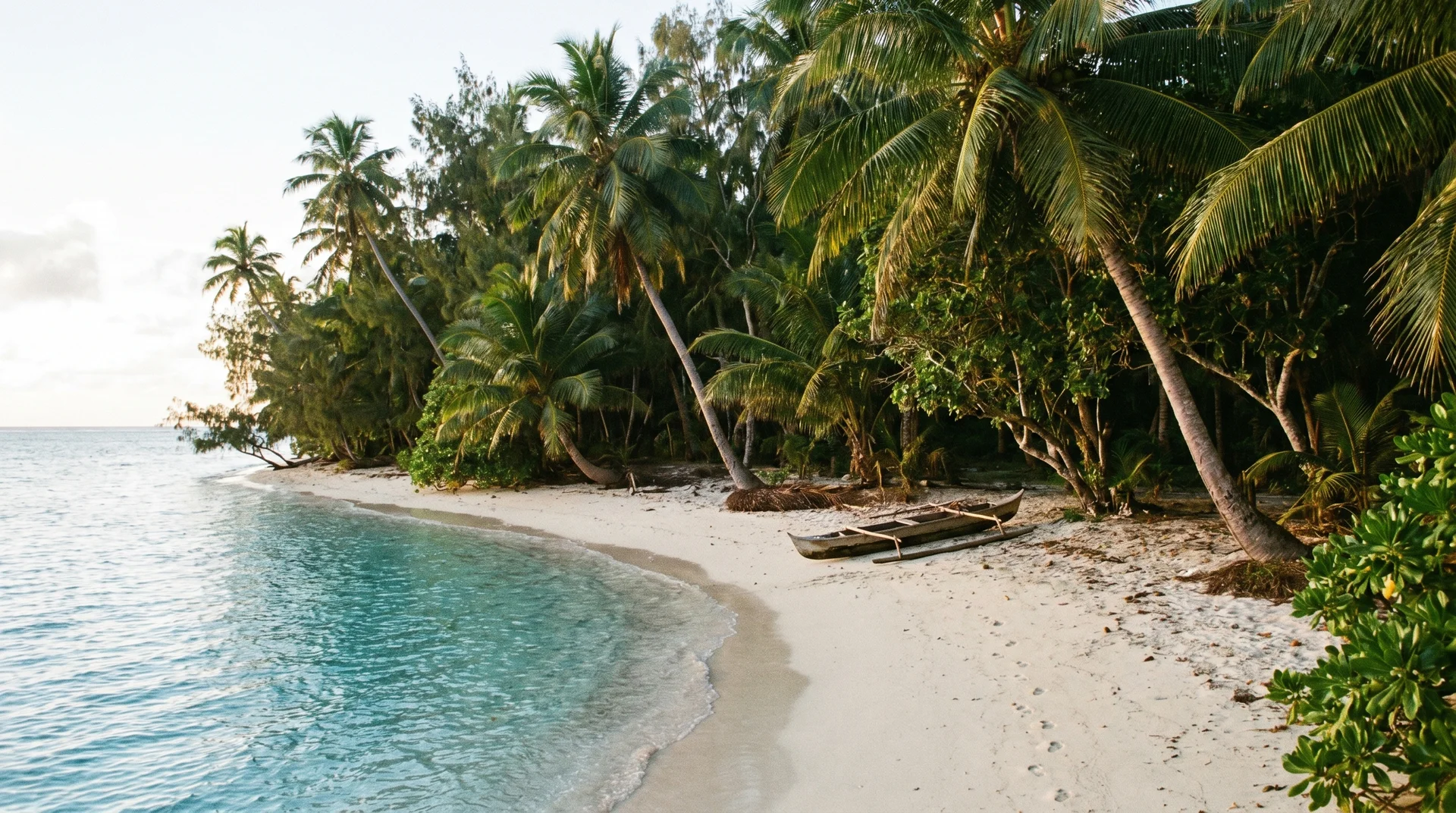
These more remote stretches lie toward the outer edges of the lagoon system and typically require a chartered boat to reach. The payoff is near-total solitude - you will often have a long stretch of white sand and turquoise water completely to yourself.
Bring everything you need: drinking water, food, sun protection, and snorkeling gear. There are zero facilities and no shade beyond whatever palm cover you find. Arrange your boat through your accommodation the day before.
For a broader view of how Tuvalu's outer atolls and island groups compare, our Tuvalu outer islands guide covers what is accessible beyond Fongafale.
Walk Through Vaiaku Village
Vaiaku is the closest thing Funafuti has to a town center - a compact cluster of government buildings, small shops, guesthouses, and the Philatelic Bureau arranged along the main road near the airport. Walking it takes under an hour even at a relaxed pace, but the density of things to notice rewards a slow approach.
The Maneapa (Meeting House)
The traditional open-air Maneapa functions as the social and ceremonial core of Tuvaluan community life. Community debates, celebrations, and formal gatherings happen here. The wooden architecture is intricate, and if something is taking place inside, you may be able to observe from a respectful distance. Wait for a nod of invitation before stepping onto the woven mats - this is genuine cultural space, not a tourist attraction.
The Tuvalu Philatelic Bureau
Right beside the main government building, the Philatelic Bureau issues some of the rarest and most sought-after stamps in the world. Tuvalu's stamps are famous among collectors globally, and sending a postcard from this tiny office with an official Tuvaluan stamp is one of the lightest and most meaningful souvenirs you can take home. The bureau is small and the staff are helpful - bring patience and cash.
The Tuvalu Women's Handicraft Centre
Located near the airport, the centre showcases handwoven pandanus mats, traditional fans, shell jewelry, and woven baskets made by local women and artisans from the outer islands. Prices are reasonable, quality varies, and buying directly here supports the makers. It is the most reliable place for authentic local crafts.
Take a Day Trip to Afelita's Island Resort
A short boat ride - roughly eight minutes from Amatuku Jetty - brings you to Mulitefala islet, a small island in the lagoon where Afelita's Island Resort operates as one of the only off-grid accommodation options in Tuvalu. The resort runs entirely on solar power and rainwater catchment, built from natural materials including wood, coral stone, and palm leaves.
You do not need to stay overnight to visit. Day trips to Afelita's are a genuine highlight for visitors who want to escape the main islet for a few hours: hammock time, wading through the shallow lagoon, eating fresh fish and local produce in the communal pavilion, and the complete silence that comes with being on a small uninhabited-feeling island in the middle of the Pacific. Arrange your boat transfer in advance through your main accommodation - the resort does not operate a public ferry, and showing up at the jetty without a plan rarely works.
This kind of low-key island escape pairs well with the conservation area boat trip if you plan around it on the same day.
Go Deep-Sea Fishing with a Local
Fishing is not a leisure activity in Tuvalu - it sustains families and communities across the atolls. Joining a local fisherman on a small motorized boat or outrigger gives you a direct window into how daily life here actually works. The target species are yellowfin tuna and mahi-mahi, caught using traditional trolling methods on hand lines.
There are no commercial sportfishing operators with fighting chairs and air-conditioned cabins. This is raw, participatory fishing where you are expected to actively help rather than watch. Ask your guesthouse owner about arranging a trip - many have contacts, and the cost is typically negotiated directly with the fisherman in AUD cash.
For a broader picture of what Tuvalu's economy and daily life look like through a visitor's lens, our Tuvalu travel costs guide is a useful reference.
Eat at the Saturday Morning Market in Vaiaku
The weekly Saturday morning market in Vaiaku is the most concentrated food and produce event on the island. Local vendors arrive early with fresh fish caught that morning, pulaka (swamp taro), coconuts, bananas, and occasional cooked dishes. Arriving by 7:00 AM gives you the best selection before the heat sets in and produce sells out.
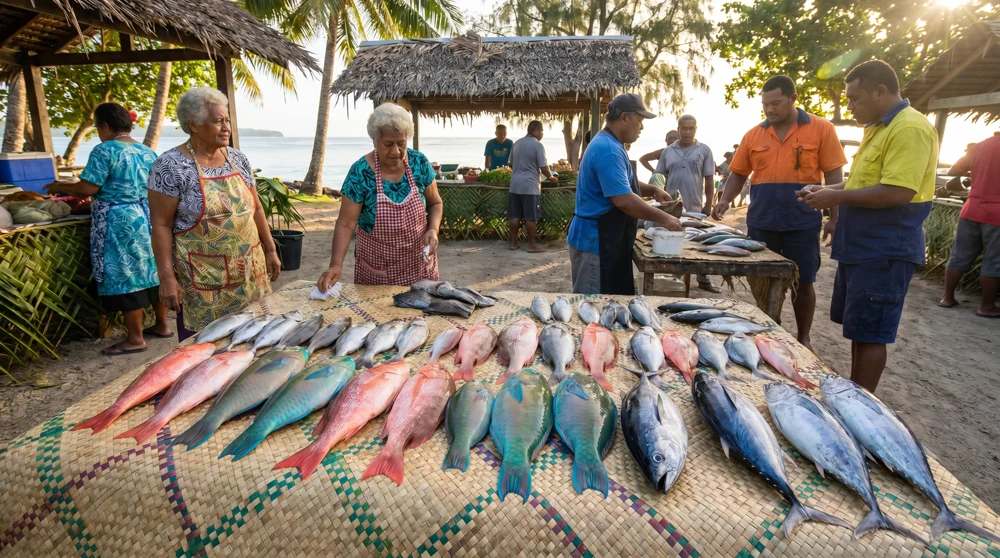
Stick to cooked items and thick-skinned fruits if you have a sensitive stomach - food hygiene infrastructure is limited and stomach upsets are a real risk in remote atoll environments. The market also functions as a social gathering point, so slow down, take your time, and let conversations happen rather than treating it purely as a shopping stop.
For Sunday shopping, note that virtually everything closes - the Saturday market and the Fusi cooperative supermarkets are your only reliable resupply windows before the weekly rest day. This connects directly to one of the most important planning points for Funafuti visitors: our where to stay in Funafuti guide covers which guesthouses provide meals on Sundays, which matters significantly when restaurants are closed.
Understand the Curfew and Sunday Rules
Two rules catch nearly every first-time visitor off guard, and both are worth knowing in advance rather than learning by experience.
The daily worship curfew runs from approximately 6:45 PM to 7:00 PM every day. During this 15-minute window, you are expected to stop moving - no walking, no driving, no standing in the road. Police enforce it. If you are caught outside, you will be asked to sit and wait until it ends. It is a brief, peaceful pause, but it does affect evening dinner timing if your accommodation is any distance from where you are eating.
Sundays operate under near-total closure. No shops, no flights, no fishing, no loud activities. The church bell ringing on Sunday morning signals a full community day of rest and worship. Walking quietly is fine; playing loud music, swimming in public areas, or expecting any services to operate is not. Stock up on water, snacks, and anything you need on Saturday. If you want to attend a church service - which several guesthouses will facilitate - dress formally with shoulders and knees covered.
For a fuller picture of cultural expectations and entry rules, see our Tuvalu entry requirements and Tuvalu climate change context articles, the latter of which explains why the community's relationship with the land and ocean shapes so much of daily life here.
Funafuti rewards visitors who come prepared and slow down. The island has almost none of the infrastructure that makes tropical travel easy - no tourist signs, no organized tours, no chain restaurants. What it offers instead is the rare experience of a genuinely remote community going about its life, with a lagoon that most travelers will never see, and a sense of place that no amount of development has touched.
Cultural Etiquette and Social Rules
Funafuti is a deeply conservative community, and visitors who respect local customs are welcomed warmly. A few rules matter more than the rest.
LGBT travellers: Tuvalu law criminalises same-sex relationships, with penalties theoretically up to 14 years imprisonment. In practice, enforcement is rare and tourists have not been targeted. The German Foreign Office and UK FCDO both note this as a formal risk. Exercise discretion in public.
Dress code: Modest clothing is expected away from the immediate beach area. Shoulders and knees covered when walking through Vaiaku village. Swimwear stays at the water.
Photography: Always ask before photographing individuals or community gatherings. The maneapa (community hall) and ongoing ceremonies deserve particular respect. People are generally happy to be photographed once asked.
Church and prayer: Sundays are near-total rest days across Tuvalu. The 6:45pm daily prayer curfew applies island-wide - stop walking, stop driving, wait quietly for about 15 minutes until it lifts. Police will politely remind anyone still moving.
What to Eat in Funafuti
Funafuti's food scene is modest but rooted in genuinely Tuvaluan ingredients. Most guesthouses provide meals on request, and the Saturday market in Vaiaku is the best place to eat like a local.
Pulaka is Tuvalu's national staple - a type of swamp taro grown in underground pits across the atolls, with a denser, earthier texture than regular taro. You will find it alongside coconut in most home-cooked meals.
Palusami - young taro leaves baked in coconut cream - appears at community feasts and occasionally at guesthouses. Ika Mata (raw fish marinated in lime and coconut cream) is the local answer to ceviche, and excellent when fresh.
The Fusi cooperative supermarket in Vaiaku stocks canned goods, rice, and basics. For fresh fish, the Saturday morning market is your best option - arrive early, the best cuts sell fast.