The Marshall Islands sit roughly 2,000 miles southwest of Hawaii, straddling the International Date Line in the North Pacific. Most travelers have never heard of Beran Island. Those who have spent months trying to get there. That gap between awareness and access is the exact reason the reef passes surrounding Ailinglaplap Atoll still break empty.
Why Beran Island Exists on Every Serious Surfer's List
The name behind Beran Island Resort is Martin Daly, the Australian surf explorer who charted over 100 virgin breaks across the Pacific over four decades. When Daly stopped at Ailinglaplap, he recognized a setup that rivals the Mentawai Islands at their best: long-period North Pacific swell hitting exposed reef passes with no crowd, no compromise.
The 45-acre private island runs entirely on solar and wind turbines. Every piece of infrastructure, from outboard engine parts to imported prime cuts in the kitchen, arrives by ship. The plantation-style lodge features vaulted ceilings and heavy timber accents that feel deliberately permanent, not temporary glamping. Max capacity is 16 guests, and regular departures sell out well in advance.
Legendary surf names have already made the pilgrimage. Kelly Slater and world-class kiters including Reo Stevens and Keahi De Aboitiz have filmed sessions here. Their verdict: the Marshall Islands competes with the best wave kitesurfing destinations on the planet.
The Wave Setup: Reef Passes and Right-Handers
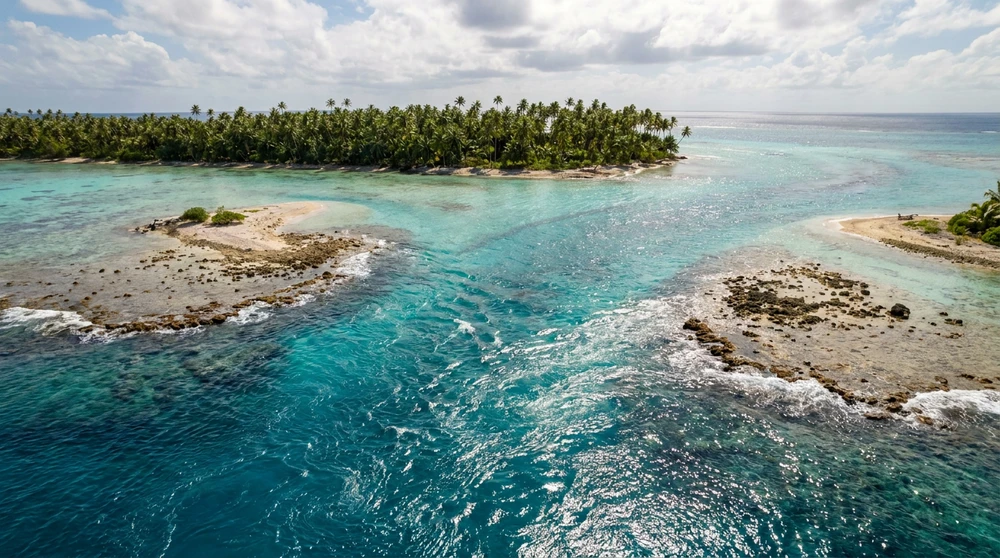
Beran sits in the center of several breaks scattered across the north coast of Ailinglaplap Atoll. Every wave in the lineup is a right-hand reef pass, running on a starboard tack setup. Wind direction sits consistently cross-to-offshore, creating clean, down-the-line conditions for both surfers and kiters.
Amnesia and The Bowl
The two closest breaks are visible from the lodge itself. Amnesia and the Bowl sit just 4 nautical miles out, a 10-minute tender ride from the dock. When swell direction and tide align, these two spots offer the most consistent sessions of the week. Water clarity here is absolute, with reef detail visible deep below the surface even under cloud cover.
Nirvana
At 12 miles from the resort, Nirvana is a classic point-style setup. When a genuine North Pacific groundswell pushes through, Nirvana produces long, structured walls that allow proper rail-to-rail surfing rather than short-burst barrel hunting. Kiters running it in waves report one of the longer rides available in the atoll.
Maybes
The resort's boat captains treat Maybes with specific respect. Located 11 miles out, it is the heaviest and most consequential break in the atoll. When the swell angle and tide stack perfectly, Maybes throws a genuine hollow barrel over a shallow reef section. This is not a spot for intermediate-level reef surfers. The fast day boats and jet skis make rapid approaches and exits from the break safe and practical.
Access to Nirvana and Maybes runs via 23-foot fast day boats or jet skis. Timing the approach around the correct tide window is critical, and the resort's captains know these passes well enough to read the incoming sets from the boat before committing to the lineup.
Kitesurfing and Foiling Conditions
The trade winds at Ailinglaplap run reliably from November through July at 15 to 25 knots, side-offshore across every break in the atoll. This puts kite conditions firmly in the high-quality bracket for most of the year, far beyond a typical two-week travel window.
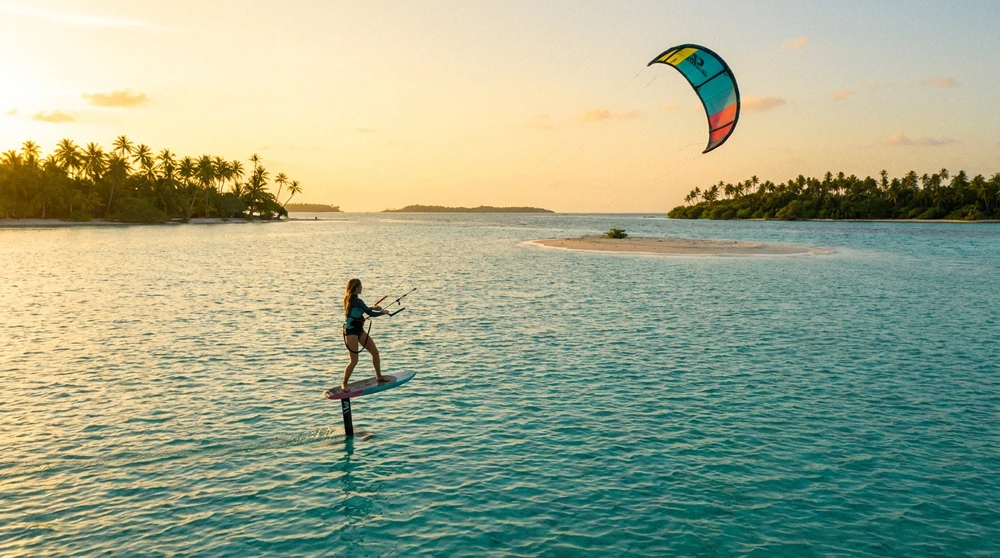
Low tide on the fringing reefs drains the water table, exposing butter-smooth flatwater slicks across the lagoon interior. These tide-dependent flatwater windows are the primary freestyle and downwind session zones. As the tide pushes back over the coral, small kickers and bump-and-jump sections form naturally, extending the session options without needing to touch the outer passes.
Tow foiling runs between the deep coral mounts on the two resort jet skis fill the no-wind gaps. The staff actively shadows sessions, calling safe exit channels over live coral in real time. Guests who bring their own foils significantly expand what is possible on flat days.
The resort's all-in gear rental package runs $1,000 per week, covering Ozone kites, twin tips, FCD surfboards, and Armstrong foil setups. Boards and bars are included. The only personal item required is a harness. Given that airlines on this Pacific routing regularly charge $250 to $300 per board bag each way, the rental math works clearly in favor of traveling light.
Getting to Beran Island
The Marshall Islands is deliberately difficult to reach, and that difficulty is the filter that keeps the breaks empty. All western travelers route through Honolulu (HNL), connecting onto the United Airlines Island Hopper to Majuro (MAJ). The full getting to the Marshall Islands guide covers routing from all major departure points including Australia.
Once in Majuro, the resort coordinates the rest. A domestic hop on Air Marshall Islands to Woja airstrip (~$425 return) is followed by a short boat transfer to the island. The full journey from Majuro arrival to checking in at Beran is typically completed within the same day. Schedule changes on the AML leg are common - build at least one buffer day in Majuro each direction.

Most western passport holders (US, EU, Canada, Australia, New Zealand) receive a visa on arrival at Majuro airport with no advance paperwork. All other nationalities should check Marshall Islands visa requirements before departure. Bring USD cash - ATMs are effectively unavailable outside Majuro.
Accommodation
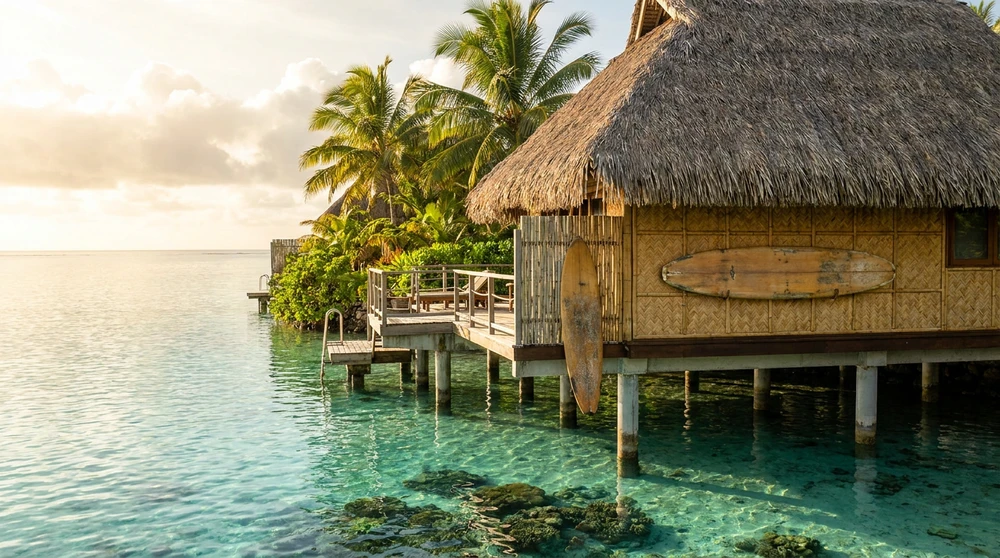
Beran Island Resort is the only place to stay on the island, which means booking and surfing are the same decision. The lodge runs eight rooms: ground floor double occupancy at $9,650 per person, upstairs en-suite with private balcony at $9,850 per person, single occupancy at $14,925. All meals, drinks, laundry, and island transfers are included. The kitchen runs on fresh local catch and imported prime cuts; dietary requirements handled with advance notice. Slots sell out months ahead - book early or join a waitlist.
Best Time to Visit
The statistical sweet spot for combining swell and wind is late January through March. This window sits inside the North Pacific swell season (October to April) while the trade winds are running at peak reliability for both surfing and kiting simultaneously. Peak swell season without reliable wind leads to flat kite days; reliable wind outside the swell season produces clean flatwater but no waves.
November through April reliably delivers groundswells from the northern latitudes. November through July covers the consistent trade wind window. The overlap is the booking target.
The best time to visit the Marshall Islands article covers the full seasonal calendar for non-surf activities including cultural events and diving visibility. Avoid booking immediately after the wet season transition (August to October). Wind frequency drops and swell direction shifts unpredictably. Experienced guests report that late January to March delivers the highest probability of scoring seven rideable days out of seven.
Marine Life and the Shark Sanctuary
The Marshall Islands enforces the largest shark sanctuary on the planet, covering nearly two million square kilometers of ocean. Commercial shark fishing and finning are completely banned and actively enforced.
The reef passes surrounding Beran are teeming with marine life as a direct consequence. Blacktip and whitetip reef sharks patrol the drop-offs constantly, typically topping out around five feet in length.
They show no aggression toward surfers or kiters moving through the lineup. Diving alongside these smaller sharks in 200-foot visibility is one of the most commonly cited highlights of non-surf downtime. The diving in the Marshall Islands guide covers dedicated dive sites beyond the Beran passes.
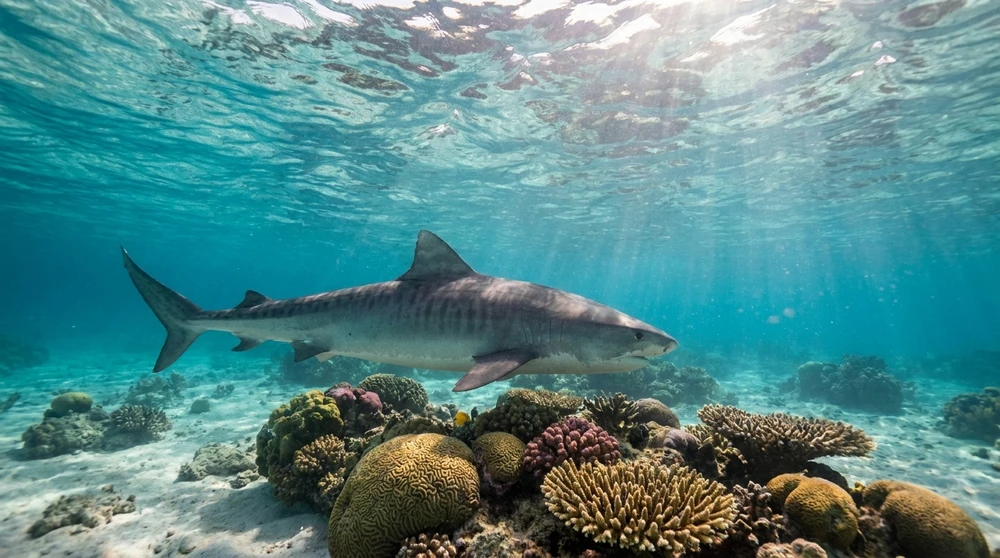
Encounters with tiger or great white sharks in these passes are virtually unheard of over decades of exploration. The shark sanctuary, the isolation, and the enforced no-fishing zones around the resort combine to create a marine environment that most tropical destinations have already lost.