Planning a trip to the Marshall Islands is an exciting venture, but because it is one of the most remote and geographically scattered nations on Earth, sorting out the logistics can feel overwhelming. Think of this guide as a detailed roadmap from a trusted travel partner who has analyzed the realities of Pacific aviation to save you from common pitfalls.
Relying on generic flight aggregators will not give you the full picture here. Navigating entry restrictions, dealing with military-controlled airfields, and understanding regional flight networks require a deeper dive. Here is everything you need to know to seamlessly plan your route to the Marshall Islands.
How to Fly to the Marshall Islands: Flights, Routes, and Entry Rules
Reaching the Republic of the Marshall Islands (RMI) is a journey in the truest sense. Unlike traditional destinations where you can simply choose from dozens of daily flights, the Marshall Islands relies on a delicate network of specific routes, strict schedules, and unique geopolitical agreements. Whether you are traveling for leisure, diving, or business, mastering these aviation corridors is your first step.
Before diving into the detailed routes, here are the foundational constraints of traveling to the RMI:
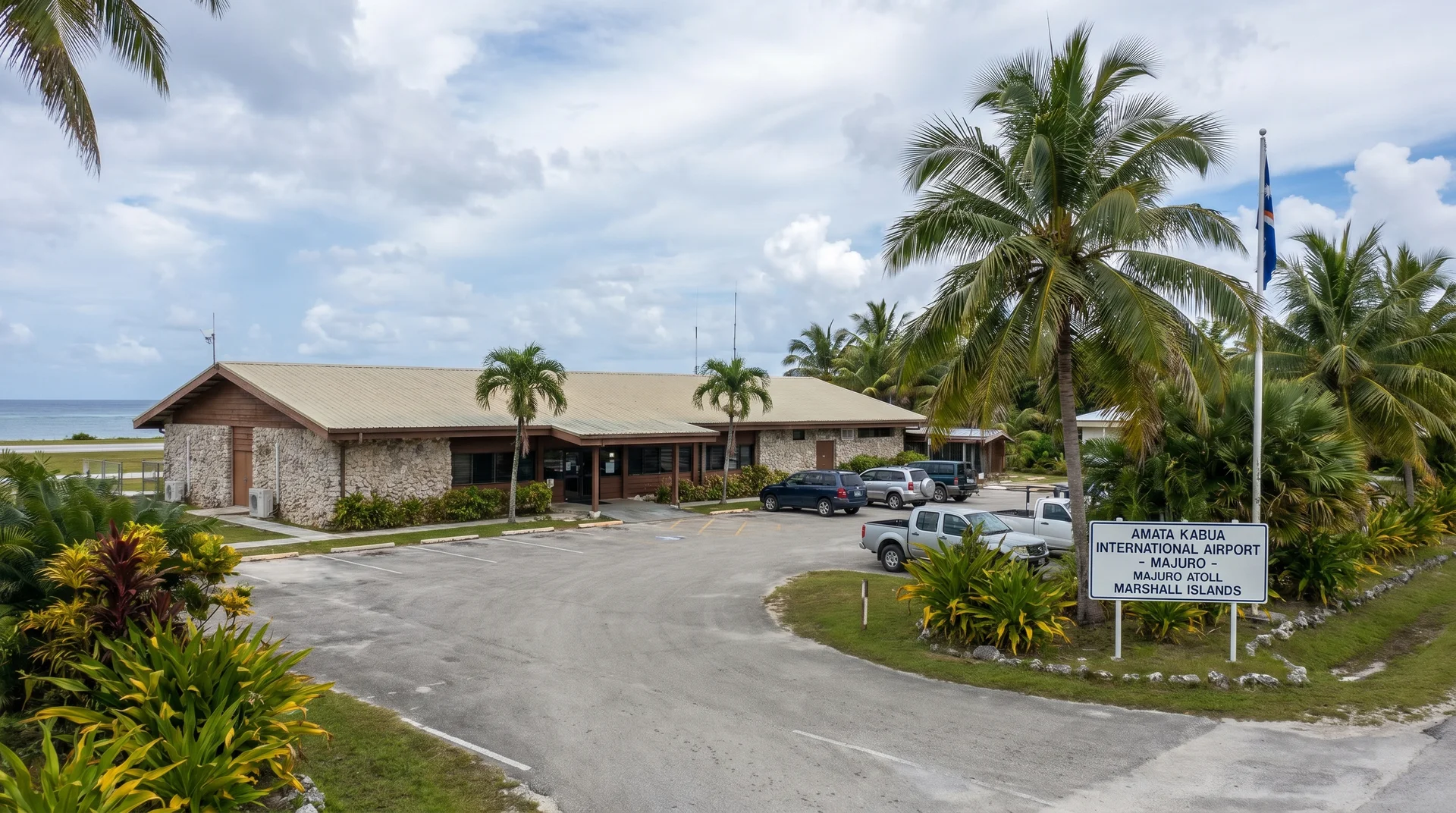
- Primary Hub: Amata Kabua International Airport (MAJ) in the capital city of Majuro.
- Major International Carriers: United Airlines and Nauru Airlines.
- Domestic Operator: Air Marshall Islands (AMI).
- Alliances Present: Star Alliance (via United Airlines).
- Seating Classes: Economy and Business Class are available on international routes; domestic flights are strictly economy.
- Low-Cost Carriers: None. Every flight into the Marshall Islands is operated by a full-service legacy or regional carrier.
1. International Flight Corridors: How to Get There
There are two primary gateways into the Marshall Islands. Your point of origin - whether coming from North America, Europe, Asia, or Australia - will dictate which of these lifelines you will take.
The Legendary United Airlines "Island Hopper" (Route UA 154 / UA 155)
If you are coming from North America or East Asia, your journey will almost certainly involve United Airlines' famous "Island Hopper." This is not just a commercial flight; it is a vital geographical lifeline that has connected Micronesia for decades.
- The Route: The flight operates between Honolulu, Hawaii (HNL) and Guam (GUM), bouncing across the Pacific Ocean.
- The Stops: A full eastbound or westbound journey typically stops at Majuro (MAJ), Kwajalein (KWA), Kosrae (KSA), Pohnpei (PNI), and Chuuk (TKK).
- Flight Time to Majuro: From Honolulu, the flight takes approximately 5 hours and 20 minutes to reach Majuro - the longest and most direct trans-Pacific leg available, covering roughly 2,278 miles.
Insider Tip: Because the Island Hopper only operates a few times a week, missing a connection can delay your travel itinerary by several days. Always book long layovers in Honolulu or Guam to cushion against delays on your feeder flights.
The Southern Connection: Nauru Airlines
For travelers originating in Australia, New Zealand, or parts of the South Pacific, Nauru Airlines offers an invaluable alternative to flying all the way north to Hawaii or Guam.
- The Route: Nauru Airlines operates an island-hopping service connecting Brisbane, Australia (BNE) to the Central Pacific.
- The Stops: The flight route moves from Brisbane to Nauru (INU), Tarawa, Kiribati (TRW), and finally to Majuro (MAJ).
- Schedule Dynamics: Much like United, Nauru Airlines operates on a highly specific weekly schedule. It provides an essential cultural and commercial link between Oceania and Micronesia, making it the perfect choice if you want to combine your Marshall Islands trip with a broader North Pacific exploration.
If Nauru is already on your radar, read our guide on how to get to Nauru for the full picture on flights and visa requirements.
2. Navigating the Gateways: Majuro vs. Kwajalein
The Marshall Islands has two airports capable of handling international flights, but they serve completely different purposes. Understanding the distinction between them is critical to avoiding a logistical nightmare.
Majuro International Airport (MAJ) - Amata Kabua International
This is the true civilian gateway to the country. Located on the southern side of the Majuro Atoll, this airport welcomes all tourists, returning residents, and business travelers.
- Facilities: It is a functional, medium-sized airport. While it features business class lounges for qualifying passengers via Star Alliance networks, amenities are basic.
- Onward Travel: From here, you can access local taxis, hotels, and the domestic terminal.
Bucholz Army Airfield (KWA) - The Military Base Catch
While major flight schedules list Kwajalein Island Airport (KWA) as a destination, you cannot simply book a ticket, land, and walk off the plane.
- The Reality: Kwajalein Atoll hosts the Ronald Reagan Ballistic Missile Defense Test Site, a restricted United States military installation.
- Access Requirements: Disembarking at Kwajalein is strictly prohibited unless you are a US military contractor, a military family member, an officially sponsored guest, or an authorized resident.
- What Happens if You Transit: If you are on the United Island Hopper and your final destination is Majuro or another island, the plane will land at Kwajalein to drop off authorized personnel and refuel. You will be required to stay on the aircraft. Unauthorized exit from the plane on this tarmac is a serious security violation.
3. Domestic Flying: Island Hopping via Air Marshall Islands
Once you arrive in Majuro, your international journey ends and your domestic adventure begins. The Marshall Islands consists of 29 coral atolls and 5 isolated islands. If you want to explore outer atolls like Wotje, Jaluit, Mili, or Likiep, you will need to fly domestically.
- The Operator: Air Marshall Islands (AMI) manages the internal aviation network, operating roughly 52 domestic routes across 21 small, regional airfields.
- The Fleet: AMI primarily operates turboprop aircraft built for short, unpaved coral runways.
- The Operational Reality: Traveling within the Marshall Islands requires extreme flexibility. Schedules are subject to change based on local weather conditions, mechanical maintenance, and fuel availability. It is highly recommended to leave a buffer of at least 48 hours between your domestic return to Majuro and your international flight back home.
If you have visited or plan to visit similar remote Pacific destinations, the logistics of flying to Tuvalu follow a comparable pattern worth reading about.
4. Health Risks and Crucial Insurance Realities
When planning your flights, it is easy to overlook what happens after you land. Because the Marshall Islands is an isolated destination, its medical infrastructure is highly constrained.
- Infrastructure Limitations: Local healthcare systems are equipped to handle basic treatments, emergency triage, and standard medical needs. However, advanced intensive care or specialized surgical facilities are severely limited.
- The Must-Have Insurance: Because of these limitations, purchasing comprehensive travel insurance with a dedicated medical evacuation (medevac) rider is non-negotiable. If you experience a severe illness or a major diving accident on a remote atoll, a commercial flight will not be an option. A private medical evacuation to Honolulu or Guam can easily cost upwards of $100,000 out of pocket without proper coverage.
- Vaccinations and Prep: Ensure your routine vaccinations are up to date. Bring an ample supply of any personal prescription medications, as pharmacies on the outer islands are practically non-existent and highly limited even in Majuro.
5. The Best Time to Visit
To get the most out of your flight investments, you want to line up your arrival dates with the country's best weather windows.
- The Dry Season (November to April): Positioned north of the equator, the Marshall Islands experiences its optimal travel weather during these months. This period offers lower humidity, minimal rainfall, and steady trade winds. It is the perfect time for diving world-class wrecks, fishing, and exploring outer atolls safely.
- The Wet Season (May to October): While temperatures remain tropical and warm year-round (typically between 25°C to 30°C), the wet season brings heavy downpours, high humidity, and increased risks of storm systems that can disrupt regional flight schedules.
By understanding the mechanics of the United Island Hopper, respecting the military restrictions of Kwajalein, securing robust medevac insurance, and budgeting extra time for domestic flight adjustments, you can approach your trip to the Marshall Islands with absolute confidence. It is one of the world's last remaining true aviation adventures.