Arriving in the Marshall Islands with a medical emergency and realizing your standard travel insurance does not cover emergency flights is a financial and logistical nightmare. Because local medical facilities are strictly limited to basic care, securing comprehensive medical evacuation (medevac) insurance and updating your vaccines are non-negotiable steps before your flight.
Before diving into the details, here is a quick-reference overview of what matters most:
- Required vaccines: None, unless arriving from a Yellow Fever endemic zone
- Crucial vaccines: MMR (measles outbreak risk), Tetanus, Hepatitis A, Typhoid
- Primary health risks: Dengue Fever, Zika (mosquito-borne), Tuberculosis, Leptospirosis
- Insurance: Comprehensive travel insurance with specific medevac coverage is essential
- Medical facilities: Very limited - severe cases require evacuation to Hawaii or Australia
Required and Recommended Vaccinations for the Marshall Islands
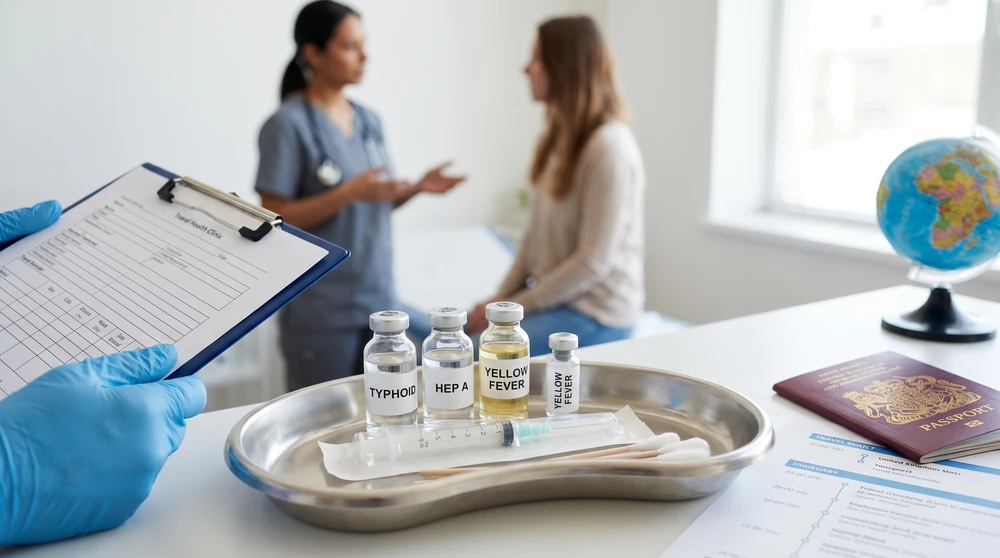
Book a travel health appointment ideally four to six weeks before departure. That window gives vaccines enough time to trigger a full immune response. Here is what the CDC and WHO currently recommend.
Routine Vaccines: MMR and DTP
Make sure your routine vaccinations are completely up to date before traveling. The CDC frequently highlights global measles outbreaks, making the MMR (measles-mumps-rubella) vaccine critical for the Pacific region. Children aged five and under may be required to show proof of MMR vaccination on arrival - unvaccinated children can be denied entry. Adults born after 1957 who have not received two documented MMR doses should get a booster.
A combined diphtheria-tetanus-polio booster is also essential, especially if your last dose was over ten years ago. The CDC recommends an additional adult polio booster for most international travelers given rising global case counts.
Highly Recommended: Hepatitis A and Typhoid
Food and water sanitation standards vary greatly across the atolls. Hepatitis A and Typhoid vaccines offer strong protection against illnesses transmitted through contaminated food and water. Typhoid is particularly important if you plan to visit outer atolls, stay with local families, or eat at small local eateries. Getting these shots at least four to six weeks before departure gives your immune system enough time to build solid defenses.
Hepatitis B
Hepatitis B vaccination is recommended for all unvaccinated travelers under 60. If you are planning a longer stay, anticipate receiving any medical or dental care, or expect close contact with local communities, this vaccine becomes especially important. Hepatitis B prevalence in the Pacific Islands is notably higher than in most Western countries.
Situation-Dependent Vaccines: Rabies, TB, Dengue
If you plan to work with animals, spend extended time in remote areas, or conduct fieldwork, consider pre-exposure rabies vaccination. Post-exposure treatment (rabies immunoglobulin) is extremely difficult to obtain in the Marshall Islands, which makes the pre-exposure series much more important here than in destinations with reliable medical infrastructure.
Tuberculosis (TB) incidence in the Marshall Islands exceeds 40 cases per 100,000 population annually - well above global average. Healthcare workers, long-term visitors, and those staying with local families should discuss BCG vaccination with their travel health provider.
The Dengue vaccine (Dengvaxia) is only licensed for individuals aged four and older who have documented prior dengue infection. It is not a general preventative for first-time visitors. Mosquito bite prevention remains your primary defense.
Chikungunya
Chikungunya has been reported in the Pacific region. A vaccine is now available and worth discussing with your travel doctor, particularly for longer stays or outdoor-focused trips.
Dengue Fever Risk and Mosquito-Borne Diseases
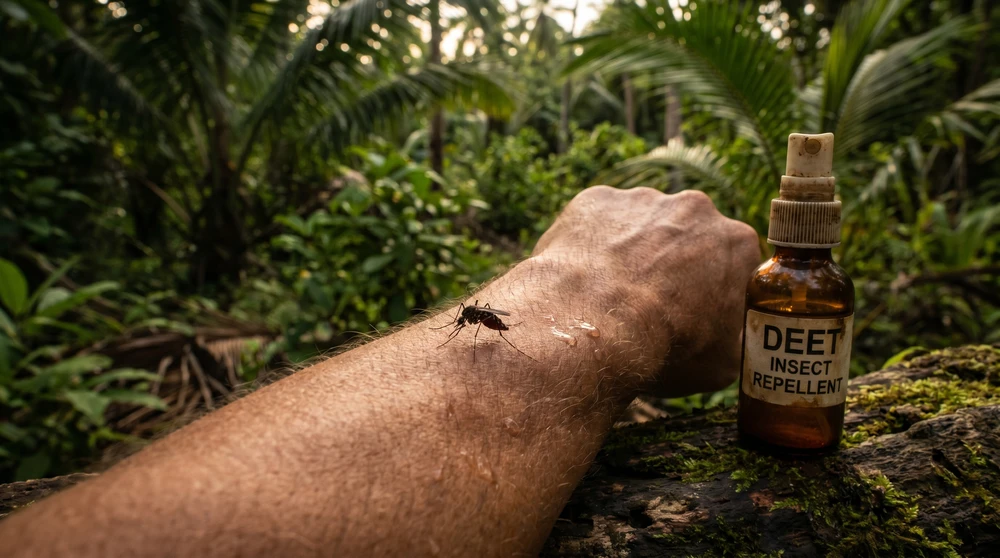
The Marshall Islands carry a significant risk for Dengue and Zika viruses, both spread by the Aedes aegypti mosquito - a daytime feeder that is most active in the two hours after sunrise and the two hours before sunset. Standard malaria prophylaxis does not apply here; malaria is not present in the Marshall Islands.
Since there is no widespread preventative medication for dengue for most travelers, physical bite prevention is your only real shield.
How to Prevent Mosquito Bites Effectively
- Use insect repellents containing at least 20% DEET, Picaridin, or Oil of Lemon Eucalyptus (OLE) - reapply after swimming or heavy sweating
- Treat your clothing and outdoor gear with permethrin before packing, but never apply it directly to your skin
- Stay in air-conditioned or well-screened rooms to drastically reduce exposure, especially in urbanized areas like Majuro
- Wear light-colored, long-sleeved shirts and long pants during peak mosquito hours
- Eliminate standing water near your accommodation - even a bottle cap of water is enough for mosquito breeding
Leptospirosis is another concern, contracted through contact with freshwater or soil contaminated by infected animal urine. Avoid wading or swimming in untreated freshwater sources, particularly after heavy rain.
Healthcare Facilities and Medical Evacuation (Medevac)
Hospitals and clinics in the Marshall Islands handle minor injuries and routine illnesses, but they lack the infrastructure for complex trauma, cardiac events, or specialized treatments. The main hospital is in Majuro. Outer atolls have even less - often a single health aide station with basic supplies.
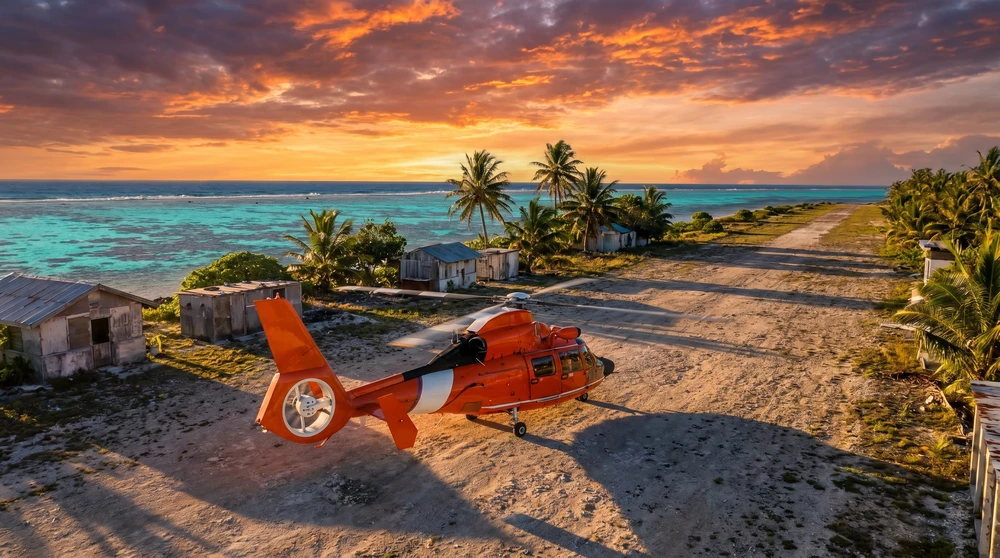
A serious accident or severe illness means an immediate, specially equipped medical flight out of the country. Destination is usually Honolulu, Hawaii or occasionally Australia. That flight, when arranged as an emergency, costs anywhere from $30,000 to $100,000 or more.
Why Standard Travel Insurance Is Not Enough
Standard travel insurance policies often cap medical expenses at low limits and frequently exclude or severely limit medical evacuation coverage. Before purchasing any policy, verify these specific points:
- Does it explicitly cover emergency medical evacuation with no sublimit?
- Does it include repatriation of remains?
- Does it cover pre-existing conditions if relevant to your situation?
- Is there a 24-hour emergency assistance hotline?
For a destination as remote as the Marshall Islands, consider adding a dedicated medevac membership (such as MedJet or Global Rescue) on top of your standard travel insurance. These memberships provide hospital-to-hospital transport once you are stabilized, which standard insurance often does not.
The U.S. Embassy in Majuro is available for American citizens in emergencies:
- Emergency after-hours line: (692) 455-8213
- Standard line: (692) 247-4011
All U.S. citizens should register with the Smart Traveler Enrollment Program (STEP) before departure.
General Travel Health Tips for the Pacific Islands
Water safety: Tap water is not safe for drinking anywhere across the atolls. Stick to sealed bottled water or pack reliable water purification tablets for situations where bottled water is unavailable.

Do not swallow water while swimming in the ocean or lagoons.
Sun and heat: The equatorial sun is intense year-round. Pack coral-safe sunscreen with SPF 30 or higher, wear a wide-brimmed hat, and stay hydrated. Heat exhaustion can set in quickly, especially during outdoor activities on exposed atolls.
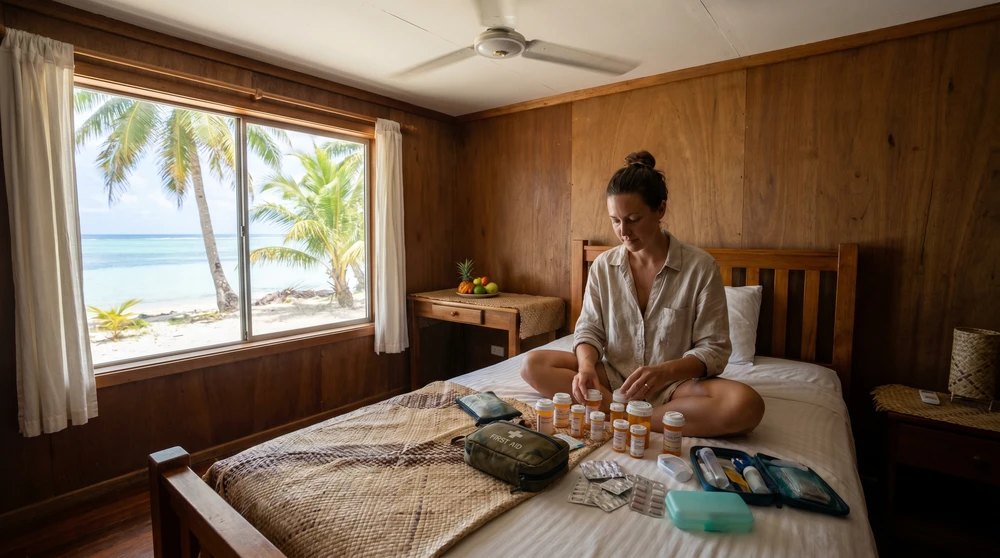
Medications: Bring a sufficient supply of any prescription medications in their original, clearly labeled containers. Local pharmacies face frequent supply chain issues. Finding your specific medication or a generic equivalent on the island is highly unlikely - pack extra doses to account for potential travel delays.
Food hygiene: Over 70% of travelers to developing regions experience some form of travelers' diarrhea. Wash hands frequently, avoid raw or undercooked food from uncertain sources, and carry oral rehydration salts as a basic precaution.
For more on planning your trip, see our visa requirements guide and our overview of Marshall Islands travel costs.