The Marshall Islands will catch you off guard if you arrive expecting the connectivity and convenience of more-visited Pacific destinations. Cash is essential, ATMs are scarce, and the cellular network is limited to a single local provider. Getting these basics right before you land makes the difference between a smooth trip and a stressful scramble.
Arriving at Amata Kabua International Airport (MAJ)
Airport Transfers and Majuro Shared Taxis
Touching down from the United Airlines Island Hopper usually happens in the early hours, making the tiny arrival hall instantly chaotic. Most major hotels - like Robert Reimers Enterprises (RRE) or the Marshall Islands Resort (MIR) - offer pre-arranged airport shuttles for around $10 to $20. Pre-booking this shuttle saves you the headache of negotiating rides in the dark.
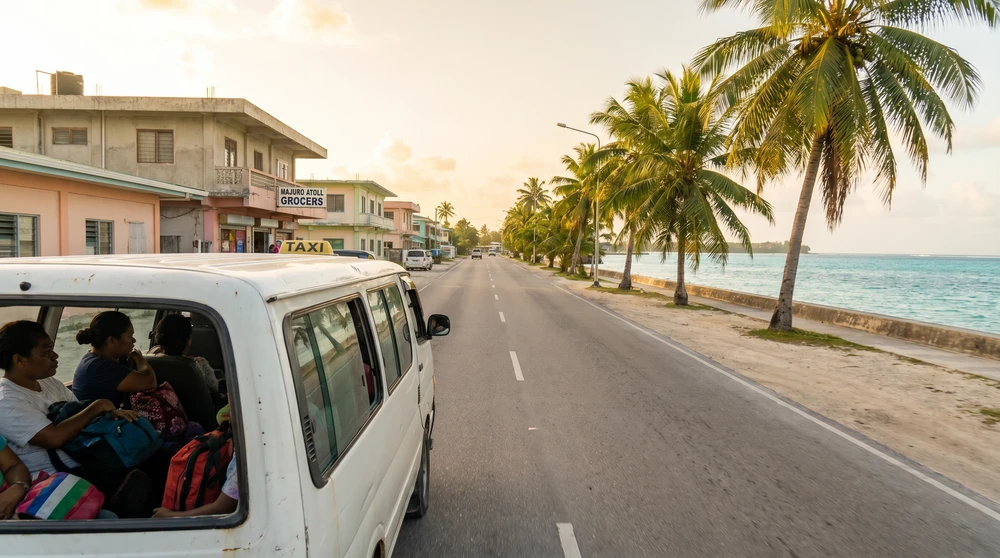
If you skip the shuttle, the local transit system is incredibly straightforward. Majuro essentially has one main road connecting the Delap-Uliga-Djarrit (D-U-D) commercial area. Shared taxis constantly cruise this strip. You simply stand by the road, wave one down, and share the ride with locals. Fares within the main D-U-D area are a flat $2 per person, while rides from the airport into the town center cost slightly more.
For more on navigating Majuro itself, see our guide to things to do in Majuro.
Renting a Car for Laura Beach
The shared taxi network is perfect for the commercial center, but exploring the quieter western tip of the atoll requires your own wheels. Renting a car costs roughly $90 for 24 hours. Teaming up with other travelers to split this fee is a highly effective strategy to keep your budget intact.
The drive out to Laura Beach takes about 40 to 60 minutes. The landscape shifts dramatically from crowded port infrastructure and concrete sea walls to lush breadfruit and coconut palm groves. Driving is effortless since there is no way to get lost on a single road. Just watch your speed - the local pace is slow, and speed bumps are frequent.
Managing Money: ATMs and Cash Rules
Bank of Guam and BMI Locations in Majuro
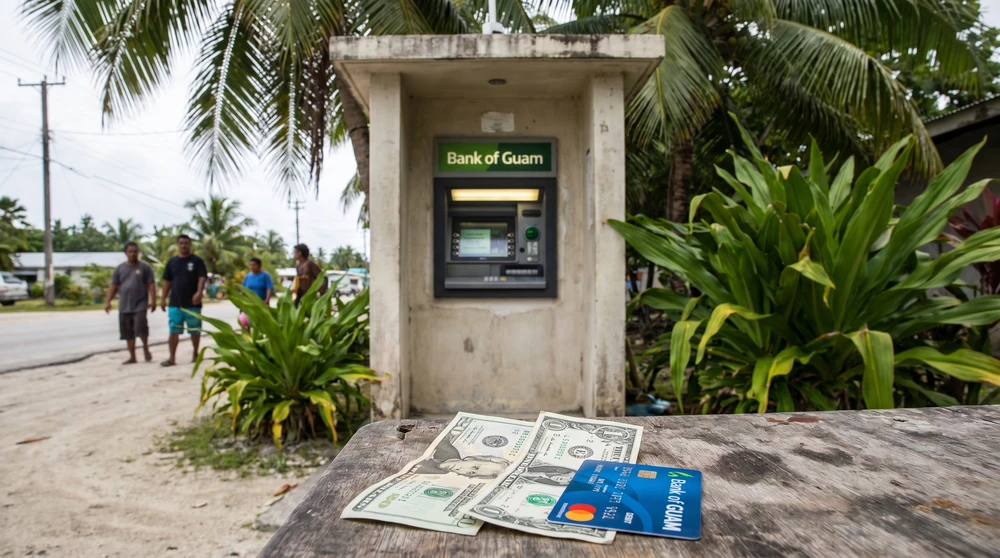
Do not expect to tap your phone or swipe a card for daily expenses like bento boxes or taxis. The legal tender is the US Dollar, and ATM access is concentrated exclusively in Majuro. You have two main options: the Bank of the Marshall Islands (BMI) in Uliga, and the Bank of Guam. The Bank of Guam operates three ATM locations: next to K&K Island Pride supermarket in Delap, inside Payless Supermarket, and at the RRE Hotel entrance.
Withdrawals typically incur a foreign-card access fee, and the Bank of Guam caps single transactions at $1,000. Always decline the ATM's currency conversion prompt. Selecting "Without Conversion" forces the machine to use your home bank's exchange rate, saving you from hidden markup fees. Note that ATMs occasionally run out of cash on weekends or after power outages - withdraw early in the week when possible.
For a full breakdown of what to budget across your trip, see our Marshall Islands travel costs guide.
Why You Need US Dollars for the Outer Atolls
Once you leave Majuro, digital banking ceases to exist. Outer atolls like Arno, Aur, and Utirik operate 100% on physical cash. There are zero ATMs and zero credit card terminals.
Before boarding a domestic flight or inter-island boat, calculate your exact budget for lodging, local guides, and food. Withdraw that entire amount in Majuro. Bring plenty of small bills. Breaking a hundred-dollar bill for a coconut or a short boat ride is almost impossible for remote local vendors.
Connectivity: SIM Cards, Wi-Fi, and Starlink
Purchasing an NTA Local SIM
The National Telecommunications Authority (NTA) is the only mobile operator in the country. You can pick up a local SIM card at the airport or at NTA retail shops in town. The SIM itself costs $15 and comes with no included credit. For most travelers, the best value plan is $50 for 5 GB data, 120 local minutes, and 120 SMS valid for 30 days. If you only need data, a 2.5 GB data-only plan runs $40 for 30 days. Make sure your phone is fully unlocked before departure.
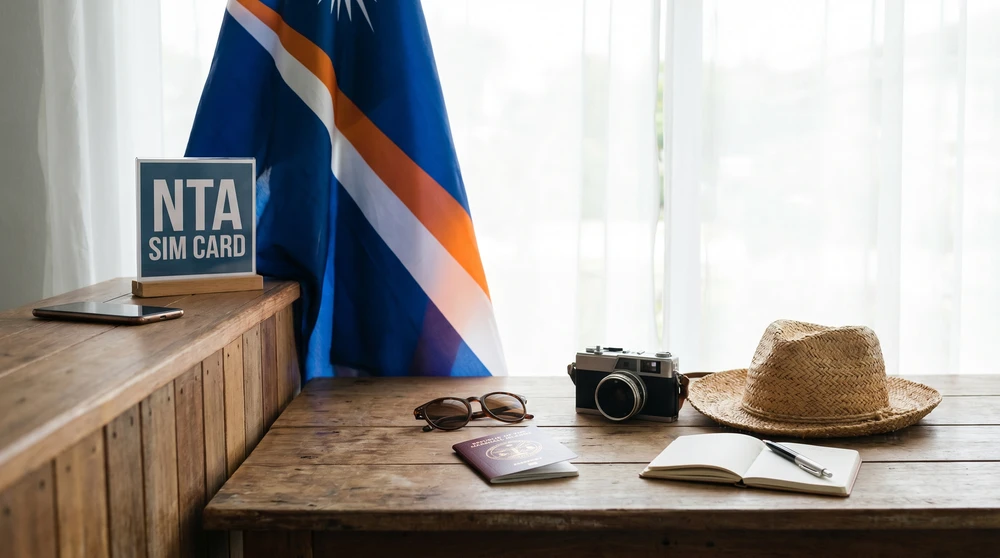
While 4G LTE exists in Majuro and Ebeye, speeds typically hover between 5 to 12 Mbit/s. It handles messaging apps and basic browsing fine, but heavy network congestion during peak hours is a daily reality. Coverage drops off sharply outside populated areas.
If you prefer not to juggle a physical SIM, some international eSIM providers offer data-only coverage for the Marshall Islands - worth checking before departure as a backup connectivity option.
Hotel Wi-Fi and Satellite Internet Realities
Do not expect complimentary high-speed Wi-Fi included in your room rate. Most accommodations operate on a strict voucher system. You buy a scratch card at the front desk, typically costing around $8 for 24 hours of access.
The infrastructure is shifting rapidly, however. Starlink satellite dishes are becoming increasingly common across guesthouses and telecenters, offering much lower latency and speeds over 50 Mbit/s. For international calls, skip the expensive traditional cellular networks. Connect to a Wi-Fi network and use apps like WhatsApp, Viber, or Rebtel to avoid massive roaming charges.
For accommodation options that include better connectivity, check our where to stay in Majuro guide.
Inter-Island Travel: Reaching the Outer Atolls
Domestic Flights via Air Marshall Islands
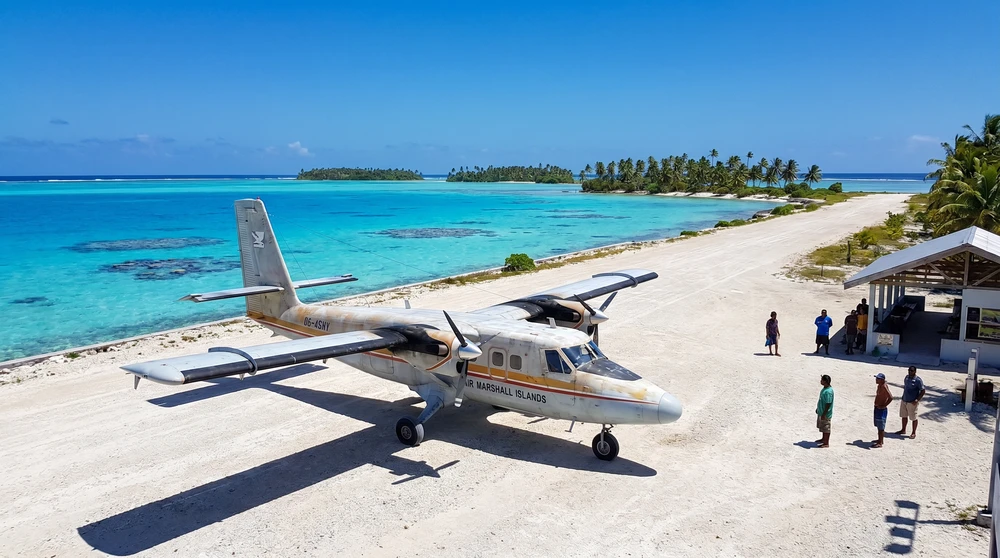
Reaching the spectacular reefs and World War II history of the outer atolls requires flying with the regional carrier, Air Marshall Islands. They operate small aircraft connecting Majuro to runways on Kwajalein, Jaluit, Arno, and others.
Capacity is incredibly tight on these routes. Flights operate on a weekly or biweekly basis, making advance bookings non-negotiable. Always build buffer days into your itinerary. Weather squalls or mandatory mechanical checks frequently delay these island-hopping schedules.
For detailed guidance on which outer atolls are worth the effort, see our Marshall Islands outer atolls guide.
Sea Crossings and Weather Considerations
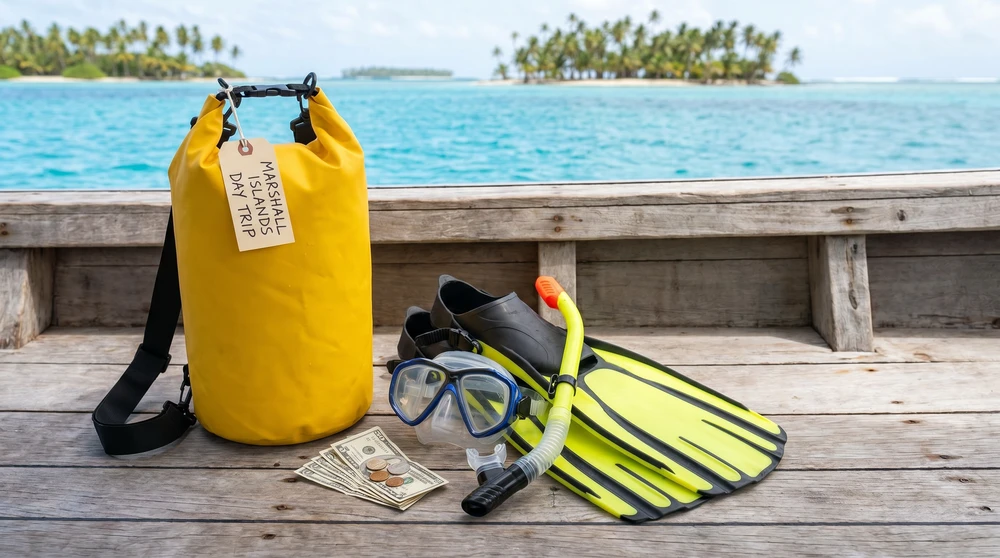
For closer destinations like Arno Atoll or Eneko Island, local boats are the standard transit method. A day trip to Eneko - a private islet roughly 25 minutes by boat from Uliga - costs about $30 per person for the return boat transfer and is easily arranged through the RRE front desk.
Sea crossings are entirely at the mercy of the wind and ocean swells. If the northeasterly trade winds pick up heavily or King Tides roll in, harbor masters will ground small vessels. Always pack your electronics and travel documents in proper dry bags, as heavy sea spray over the bow is guaranteed.
Daily Essentials: Water and Health Safety
The most critical daily logistics rule involves your hydration. There is zero natural freshwater runoff on these low-lying coral ribbons. Majuro's tap water is a mix of rainwater catchment and desalination, strictly meant for showering and washing clothes. You must rely exclusively on bottled or heavily purified dispenser water for drinking and brushing your teeth.
Keep a high-SPF, reef-safe sunscreen on hand, as the equatorial sun is brutal and regular sunscreens severely damage the fragile coral ecosystems. If you plan to explore the outer atolls, pack a compact first-aid kit and physical copies of your prescriptions. Medical facilities outside the capital are virtually non-existent, and having basic supplies on hand prevents minor issues from becoming trip-ending emergencies.