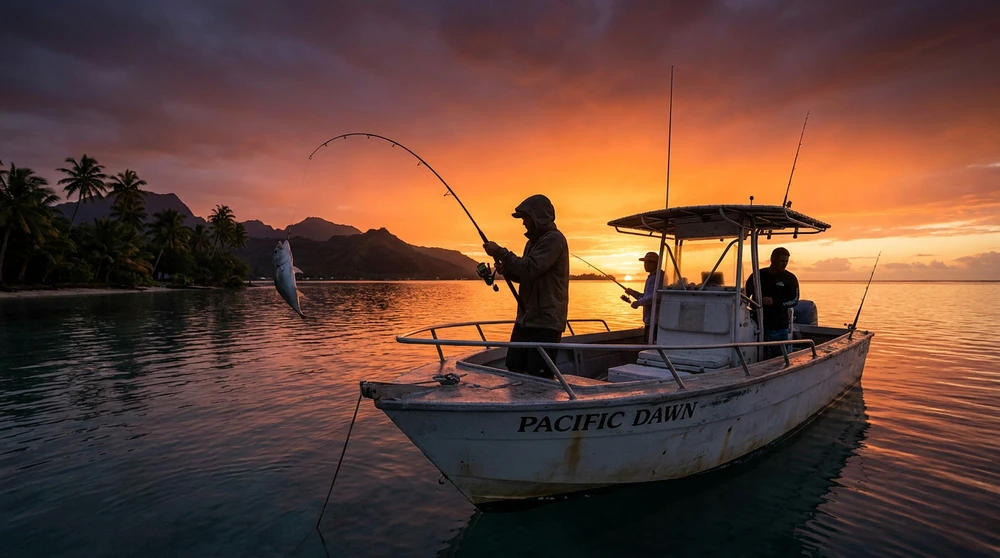
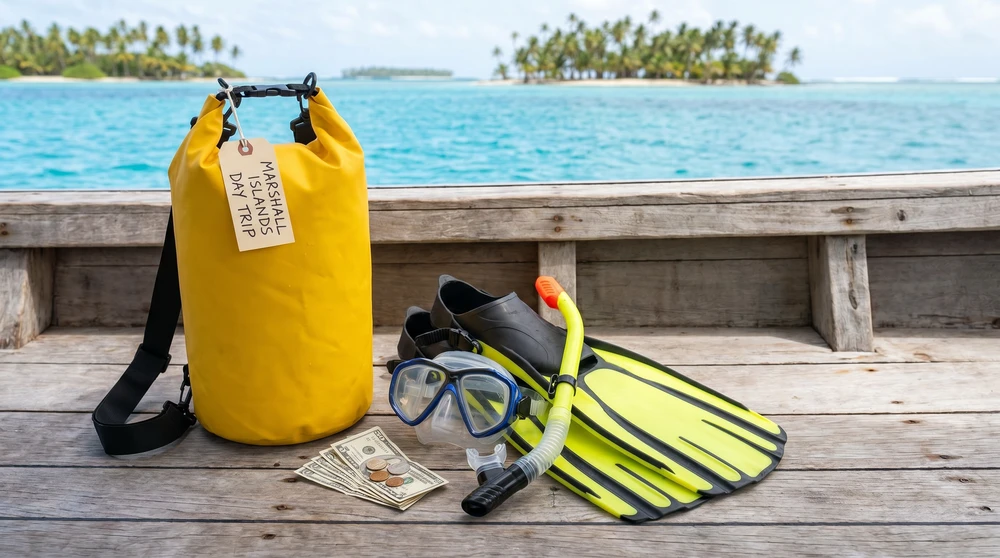
The Marshall Islands sit roughly equidistant between Hawaii and Australia, which tells you everything you need to know about how seriously you have to plan before you go. This is not a destination you decide on casually. The reward for that commitment, however, is some of the most extraordinary diving on the planet: a UNESCO-listed nuclear wreck graveyard accessible only to technical divers, pristine outer reef systems that see almost no recreational pressure, and a shark sanctuary covering more than 2.5 million square miles of open Pacific.
- Required cert (Bikini): TDI Advanced Nitrox + Decompression Procedures or PADI Tec 50 equivalent
- Water temperature: 27-29°C year-round, no thermoclines
- Visibility: 40-50 meters (up to 164 ft) during optimal season
- Best season: May through October
- Primary access: United Airlines Island Hopper via Honolulu or Guam
- Bikini Atoll: liveaboard-only, book 12+ months in advance
- Currency: US Dollar throughout the Marshall Islands
Bikini Atoll: The Nuclear Fleet Graveyard
Bikini Lagoon holds the most consequential collection of warships ever assembled on a single seafloor. Seventy-odd vessels from the United States and Imperial Japanese navies, sunk deliberately during Operation Crossroads in 1946, now rest at depths between 30 and 55 meters. The UNESCO World Heritage designation recognizes not just the diving but the historical and scientific significance of a site where nuclear testing transformed warfare and medicine simultaneously.
Every dive here involves decompression. Average bottom times routinely exceed 100 minutes, and gas planning demands precision that recreational training simply does not cover. If you hold a TDI Advanced Nitrox and Decompression Procedures card or a PADI Tec 50, you meet the minimum bar. Rebreather divers with Normoxic Trimix certification access the deepest profiles most comfortably.
USS Saratoga: The Crown Jewel
The USS Saratoga (CV-3) is the reason most technical divers make this trip. A 270-meter aircraft carrier sitting completely upright on the sandy bottom, flight deck at 28 meters, keel at approximately 52 meters. The scale is genuinely disorienting on the first descent. Scout bombers remain strapped inside hangar bays, untouched since 1946. Deeper penetration leads into the ship's sick bay, where a fully intact dentist chair remains bolted to the deck exactly as it was left.
Visibility on the Saratoga regularly exceeds 40 meters, which means you can see the full length of the hull from amidships, a perspective that few dive experiences anywhere in the world can match.
HIJMS Nagato: Japan's Inverted Flagship
The former flagship of the Imperial Japanese Navy lies completely upside down in 52 meters of water. The Nagato survived the first atomic test at Bikini but capsized four days after the second. Swimming along the colossal upturned hull, two imposing 16-inch gun turrets protrude into the sand below the bow. The bridge structure extends roughly 30 meters outward, forming a stark silhouette against deep blue water. Meticulous buoyancy control is non-negotiable here - the inverted orientation disorients even experienced wreck divers on the first pass.
USS Arkansas and Operation Crossroads Destruction
The Arkansas displays the most dramatic structural damage in the lagoon. Massive 12-inch armor plates bent like crumpled foil by the downward force of the nuclear blast. The inverted hull at 54 meters gives you direct access to the destruction. Twisted steel beams reveal what a 21-kiloton airburst does to a 27,000-ton warship. Additional wrecks in the lagoon - the USS Pilotfish submarine, USS Lamson, USS Anderson, Prinz Eugen, and IJN Sakawa - extend any 10-14 day liveaboard itinerary well past saturation point.
Shark Pass: The Outer Wall
Not every Bikini dive goes inside a hull. The southwestern corner of the atoll features a massive drop-off where intense tidal currents concentrate pelagic life. Hook onto the reef edge and hundreds of gray reef sharks and silvertips patrol the blue alongside schooling dogtooth tuna. Strong currents here require excellent physical fitness and solid buoyancy skills.
Majuro and Arno: Reef Diving Without the Technical Overhead
Bikini defines the Marshall Islands' international reputation, but two reef systems accessible from the capital Majuro serve recreational divers with considerably less logistical complexity.
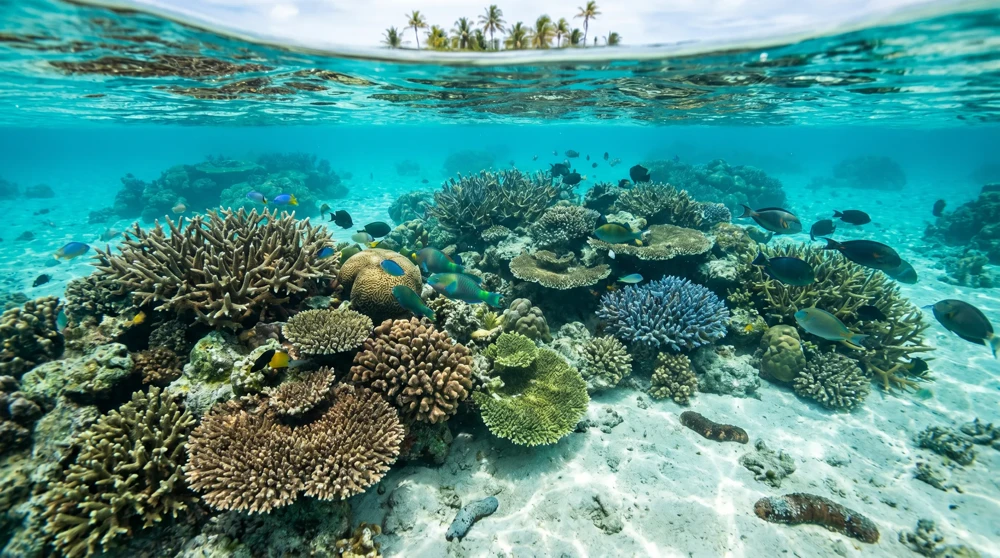
Majuro Lagoon provides an immediate introduction to the Marshall Islands' underwater environment with reefs and WWII-era wrecks accessible by day-boat from the capital. Visibility exceeds 100 feet in the lagoon itself, and the Majuro Channel generates enough current to concentrate barracuda schools and occasional reef shark sightings. The Eneko and Enemanit areas offer calmer conditions well suited to underwater photography.
Arno Atoll, accessible by short boat transfer from Majuro, remains genuinely underexplored. Coral walls here host dense hard and soft coral cover with almost no recreational diving pressure - conditions that create thriving populations of eagle rays and sea turtles. The operators most likely to take you here are Marshalls Dive Adventures and Raycrew, both based in Majuro. Visibility at Arno regularly matches Bikini's 40-meter benchmark.
The Marshall Islands was designated the world's largest shark sanctuary in 2011, protecting all shark species across its entire Exclusive Economic Zone. Encounters with gray reef sharks, silvertips, oceanic whitetips, and occasionally hammerheads are routine at outer reef sites rather than exceptional.
Other Dive Destinations in the Archipelago
The two island chains - Ratak (Sunrise) and Ralik (Sunset) - each hold multiple atolls worth investigating for serious divers with extended itineraries.
Jaluit Atoll, in the southern Ralik Chain, offers a combination of intact hard coral formations and genuine WWII wreck diving at recreational depths alongside nudibranchs and dense anemone fields. Infrastructure here is minimal; day-trip logistics from Majuro require advance coordination with local operators.
Rongelap Atoll reopened to tourism relatively recently after decades of post-nuclear contamination concerns. Its drop-offs and reef systems remain among the least-dived in the entire Pacific. Access requires coordination through specialist expedition operators. Get comprehensive travel insurance before committing to any remote atoll expedition - medical evacuation from these locations is expensive and logistically complex.
Ailinglaplap Atoll adds sea turtle encounters and resident shark populations to the mix for divers on extended multi-atoll liveaboard itineraries.
Getting to the Marshall Islands
The only practical routing for international visitors runs through Honolulu or Guam via United Airlines. The Island Hopper service stops at several isolated atolls before reaching Majuro (MAJ), running only a few times per week. Missing a single connection disrupts your entire itinerary. Build in an overnight buffer in Hawaii or Guam; do not book tight connections.
Bikini-bound divers face additional complexity. Reaching the atoll requires transiting Bucholz Army Airfield at Kwajalein (KWA), an active United States military installation. You cannot exit the aircraft or enter the base without an official authorization letter issued by your liveaboard operator. Army personnel review documentation at the gate before allowing transfer to the Ebeye Island embarkation pier. Keep all printed permits in carry-on luggage - checked bags occasionally go missing on this route.
Most Bikini liveaboards depart from Kwajalein after an island hopper connection. A few operators run itineraries from Majuro with an overnight sail to the atoll. Confirm routing with your specific vessel before booking flights.
For the Marshall Islands generally, a 30-day visitor permit is available on arrival for most nationalities. US citizens and nationals of countries with compact of free association arrangements face no visa requirements. If your routing includes the US territory of Guam or Hawaii, you need either a US visa or ESTA clearance.
Planning Your Dive Trip
Book Bikini at least 12 months out. This is not a strong suggestion - it is an operational reality. Liveaboard berths are limited to 10-12 divers per trip to accommodate technical equipment. Combined with the restricted Island Hopper flight schedule and the Kwajalein military authorization process, this is a destination where late bookings fail logistically, not just by availability.
Verify gas supplies with your liveaboard well before departure. Most operators stock standard technical gases - helium, oxygen, and nitrox blends - but custom rebreather configurations require proactive coordination. Helium deliveries to this part of the Pacific depend entirely on sparse cargo shipping schedules that do not bend to expedition timelines.
Medical infrastructure in the Marshall Islands is limited. Hyperbaric chambers are not readily available; the nearest facility capable of treating serious decompression injuries is in Hawaii or Guam. Travel insurance with medical evacuation coverage is not optional on a Bikini expedition.
The May-October season offers calm surface conditions and peak visibility. November through April brings the cyclone season, with tropical storms generating wind, choppy surface conditions, and reduced underwater clarity. Some operators run year-round trips to Majuro; Bikini liveaboards strictly follow the May-October window.
The Marshall Islands shares broadly similar Pacific diving characteristics with nearby Micronesian neighbors. Divers researching this region may also find useful context in the diving and snorkeling coverage for Nauru and the Funafuti Conservation Area guide, both of which cover remote Pacific reef environments with comparable logistical challenges.