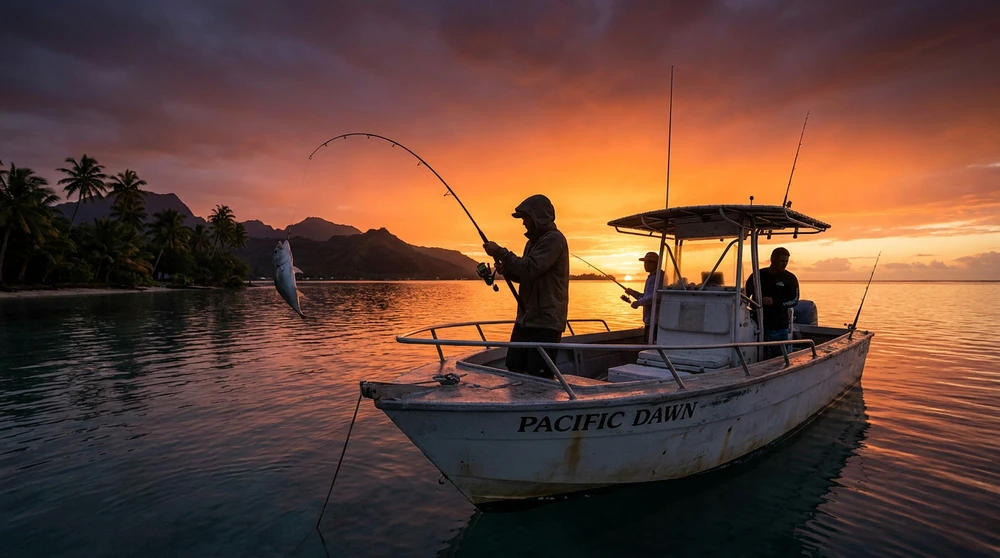
The United Airlines Island Hopper is one of the most unusual commercial flights on earth. Flight UA154 traces a 14.5-hour arc from Honolulu to Guam, touching down on five remote Pacific atolls that almost no other commercial airline serves. For travelers interested in the world's least-visited nations, understanding exactly how this route works before you board can be the difference between a smooth Pacific adventure and a logistical nightmare.
What Is the United Airlines Island Hopper?
The Island Hopper operates as Flight UA154 westbound (Honolulu to Guam) and Flight UA155 eastbound (Guam to Honolulu). The route runs three times per week on Monday, Wednesday, and Friday in the westbound direction. United operates a Boeing 737-800 for the entire journey, covering roughly 3,800 miles across the open Pacific with stops at Majuro, Kwajalein, Kosrae, Pohnpei, and Chuuk.

Total block time is approximately 14.5 hours, though this is split across six individual segments. There is no long-haul catering, no inflight Wi-Fi over open ocean, and no automated baggage handling at the intermediate stops.
Booking: Cash, Miles, and What to Expect
Cash fares on this monopoly route are steep. A one-way economy ticket from Honolulu (HNL) to Guam (GUM) typically runs between $1,200 and $1,500, though prices can spike significantly during peak periods. Individual segment bookings between island stops range from roughly $300 to $500 per leg depending on availability.
The strongest value play is United MileagePlus or Star Alliance partner miles. Upgrading to Economy Plus for the extra legroom costs $50 to $80 and is worth every cent on a 14-hour narrowbody journey.
International travelers face a specific bureaucratic trap: transiting through Kwajalein or Guam requires a valid US ESTA or visa, even if you never leave the aircraft. ESTA applications must be submitted and approved at least 72 hours before departure. Missing this step results in a boarding denial at the Honolulu gate.
The Complete Flight Sequence
Honolulu (HNL) to Majuro (MAJ)
The opening leg is the longest: a 5-hour ETOPS crossing over open ocean. The aircraft crosses the International Date Line during this segment, advancing the calendar by one day. A United mechanic occupies seat 7C on every departure, and spare parts ride in the cargo hold because there is no aircraft maintenance capability at any of the intermediate stops.
Majuro (MAJ) to Kwajalein (KWA)
A 57-minute hop drops passengers into one of the most restricted airspaces in the Pacific. Bucholz Army Airfield is an active US military installation. Transit passengers are forbidden from leaving the aircraft, and all exterior photography is strictly prohibited while the plane sits on the tarmac. Keep phones stored and follow crew instructions without exception.
Kwajalein (KWA) to Kosrae (KSA)
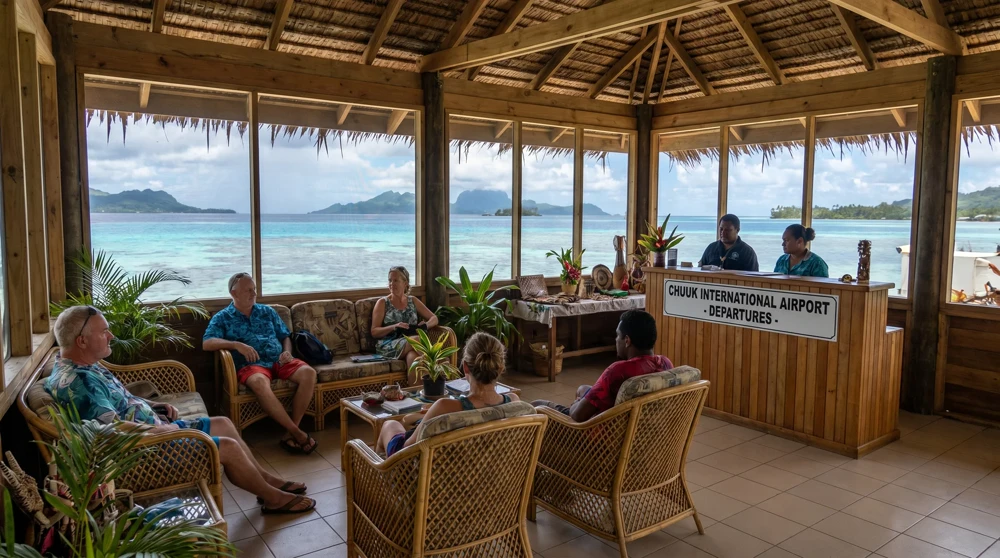
Kosrae is the easternmost state of the Federated States of Micronesia (FSM). The runway sits on an artificial island protruding into the ocean, making approaches visually dramatic. Transit passengers can disembark and stretch their legs. The small departure lounge kiosk sells local banana chips that are genuinely worth purchasing.
Kosrae (KSA) to Pohnpei (PNI)
Approach into Pohnpei requires navigating around Sokeh's Rock, a towering basalt plug visible from the descent. Pohnpei receives heavy rainfall year-round, and tropical weather delays are common here. The transit lounge at Pohnpei is the largest on the route and serves hot food. This is the best stop for purchasing passport stamps: immigration officers at the transit desk will grant entry and exit stamps during the 45-minute layover.
Pohnpei (PNI) to Chuuk (TKK)
Chuuk Lagoon is recognized as the premier World War II shipwreck diving destination on the planet. Dozens of Japanese vessels from Operation Hailstone rest in the shallow lagoon, making this a major bucket-list stop for divers. The 6,000-foot runway at Chuuk often requires firm braking due to gusty afternoon crosswinds. Schedule delays accumulate by this stage of the journey.
Chuuk (TKK) to Guam (GUM)
The final 100-minute leg delivers passengers to a fully modernized international hub. Automated baggage carousels, duty-free shops, and standard US Customs and Border Protection procedures replace the manual check-in tables of the intermediate islands.
Seating Strategy: Which Side of the Plane?
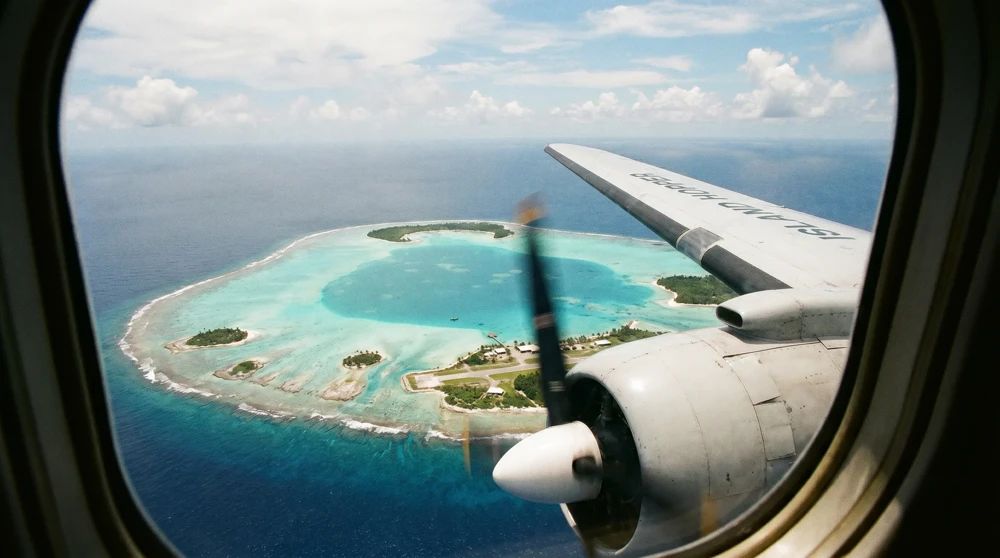
Choosing the correct window seat makes an enormous difference. On the westbound route (HNL to GUM), secure a right-side window seat for the first leg to Majuro, then shift to the left side for all remaining segments. On the eastbound route (GUM to HNL), sit on the right side for most of the journey, switching to the left only when departing Majuro.
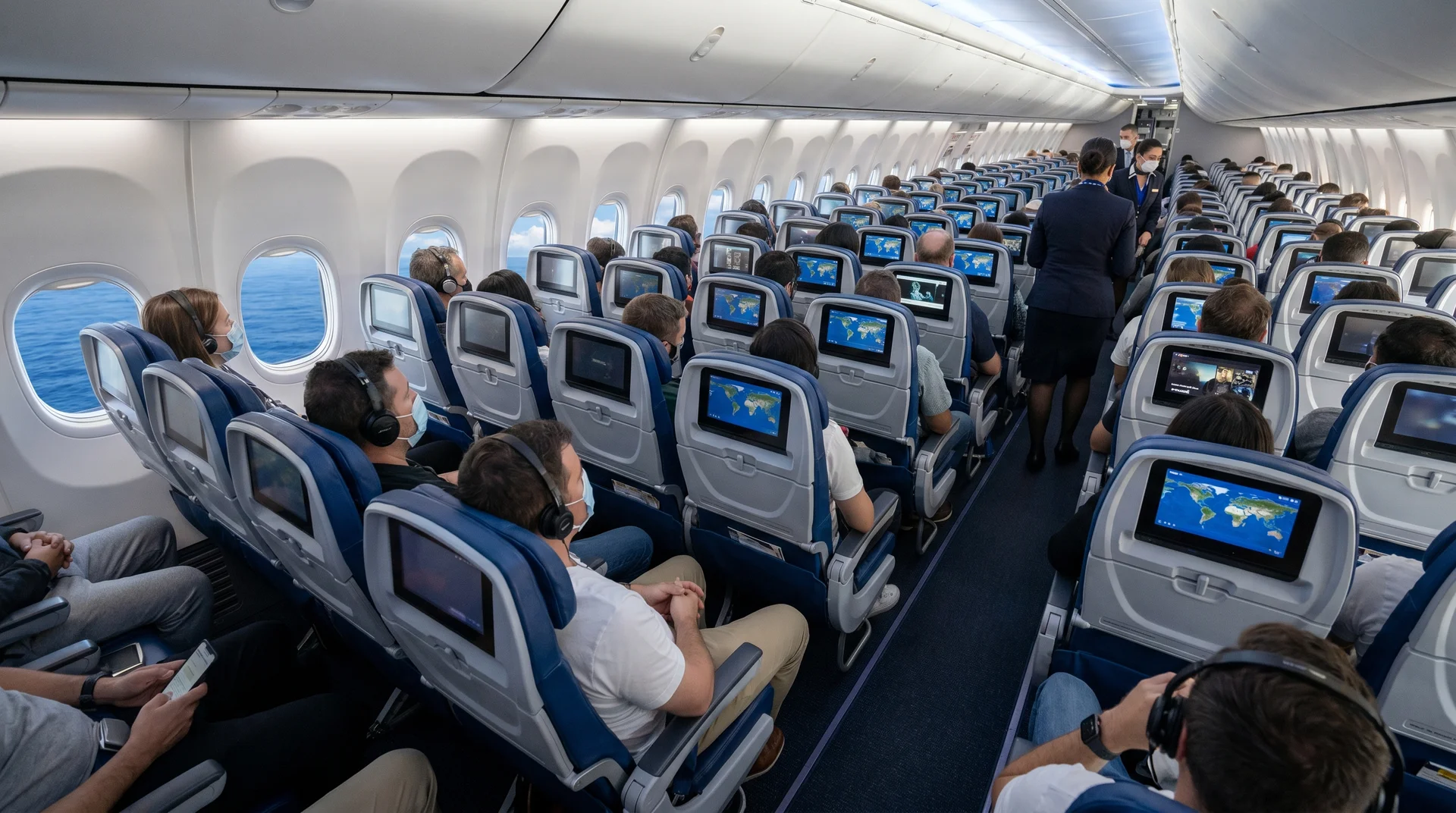
Avoid window seats over the wing between Rows 10 and 20. The 737 engines completely block the fleeting 60-second views during approach and climb. Seat 7F provides pristine, unobstructed views for photographers. Seat 8F suffers from slight engine intrusion in the lower peripheral vision.
Food, Water, and Surviving 14 Hours
United categorizes this journey as a series of domestic short-haul segments rather than a long-haul international flight. The practical result: only standard domestic snacks (pretzels, almonds, small water cups) are served. There is no meal service on any leg.
Buying a substantial meal and a large water bottle on the secure side of Honolulu Airport before departure is not optional - it is essential. Local islanders understand the freight logistics of this route perfectly: look for Coleman cooler boxes sealed with duct tape in the cargo hold, transporting frozen goods across the Pacific.
Entertainment systems reset completely at every ground stop. Only the initial 5-hour transoceanic leg provides enough continuous airtime to watch a full movie. Download content to a personal device before leaving your hotel. Bring a USB-A charging cable, as older 737 configurations do not have USB-C ports.
Island Stopovers: Stamps, Fees, and Terminal Rules
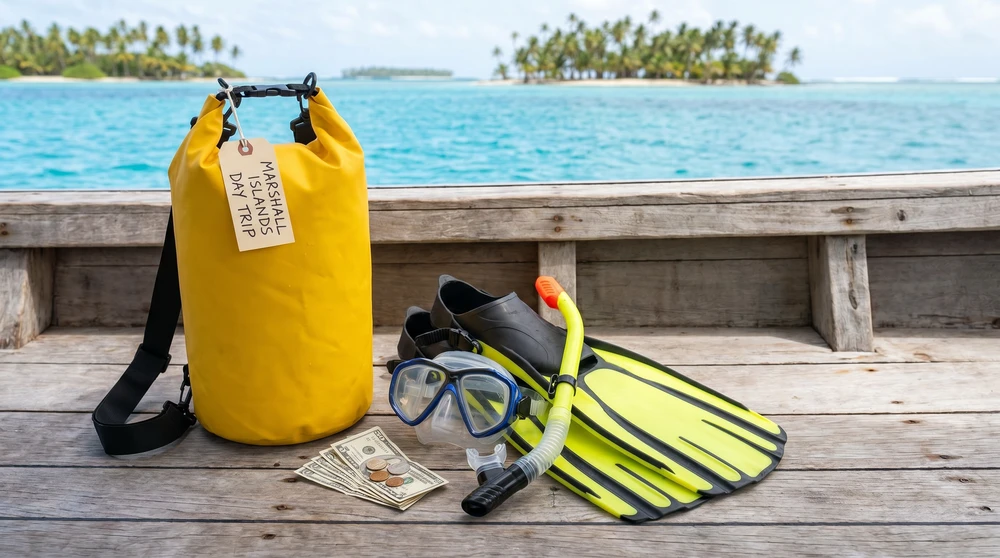
Breaking up the journey with a few nights on one of the islands requires preparation for a strictly analogue departure process. Every FSM state manages its own immigration and charges a mandatory $20 cash departure fee before issuing a boarding pass. ATMs and card machines do not exist at the check-in counters. Bring clean US dollar bills.
Security screening is entirely manual. Officials inspect bags by hand on folding tables without X-ray equipment. This process is thorough and adds time to every departure, so arrive at the check-in counter well before the stated boarding time.
Connectivity on the Island Hopper
There is no in-flight Wi-Fi over the deep Pacific, and local SIM cards are difficult to source at the small island airports. If you plan to stay for several days at one of the FSM stops, an international eSIM is the most practical solution for maintaining connectivity across multiple jurisdictions. Airalo eSIMs cover Micronesia and work across all five island stops on the route
Travel Insurance for Remote Pacific Travel
Medical evacuation from any of the intermediate islands is an extremely costly and logistically complex event. Standard travel insurance policies often exclude remote island nations or cap emergency evacuation payouts well below the actual cost. For a journey that passes through some of the most medically underserved territory on earth, comprehensive coverage is non-negotiable. VisitorsCoverage offers plans that include emergency medical evacuation for remote Pacific destinations
Related Pacific Routes
The Island Hopper is the gateway to some of the Pacific's most remote destinations. Travelers who use Tuvalu as a regional base before or after this route will find Flying to Tuvalu: Flights, Connections and Booking Tips a useful planning resource, while Nauru for Country Collectors: Is It Worth the Trip? covers another extreme Pacific detour that occasionally connects with Island Hopper segments through Guam.