Sport fishing in the Marshall Islands is among the most demanding, most rewarding saltwater angling experiences on the planet. Across 29 atolls and more than 1,100 islands scattered through the central Pacific, the fisheries remain almost completely untouched. There are no crowds, no tackle shops, and virtually no other boats.
What you will find are giant trevally on shallow flats that have never seen an artificial lure, blue marlin that rise to trolled skirts in absolute wilderness, and dogtooth tuna that will destroy any gear you underestimate. This is not casual holiday fishing. Treat it as a bluewater expedition, and it will reward you accordingly.
- Fishing license: not required for recreational tourists
- Lagoon/flats charter: $350 to $550 USD per day
- Offshore sportfisher charter: $650 to $1,200 USD per day
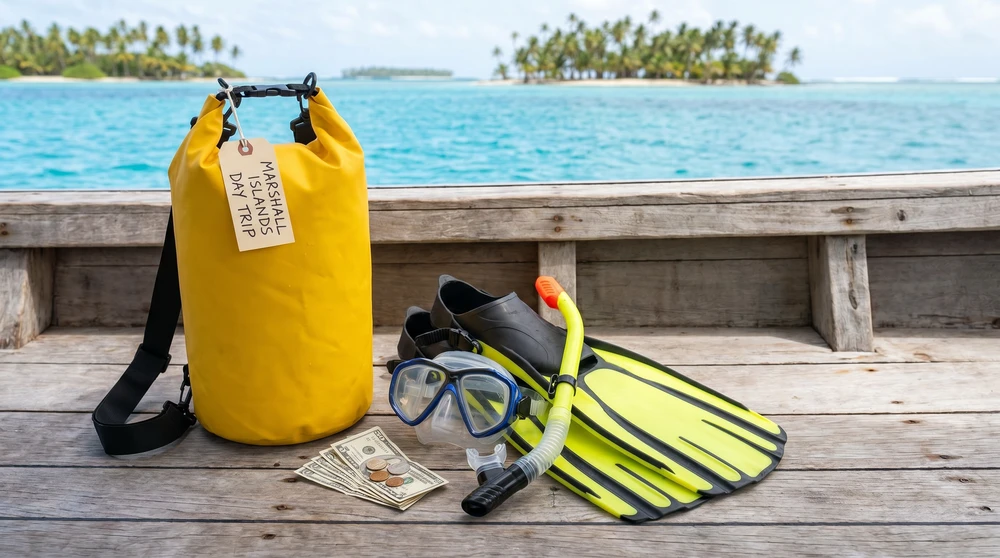
- Primary currency: US Dollar (USD), cash mandatory outside Majuro
- Peak flats and GT season: December to April
- Peak offshore pelagic season: May to November
- Local tackle availability: zero, bring everything yourself
Why Fishing the Marshall Islands Is Different
This destination rewards raw determination over luxury. The fishing pressure on these atolls is effectively non-existent, which means the fish are both plentiful and aggressive. You will not share these horizons with tourist crowds or other charter boats.
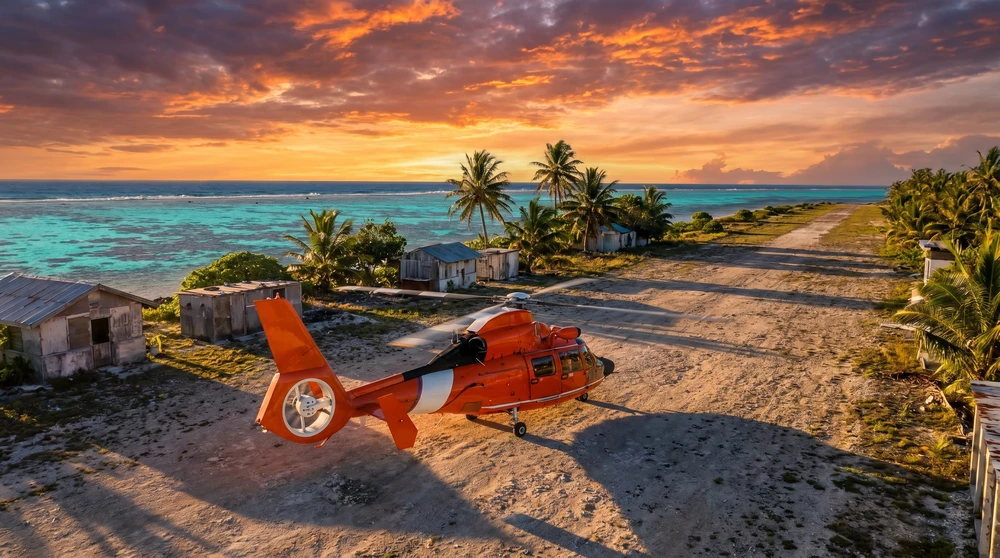
The environment is unforgiving on gear and stamina. Hook a prize fish outside the reef edge and the taxman arrives instantly. Grey reef and silvertip sharks patrol these drop-offs with aggressive efficiency, and every hooked fish is a race against the clock. Substandard split rings will open under the strain. Heavy braids will snap against razor-sharp coral.
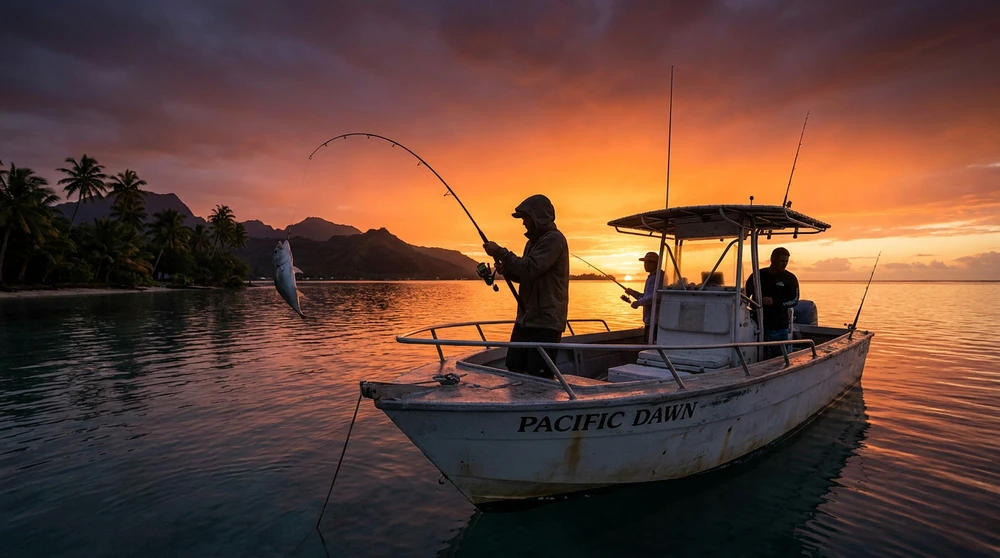
Western anglers have reported losing complete sets of terminal tackle on a single reef session at Likiep. The coral configurations here are unlike anything found in more accessible Pacific destinations. Bring heavy-duty braid, premium fluorocarbon leaders, and spare reel components for every piece of tackle in your kit.
Target Species and Proven Techniques
Giant Trevally on the Flats
These apex predators patrol the shallow sandbanks of the outer atolls with terrifying speed. Sight-fishing for cruising giants in knee-deep water demands accurate, long-distance casting and immediate, brutal drag pressure.
Use heavy 10-weight to 12-weight fly rods or heavy spinning setups equipped with high-end saltwater reels such as Shimano Stellas. Large, loud wooden poppers or stickbaits are essential for triggering explosive surface strikes. Set your drag to near-lockout levels immediately, before the fish dives back into the coral structure. A GT that reaches the reef will end the fight on its own terms.
The Marshalls offer sight-fishing conditions that rival Christmas Island or the Seychelles but with a fraction of the angler traffic. The fish are naive, aggressive, and large.
Blue Marlin and Offshore Pelagics
The ocean floor drops into thousands of meters of blue water just minutes outside the main lagoons. This sheer drop-off creates a migration highway for pelagic species year-round.
Blue marlin over 500 pounds are regularly encountered along the reef boundaries. Trolling large skirted lures is the most effective method, with strikes often occurring within two or three kilometers of the atoll edge. The operator Ben Reimers, running operations out of Majuro and associated with the Indies Trader mothership, is widely considered one of the most experienced billfish guides in the Marshall Islands, with thousands of billfish encounters across decades of working these waters.
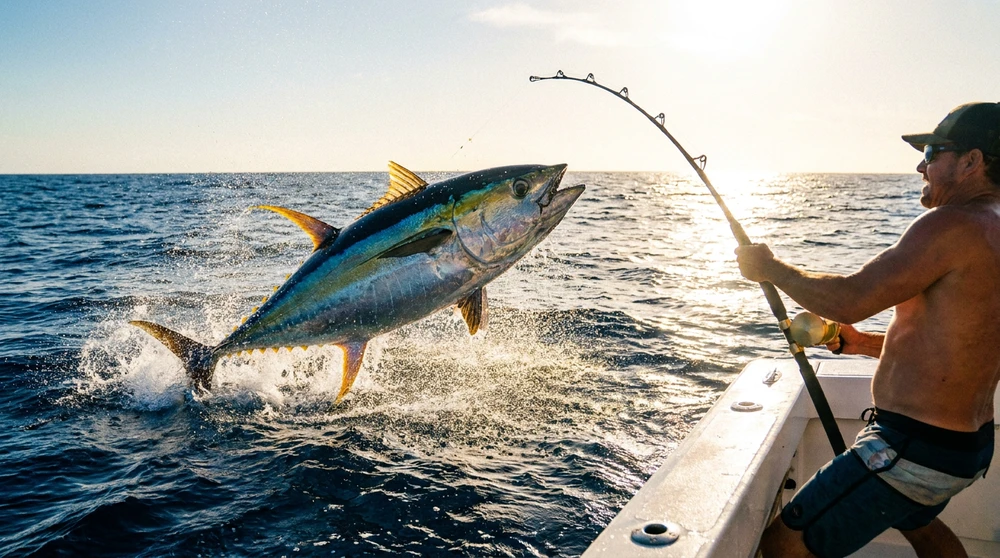
Yellowfin tuna and wahoo fill the gaps between billfish strikes, providing continuous heavy-tackle action throughout the day. Mahi-mahi are also common in the offshore zone and provide excellent table fare for the boat.
Dogtooth Tuna and Deep Reef Exotics
True monsters live along the deep vertical reef walls. Unlike yellowfin, dogtooth tuna stay close to structure and possess a formidable set of teeth that will cut through inferior fluorocarbon in a single run.
Deep jigging with heavy butterfly jigs (150-300g) is the most effective approach. The initial run of a hooked dogtooth is violent and downward, pulling toward the reef structure. Expect to lose several jigs before learning the timing needed to turn these fish around. A braided mainline of no less than 80-pound test is the standard starting point.
Coronation trout, grouper of multiple species, and large bluefin trevally round out the deep-reef target list, all accessible by vertical jigging around coral heads.
Top Atolls for Anglers
Majuro Atoll: The Logistical Hub
As the nation's capital, Majuro offers the most reliable charter operations, fuel access, and accommodation infrastructure. The massive lagoon stretches for 40 kilometers, serving as an excellent testing ground for reef popping and light tackle before venturing further afield.
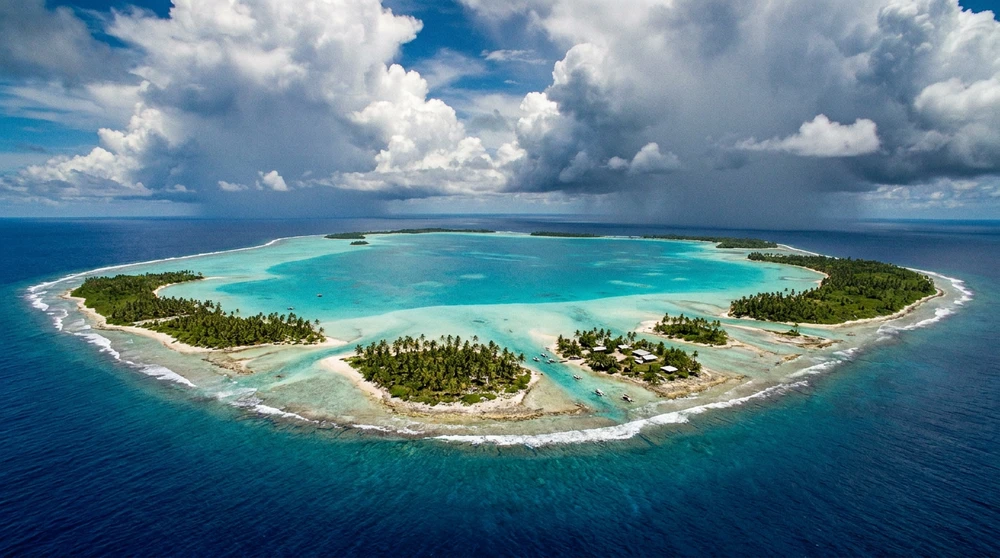
The outer reef edge drops instantly into deep ocean water. This accessibility allows you to target marlin and tuna without long, fuel-intensive boat runs. For first-time visitors to the Marshalls, Majuro is the correct base. You learn the rhythms of these waters before committing to remote atoll logistics.
Hotel Robert Reimers in Majuro is the traditional hub for arriving anglers, with staff experienced in coordinating charter connections. The diving operation at Dive Marshall Islands also assists visiting sport anglers with local charter referrals.
Bikini Atoll: The Remote GT Haven
Nuclear testing in the mid-20th century inadvertently created one of the most pristine marine sanctuaries in the Pacific. The marine life inside Bikini's isolated lagoon has recovered into absolute wilderness over the past several decades.
The giant trevally here have rarely encountered an artificial lure, producing aggression that seasoned GT anglers describe as unlike anything they have experienced elsewhere. Access is strictly limited, requiring specialist live-aboard vessels booked up to a year in advance. Residual radiation remains in the soil of the islands, but the fish populations are healthy and the water itself is safe. Avoid consuming any land-grown produce from the islands.
Arno Atoll: Accessible Flats Fishing
Arno Atoll, located roughly 50 kilometers southeast of Majuro, is more easily accessible than the far outer atolls and offers exceptional bonefish and permit flat fishing. Local guides on Arno have experience with visiting anglers and can arrange day trips from Majuro on faster local boats.
This is the best entry point for anglers wanting genuine flats fishing without committing to the full logistics of a remote outer atoll expedition.
Likiep and the Outer Atolls: High Risk, High Reward
Venturing into the outer atolls places you entirely off the grid. Money loses its utility once you leave Majuro. The communities on Likiep and similar remote atolls operate primarily on a subsistence basis, and gasoline shortages are a constant reality that can ground local boats unexpectedly regardless of fishing conditions.
Pack high-quality stainless steel knives, tools, or heavy-duty flashlights to use for bartering with local boat owners. This is not a theoretical recommendation: anglers who have fished Likiep consistently report that practical trade goods opened fishing opportunities that cash could not. The reward for accepting these constraints is access to reef systems that western anglers have almost never fished.
Charter Costs and Booking
| Boat Type | Duration | Estimated Cost (USD) | Target Species |
|---|---|---|---|
| Lagoon / Flats Skiff | Full Day | $350 to $550 | Bonefish, Bluefin Trevally, Permit |
| Reef Fishing Panga | Full Day | $400 to $650 | Giant Trevally, Grouper, Snapper |
| Offshore Sportfisher | Full Day | $650 to $1,200 | Blue Marlin, Yellowfin Tuna, Wahoo |
| Live-aboard Expedition | 7 to 10 Days | $700 to $1,000 per person | All species across remote atolls |
Charter operations in Majuro are small in number. The most established operators include the Indies Trader mothership expeditions, the Raycrew operation catering to Japanese anglers with extensive local knowledge, and the dive operation at Dive Marshall Islands that arranges sportfishing referrals. Booking six to twelve months in advance is strongly recommended for peak season slots. Contact operators directly, as none maintain significant online booking infrastructure. Browse guided fishing tours
Crucial Logistics for Traveling Anglers
Zero Tackle Shops: Bring Your Own Gear
You cannot buy a single hook, fluorocarbon leader, or spare spool of braid anywhere in the country. If a rod snaps or a reel seizes due to salt corrosion, your trip is effectively over for that piece of equipment.
Pack double what you think you need, including specialized reel lubricants, spare guides, and heavy-duty terminal tackle across multiple sizes. Bring high-SPF clothing and specialized flats boots. Walking on exposed coral reef flats will destroy standard footwear within hours, and the nearest replacement is in Honolulu.
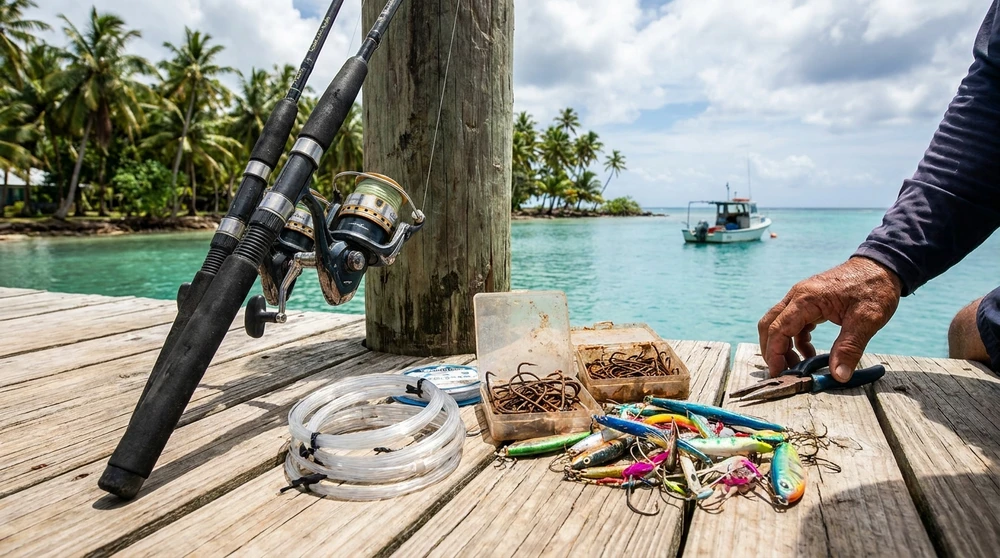
Carry a basic tool kit for reel maintenance. Salt corrosion in this environment is aggressive, and a reel left without lubrication after a day of fishing will deteriorate rapidly.
Fuel Shortages and the Barter Economy
The outer islands operate on a different rhythm where currency has limited practical value. A local captain may have the right boat but no fuel to run it that day. Coordinate your fuel requirements with your charter operator weeks before departure, and consider arranging to purchase a barrel of gasoline for remote trips as part of the negotiation.
Offering practical goods, stainless steel kitchen knives, quality multi-tools, waterproof torches, to local landowners and village leaders smooths every interaction and opens doors that money cannot. Respect traditional ownership of all shorelines and shallow reef areas, and always ask for permission before casting from any beach or reef flat.
Getting to the Marshall Islands
United Airlines operates the Island Hopper route connecting Honolulu to Majuro via several Micronesian islands. This remains the primary access route for western anglers. The journey from Honolulu takes approximately seven hours with stops. Learn more about the United Airlines Island Hopper route before planning your itinerary.
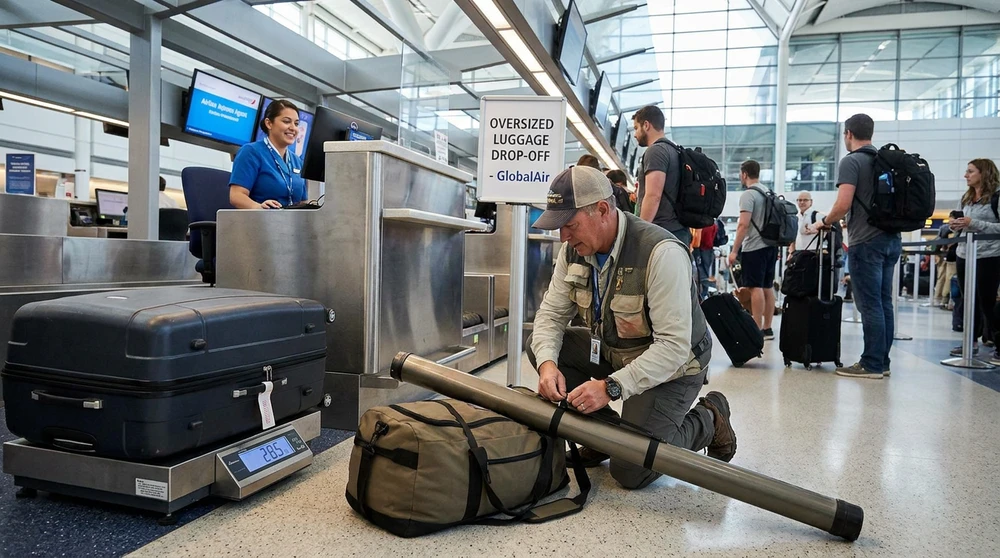
Flying into Majuro via Honolulu means you are arriving with all your gear. Airline baggage policies for oversized fishing rod tubes vary, and it is worth confirming United's policy for rod cases and tackle bags before departure.
Best Time to Visit for Fishing
The tropical climate stays hot and humid year-round, but wind patterns drive the fishing calendar. The dry season runs from December to April, bringing consistent trade winds and exceptional water clarity, ideal for stalking bonefish and casting poppers for GTs on the shallow flats.
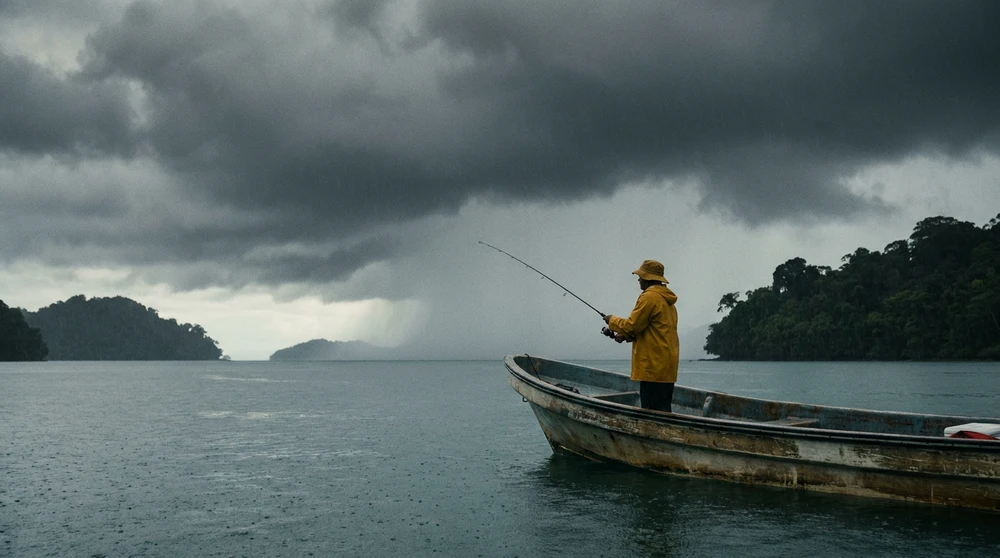
The wet season spans May to November, introducing variable winds and increased rainfall. However, the calmer offshore sea states during these months coincide with the strongest presence of large pelagics. Blue marlin and yellowfin tuna are most reliably encountered during this period, making it the preferred window for offshore angling. Combining a trip that bridges both seasons, arriving in late April or early May, gives access to both GT flats fishing and offshore pelagic action within a single expedition.
For broader context on planning your visit, the best time to visit Marshall Islands article covers weather patterns across all activities, not just fishing.
Safety: Ciguatera Toxin and Sharks
The crystal-clear water hides a biological hazard that has serious consequences. Ciguatera toxin accumulates in resident reef predators, particularly large barracudas, older groupers, and large snappers. Eating a contaminated fish causes severe neurological symptoms and gastrointestinal illness that can persist for weeks or months.
Never consume a reef fish without the explicit approval of a local captain or guide who knows the specific reef zones around each atoll. For eating, rely strictly on pelagic open-ocean species, yellowfin tuna, mahi-mahi, and wahoo, which do not carry the toxin. Dogtooth tuna, despite being a tuna, can carry ciguatoxin due to its reef-dwelling behavior and should be treated with the same caution as reef fish.
Keep your hands and feet inside the boat when releasing or dehooking fish. The local shark population is dense and bold. When a shark targets your hooked fish, increase drag pressure and bring the catch to the boat as fast as physically possible to avoid dangerous encounters alongside the hull.
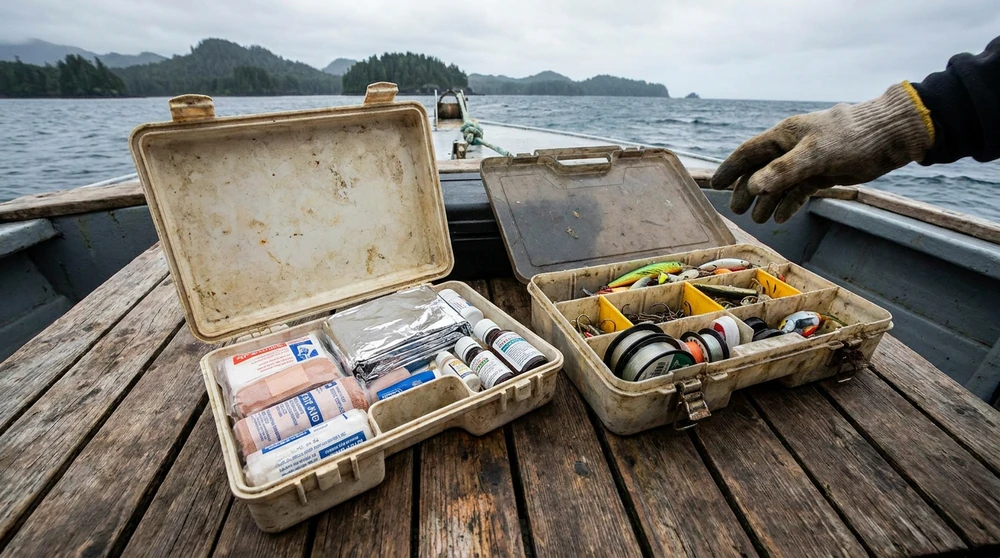
Consider comprehensive travel insurance before departure. The nearest advanced medical facility is in Honolulu. A ciguatera poisoning incident or a serious fishing-related injury on a remote outer atoll becomes a medical evacuation scenario with no nearby hospital to fall back on. Get travel insurance for the Marshall Islands
What to Pack
Experienced Marshall Islands anglers consistently emphasize packing for complete self-sufficiency across every category of gear.
For tackle and terminal gear: heavy braided mainline in 65 and 80-pound test, fluorocarbon leaders in 60 to 200-pound test, a selection of large wooden poppers and stickbaits, heavy butterfly jigs from 150 to 300 grams, a range of trolling skirts and rigged leaders for billfish, and double the hooks you think you need in every size.
For reels and rods: a minimum of two heavy spinning outfits and one jigging rod per angler, with a dedicated fly rod setup if targeting bonefish. Bring extra drag washers and reel grease. Salt spray in the Marshalls is heavy.
For personal gear: high-SPF sun protection clothing covering arms and neck, polarized sunglasses rated for flats fishing, specialized flats wading boots, a waterproof first aid kit, and oral rehydration salts for long hot days on exposed flats and open water.
For barter goods: quality stainless steel kitchen knives, LED headlamps, multi-tools, and small quality hand tools all carry genuine practical value in outer atoll communities. Bring a selection when venturing beyond Majuro.