Relying on tight domestic flight schedules in the Marshall Islands is the fastest way to derail your outer atoll itinerary. "Air Maybe" cancellations are frequent, and Arno Atoll, reachable by a short boat crossing, remains your safest bet for a genuine remote escape. Build buffer days into your trip and your return flights become far less stressful.
- International hub: Amata Kabua International Airport (MAJ), Majuro
- Currency: USD (cash only on outer atolls; no ATMs available)
- Boat to Arno: ~45-60 minutes from Majuro, $15 one-way (departures Mon/Wed/Fri ~10am)
- Local airline: Air Marshall Islands (direct contact required; expect delays)
- Essential gear: travel insurance with evacuation coverage, offline maps, reef-safe sunscreen, physical cash
How to Get to the Outer Atolls
Arriving in Majuro: The Island Hopper Reality
Getting to the Marshall Islands means booking a seat on the United Airlines Island Hopper, which connects Honolulu to Guam with several island touchdowns, including Majuro. The route operates four times weekly and takes an entire day to complete.

Pack snacks, secure a window seat, and brace for multiple cabin pressure changes. A second option is Nauru Airlines, which runs weekly on Fridays via Brisbane, Nauru, and Tarawa, useful if you are routing through the North Pacific.
On departure from Majuro, note the $20 airport departure tax payable in cash or by card at the check-in counter.

Inter-Island Flights (Air Marshall Islands)
Moving between the outer atolls by air tests your patience and your schedule. Air Marshall Islands operates a small fleet, and local weather or mechanical issues pause services without warning. A scheduled Tuesday departure can easily slip to Thursday. Treat every booking as a tentative plan rather than a guaranteed seat, and always hold a flexible international return ticket to absorb domestic delays.
The airline's booking process requires direct contact, as online reservations are unreliable. Call or visit the Majuro office to confirm your seat and the most current departure time.
Majuro to Arno Atoll Boat
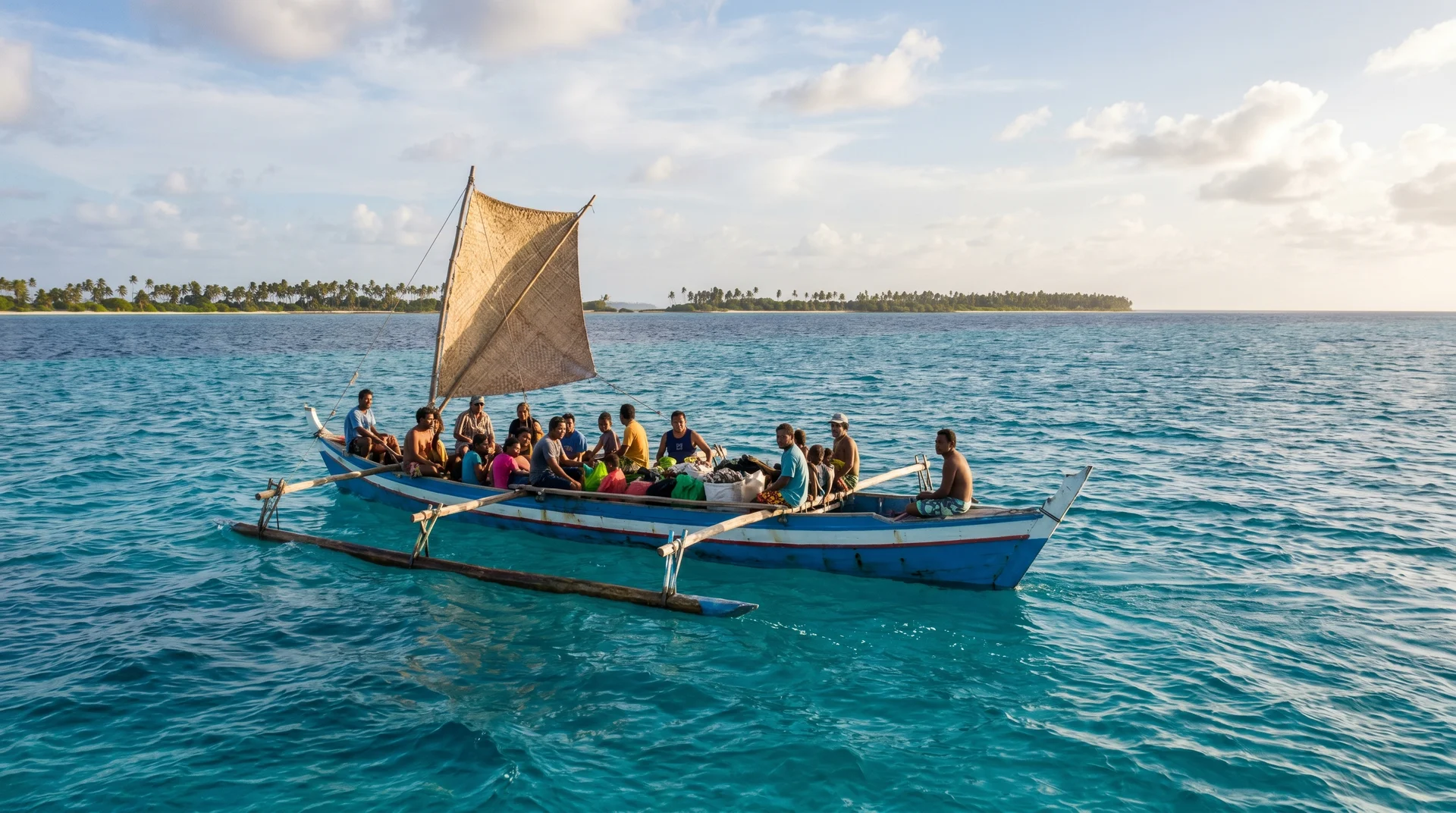
Arno is the only outer atoll reachable without a domestic flight. Small passenger and cargo boats depart from the municipal dock near the Robert Reimers hotel in Majuro on Monday, Wednesday, and Friday mornings around 10am. The crossing takes roughly an hour and costs $15 per person each way. Morning departures offer calmer seas; confirm the exact time at the pier the day before you travel. The boat is Arno's only link to the outside world, so it also carries mail, supplies, and local residents, not just tourists.
Field Trip Ships to Remote Atolls
For atolls beyond Arno and Jaluit, government supply vessels (called "field trip ships") occasionally take passengers. Schedules are irregular and fares run roughly $10-$50 per leg depending on distance. These are working cargo boats with minimal facilities; bring a sleeping mat, food, and water for the voyage. Departure dates are posted at the Majuro port authority and change frequently.
Best Outer Atolls to Visit
Arno Atoll: The Most Accessible Escape
Arno offers total silence just an hour away from the busy capital. Wide white-sand beaches, intact coral reefs, and off-grid living define the landscape. The Beachcomber Lodge provides basic lagoon-facing cabins with cooking facilities for around $50 a night, the only formal accommodation option on the atoll. Bring your own drinking water, mosquito repellent, and snorkeling gear, as no rental shops exist here.

On the crossing from Majuro you may encounter dolphins, whales, and schools of feeding tuna close to the surface. The lagoon's reef flats are excellent for snorkeling and casual reef walking. Local women are known for their woven pandanus mats and baskets; buying direct from artisans supports the community directly.
Before heading out, stock up at MISCO Market in Majuro, which carries fresh sashimi, bottled water, and imported goods not available on the atoll.
Jaluit Atoll: WWII Relics and Broad Lagoons
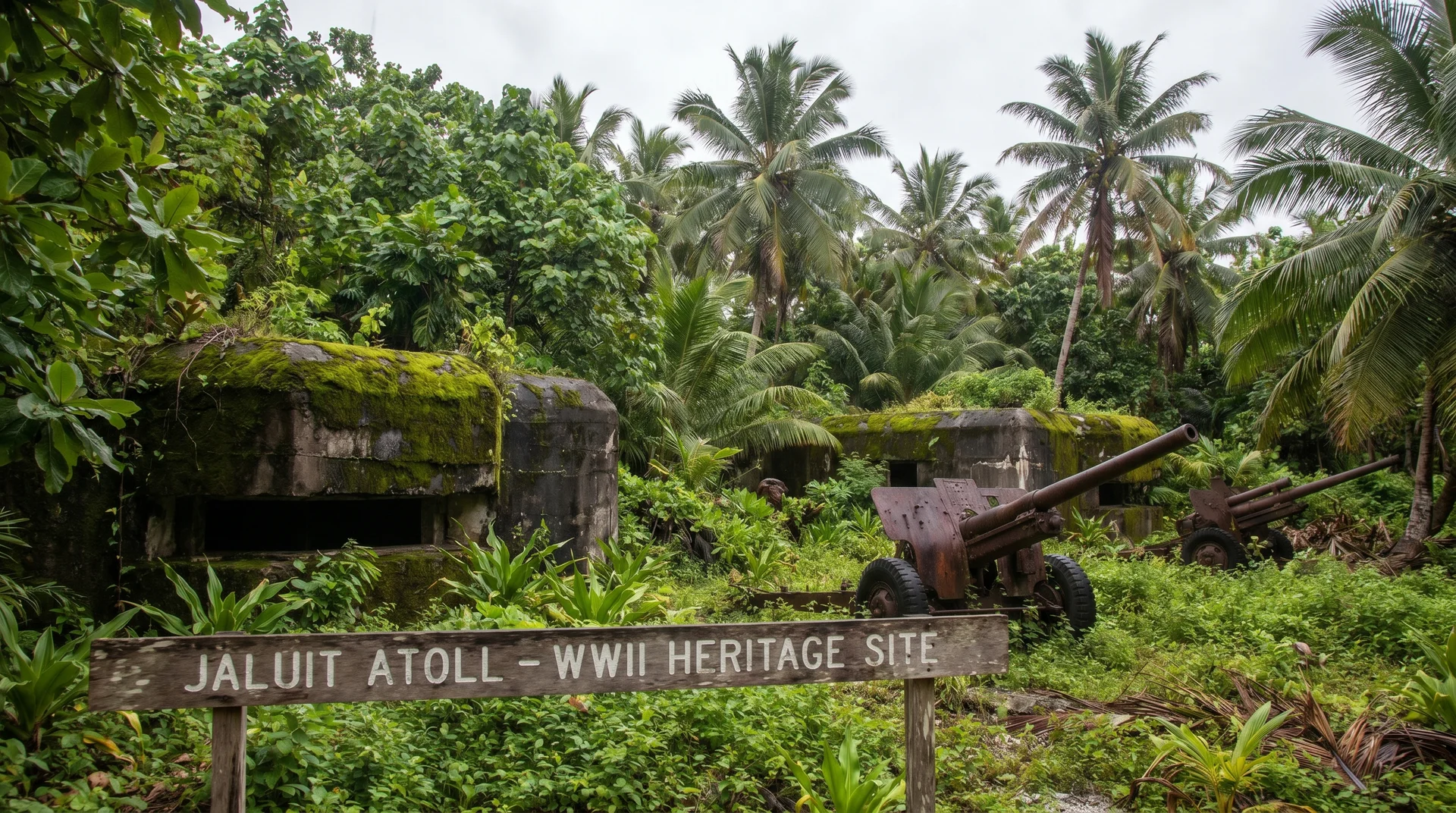
Jaluit served as the administrative capital under both German and Japanese colonial rule, leaving behind a layered archaeological record. Rusting wartime structures, Japanese bunkers, and overgrown airstrip remnants sit among palm groves and tidal pools. The broad lagoon and reef drop-offs attract reef fish, wrasses, rays, and sea turtles.
Reaching Jaluit requires an Air Marshall Islands domestic flight to the rudimentary airstrip. Modest local guesthouses offer shelter, but communication back to the capital remains patchy. The flight schedule is weekly or bi-weekly at best; confirm departure times directly with the airline and plan for at least one extra buffer day.
Bikini and Utirik Atolls: Radiation Safety and Access Restrictions
Visiting Bikini or Utirik involves navigating islands fundamentally altered by mid-century nuclear testing. You cannot independently explore these atolls. Access to Bikini requires a licensed liveaboard dive operator, who manages the permitting process through the Kili/Bikini/Ejit Local Government. Attempting to arrange this independently is not permitted. Advanced open water certification is standard, with deep and wreck specialties recommended.
Background radiation on established tourist tracks at Bikini remains within safe thresholds, but specific areas stay completely restricted. Never consume locally sourced coconuts or untreated water from these zones. Follow operator safety protocols closely.
Practical Preparations for Remote Atolls
Cash Economy and Missing ATMs
Credit cards work in Majuro's main hotels and supermarkets, but become useless the moment you board a boat or domestic flight. The outer atolls operate entirely on cash. Withdraw plenty of small US dollar bills in the capital before departure; you need exact change for village homestays, small grocery shacks, and local transport. No ATMs exist outside Majuro. This cash-only reality mirrors conditions across other remote Pacific nations, as travelers heading to Tuvalu's outer islands will recognize immediately.

What to Pack
The outer atolls sell almost nothing beyond basic dry goods. Pack everything you need before leaving Majuro:
- Bottled water (carry more than you think you need)
- Non-perishable food and snacks
- Reef-safe sunscreen and insect repellent
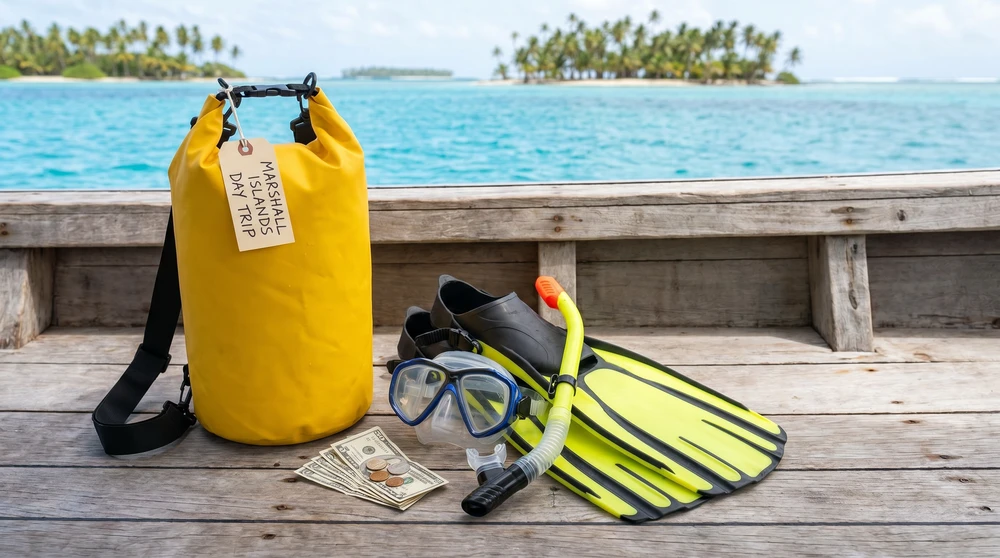
- Snorkeling mask and fins
- Motion sickness medication for boat crossings
- Physical medications (the nearest pharmacy is back in Majuro)
- Offline maps downloaded before you leave (no signal on most atolls)
- A small amount of cash in single-dollar bills for small transactions
Health, Hygiene, and Medical Evacuation
Medical facilities outside Majuro range from a basic first-aid clinic to nothing at all. Pack a comprehensive travel medical kit including broad-spectrum antibiotics and any personal prescriptions. Travel insurance with medical evacuation coverage is non-negotiable. An emergency airlift from a remote atoll costs thousands of dollars without proper coverage.
Treat all local tap and well water as unsafe for drinking. Rely entirely on bottled supplies or a portable water filter. Get travel insurance with evacuation coverage before you depart; the remoteness of these atolls means standard domestic health cover provides almost no safety net.
Connectivity and Communication
Mobile signal is patchy or absent once you leave Majuro. A local SIM card from the capital airport helps with basic connectivity in the city, but most outer atolls have no reliable internet or mobile service. Arno historically relied on ham radio to communicate with Majuro. Download offline maps, save important contacts, and let someone know your itinerary before you travel beyond the capital.
When to Visit
The dry season from December to April brings calmer seas, lower humidity, and the best conditions for snorkeling and boat crossings. This period also sees higher demand, so arrange Beachcomber Lodge accommodation and Air Marshall Islands flights at least six weeks in advance for outer atolls during peak months. Country collectors adding Marshall Islands to a Pacific circuit often pair it with visiting Nauru or Tuvalu on the same trip, which share similar logistical challenges.
August marks the wet season with regular rain and rougher sea conditions; boat crossings to Arno can be uncomfortable and occasionally postponed. The shoulder months of May and November offer a compromise: fewer visitors, lower accommodation pressure, and generally manageable weather.