Securing a tourist visa for Nauru requires navigating a heavily bureaucratic process that involves coordinating directly with the immigration director via email weeks before your departure. Turning up at the airport without a pre-approved entry permit and a printed sponsor letter guarantees you will be denied boarding on the sole airline servicing the island.
- Visa: Pre-approved entry permit required for almost all nationalities prior to arrival.
- Currency: Australian Dollar (AUD); entirely cash-based economy.
- Airline: Nauru Airlines (flights via Brisbane, Nadi, Tarawa).
- Connectivity: Local Digicel SIM or pre-purchased eSIM.
- Transport: Rental cars or scooters; no public transit system exists.
Navigating the Visa Application Process
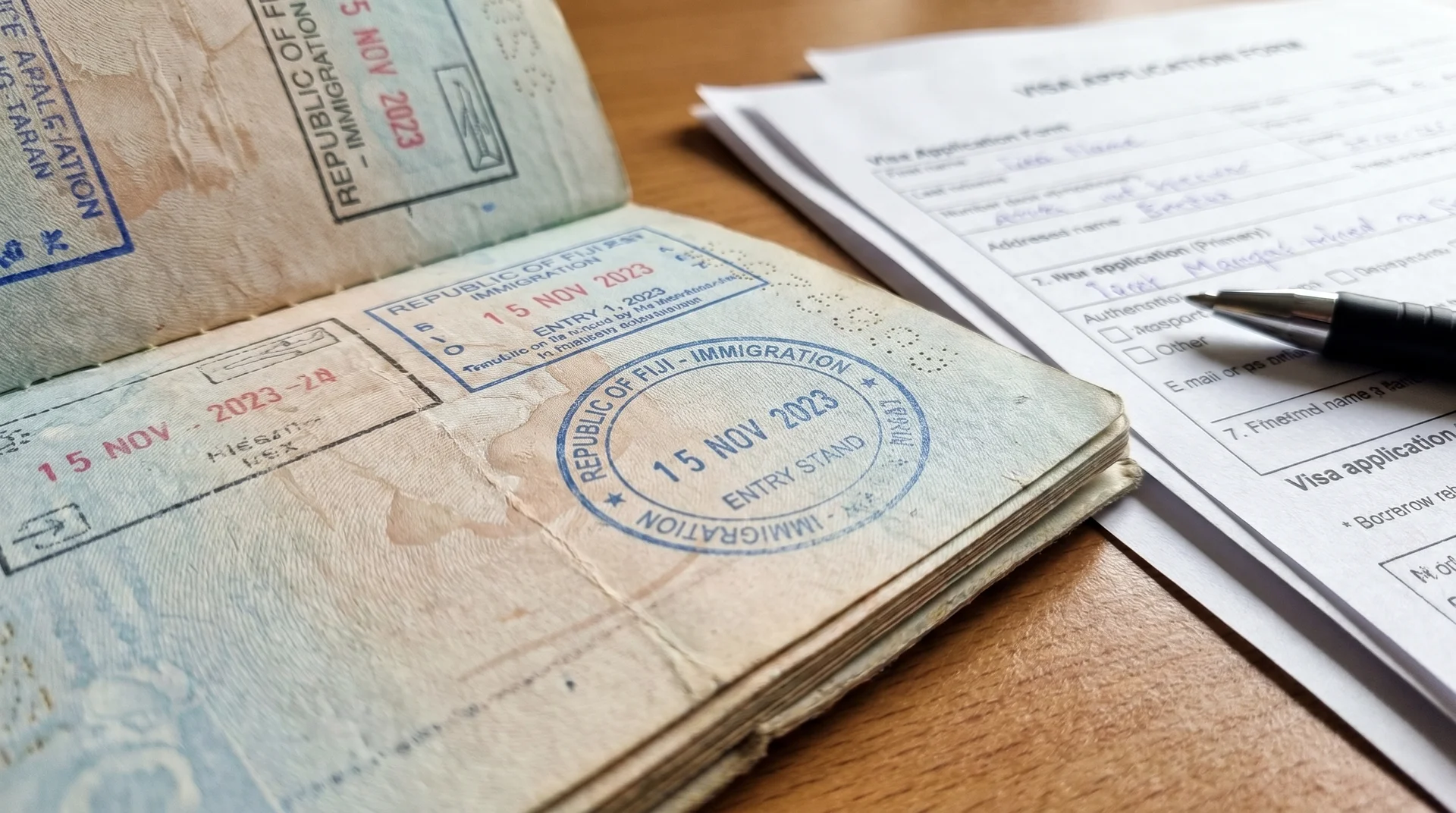
Applying for an entry permit involves direct correspondence with the Nauru Department of Justice and Border Control. The complete document checklist and step-by-step timeline are in the Nauru visa requirements guide. You submit your documents via email to the Director of Immigration at visa@naurugov.nr and wait for a manual review. The required documentation includes a completed application form, passport copy, confirmed flight itinerary, hotel booking, and proof of employment.
Response times vary drastically. Some applicants receive a reply within days, while others wait weeks. Start this process long before your intended travel date. Once approved, the department provides bank details for the visa fee transfer. Keep a printed copy of the final approval email; immigration officers check this thoroughly upon landing.
Catching Flights to the Central Pacific
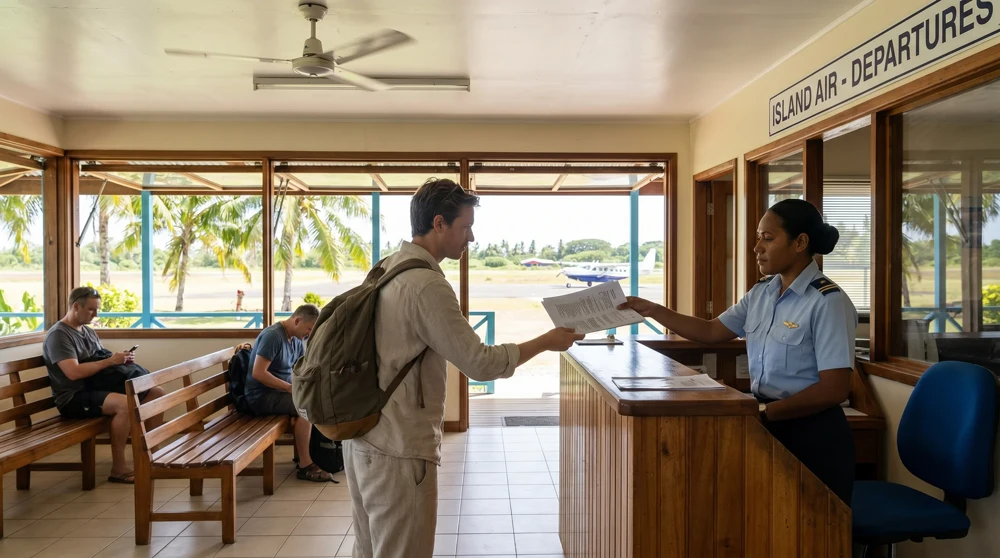
Reaching the island means flying with Nauru Airlines, the only commercial carrier operating on this route. The primary hub is Brisbane, Australia, with additional connections from Nadi (Fiji) and Tarawa (Kiribati). Regular services run from Brisbane on Sundays, returning on Tuesdays, though schedules connect through multiple stops.
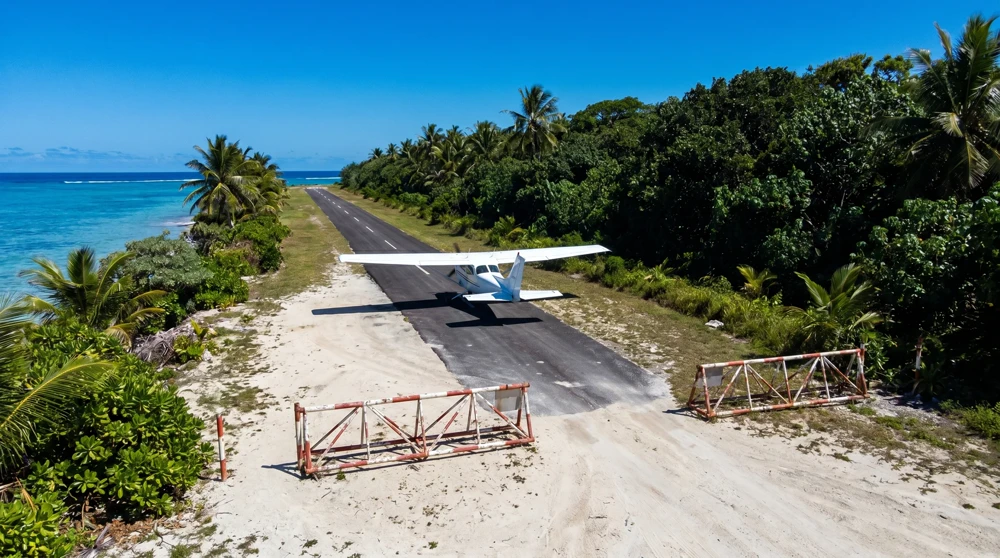
Flight schedules change frequently due to weather, maintenance, or logistical reasons. Build a buffer into your broader travel itinerary to absorb sudden delays or rescheduled flights. Note that runway works at Nauru International Airport are expected to resume in June 2026, which may affect schedules during that period, so check the Nauru Airlines website for updates before booking. Prepare for a unique landing experience; the runway cuts directly across the island's main perimeter road, forcing local traffic to stop behind folding gates during takeoffs and landings.
Managing Cash and Connectivity
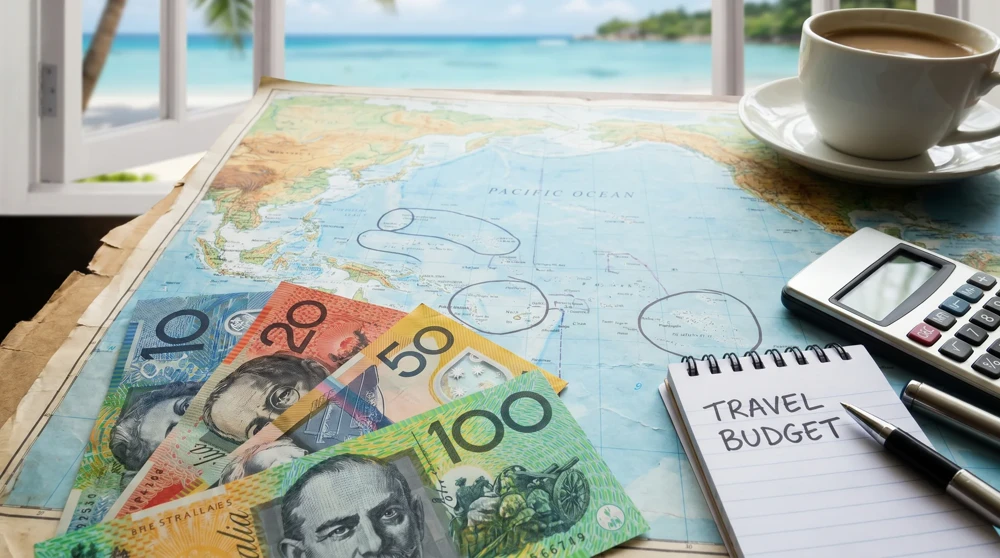
Nauru operates almost entirely on the Australian Dollar. Bring all the cash you need for your entire stay. For a full trip budget, the Nauru travel costs breakdown covers flights, accommodation, food, and daily expenses. While a few larger establishments possess card machines, network outages render them useless, and local ATMs frequently run out of cash.
Staying connected requires a bit of planning. The local telecom provider, Digicel, sells physical SIM cards at their Civic Centre office. If you prefer immediate access upon landing, a global eSIM is the most reliable alternative. The 4G coverage remains strong along the coastal ring but drops off sharply once you head into the island's interior.
Getting Around the Coastal Road
A single paved road circles the entire 19-kilometer perimeter of the country. Renting a car or a scooter is the most practical way to explore, as public transportation does not exist. You arrange rentals through local providers like Capelle & Partner or directly through your accommodation host.
Driving is on the left, and the island-wide speed limit is slow. Walking the entire coastal road takes roughly four to six hours. Attempting this island walk at dawn helps you avoid the intense equatorial heat and high humidity that dominate the afternoons. Beware of aggressive street dogs, especially when walking near residential areas.
Exploring the Topside and Coastal Relics
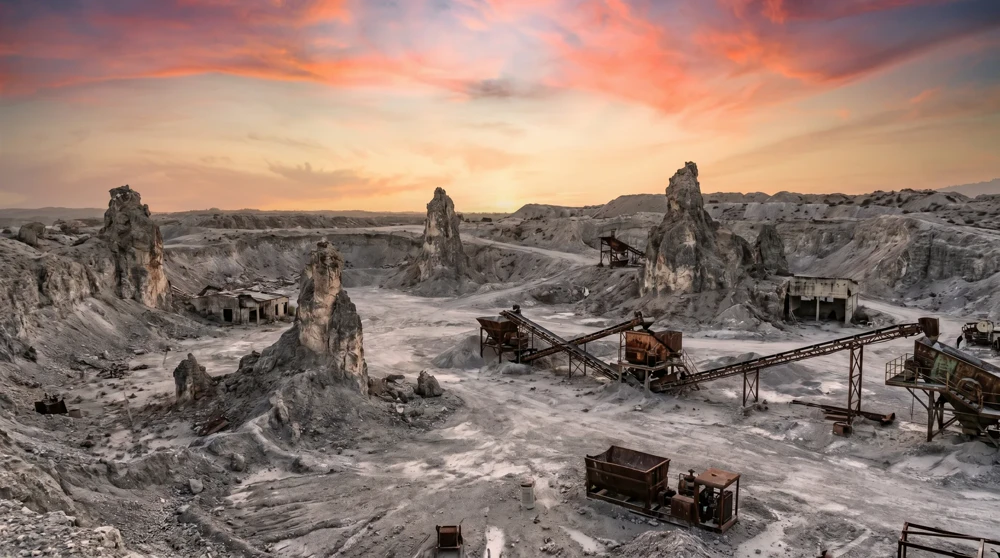
The island's interior, known locally as "Topside," presents a stark, lunar-like landscape scarred by decades of intense phosphate mining. Jagged limestone pinnacles dominate the terrain. A 4WD vehicle handles the unpaved, rugged mining roads much better than a standard rental car.
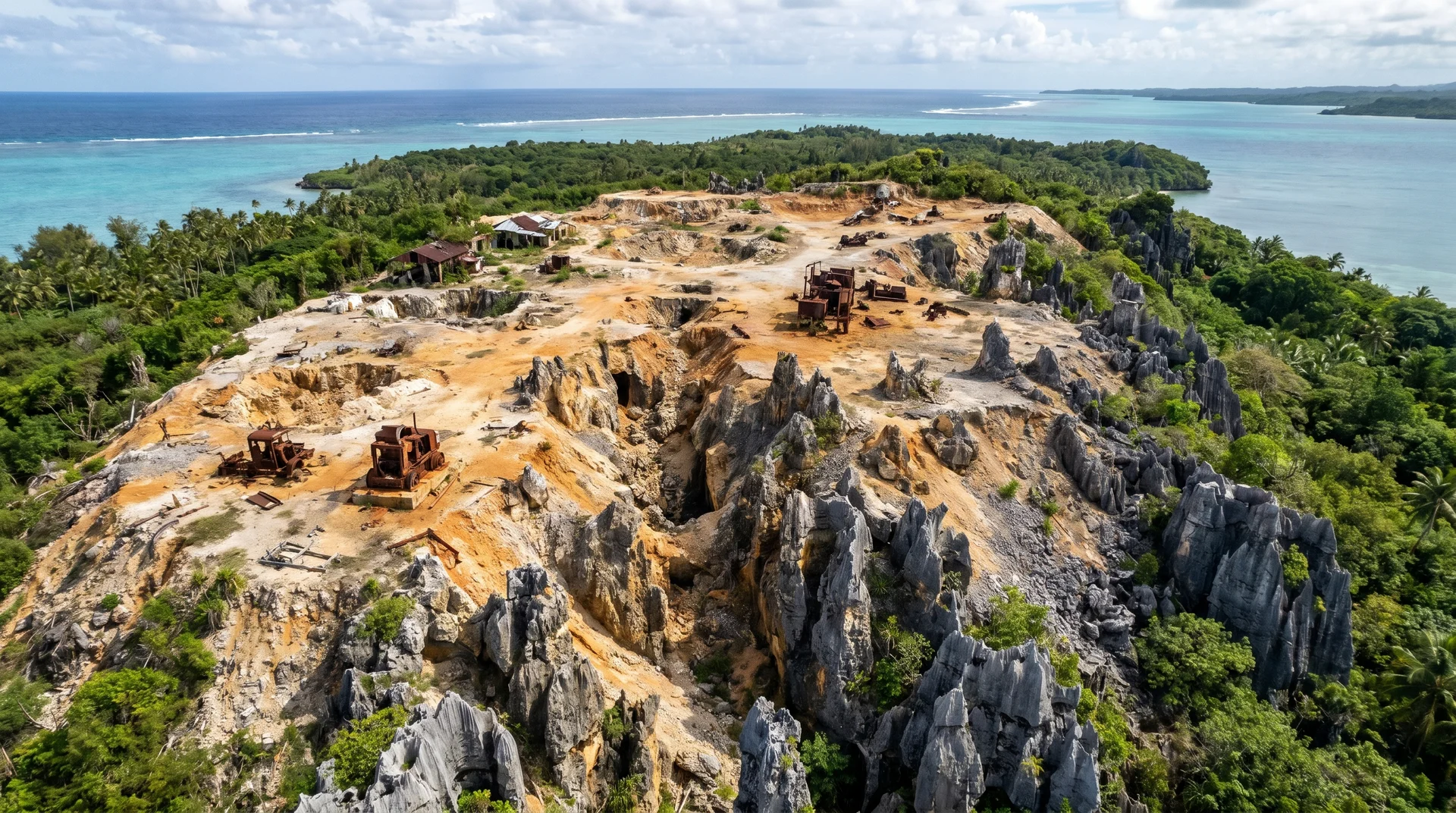
Command Ridge serves as the highest point and holds significant World War II history. Rusted Japanese anti-aircraft guns and communication bunkers sit hidden among the dense scrub. Down on the coast, Anibare Bay offers the best spot for swimming. Linkbelt Oval in Aiwo, meanwhile, hosts Australian Rules Football year-round - the sport has over 30% per-capita participation, the highest rate on Earth. The deep water drop-offs and towering phosphate cantilevers create a dramatic backdrop for afternoon snorkeling.
Understanding Local Micronesian Culture
Nauruans maintain a strong connection to their ocean environment. Reef gathering remains a common practice at low tide, where locals collect periwinkles and sea urchins. Engaging a local guide provides access to deeper cultural practices, such as the traditional catching and cooking of the Noddy bird.
The community is predominantly Christian and conservative. Dressing modestly outside of beach areas shows respect for local customs. Sundays are strictly observed as a day of rest; expect most shops, restaurants, and services to remain closed throughout the day.
Accommodation and Dining Options
Lodging choices are limited to a handful of options. The Menen Hotel is the largest and most well-known, offering a restaurant and a weekend bar where locals and expatriate workers gather - a full breakdown of all three venues, dress codes, and the cash-only rule is in the Nauru nightlife guide. Ewa Lodge provides an alternative, usually situated closer to the main supermarket. The full comparison of all three properties is in the Nauru hotels guide. Securing your room confirmation early is not just vital for your comfort; it also serves as a mandatory prerequisite for your entry permit approval.
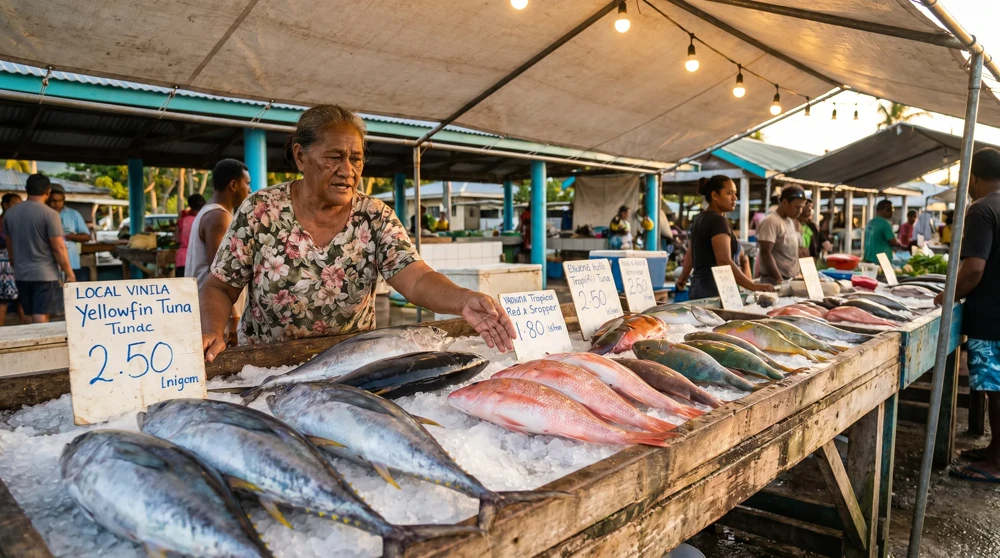
Dining revolves around imported goods and fresh local seafood. Tuna and snapper feature heavily on menus, often prepared alongside Chinese cuisine. Small takeaway shops dot the districts of Denigomodu and Aiwo, offering simple, filling meals. If you want to explore local flavors more deeply, the local food scene in Nauru covers what to eat and where to find it. Always drink bottled or filtered water, as the island relies heavily on desalination plants for its fresh water supply.