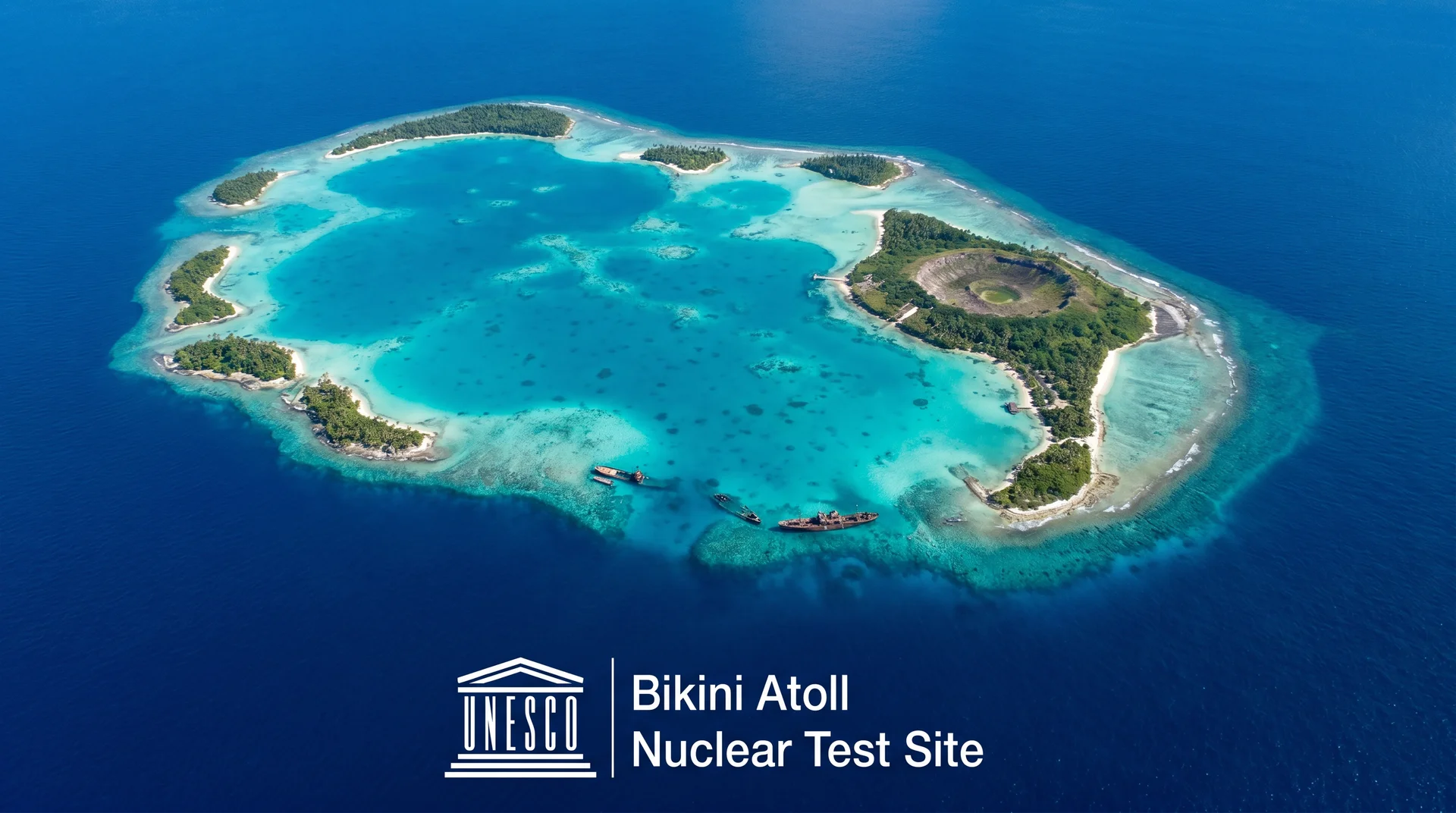
The Marshall Islands sit at the center of one of the most consequential chapters in Cold War history. Between 1946 and 1958, the United States detonated 67 nuclear weapons across these remote Pacific atolls, permanently altering the land, the ocean, and the lives of an indigenous people who had nothing to do with the arms race reshaping the world above them.
Visiting today means navigating layers of radiation science, geopolitics, ethical responsibility, and genuine logistical complexity. This guide breaks down exactly what happened, what the landscape looks like now, and what atomic tourism actually requires of you.
The nuclear testing program was itself a direct consequence of the Pacific War, which saw American forces capture the Marshall Islands from Japan in 1944. Our Marshall Islands in World War II guide covers Operation Flintlock and the military campaigns that brought the US to these atolls.
For those planning to dive the historic wreck fleet, our detailed guide on diving Bikini Atoll covers the nuclear ghost fleet and WWII wrecks in full. You may also want to read our broader diving in the Marshall Islands overview before committing to an expedition.
Access Status and Entry Requirements
You cannot simply buy a plane ticket and arrive at Bikini Atoll. The entry framework across the northern atolls involves multiple layers of bureaucracy, and skipping any of them will result in deportation or being turned away at Majuro.
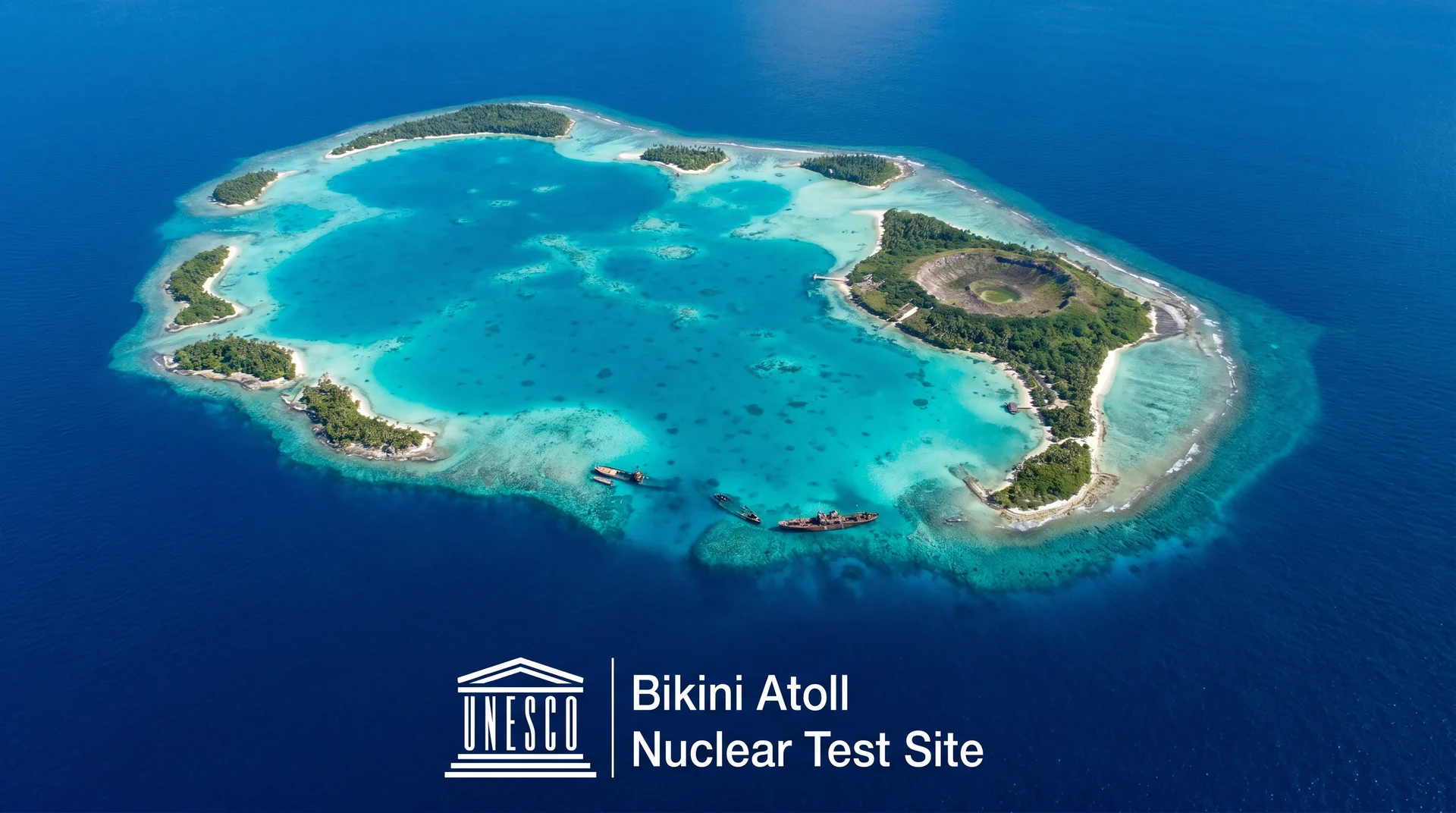
- Bikini Atoll: Restricted expedition access only. You need independent government clearances from the Ministry of Culture and Internal Affairs, plus a formal invitation from the local atoll government. These take months to secure.
- Enewetak Atoll: Limited visitation allowed, but requires an official invitation letter from the Enewetak-Ujelang local government before you arrive.
- Kwajalein Atoll: Active U.S. military installation. Entry requires strict Department of Defense protocols and is effectively closed to independent travelers.
- Majuro: The capital operates normally. Ambient radiation here is standard global background levels with no special precautions needed.
For current entry rules and visa details, see our Marshall Islands visa requirements guide.
Transportation Reality
Air Marshall Islands flights operate on highly irregular schedules, and commercial service to the northern atolls is effectively nonexistent. The only reliable way to reach Bikini Atoll for atomic tourism is via a chartered, fully self-sustained liveaboard diving vessel departing from Kwajalein or Majuro. There are no hotels, no resupply options, and no emergency infrastructure at the atoll itself. The local dive resort that once operated there closed over a decade ago and has not reopened.
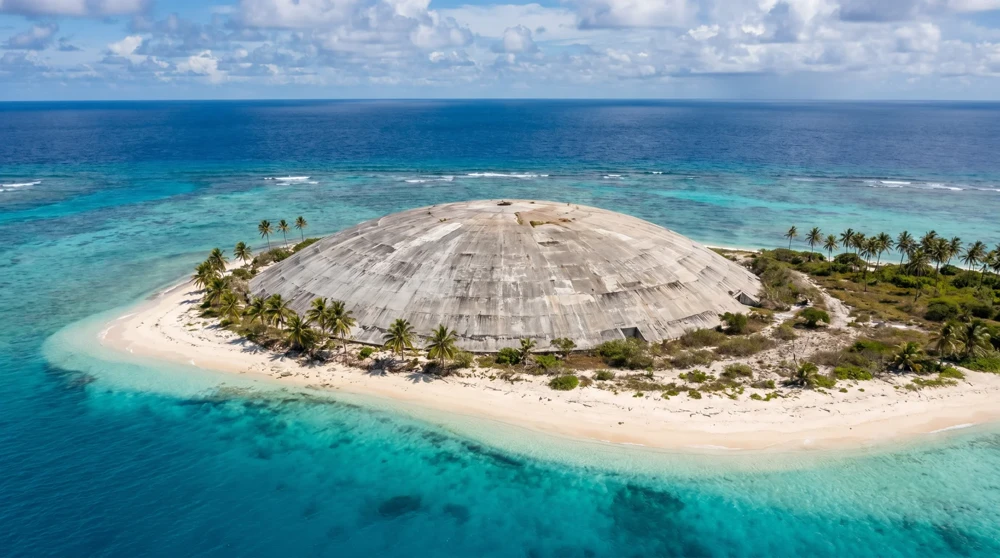
Expedition charters typically cost between $5,000 and $10,000+ per person due to the extreme geographic isolation and fuel requirements. Build several buffer days into any Majuro-based connection, because schedule disruptions are routine.
For a realistic cost breakdown across the country, see Marshall Islands travel costs.
Current Radiation Levels and What You Can Actually Do
The radiation picture across the Marshall Islands is not uniform, and oversimplifying it in either direction is dangerous.
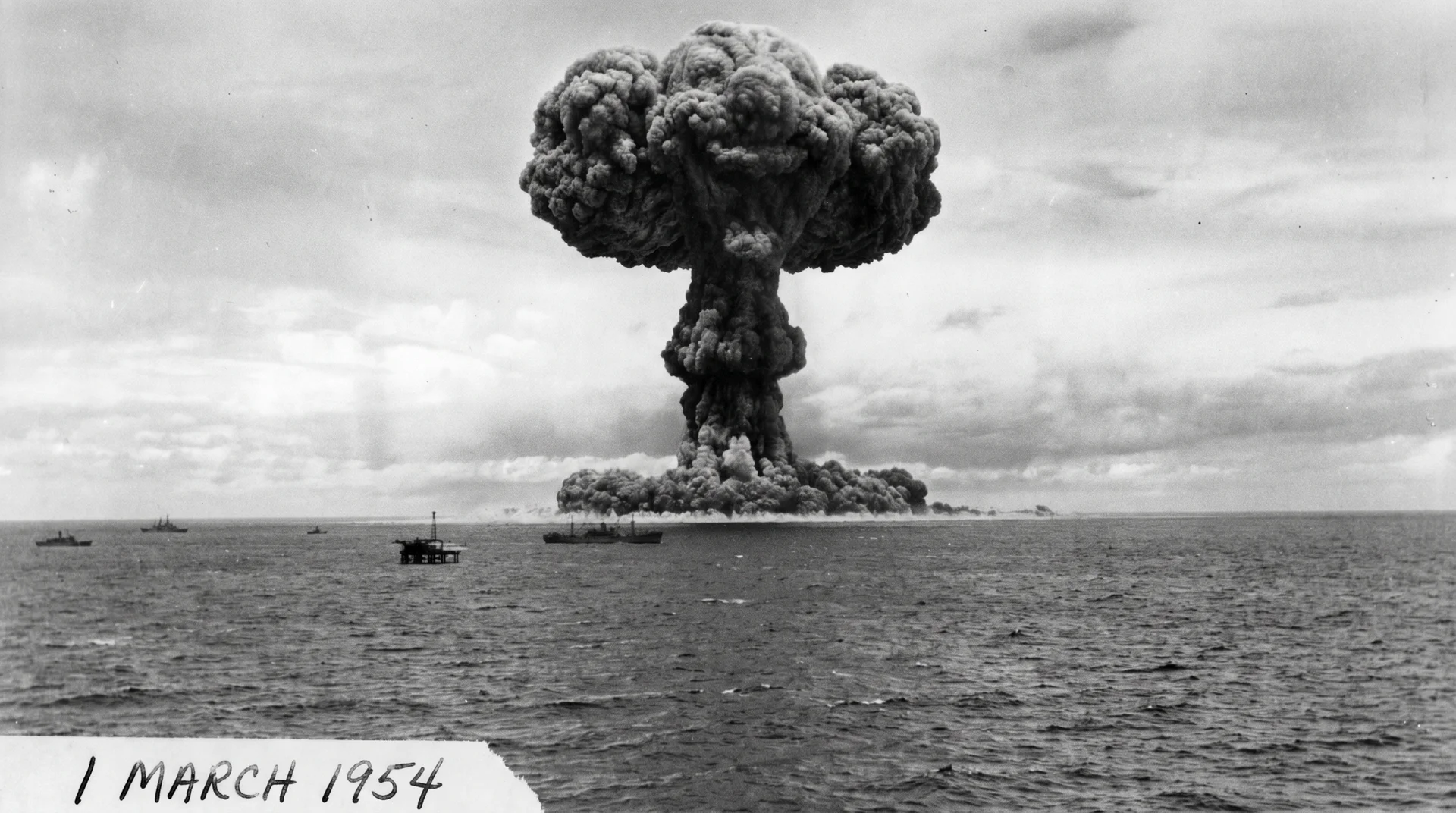
Ambient atmospheric radiation in Majuro and other major transit hubs is entirely within normal global background levels. You face no measurable risk walking around the capital.
Bikini Atoll is a different environment. The soil and plant matter on specific islands within the atoll still contain elevated concentrations of cesium-137 from weapons fallout and soil that was never fully remediated. Walking on the beaches for brief periods carries no significant danger. The risk is ingestion. Consuming locally grown coconuts, coconut crabs, or any fruits from the affected zones poses severe internal radiation exposure. All food must come from your expedition vessel.
For open-water diving around the wreck sites, the water column itself is not the primary concern. The wrecks are extraordinary and the diving community has operated there safely for decades. The restrictions on local food consumption apply regardless of how you arrived.
The Runit Dome: The Pacific's Nuclear Storage Problem
On Runit Island within Enewetak Atoll, a massive concrete structure sits flush against the ground like an oversized manhole cover. This is the Runit Dome, a 46-centimeter-thick concrete cap sealing over 73,000 cubic meters of radioactive debris, plutonium-contaminated soil, and weapons test remnants left behind by American cleanup operations in the late 1970s.
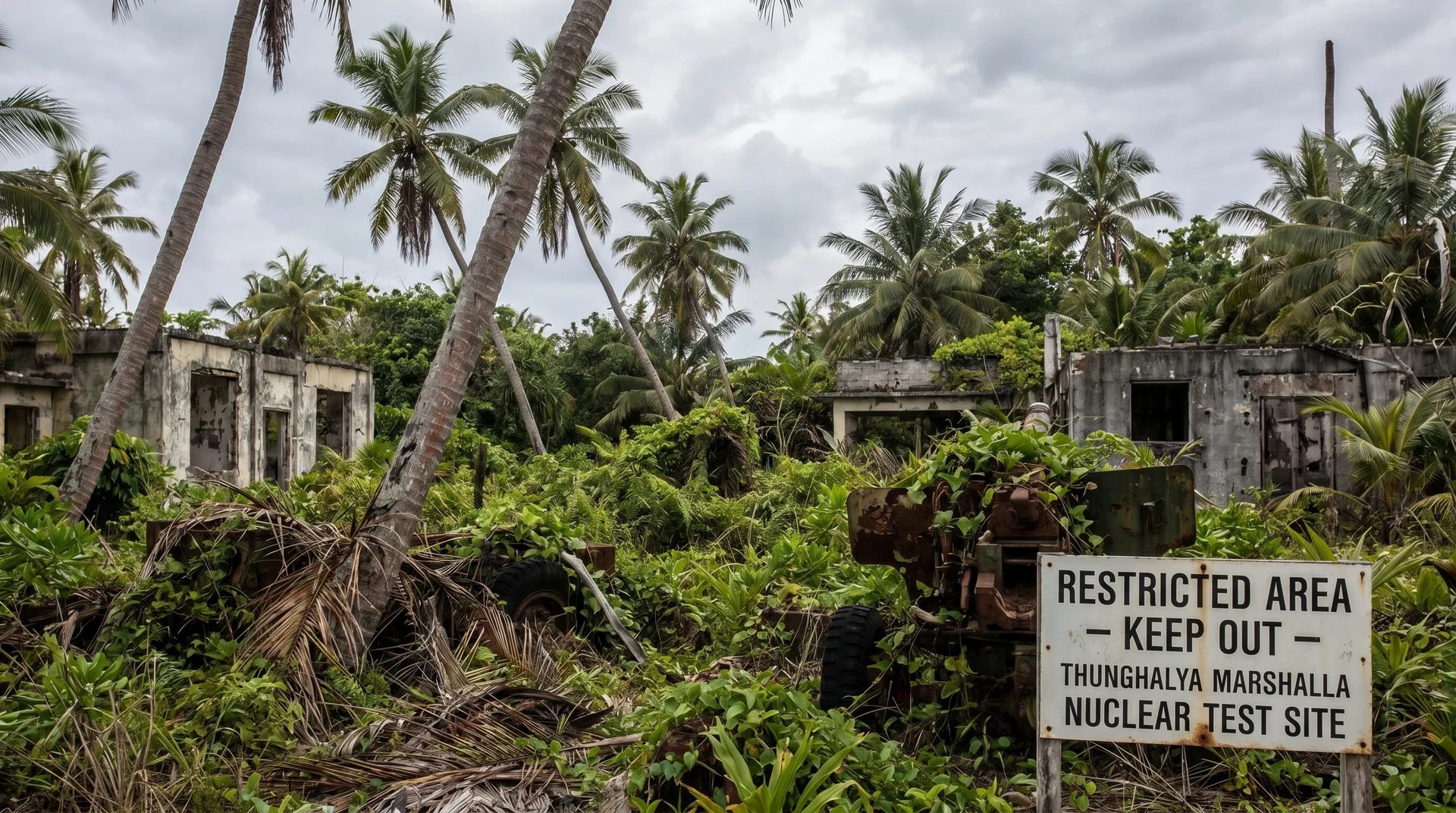
The structure was built over an unlined bomb crater, which at the time seemed adequate. It was not designed for a changing climate.
The Climate Change Problem
Rising sea levels are now driving seawater directly through the radioactive sediment beneath the dome. The contaminated groundwater has no barrier to the ocean. Elevated levels of plutonium and cesium have been documented in the surrounding lagoon waters, making swimming, diving, or fishing in the immediate vicinity of Runit Island genuinely hazardous. The concrete panels themselves are visibly weathering, though structural collapse is not an imminent threat. What is happening is a slow, continuous leak that U.S. Department of Energy monitoring has struggled to quantify with precision.
This is not a hypothetical future risk. It is an ongoing environmental condition.
Castle Bravo and the History of 67 Tests
The United States selected the Marshall Islands as its primary nuclear testing ground for the early Cold War period for two reasons: geographic isolation and low population density. What followed was a 12-year campaign of atmospheric and underwater detonations that would be unthinkable under any modern regulatory framework.
Operation Crossroads in 1946 opened the testing program with two detonations at Bikini Atoll, ostensibly to study the effects of nuclear weapons on naval vessels. The Marshallese residents of Bikini were relocated - told by Commodore Ben Wyatt that they were like the children of Israel and that moving temporarily would benefit all of mankind. They have never permanently returned.
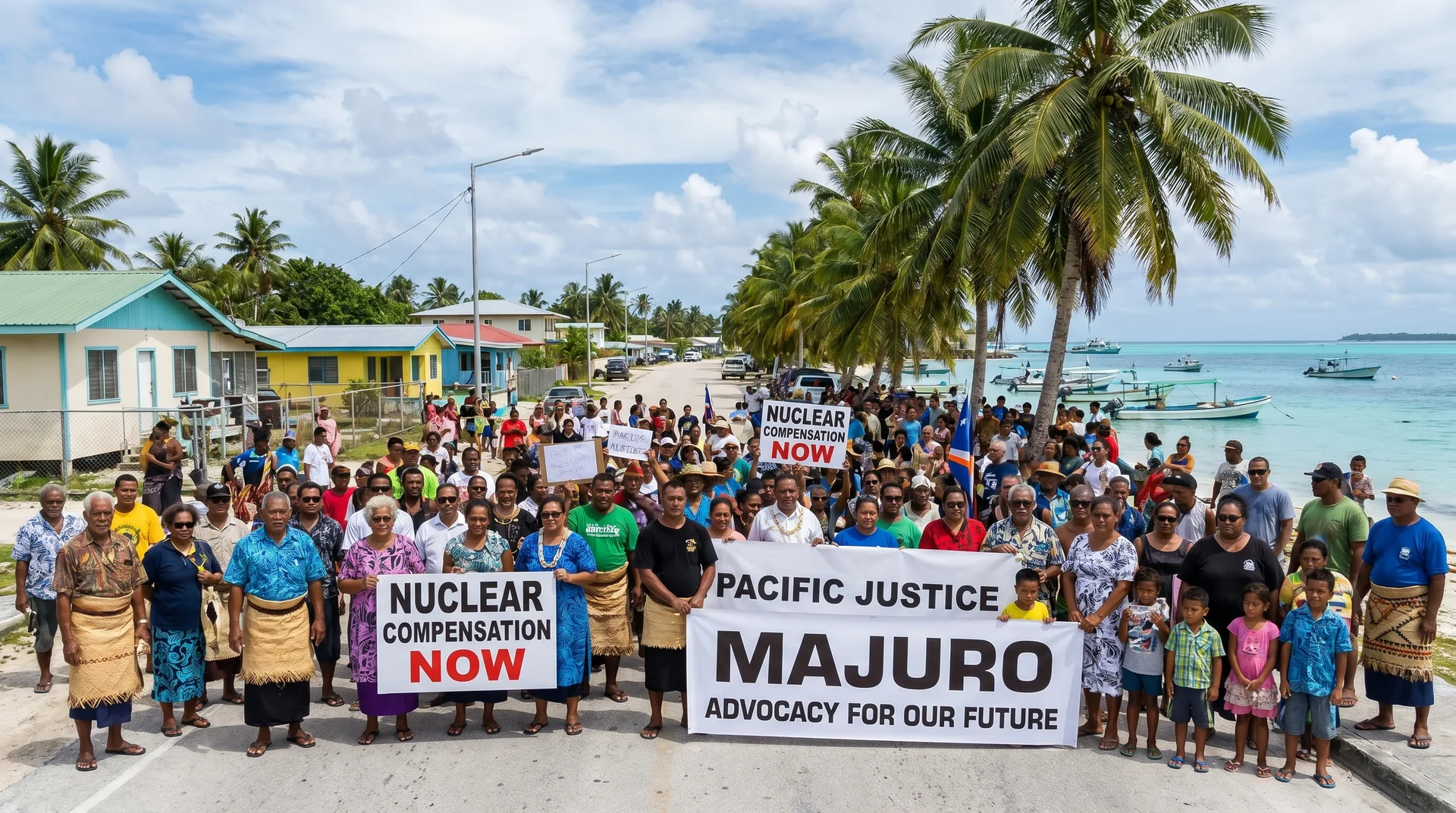
The program's catastrophic peak came on March 1, 1954, with the surface detonation of Castle Bravo on Bikini Atoll. The device yielded 15 megatons - 1,000 times more powerful than the bomb dropped on Hiroshima. The yield significantly exceeded projections, and the resulting fallout cloud blanketed inhabited downwind atolls including Rongelap and Utrik. Islanders on Rongelap reported ash-like fallout settling on their skin and in water supplies before any evacuation was ordered. The delayed response had long-term health consequences that are still documented in Marshallese communities today.
Between 1946 and 1958, the total program included 67 detonations - atmospheric, surface, and underwater - covering a geographic spread across both Bikini and Enewetak atolls.
Health Justice and the Compensation Gap
Your understanding of the Marshall Islands is incomplete without recognizing the Compact of Free Association (COFA). This complex political agreement permits Marshallese citizens to live and work in the United States while granting the U.S. military exclusive strategic access to the region's vast waters and airspace.
The Nuclear Claims Tribunal, established to adjudicate compensation for nuclear testing damages, awarded over $2 billion in claims. The United States has paid a fraction of that amount. The original $150 million compensation fund established under the Compact ran out in 2009, leaving hundreds of valid property and health claims completely unpaid. Local advocates continue pushing for updated environmental cleanups and comprehensive medical infrastructure. The islands still lack specialized oncology facilities to treat radiation-linked illnesses, meaning Marshallese patients must travel abroad for cancer treatment that may be directly connected to the testing program.
High rates of thyroid cancer, birth defects, and other radiation-linked conditions persist across affected atoll communities. The generational displacement of populations from Bikini, Rongelap, and Enewetak continues to shape Marshallese culture and politics today.
Ethical Considerations for Atomic Tourism
Choosing to visit these atolls requires a commitment to ethical travel that goes beyond the standard responsible tourism framework. These are not dark tourism attractions in the conventional sense. They are active monuments to human tragedy, geopolitics, and an ecological wound that has not healed.
Practical ethical requirements include:
- Hiring Marshallese guides rather than importing outside operators
- Securing formal customary land permissions from traditional chiefs (Alaps) before accessing any land
- Ensuring your financial investment reaches local communities, not just international charter operators
- Understanding the political history before you arrive, not after
For context on who visits the Marshall Islands and what to expect from the country as a destination, our Marshall Islands for country collectors article is worth reading before you commit to an expedition.