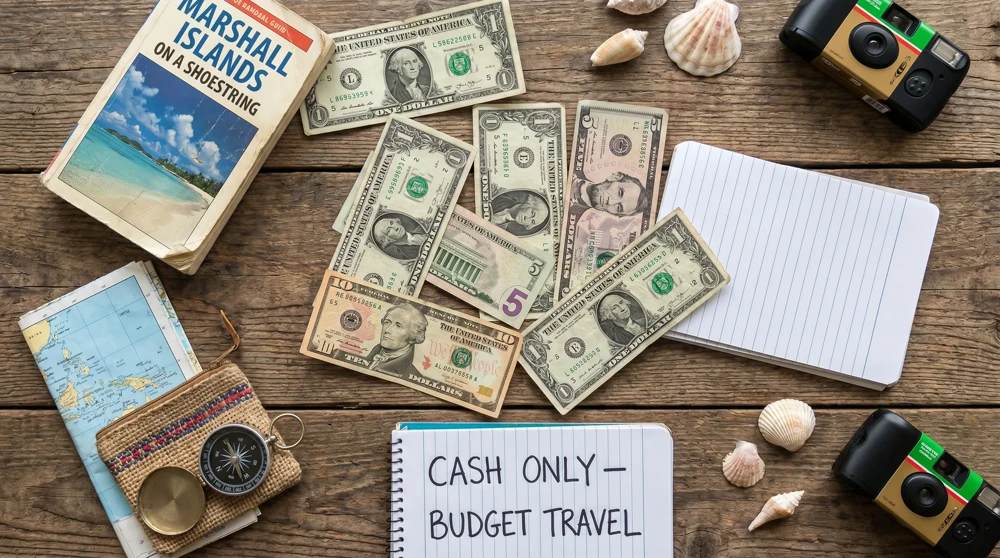
Landing on a remote Pacific atoll without a thick stack of US Dollar cash will completely strand your travel plans before you even clear immigration. The Marshall Islands operates on a strict, cash-driven economy where international credit cards are virtually useless outside major resort front desks. Navigating this logistical reality requires precise budgeting and an advanced understanding of the true costs associated with the legendary United Airlines Island Hopper.
- Currency: United States Dollar (USD)
- Daily budget (budget): $75-$100 per day
- Daily budget (mid-range): $150-$250 per day
- Shared taxi flat rate: $1-$2 within D-U-D
- Car rental (24 hours): $75-$90
- Airport departure tax: $20 (cash only, ages 13-59)
- Eneko Island day trip: $60-$70 return boat
- Best time to visit: January to March (dry season)
The Reality of the Marshallese Economy: Cash is King
ATMs in Majuro frequently run out of bills or experience satellite connectivity blackouts for days at a time. Local businesses, family-run stores, and transport providers do not accept digital payments under any circumstances. Withdraw your entire trip budget in USD cash before departing your transit hub in Hawaii or Guam. Relying on finding an active ATM on arrival is an unsafe strategy that will leave you without options.
The US Dollar is the official currency, so there is no exchange rate to worry about, but the scarcity of physical bills in circulation is the real challenge. Keep bills in multiple denominations, as $50 and $100 notes are sometimes refused by smaller vendors who cannot make change.
Flights and the United Airlines Island Hopper
Reaching Amata Kabua International Airport (MAJ) represents the most significant financial hurdle of your entire itinerary. The United Airlines Island Hopper is the primary aviation lifeline for the region, and a single leg can easily cost $800 to $1,500 depending on how far in advance you book. Round-trip fares from the continental United States regularly reach $2,000 to $3,500.
Frequent 24-hour flight cancellations due to sudden Pacific weather shifts are a documented reality. Budget for unexpected extra nights at a transit point in Honolulu or Guam, as rebooking on the Island Hopper can take days when seats are limited.
Booking 3 to 6 months ahead reduces fares significantly. The Island Hopper stops at Majuro, Kwajalein, Kosrae, Pohnpei, and Chuuk on its route between Honolulu and Guam, so booking a fare that stops mid-route sometimes cuts the ticket price substantially if you can flex on departure city. Get travel insurance before you fly
Accommodation Prices in Majuro
Lodging choices are restricted across the narrow ribbon of the Delap-Uliga-Djarrit (D-U-D) commercial district. Because the atoll is small and demand from NGO workers, researchers, and government contractors is consistent, room rates remain elevated despite modest amenities.
| Tier | Representative Property | Nightly Cost |
|---|---|---|
| Budget | Flame Tree Backpackers | $50 - $100 |
| Budget | Container apartments near EZ Price | $75 |
| Mid-Range | Robert Reimers Enterprises (RRE) Hotel | $100 - $200 |
| Premium | Marshall Islands Resort (MIR) | $124 - $250+ |
Flame Tree caters mostly to researchers and younger travelers needing simple, no-frills rooms. RRE Hotel functions as the commercial nerve center of the island, offering reliable security in the heart of town.
The Marshall Islands Resort accommodates government officials and NGO workers, providing lagoon views and a swimming pool. No hostels or camping options exist, so even the lowest tier involves a nightly room rate.
Food Costs: Eating in Majuro
Dining relies heavily on imported goods, which inflates the cost of casual meals. Expect to pay $10 to $20 for standard plates at prominent hubs like the Tide Table Restaurant or Enra. Korean and Japanese restaurants near the port area offer mid-range options in the same price band.
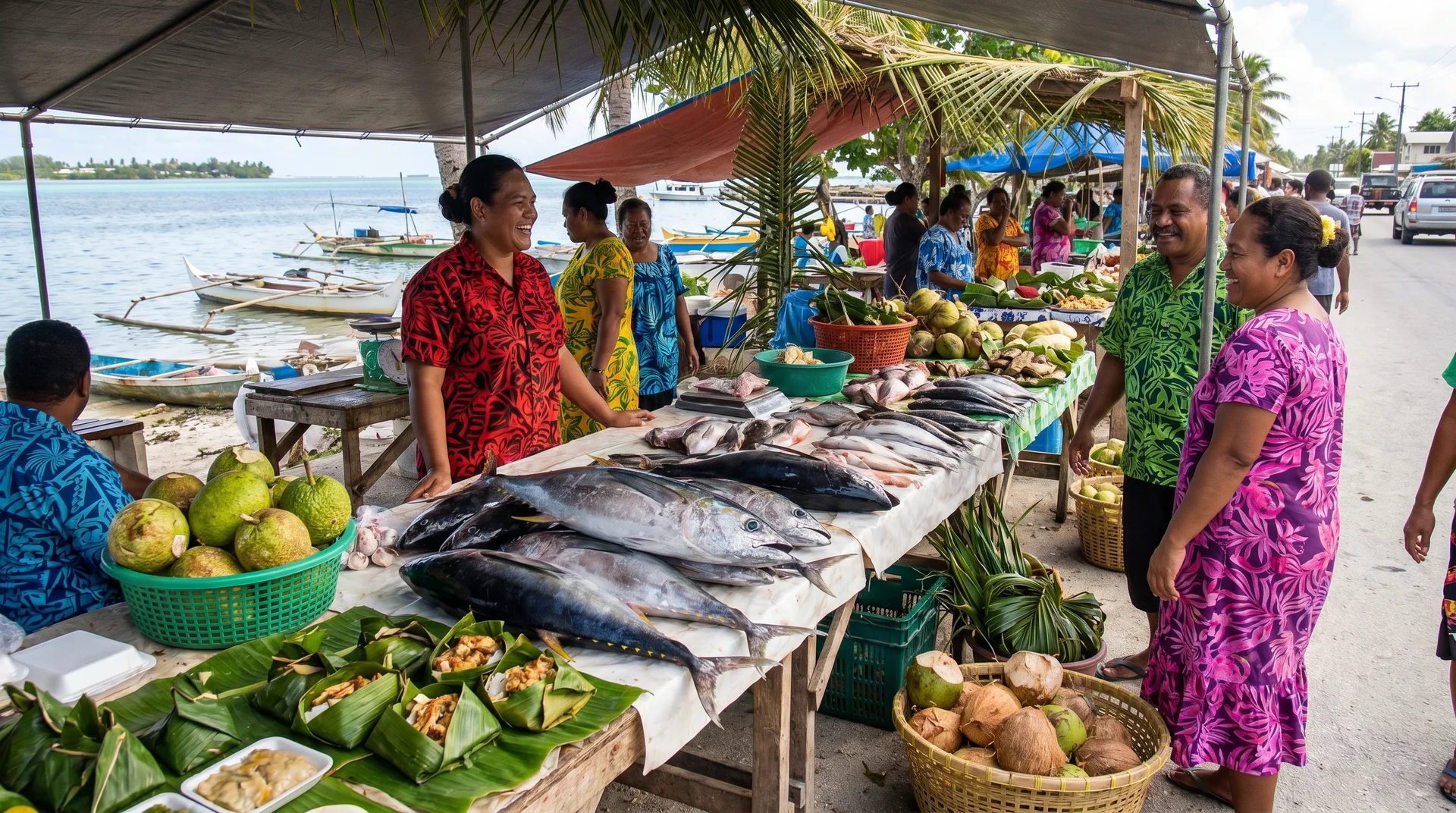
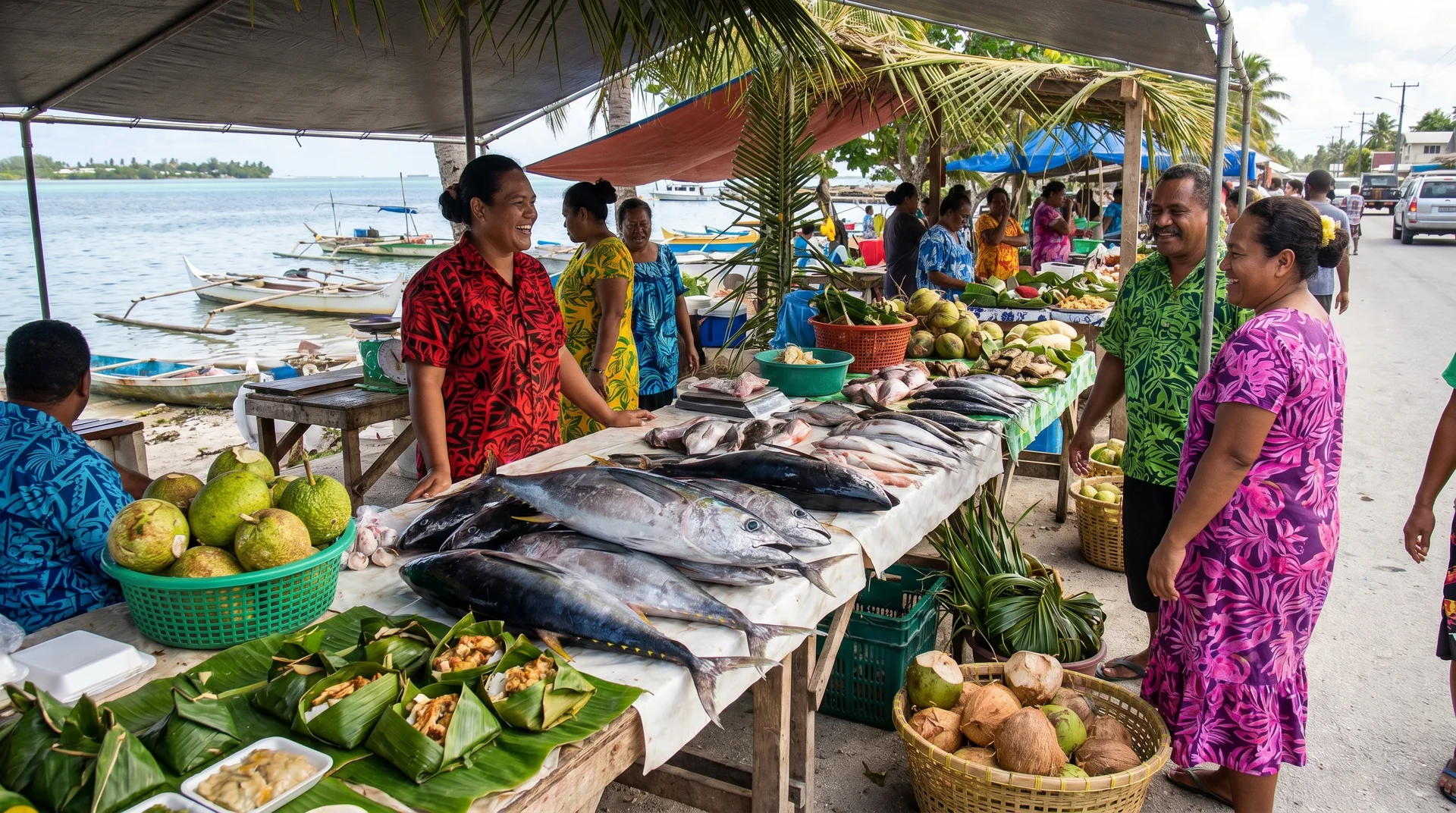
Fresh seafood provides the best value on the atoll. Local tuna sashimi is exceptionally fresh, highly affordable, and widely available at MISCO Market. For budget-conscious days, sidewalk open-air markets next to the resorts sell traditional bento boxes containing fresh parrotfish, rice, and local roots for a few dollars. A full day eating locally runs $15 to $25 in total.
Groceries imported through the main supermarkets cost significantly more than in North America or Australia. A basic bottle of water runs $1 to $2, and packaged snacks carry a visible shipping premium. Self-catering from the market cuts daily food costs roughly in half.
Getting Around: Shared Taxis and Car Rentals
Transportation costs depend entirely on whether you stay within the urban port center or venture beyond it.
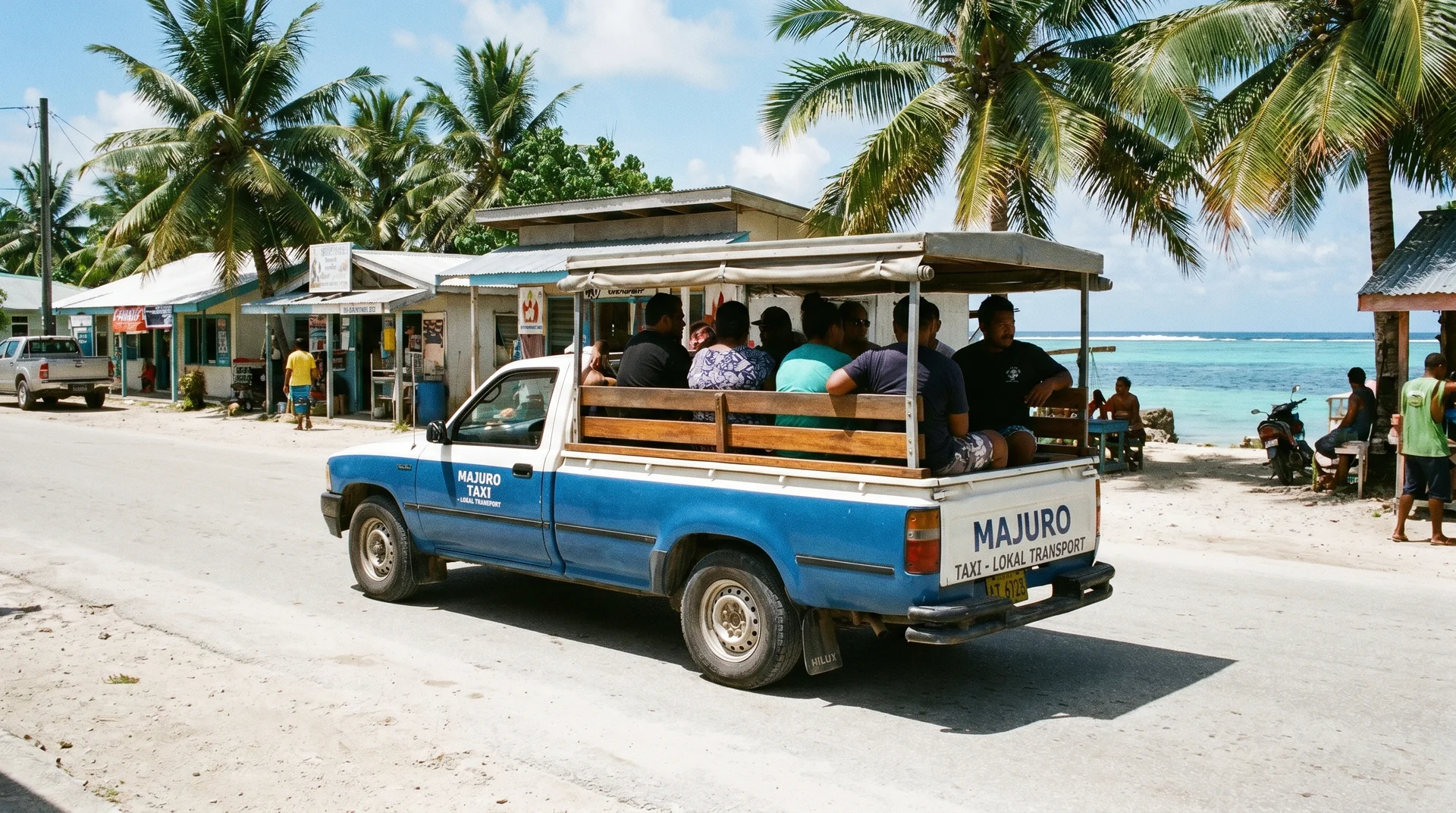
The shared taxi system cruising the single main road is remarkably safe, communal, and efficient. Wave a car down, ride alongside local families, and pay a $1-$2 flat rate for trips within the D-U-D zone. Airport transfers cost around $5.
Exploring Laura Beach at the western tip of the atoll requires a rental vehicle. Car rentals run $75-$90 per 24 hours for a basic vehicle. Sharing with fellow travelers splits this cost significantly and makes the 60-minute drive along the speed-bump-heavy main road very manageable. Tuvalu travel costs follow a similar cash-and-shared-transport model if you are comparing Pacific micro-nation budgets.
Internet and Connectivity Costs
Connectivity is a certified luxury rather than a standard amenity. The National Telecommunications Authority (NTA) sells local SIM cards, but satellite speeds remain slow and inconsistent during peak evening hours.
Most hotels exclude Wi-Fi from the base room rate. Internet vouchers typically cost $8 for 24 hours of access suited mostly for emails and basic messaging. Do not expect to stream video or upload large files reliably. Downloading offline maps and guides before departing Hawaii is one of the most practical things you can do before landing.
Activities and Excursions
Eneko Island Day Trips
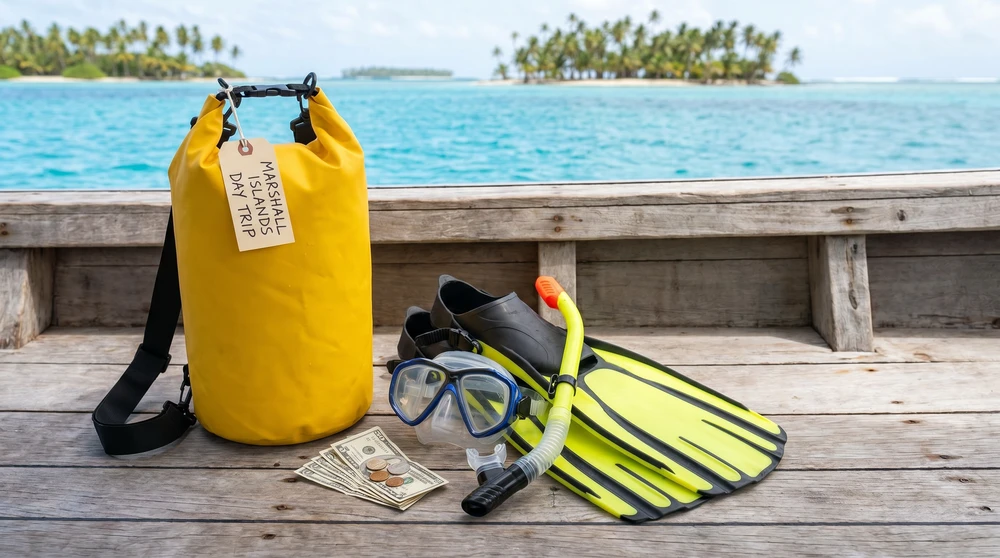
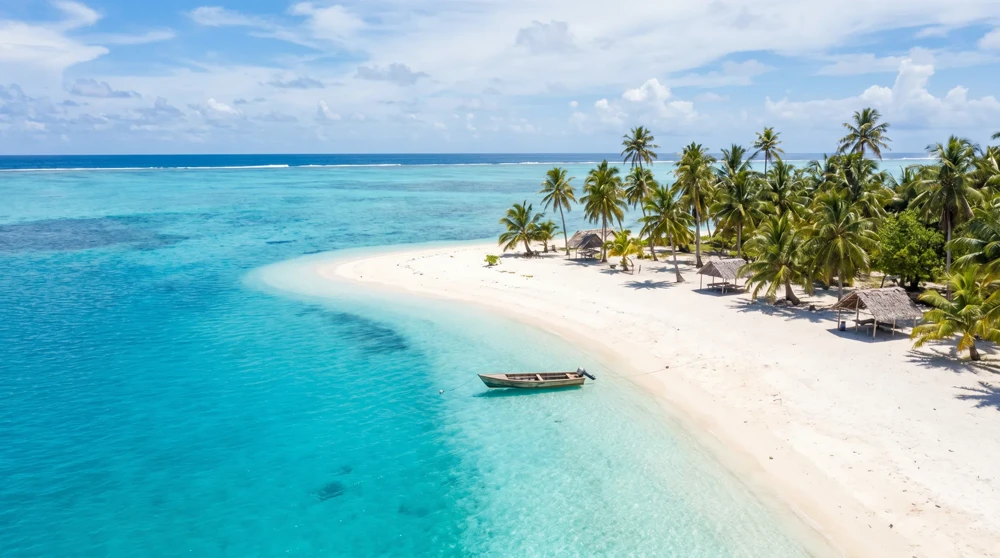
Escaping the busy port center for pristine white sands requires a short boat journey across the turquoise lagoon. A day trip to Eneko Island, a private islet managed by the Reimers family, costs approximately $60-$70 per person for the return boat transfer. The islet offers excellent snorkeling, basic bungalows, and absolute tranquility. No shops operate on-site, so pack your own snacks and drinks for the day.
Alele Museum and Cultural Sites
The Alele Museum and Library in downtown Majuro is free or low-cost, housing exhibits on traditional Marshallese navigation, weaving, and cultural heritage. Walking the single main road and visiting local churches and government buildings costs nothing beyond your time. The nuclear testing legacy at Bikini Atoll falls outside the standard tourist infrastructure and requires a separate, expensive chartered expedition.
Arno Atoll
Arno Atoll, roughly one hour by boat, offers a complete contrast to the commercial capital. Inter-island boat fares run approximately $15 each way. Beachcomber's Lodge on Arno offers lagoon-facing cabins at $50 per night with basic kitchenette facilities, making it the most affordable accommodation option in the entire country.
The Mandatory Departure Tax
A critical administrative fee catches many departing travelers completely off guard. Before checking in for your outbound flight from Majuro, you must pay a mandatory $20 departure tax at the airport terminal. This applies to travelers aged 13 to 59. The fee cannot be rolled into your airline ticket and must be settled directly in cash. Reserve exact change for this at the end of your trip.
Practical Budget Tips
Respecting local customs is not just culturally appropriate, it actively saves money. The Marshallese culture is conservative, so dressing modestly with covered shoulders and knees prevents friction with community vendors and builds immediate rapport.
Prioritize local sidewalk BBQs over air-conditioned hotel dining rooms to cut daily food expenses in half. The combination of fresh-caught grilled fish and rice is nutritious, affordable, and culturally authentic.
Pack all prescription medications and common over-the-counter supplies before departure. The pharmacy selection in Majuro is extremely limited, and the cost of obtaining any imported medication through local channels is significantly higher than in your home country. This is one of the most frequently overlooked hidden costs of visiting remote Pacific atolls.
If you are visiting the Marshall Islands as part of a broader Pacific micro-nation trip, comparing it with Nauru travel costs helps frame realistic expectations for this tier of destination. Both nations share the cash-only economy, expensive imported goods, and limited accommodation tiers that define budget travel across the least-visited corners of Oceania.