Bikini Atoll sits at the far edge of what most divers will ever experience. It is a UNESCO World Heritage Site, a former nuclear test ground, and the resting place of one of the most extraordinary shipwreck collections on the planet. Getting here takes around 30 hours aboard a liveaboard after clearing a US military base in the middle of the Pacific. What awaits is an underwater museum that no salvage crew has ever touched, reserved entirely for technical divers willing to manage heavy decompression at depths where the nearest hyperbaric chamber is thousands of miles away. - Required certification: PADI Tec 50, TDI Extended Range, or CCR equivalent
- Wreck depths: 25m to 55m (bridge of USS Saratoga to seabed)
- Water temperature: 28-29°C (82-85°F) year-round
- Visibility: typically 15-20 meters, up to 40m in ideal conditions
- Diving season: April to October
- Arrival airport: Kwajalein Atoll (KWA) via United Airlines Island Hopper
- Sole operator: Master Liveaboards (Pacific Master vessel)
Why Bikini Atoll Is the Ultimate Technical Wreck Dive
Following World War II, the United States military launched Operation Crossroads to test nuclear weapons against a real naval fleet. The atolls had only recently emerged from the Japanese occupation and the fierce battles of Operation Flintlock - for the full wartime context, our Marshall Islands in World War II guide covers the Pacific campaign that put these islands on the map. They anchored 95 fully loaded vessels, including aircraft carriers, battleships, and submarines, in the remote lagoon of Bikini Atoll and detonated two atomic bombs above and below the surface. Test Able and Test Baker sent an entire armada to the seafloor within days.
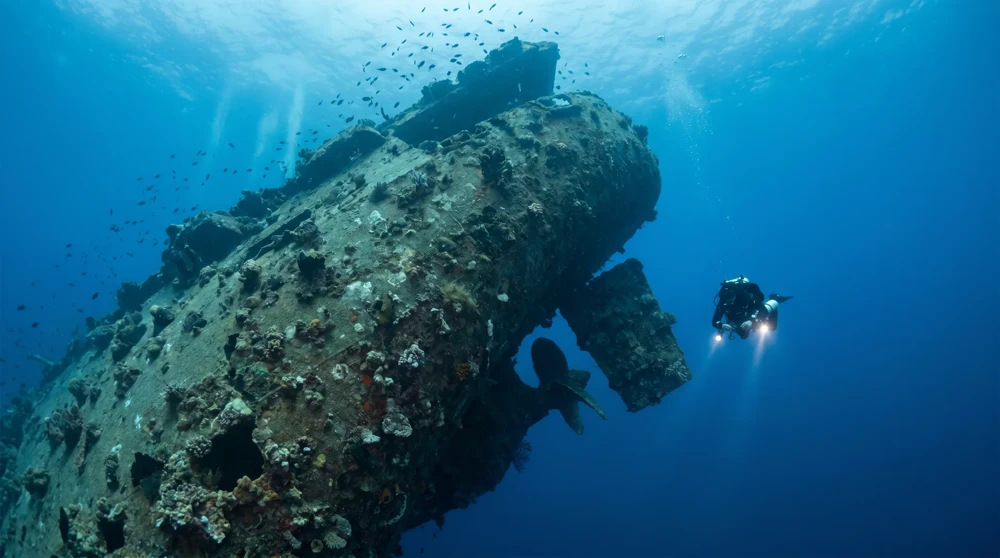
The result is an underwater museum locked in time. Unlike heavily salvaged wreck sites across Southeast Asia or the Mediterranean, the Bikini ghost fleet has never been stripped. Torpedoes remain racked in their tubes. Sixteen-inch guns still point into the deep. Aircraft lie scattered across flight decks exactly where the shockwave threw them. The extreme depth and radical remoteness have kept recreational divers out entirely. Bikini Atoll was inscribed as a UNESCO World Heritage Site in 2010, formally recognizing the lagoon as an outstanding example of a nuclear test site. The designation also means the site is monitored and access is tightly regulated, which has helped preserve the wrecks in a condition that would be unthinkable elsewhere. ## The Operation Crossroads Wrecks
The target fleet was subjected to forces that modern naval engineering cannot easily replicate. The Baker bomb, detonated 27 meters underwater, lifted ships vertically out of the lagoon and crushed hulls with supersonic pressure waves. That violent history determines every aspect of how you dive these sites today.
USS Saratoga (CV-3): The Signature Dive
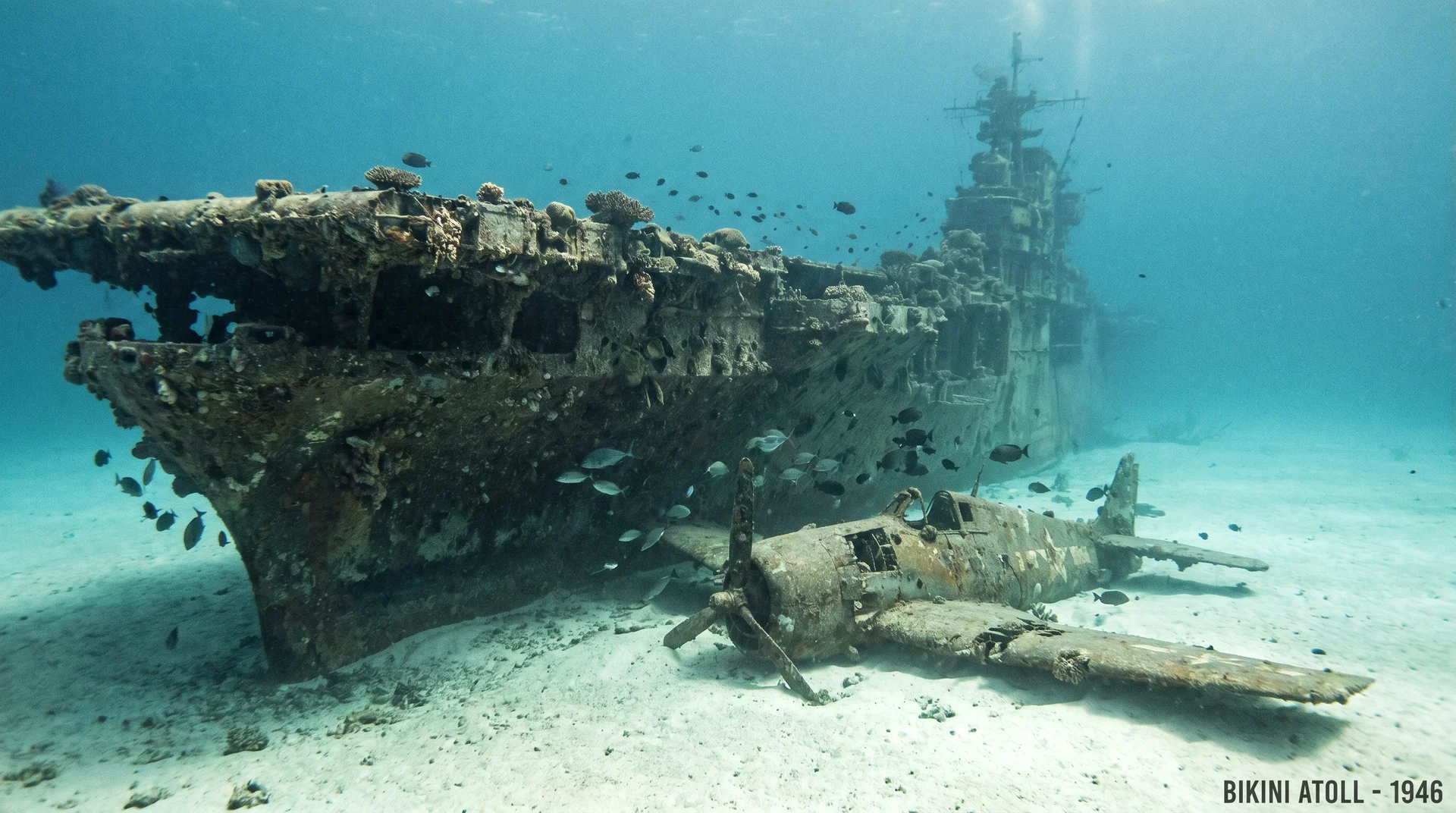
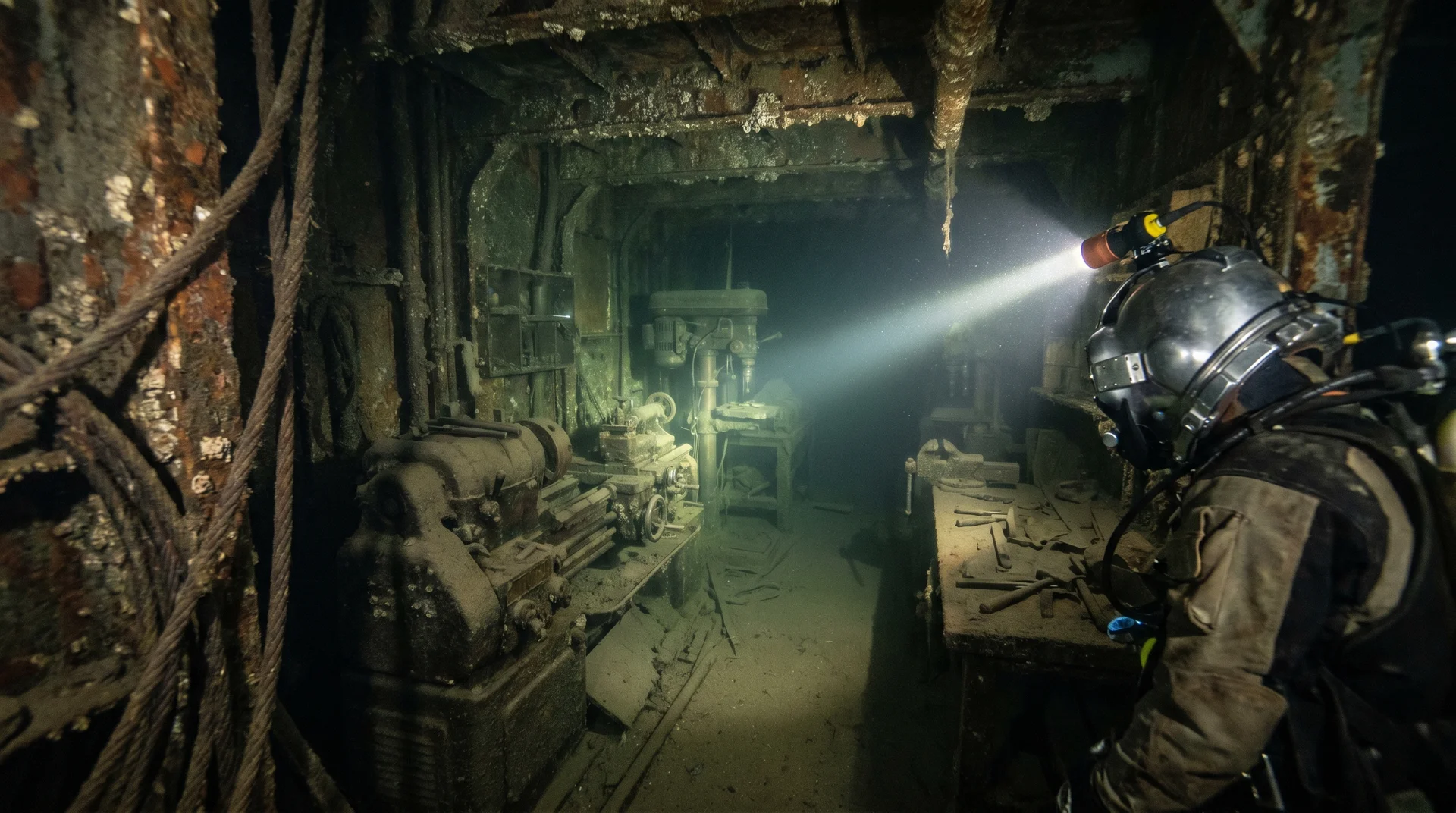
The USS Saratoga is a 277-meter Lexington-class aircraft carrier and the undisputed centerpiece of the atoll. She is one of only three diveable aircraft carriers in the world. The Baker blast knocked equipment off her flight deck and destroyed her funnel, but the hull sank completely upright, making her one of the most navigable large wrecks on the planet. The flight deck sits at around 25m, making it the shallowest profile among the major targets. The bridge reaches up to 12m, accessible before you even reach the deeper structures. Penetration routes run through the flag bridge and compass, down through the machine shops, galleys, and the now-famous dental clinic. Off the starboard bow, mangled Helldiver aircraft rest in the white sand exactly where the shockwave deposited them. The scale is impossible to grasp in a single dive. Most divers complete three or four dives on Saratoga alone and still feel they have only scratched the surface. Plan your gas strategy around deep penetration sections early in the trip when you are fresh, then use later dives for the shallower flight deck sections. ### IJN Nagato: Admiral Yamamoto's Flagship
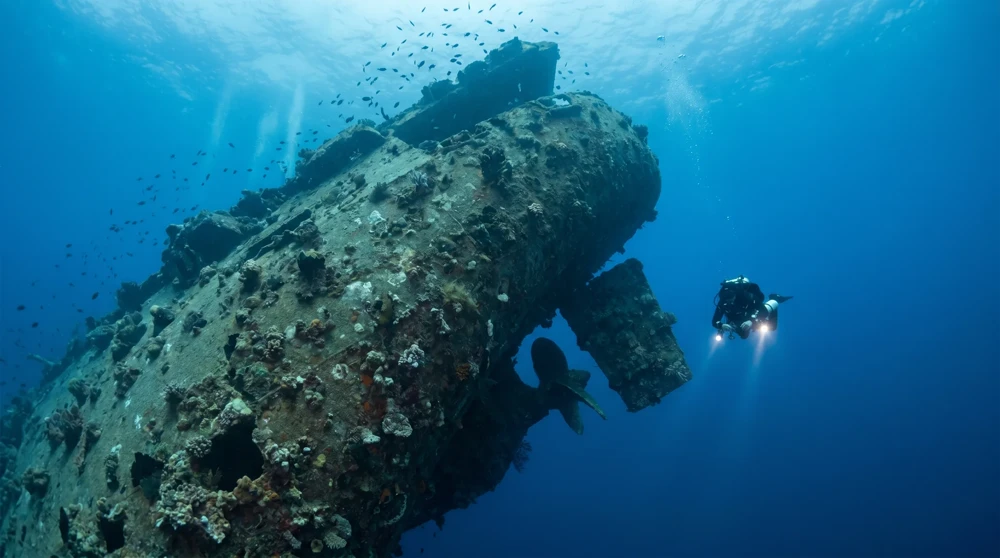
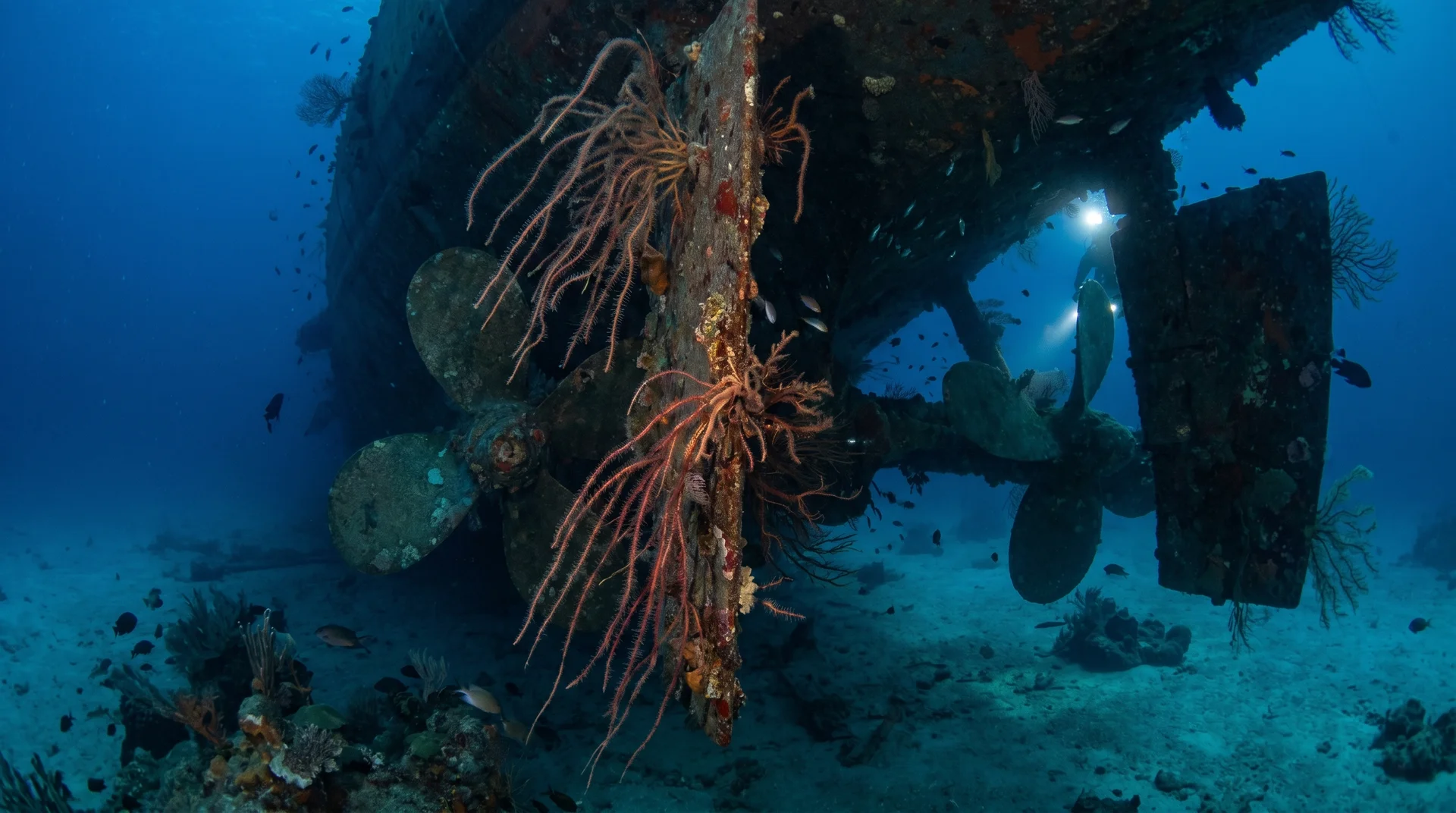
The Nagato carries a different kind of weight. This 32,720-ton dreadnought was the pride of the Imperial Japanese Navy, the ship from which Admiral Yamamoto issued the order to attack Pearl Harbor. She survived the initial nuclear detonation but capsized hours later, sinking completely upside down at 52m. Descending onto the upturned hull, four colossal propellers come into view, heavily encrusted with whip corals and swarming with fish life. Because the massive pagoda mast props the stern off the seafloor, you can swim underneath to inspect the 16-inch guns suspended from the hull and pointing outward into the gloom. Swimming under 47,000 tons of inverted steel at 52 meters is a genuinely humbling experience that has no equivalent in recreational wreck diving. ### The Submarines: USS Apogon and USS Pilotfish
When navigating the corridors of massive warships begins to blur, the submarines offer a sharp change of pace. Both the USS Apogon and USS Pilotfish are Balao-class boats resting in the 50m range. The Apogon sits perfectly upright on the seabed, looking ready to begin a patrol. The Pilotfish lies on her side, half-buried in white sand after the Baker pressure wave blew her hatches open. Both boats have low profiles, meaning you can cover the entire length in a single dive while managing your decompression obligations carefully. The hatches on the Pilotfish are large enough for penetration, but the silt buildup inside requires exceptionally clean buoyancy work. ### The Destroyers: USS Lamson and USS Anderson
These Mahan and Sims-class destroyers took the direct force of the Test Able bomb. The Anderson rests on her port side, while the Lamson sits upright with a horribly twisted hull that serves as a permanent visual record of nuclear blast physics. At just over 100 meters, the destroyers are compact. Intact depth charge racks, gun turrets, and loaded torpedo tubes are all reachable without extended penetration. For divers conserving bottom time after deeper dives on the Saratoga or Nagato, the destroyers offer a highly productive shallower dive. ## Technical Requirements and Dive Conditions
Bikini Atoll diving demands extreme discipline. The margin for error disappears completely when the nearest emergency medical facility is multiple days away.
Mandatory Certifications and Equipment
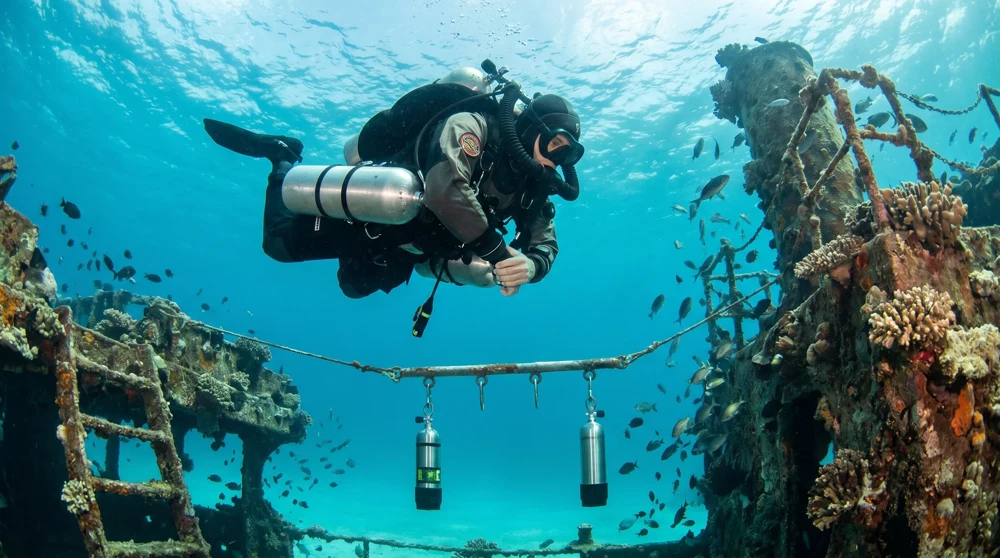
There is no recreational diving here. Master Liveaboards requires a minimum of PADI Tec 50, TDI Extended Range, or a CCR equivalent with normoxic trimix capability. Solo diving inside the wrecks is strictly forbidden. Dive guides do not lay penetration lines for you. If you plan to navigate deep inside the Saratoga, you must run your own reels and manage your own gas strategy. Beyond certifications, Master Liveaboards enforces specific equipment requirements. You need two independent buoyancy sources (wing with redundant bladder, drysuit, or lift bag), a multi-gas dive computer capable of switching between at least two mixes, a backup depth timer, two surface marker buoys, and two reels or spools. Arriving without this equipment means sitting out dives. Bring spares of everything, because there is no dive shop within range. Due to the consistent 50m profiles and the overhead environment inside the wrecks, diving on normoxic trimix is strongly recommended. Nitrogen narcosis at 50 meters inside a dark machine shop is not a situation you want to manage with air alone. ### Depths, Visibility, and Water Temperature
The lagoon seabed sits at a flat 50 to 55 meters. You will spend most of your bottom time between 40 and 50 meters, with shallower sections of the Saratoga providing some relief. Visibility typically runs 15 to 20 meters and is heavily dependent on recent weather, but in ideal conditions it can exceed 40 meters. Water temperature holds steady at 28-29°C (82-85°F) at all depths, with no meaningful thermocline. Despite the warmth, a 3mm wetsuit or thermal undergarment is not optional. You will accumulate decompression obligations that stretch to 45 minutes on a deco bar. Developing hypothermia during a long deco hang at 6 meters is one of the most common serious incidents on technical expeditions. Sharp metal is everywhere on these wrecks. Wear gloves and full-length exposure protection. Aviation fuel and oil residues still coat sections of the Saratoga's flight deck, and cuts from rusted steel in a remote location carry infection risks that are genuinely dangerous. ## How to Get to Bikini Atoll
The logistics are often described as harder than the diving itself. Missing a single connection here does not mean catching the next flight. It often means missing the expedition entirely. Standard Marshall Islands entry documentation applies for your transit through Majuro -- our Marshall Islands visa requirements guide details the exact documents you need at check-in.
The United Airlines Island Hopper
Your entry point is Kwajalein Atoll (KWA). To reach it, you must book the United Airlines Island Hopper, a route originating from either Honolulu (HNL) or Guam (GUM) that hops through several remote Micronesian islands. These flights operate only a few days per week. Maintenance delays are notorious. Build at least one buffer day into your schedule before the liveaboard departure. A missed connection in Honolulu is a recoverable problem; a missed connection at an intermediate stop often is not. ### Kwajalein Military Base Security Clearance
Kwajalein Island is an active US Army Garrison. You cannot simply walk off the plane. Military personnel verify paperwork and escort arrivals to a secure holding area. Once cleared, you board a 20-minute ferry to Ebeye Island, where the Pacific Master crew meets you. From Ebeye, the open-ocean crossing to Bikini lagoon takes 24 to 30 hours. Pack seasickness medication regardless of how confident you feel about your sea legs. ### Travel Insurance for a Remote Expedition
At this level of remoteness and technical risk, comprehensive travel insurance is not optional. Standard policies do not cover technical scuba diving or medical evacuation from the central Pacific. You need a policy that explicitly covers technical diving and emergency evacuation, with a medical evacuation benefit that reflects the cost of a helicopter and aircraft transport from this part of the world. Compare travel insurance for technical diving
Is Bikini Atoll Safe from Radiation? For short visits involving diving and surface intervals, the answer is yes. The US Department of Energy has monitored ambient radiation levels in the lagoon for decades. The water and the surfaces of the wrecks pose no measurable danger to divers.
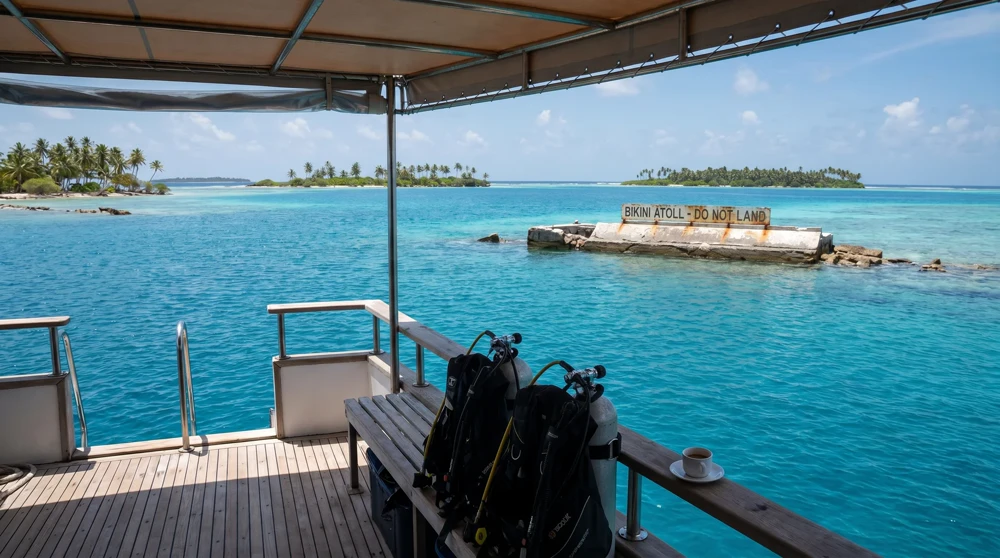
The risk is in the soil. Groundwater and vegetation on Bikini Island absorb residual radiation. For the complete historical picture of the 67 nuclear tests -- including Castle Bravo, the Runit Dome, and current monitoring data -- our Marshall Islands nuclear legacy guide covers what the testing program actually did to these atolls. Consuming locally grown food, including coconuts or island crabs, is hazardous over time. Stick entirely to provisions loaded aboard the liveaboard. This restriction has been in place since monitoring began and is not expected to change in the near future. ## Liveaboard Operations and Seasonality
Master Liveaboards is currently the only operator with the logistical capability to run Bikini Atoll expeditions. They deploy the Pacific Master on 10 to 13-night itineraries during the operational season.
The season runs strictly from April through October, when Pacific trade winds calm enough to permit the long open-ocean crossing from Kwajalein. Outside those months, the crossing is dangerous and unnavigable for liveaboard vessels. The number of annual departures is limited, which means trips book out far in advance. If this expedition is on your list, plan a minimum of 12 to 18 months ahead. For context on what extreme Pacific atoll travel looks like at the recreational end of the spectrum, diving and snorkeling in Nauru offers a comparison point. Nauru sits at the opposite end of the access spectrum, reachable without military clearance, and the drop-off diving there serves as a useful introduction to remote Pacific diving conditions before attempting a technical expedition of this scale. Remote Pacific travel also carries logistical similarities to visiting other micro-states in the region; the country collector community has documented the challenges of reaching Tuvalu and other isolated atolls that share similar transit constraints. Bikini Atoll will never be a destination that sells itself to the masses. The 95 vessels that remain on the seafloor are a direct product of one of the most consequential moments in human history, and the extreme barriers to access have left them almost exactly as they were the day they sank. That preservation is the entire point. If your technical credentials are solid and the logistics do not intimidate you, nothing else in wreck diving compares.