Landing at Velana International Airport without a plan for cash and connectivity is the fastest way to overpay on your first day. Luxury resorts run entirely on credit cards and fast WiFi, but local islands and public ferries demand Maldivian Rufiyaa and a reliable data connection. Sorting out currency and a local network right after passport control saves time, money, and a lot of friction.
- Local currency: Maldivian Rufiyaa (MVR), roughly 1 USD = 15.4 MVR
- Best foreign currency: US Dollars, crisp and untorn, issued 2009 or later
- Mobile operators: Dhiraagu and Ooredoo (a duopoly with near-identical pricing)
- Tourist eSIM or SIM: around $40 for 20GB, up to $50 for 30GB+ social bundles
- Card acceptance: near 100% in resorts and Malé, very low on local islands
What Is the Best Currency to Take to the Maldives?
The Maldives runs on a dual-currency system. US Dollars dominate the tourism sector while Maldivian Rufiyaa rules the local streets. Bringing the right mix of both decides how smoothly your daily transactions go.
US Dollars vs. Maldivian Rufiyaa (MVR)
US Dollars are the default travel currency here. Resorts, dive centers, and excursion operators quote all their prices in USD, and you can hand over dollars almost anywhere in the tourism bubble.
There is a strict catch with paper money. Maldivian banks are unforgiving about note condition, and any bill with a slight tear, pen mark, or heavy crease faces immediate rejection. Bring only crisp notes, and check the year, since many vendors and banks now refuse anything issued before 2009. Smaller denominations like worn $1 bills are the most likely to be turned away, so keep your cash flat and clean.
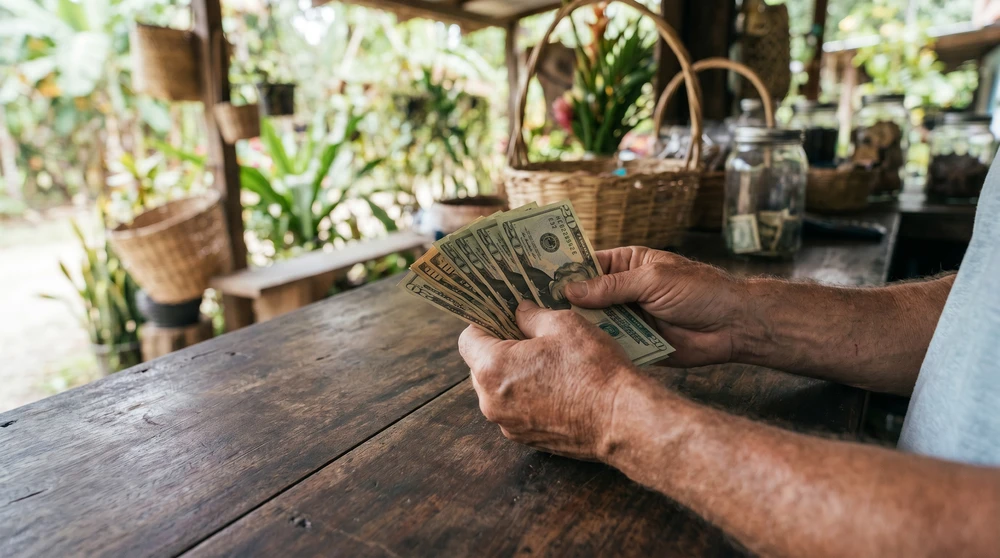
One detail that catches first-timers off guard: on many local islands shops price everything in Rufiyaa and may not take dollars at all. Even when they do, change comes back in MVR at a rate that favors the shop, so paying in exact local currency for small purchases protects your budget.
Do not convert your entire budget into MVR at the airport. MVR is a closed currency, meaning it holds no value once you leave the Maldives and is nearly impossible to exchange back. Keep your main funds in USD and convert small amounts to Rufiyaa only as needed. For a fuller picture of where these costs land across a trip, our Maldives trip cost breakdown maps out budget versus luxury spending.
Tipping and Small Purchases
A 10% service charge is added automatically to almost every resort and restaurant bill, sitting alongside the tourism tax. As of mid-2025, the tourism GST rose to 17%, so taxes and service together can add 26 to 27% to a resort bill. Additional tipping stays optional but is genuinely appreciated by staff.
Keep a stack of $1 and $5 bills handy for porters, room attendants, and boat crews. For snacks from a corner shop or a street stall in Malé, small MVR notes such as 20 or 50 Rufiyaa make the transaction seamless and spare you a poor exchange rate baked into your change.
How to Pay in the Maldives: Cash or Card?
Your accommodation style dictates your entire payment strategy. The financial reality of a private island is drastically different from a residential atoll, a contrast we break down further in our guide to choosing a resort versus a local island.
Resort Islands vs. Local Islands
Resort life is effectively cashless. At check-in, the hotel links your credit card to your room, and every cocktail, spa treatment, and snorkeling trip just needs a signature. You settle the final bill at checkout with Visa, Mastercard, or sometimes American Express. Watch for a card surcharge of around 3.5% that some resorts and dive shops add to credit card payments, since paying part of the bill in USD cash can sidestep it.
Local islands sit at the opposite end. Public ferries, budget guesthouses, local cafes, and independent shops run strictly on cash, and a card is practically useless when buying a ferry ticket or paying at a local market stall. Carrying a rough 70:30 split of cash to card is the safest approach once you venture outside the resort bubble. Getting between these islands is its own puzzle, which we cover in detail in our guide to getting around the Maldives.
ATMs and Currency Exchange Locations
ATMs are common across Malé and Hulhumalé. Bank of Maldives (BML) and Maldives Islamic Bank machines reliably accept international Visa and Mastercard debit cards, though many cap a single withdrawal at around 5,000 MVR, so plan for more than one withdrawal if you need a large cash float.
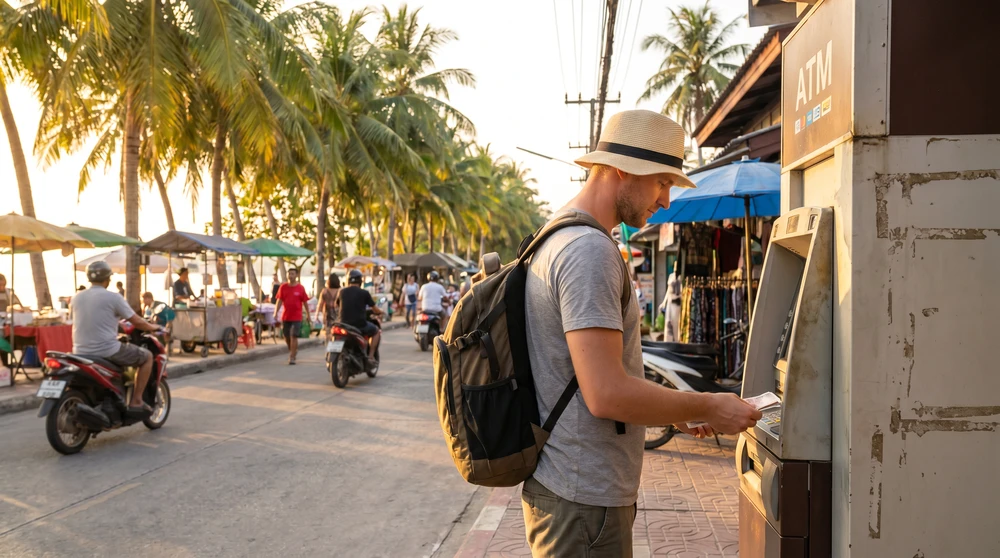
Finding a working ATM on a remote local island is a gamble. Always withdraw enough MVR in the capital or at the airport before catching your speedboat or ferry transfer. ATMs here dispense Rufiyaa, and you should decline the dynamic currency conversion offer so your home bank applies the mid-market rate instead of an inflated one.
How to Get a SIM Card or eSIM in the Maldives
Hotel WiFi handles basic browsing, but public ferry rides and remote beach days need cellular data. The local mobile infrastructure is surprisingly robust, even far out in the Indian Ocean.
Dhiraagu vs. Ooredoo: Which Network Is Better?
Dhiraagu and Ooredoo hold a duopoly over the market, offer near-identical tourist packages, and charge essentially the same prices. Coverage differences are minimal. Dhiraagu, as the national provider, occasionally edges ahead with a stronger signal on the furthest, most remote atolls, while Ooredoo posts excellent 4G speeds across the main tourist routes and inhabited islands. Choosing between them often comes down to which kiosk has the shorter queue at arrivals.
Buying a Tourist SIM at Velana International Airport
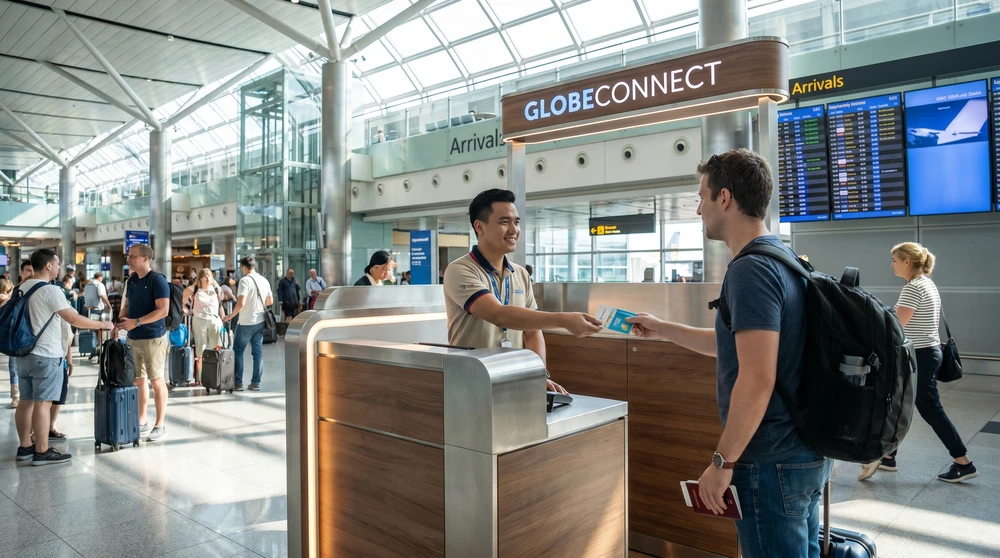
Securing a physical SIM takes barely five minutes. Step out of the arrivals hall, turn right, and the Dhiraagu and Ooredoo storefronts sit side by side, with a Dhiraagu self-service kiosk outside the terminal as a backup. Hand over your passport, choose a package (typically $40 for 20GB or around $50 for the larger social bundles), and pay by card or USD cash. Staff swap the SIM and confirm the connection works before you walk away.
The Tourist eSIM Option
For phones that support digital SIMs, an eSIM removes the airport queue entirely. Both networks let tourists buy and register an eSIM through their websites before the flight, and third-party providers sell Maldives data plans from as little as $30 if you want to compare.
Setup needs a photo of your passport and a quick selfie for verification. Once approved, the system emails a QR code: connect to the free Velana Airport WiFi on landing, scan it, and your phone jumps onto the local 4G network. If you prefer to lock in connectivity before you fly, you can Set up a Maldives eSIM in advance and skip the kiosk altogether.
Internet Speed and WiFi Reliability
Do not expect fiber-optic speeds on a tiny coral island. Luxury resorts invest heavily and provide seamless WiFi that streams high-definition video, though signal often weakens the further your villa sits from the main reception or restaurants. Guesthouse WiFi on local islands fluctuates with the weather and the number of connected guests.
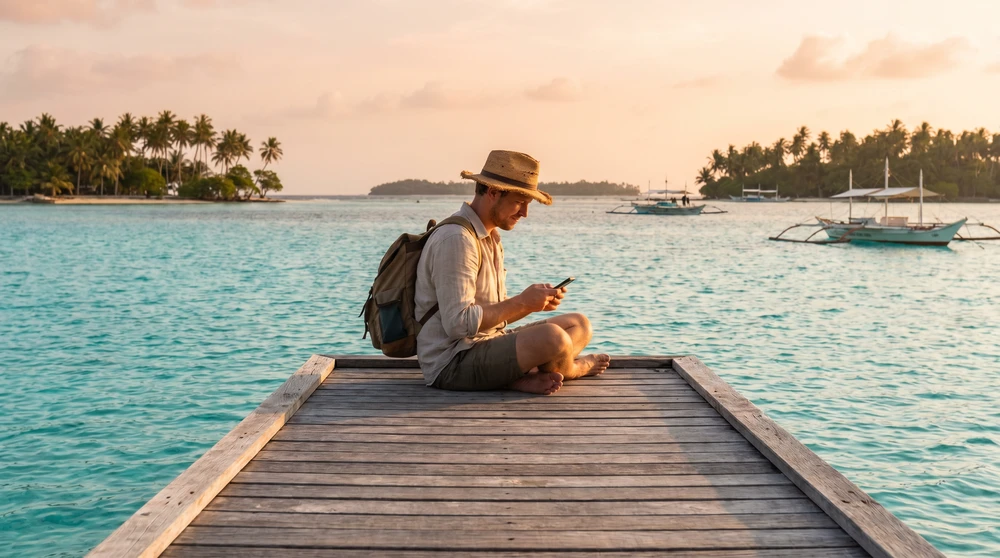
Here is the counterintuitive part: cellular 4G usually outperforms local WiFi. You will hold a strong LTE connection even while cruising on a speedboat miles from the nearest landmass, which makes a tourist SIM the most reliable internet option for the whole trip. For longer or more remote itineraries, factoring connectivity into your route alongside our 7-day Maldives itinerary keeps you online where it matters.