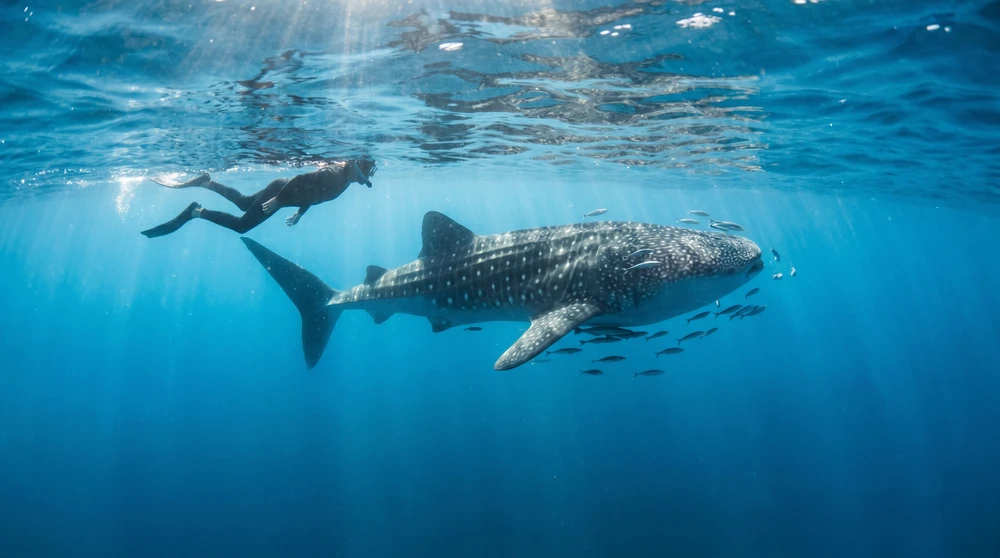
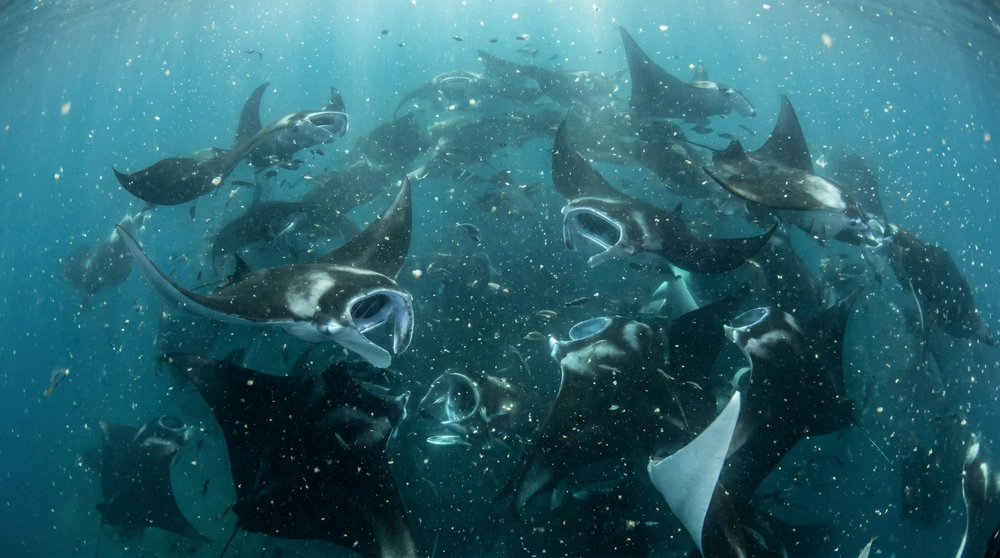
Planning a trip to see the manta rays in the Maldives without knowing the strict time limits and monsoon patterns of Hanifaru Bay often results in staring at an empty, plankton-free ocean. Timing your arrival alongside the lunar tide is the single most critical factor for witnessing the legendary manta cyclone, with dozens of giants feeding simultaneously and occasionally more than 200 during a mass aggregation.
- Season: May to November (peak August to October)
- Allowed activity: snorkeling only, scuba diving is banned
- Maximum time in water: 45 minutes per group
- Entrance fee: USD 20 per person per day, paid at the ranger station
- Access: domestic flight to Dharavandhoo, then a short speedboat ride
Why Hanifaru Bay Is a Global Hotspot for Manta Rays
The Baa Atoll operates under strict environmental protection as a UNESCO Biosphere Reserve. The waters here are remarkably undisturbed and the marine life is abundant. Hanifaru Bay itself is a tiny, funnel-shaped lagoon rather than a vast open sea. This unique topography creates a natural trap for plankton, turning a quiet reef into one of the most active feeding stations in the Indian Ocean.
The sheer volume of manta rays appearing at once is purely a matter of oceanography. Between May and November, the southwest monsoon currents push massive amounts of deep-water plankton toward the shallow, narrow opening of the bay. When the lunar tide pushes back against this current, the plankton gets trapped inside the lagoon and the water turns into a thick, nutrient-rich soup.
This exact condition triggers the feeding frenzy, drawing whale sharks and hundreds of reef manta rays into a chaotic but graceful underwater ballet. Hanifaru hosts the largest known manta feeding aggregations on the planet, which is why the Manta Trust and its Maldivian Manta Ray Project (MMRP) have studied these waters for years.
Best Time to Visit Hanifaru Bay for Manta Rays
Booking your flights for the dry season means missing the manta rays entirely. The southwest monsoon season, running from May to November, dictates the plankton blooms. Aim for the days immediately surrounding the full moon or new moon in August, September, and October.
The tidal shifts during these lunar phases maximize plankton concentration, significantly increasing your chances of swimming alongside a massive aggregation rather than just one or two isolated individuals. Even within peak season, sightings depend on tide and current, so booking a stay of several days gives you multiple chances rather than betting everything on a single excursion.
Strict Marine Park Rules: Snorkeling Only
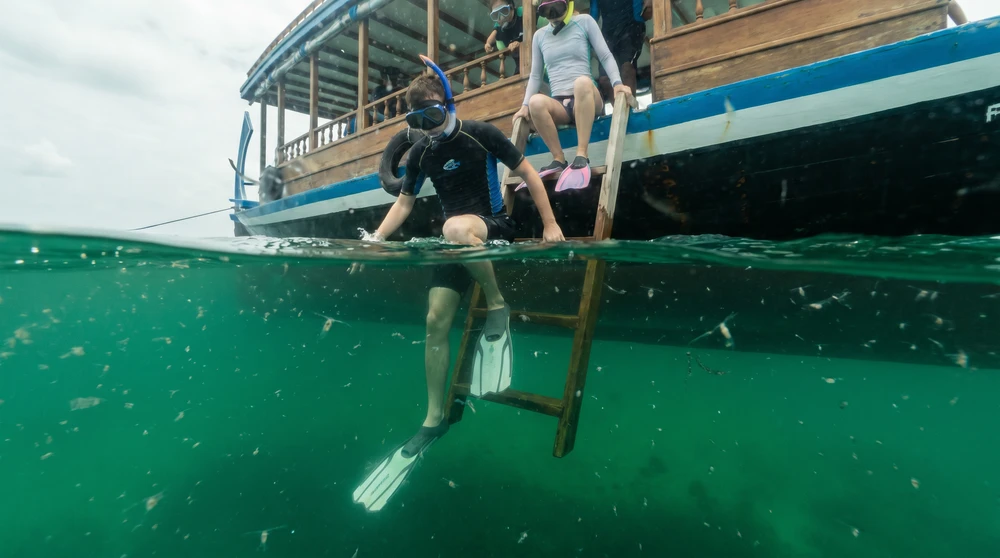
Blowing bubbles from a scuba regulator disrupts the natural feeding behavior of manta rays and whale sharks. Hanifaru Bay is snorkel-only and scuba diving is completely banned to preserve the fragile dynamic of this UNESCO site. You are only allowed to snorkel, floating quietly on the surface. Maintaining a calm, noise-free environment helps the rays stay in the bay longer, largely unfazed by human presence.
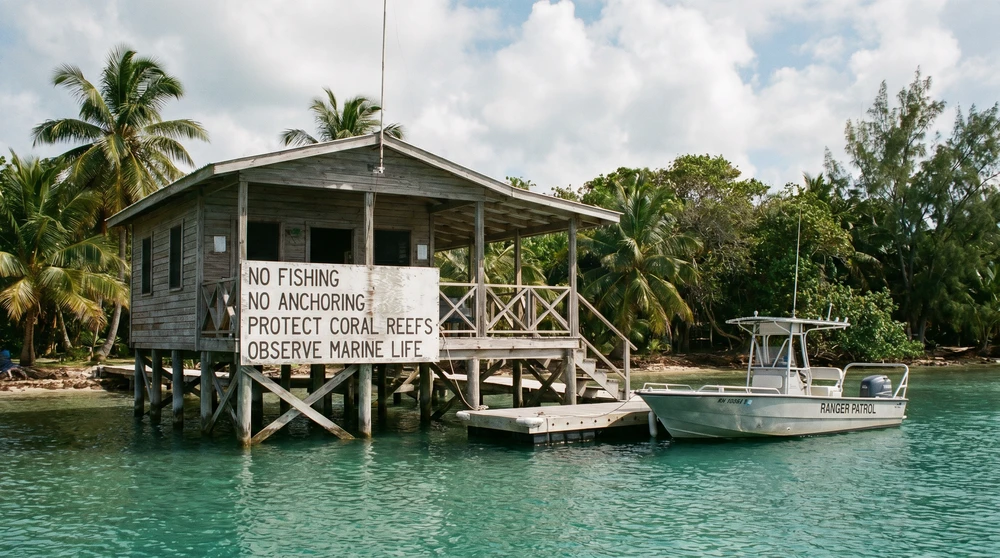
Rangers cap your time in the water at 45 minutes per group and control how many people enter at once. Recent management limits the bay to roughly 45 visitors in the water at a time and a small number of boats, and every group must be led by a guide holding an official Hanifaru Bay license. In practice, that 45-minute cap works out to roughly 20 to 30 minutes of actual manta time once you subtract entry, repositioning, and the scramble of snorkelers sharing the bay at peak. Swimming into the path of a feeding manta ray is a serious violation, so the official guidelines require passive observation:
- Keep a minimum distance of around 3 meters from the body of a manta ray and 4 meters from a whale shark.
- Never swim directly in front of their feeding path or block their exit to the open ocean.
- Free diving or duck diving below the surface is prohibited.
- Use cameras without a flash, since sudden bright lights startle the animals.
Violating these rules can result in immediate removal from the water and heavy fines for the tour operator. The entrance fee feeds directly into the Baa Atoll Conservation Fund, so paying it is part of keeping this spectacle alive. If you want a guided trip with a licensed operator, you can Book a manta snorkeling trip before you arrive.
How to Get to Hanifaru Bay
The most reliable and cost-effective entry point to the Baa Atoll is Dharavandhoo Airport (DRV). Regular domestic flights operate daily from Velana International Airport (MLE) in Male, taking roughly 20 minutes. From Dharavandhoo, Hanifaru Bay is just a short 10-to-15-minute speedboat ride away. This proximity lets local guesthouse visitors react instantly when a manta sighting is radioed in. Many Baa Atoll operators also fly drones to scout the feeding aggregations, and the boats that launch fastest reach the bay first, often buying ten quiet minutes in clear water before dozens of other snorkelers pile in.
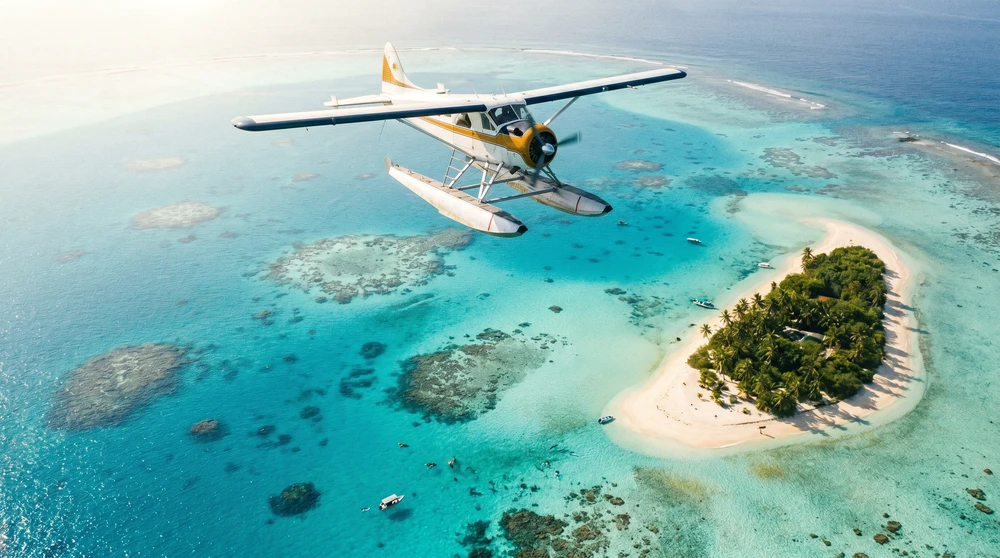
If you book a luxury island resort, the transfer usually involves a direct seaplane flight from Male. These scenic flights take about 30 to 35 minutes and drop you at the resort jetty. Seaplanes only operate during daylight hours, so your international flight must land in Male early enough to catch a same-day transfer.
Where to Stay Near Hanifaru Bay
Experiencing the Baa Atoll does not require a five-star budget. Dharavandhoo Island is packed with local guesthouses and dive centers running daily snorkeling excursions to the bay. A Hanifaru snorkeling trip from the island usually runs around USD 60 to 80 per person, with the higher price reflecting faster speedboats that reach the bay ahead of the slower fleet. Carry US dollars in cash for these trips, since paying by card typically adds about a 3.7 percent surcharge and settling in local rufiyaa earns you a weak exchange rate.
Staying on a local island cuts costs significantly and positions you geographically closer to the marine park than many high-end resorts. The island is fully functional, the local culture is vibrant, and access to daily boat trips is seamless. You can compare Baa Atoll guesthouses and resorts and Find a place to stay in Baa Atoll close to the departure points.
Several premium resorts in the Baa Atoll run specialized marine biology programs and hold official permits for Hanifaru Bay. Properties like Four Seasons Landaa Giraavaru operate a manta-on-call service, equipping guests with a dedicated phone that rings the moment researchers spot a feeding aggregation. You drop everything, head to the dive center, and jump on the speedboat. This setup reduces the risk of paying for empty ocean trips, since you only launch when the manta rays are confirmed to be there.