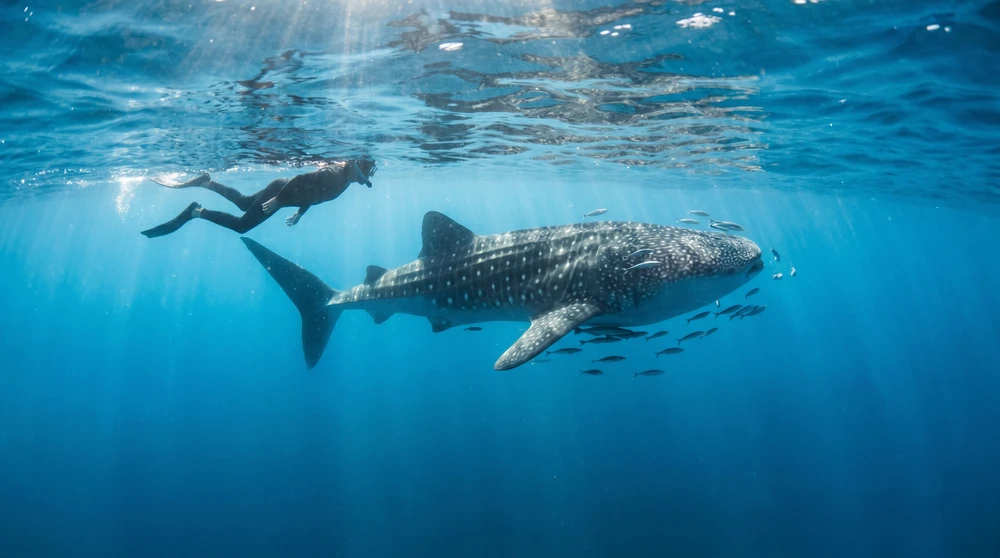
Imagine slipping into clear, azure water and finding yourself face to face with a creature the size of a school bus, gliding effortlessly through the ocean. Swimming with whale sharks is a bucket-list experience for travelers worldwide, and there is arguably no better place to do it than the South Ari Atoll in the Maldives, specifically around the local island of Dhigurah. South Ari hosts whale sharks year-round, which sets it apart from almost every other destination on Earth, where encounters are tied to a narrow season.
Unlike those seasonal hotspots, this region holds a resident population of juvenile whale sharks that live here all year. Whether you stay at a luxury resort or a charming local guesthouse, the adventure takes a bit of planning. Below is a practical, independent guide to making this marine encounter happen ethically, safely, and smoothly.
- Best season: year-round, with December to April offering the clearest water and May to November bringing higher plankton and marine activity
- Primary location: South Ari Marine Protected Area, near Dhigurah and Maamigili
- Getting to Dhigurah: 1.5 to 2 hours by public speedboat from Male, or a 20-minute domestic flight to Maamigili followed by a short boat transfer
- Snorkeling, not diving, is how you meet these sharks; they feed near the surface
Best Time to Swim with Whale Sharks
Because the South Ari Atoll serves as a permanent nursery and feeding ground for these gentle giants, you can spot whale sharks in January just as easily as in July.
The South Ari Marine Protected Area is widely described as the only year-round whale shark aggregation site of its kind in the world, and to date more than 726 individual sharks have been catalogued there across over 8,000 recorded encounters. The shifting Maldivian monsoons still influence underwater conditions and visibility, though, so timing affects the quality of the swim more than the odds of a sighting.
From December to April, the northeast monsoon dry season, the weather is sunny and the ocean surface is calm. This is widely considered the best window for underwater photography, since horizontal visibility can exceed 30 meters. Clear days also make it much easier for boat crews to spot the sharks' dark silhouettes from the deck.
From May to November, the southwest monsoon wet season, increased rainfall and shifting currents bring nutrient-rich upwellings. This can slightly reduce water clarity through plankton blooms, but it creates a feast for filter-feeders. If you do not mind occasional tropical showers and choppier seas, the sheer volume of marine life during these months, including both whale sharks and manta rays, can be staggering.
Why South Ari Atoll and Dhigurah Island
The Maldives is an archipelago of more than 1,190 coral islands, but the South Ari Marine Protected Area stands out as the crown jewel of its marine conservation efforts. The protected area encompasses the southern fringe of the South Ari Atoll, stretching past islands like Dhigurah, Maamigili, and Sun Island.
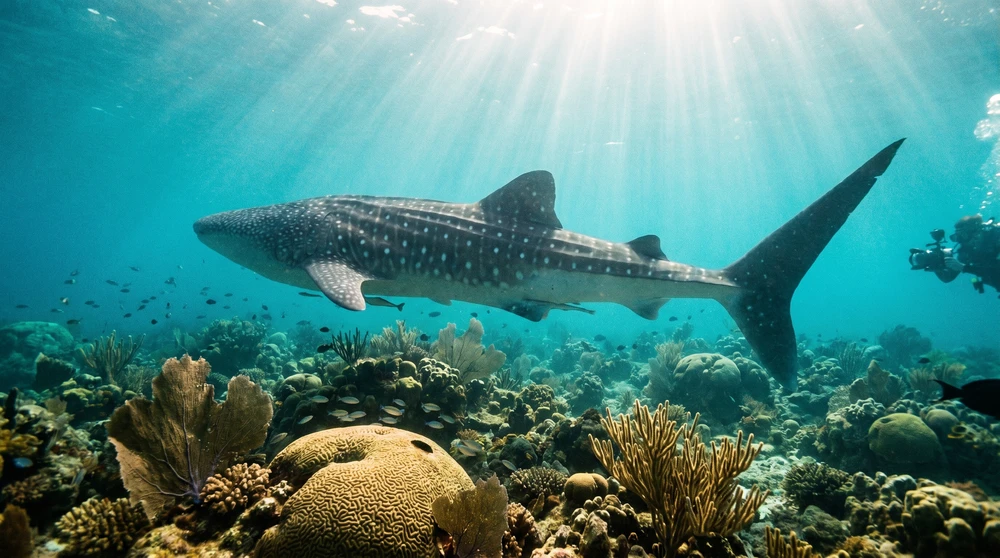
What makes this stretch of reef a whale shark magnet comes down to underwater topography. The deep ocean trenches surrounding the outer reef drop sharply into the abyss, forcing nutrient-dense currents upward against the shallow plateau. This creates an ideal thermoregulation and feeding environment.
Research by the Maldives Whale Shark Research Programme, a UK-registered charity based on Dhigurah, shows the population here consists mainly of juvenile males averaging 4 to 8 meters in length. The programme has photo-identified individual sharks since 2006, building one of the longest-running datasets of its kind. These young sharks use the shallow, warm inner-reef waters to warm up after diving deep to feed, which makes them slow-moving and highly accessible to snorkelers.
How to Get to Dhigurah
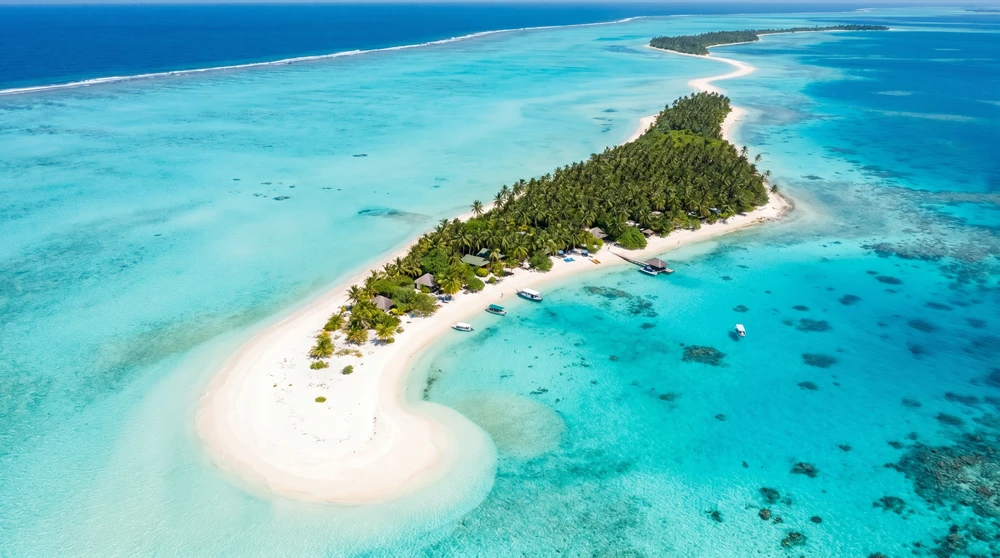
To base yourself in the heart of whale shark territory, you will want to reach Dhigurah Island, roughly 100 kilometers southwest of the capital, Male. Dhigurah is accessible by two main routes.
The scheduled speedboat is the budget-friendly, scenic option. Daily speedboats run directly from Male, or Velana International Airport, to Dhigurah. The journey takes about 1.5 to 2 hours depending on sea conditions and is the most cost-effective way to arrive.
The domestic flight plus boat transfer is faster and gentler. If you are prone to seasickness or traveling during the choppier monsoon months, you can take a 20-minute domestic flight from Male to the neighboring airport island of Maamigili.
From there, your guesthouse or operator arranges a 20- to 30-minute speedboat or traditional dhoni ride to Dhigurah. It costs more than the speedboat but skips long stretches of open water. You can compare and reserve crossings and rooms in advance through A guesthouse on Dhigurah or Maamigili.
What to Expect During Your Excursion
A typical whale shark safari is a half-day or full-day affair. You board a vessel equipped with snorkeling gear, life jackets, and a trained crew. Because these animals move freely in the wild, the trip is as much an adventurous treasure hunt as it is a swim.
Local operators around Dhigurah and Maamigili report sighting success rates in the range of 75 to 90 percent, and early morning departures tend to deliver the best odds before the water gets busy.
Spotting the Gentle Giants
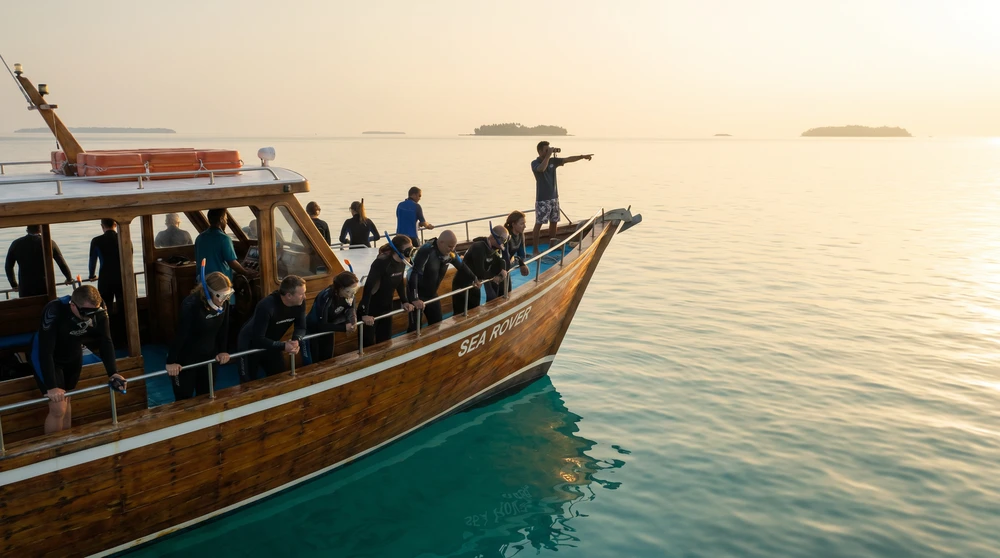
Once the boat reaches the outer reef, the real excitement begins. Experienced spotters climb to the roof or bow, scanning the azure water for a localized shadow, a sudden break in the wave pattern, or a change in water color.
While you wait, crews often point out pods of spinner dolphins or green sea turtles nearby. The wait can take anywhere from fifteen minutes to a couple of hours, demanding patience but usually rewarding it. If you have not booked yet, you can lock in a small-group departure through A whale shark snorkeling trip.
In the Water: Rules and MWSRP Etiquette
When a whale shark is sighted, the captain positions the boat safely ahead of the animal's path and the guide gives a quiet command to slip in. This is where the ethical guidelines are non-negotiable. The South Ari code of conduct, monitored by the Maldives Whale Shark Research Programme, sets out several mandatory rules.
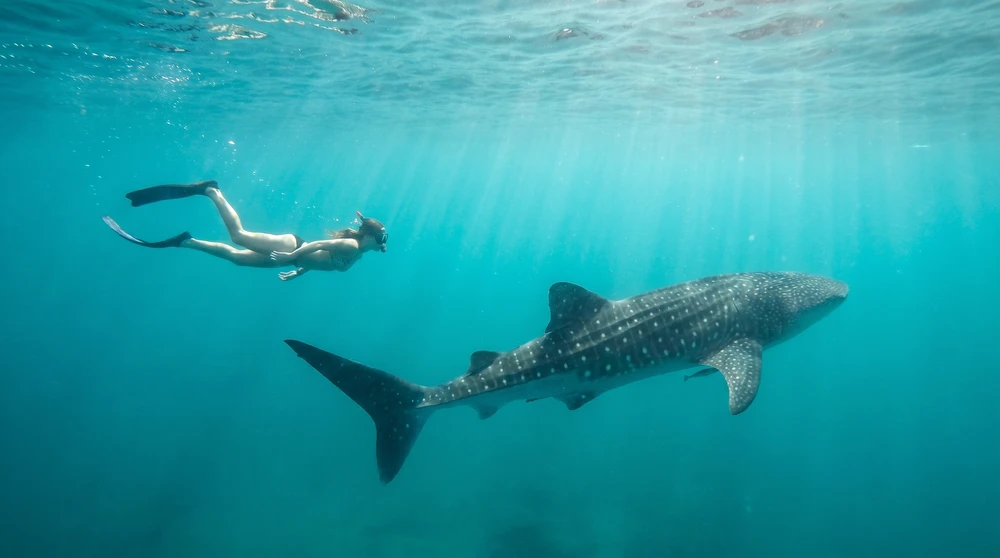
- Keep your distance. Always stay at least 3 meters away from the body of the shark, and 4 meters away from its powerful tail to avoid accidental injury.
- Never touch or chase a whale shark. Their skin carries a protective mucous layer, and contact can introduce harmful bacteria and cause stress.
- Do not block their path. Avoid swimming directly in front of the shark's mouth. If it feels obstructed, it will dive into the deep, ending the encounter for everyone. Swim parallel to the animal instead of head-on.
- Skip the flash. Their eyes are sensitive to sudden changes in light, so keep your underwater camera or action camera on natural-light settings.
Excursion Costs and Booking Options
What you spend depends entirely on your travel style. Local-island tours are far cheaper than resort excursions, which is the main reason budget travelers base themselves on Dhigurah or Maamigili.
If you stay on a local island, excursions booked through local guesthouses or independent dive centers are highly economical and often include lunch on a sandbank, water, and snorkeling gear. These tours are personalized and directly support the local island economy. Because guesthouse and operator rates shift with season and group size, ask your host for a current quote rather than relying on a fixed figure.
If you choose a luxury private resort within the South Ari Atoll, trips run on larger speedboats or yachts and cost considerably more, frequently led by an on-site marine biologist who gives an educational briefing before you enter the water. Many travelers split the difference by basing themselves on Dhigurah and booking ahead through A guided whale shark snorkeling tour.
Essential Packing List
To make your day on the water comfortable and successful, pack a few essentials.
Reef-safe sunscreen matters here. Standard sunscreens contain chemical compounds like oxybenzone that bleach coral and poison marine life, so opt for non-nano zinc oxide formulas.
Polarized sunglasses cut the glare on the ocean surface and let you help the crew spot sharks from the boat. An action camera with a secure floating wrist strap captures the scale of the animal alongside you. A rash guard protects your back from intense tropical sun and guards against micro-stings from plankton. Finally, motion sickness tablets taken 30 minutes before departure keep the rolling outer-reef swells from cutting your dream trip short.
Given that trips run on open water with currents, it is also worth carrying travel insurance that covers water activities, which you can arrange through A plan that includes snorkeling and boat excursions.