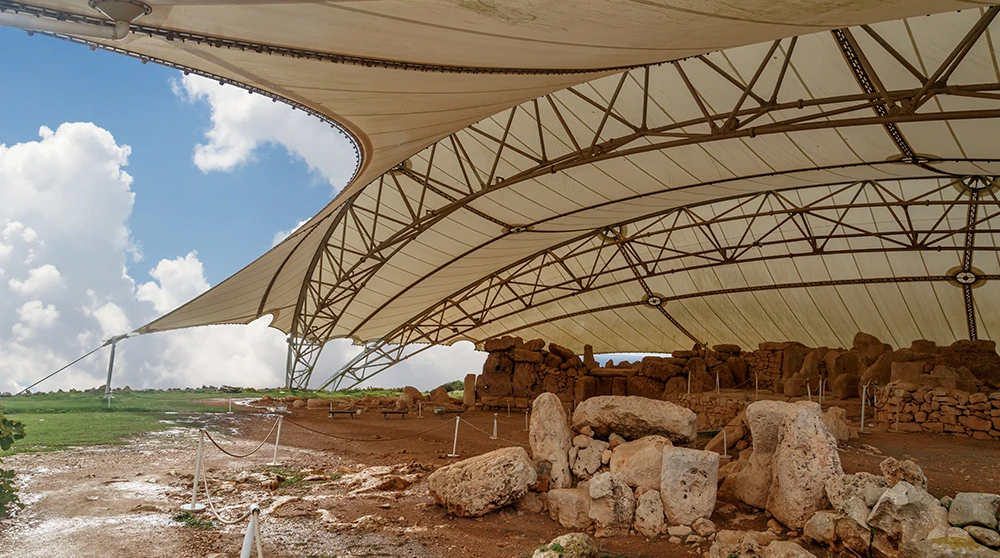
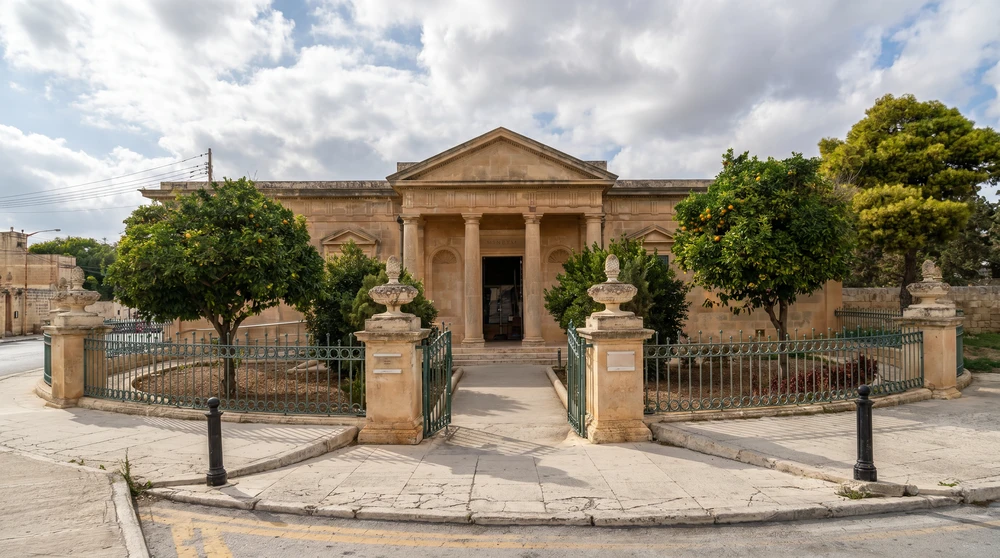
The biggest mistake you can make at Ġgantija is expecting a towering, intact monument like the Egyptian Pyramids, then arriving to find scaffolding and waist-high ruins instead. Managing that expectation is everything here. Once you grasp that these megaliths were raised over 5,600 years ago, long before the wheel or metal tools existed, a seemingly modest stone enclosure transforms into a genuine architectural miracle. This guide covers tickets, opening hours, transport, and what the visit actually feels like in 2026.
- Entrance fee: €10 adults, includes the Ta' Kola Windmill
- Opening hours: 10:00 to 18:00 (Mar to Oct), 09:00 to 17:00 (Jan to Feb, closed Tuesdays)
- Last admission: 30 minutes before closing
- Duration: 1 to 1.5 hours
- Transport: Bus 322 from Mġarr, or Uber/Bolt from Victoria
- Best time: early morning or late afternoon to dodge the tour buses
What to Expect at Ġgantija Archaeological Park
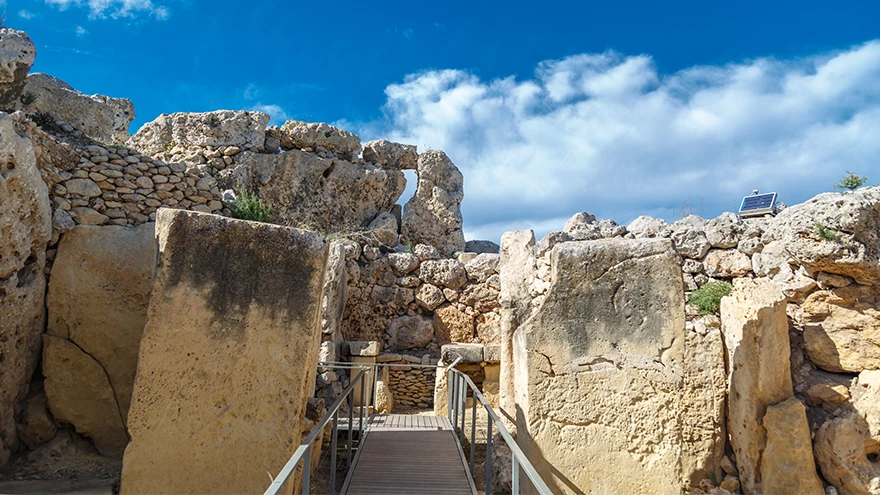
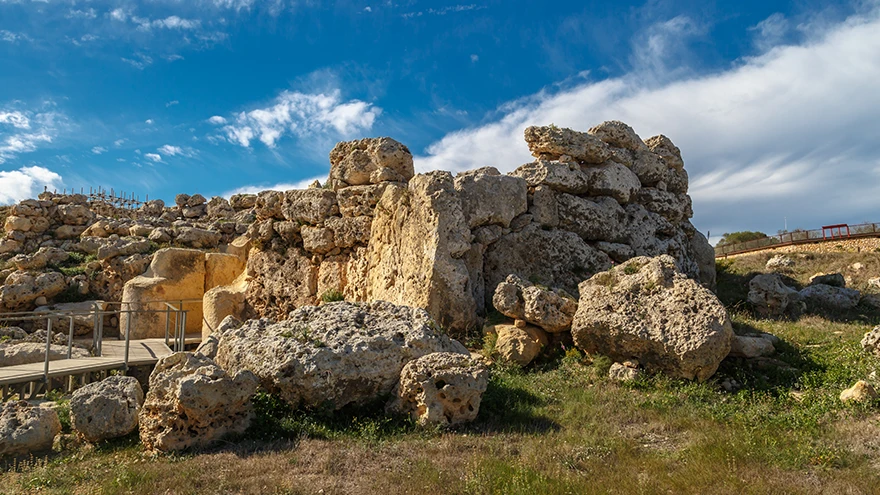
The site holds two main temple structures enclosed within a single massive outer boundary wall. Unlike Ħaġar Qim and Mnajdra on the main island, Ġgantija is fully open to the elements with no protective tent overhead. Because the softer Globigerina limestone interior degrades over the millennia, you will see metal scaffolding propping up the most vulnerable walls. This conservation work breaks the ancient aesthetic, but it is the only thing keeping the structure upright.
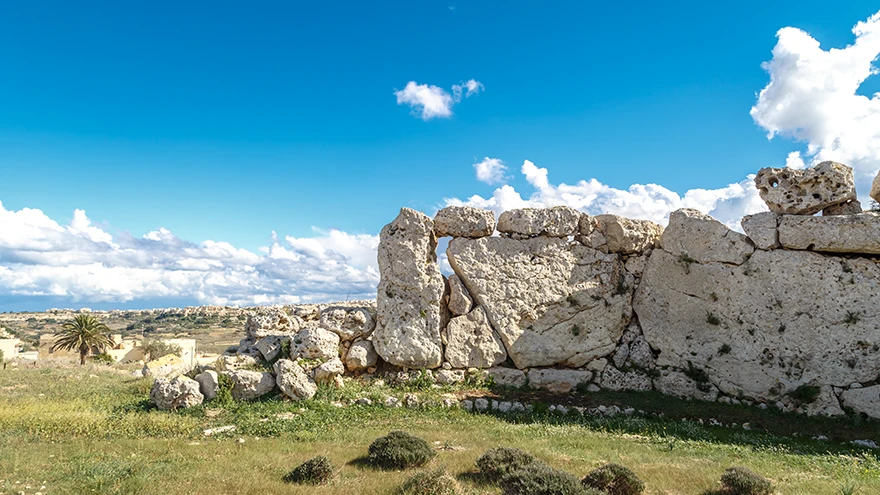
The scale of the outer Coralline Limestone blocks is staggering, with some weighing over 50 tons. Yet the physical footprint of the ruins feels surprisingly compact once you step inside. A raised pathway winds through a well-tended Mediterranean garden that smells of wild thyme and mastic, leading you straight to the temple entrances.
The Interpretation Centre: Do Not Skip It
Your visit begins indoors at the Interpretation Centre, and rushing past it to reach the outdoor ruins is a real missed opportunity. The indoor museum is air-conditioned, genuinely informative, and essential for making sense of the otherwise abstract pile of stones you are about to walk through. An English audioguide is included with entry and is worth picking up before you head outside.
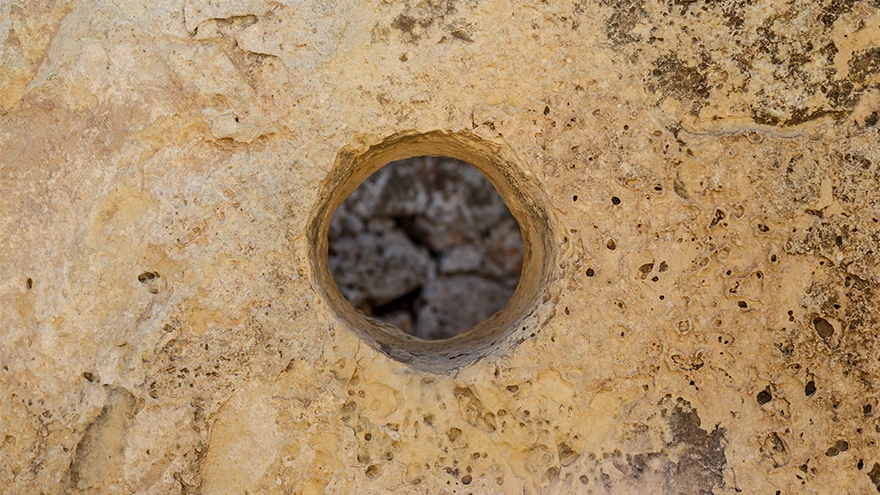
The exhibition showcases intricately carved fertility figurines, stone hearths, and animal bones that point to ancient communal feasts. Seeing the famous snail-with-a-human-head carving and a remarkably preserved prehistoric skull builds a tangible connection to the people who raised this site around 3,600 BCE.
How to Get to Ġgantija Temples
The archaeological park sits on the Xagħra plateau, reached after the short ferry crossing from mainland Malta. Navigating to this quiet village is straightforward whatever your starting point on the island.
From Gozo Ferry Terminal (Mġarr)
If you are heading straight to the temples after stepping off the fast ferry from Valletta or the standard car ferry, Bus 322 is your most direct public transport option. It runs toward Marsalforn and stops right in Xagħra. Alternatively, renting an e-bike at the port makes for a scenic 15 to 20-minute uphill ride directly to the site.
From Victoria
Traveling from Gozo's capital, Victoria, takes less than 10 minutes by car. Hailing an Uber or Bolt is often faster and less stressful than waiting for the local buses, especially through the hot summer months. The drop-off point leaves you just steps from the main ticket office.
Ġgantija Temples Tickets and Combo Options
The standard adult ticket costs €10, excellent value given that it grants access to two separate historical sites. Your temple ticket automatically includes free entry to the Ta' Kola Windmill just down the street.
| Visitor Type | Price |
|---|---|
| Adults (18+) | €10 |
| Youths (12-17) and Seniors (60+) | €8 |
| Children (6-11) | €6 |
| Infants (1-5) | Free |
Buy your tickets at the welcome center on arrival; there is rarely any need to book online in advance during the off-season. Heritage Malta members and Malta Pass holders enter free of charge, and a Multipass bundling Ġgantija with other Heritage Malta sites is worth doing the math if you plan to visit several temples or museums.
Best Time to Visit
The complex is a major stop for large hop-on-hop-off buses and guided tour groups. When two or three coaches arrive at once, the compact pathways inside the ruins turn loud and congested, instantly breaking the mystical atmosphere.
Arrive right at opening time or come after 15:30 to experience the temples in relative silence. The late afternoon light also throws dramatic shadows across the megaliths, making it the best window for photography. Winter visits are quietest of all, though the site closes on Tuesdays from January through February.
Practical Tips for Your Visit
Visiting ancient ruins takes a little logistical foresight, especially under the Mediterranean sun.
- Sun protection: The outdoor area offers zero shade. A wide-brimmed hat, sunglasses, and water are non-negotiable between May and October.
- Accessibility: The Interpretation Centre and main pathways are wheelchair accessible via dedicated ramps. Some deep inner chambers stay off-limits to wheels due to the uneven, archaeologically sensitive ground.
- Facilities: The site has exceptionally clean, gender-neutral toilets near the museum. There is no café inside the park, but you can buy cold water at the small gift shop near the exit.
- Last entry: Plan to arrive at least 30 minutes before closing, since that is the cutoff for admission.
Things to Do Near Ġgantija
Do not toss your ticket after exiting the temple grounds, because the same quiet street holds one of Gozo's most charming small museums before the village fans out into a wider day of sights.
Ta' Kola Windmill
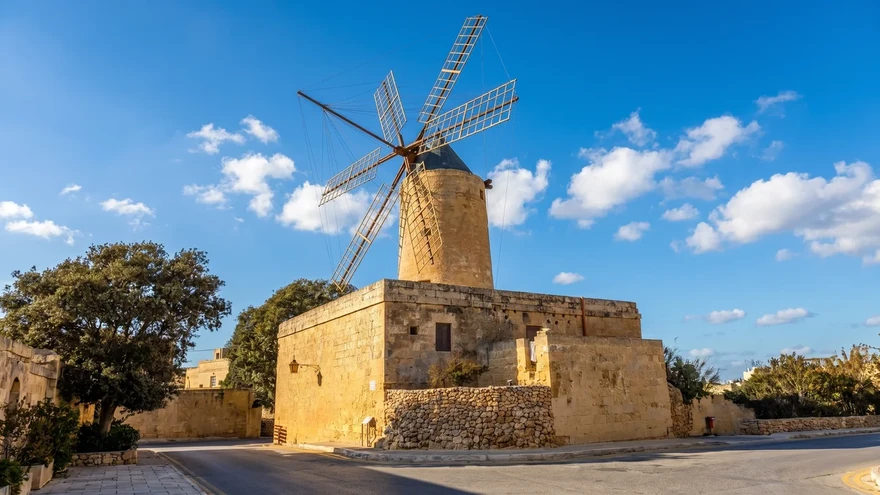
A two-minute walk down the road brings you to the Ta' Kola Windmill, and your Ġgantija ticket covers it for free. Built in 1725 during the era of the Knights of St. John and later rebuilt in the 1780s, it takes its name from its last miller, Żeppu ta' Kola, who kept the sails turning until 1987. Heritage Malta now runs it as a museum of traditional Gozitan rural life, and the recurring theme inside is just how central bread and flour once were to survival on the islands.
The ground floor recreates the miller's living quarters and a workshop full of hand-forged tools, while a narrow winding spiral staircase climbs to the original milling machinery, the heavy millstones and wind-driven gears sitting at the top. That staircase is tight and steep, so anyone with limited mobility is better off admiring the tower from the street. Budget about 20 to 30 minutes. On its own the windmill would not justify a special trip, but as a free, atmospheric counterpoint to the Neolithic stones next door, it is well worth the short walk.
With more time on the island, the nearby Ta' Pinu Sanctuary and Ramla Bay pair naturally into a full Gozo day, and choosing where to stay in Gozo close to Victoria keeps all of these within a short drive.