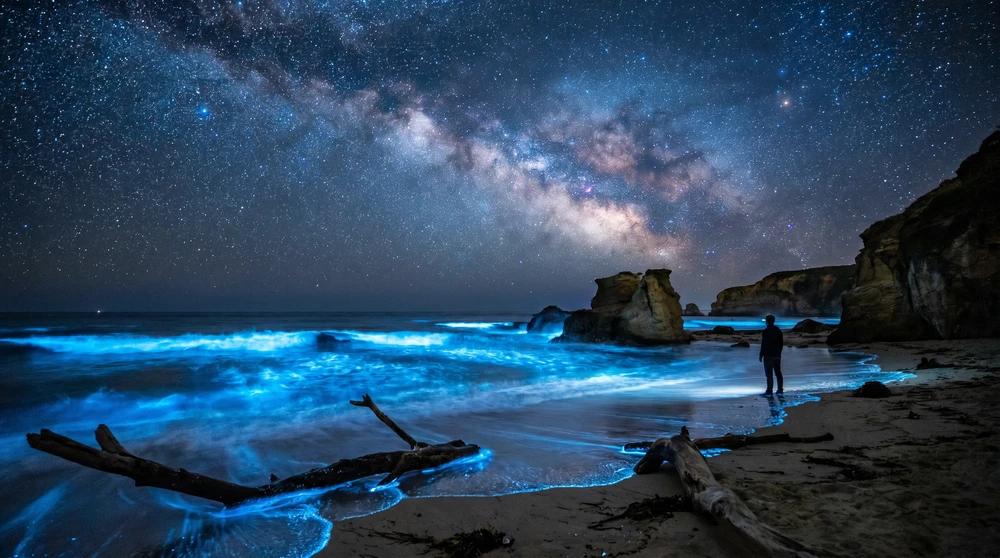
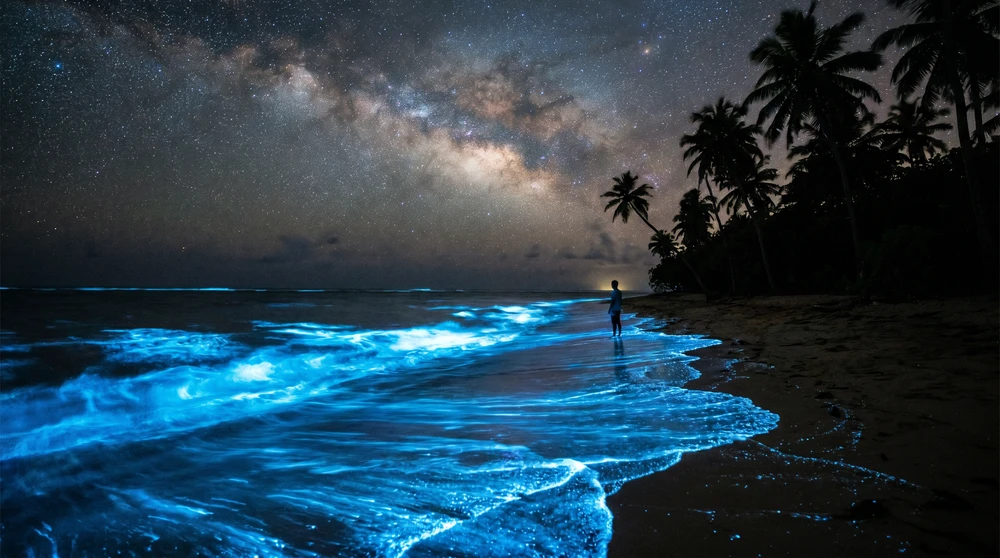
Walking along a shoreline where every breaking wave leaves a glittering trail of neon-blue light is a bucket-list dream for many travelers. Famously known as the Sea of Stars, the glowing beaches of the Maldives look like a scene from a fantasy film, and they are the result of living organisms rather than any light installation.
Despite what heavily edited social media clips suggest, this is not a permanent attraction. It is a spontaneous, climate-dependent natural event, and it is never guaranteed on any specific night. You cannot simply show up at any resort and expect the glow. You need to understand where to go, when to visit, and how to maximize your chances of seeing it.
Before planning your trip, the essentials come down to a handful of factors:
- Primary locations: Vaadhoo Island (Raa Atoll) and Mudhdhoo Island (Baa Atoll)
- Peak months: June to October, with July and August the strongest, sometimes lingering into December
- Best moon phase: new moon, or at least five days after a full moon
- Conditions needed: complete darkness, warm water, and physical movement in the water
- Cost: public beaches are free, though transport and tour fees apply
Where Is the Glowing Beach in the Maldives?
While bioluminescence can technically appear on almost any of the country's roughly 1,200 islands, a few locations have earned a reputation for frequent sightings thanks to their geography and the ocean currents that sweep plankton toward the shore.
The most famous spot is Vaadhoo Island, located in the Raa Atoll roughly 180 kilometers north of Malé. Virtually uninhabited and well preserved, Vaadhoo features the stretch of sand most often labeled the definitive Sea of Stars. It is visually striking enough that marine photographers and filmmakers have flocked here for years.
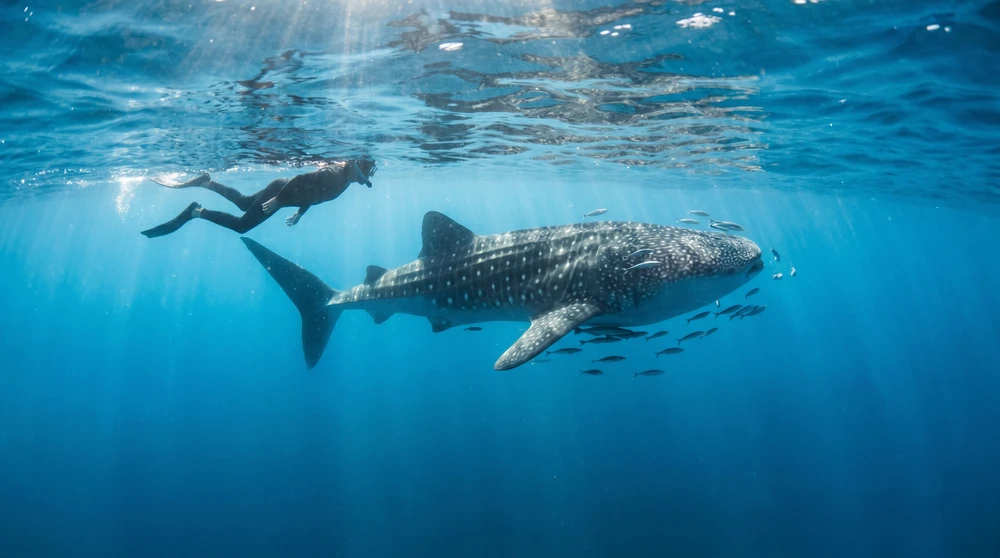
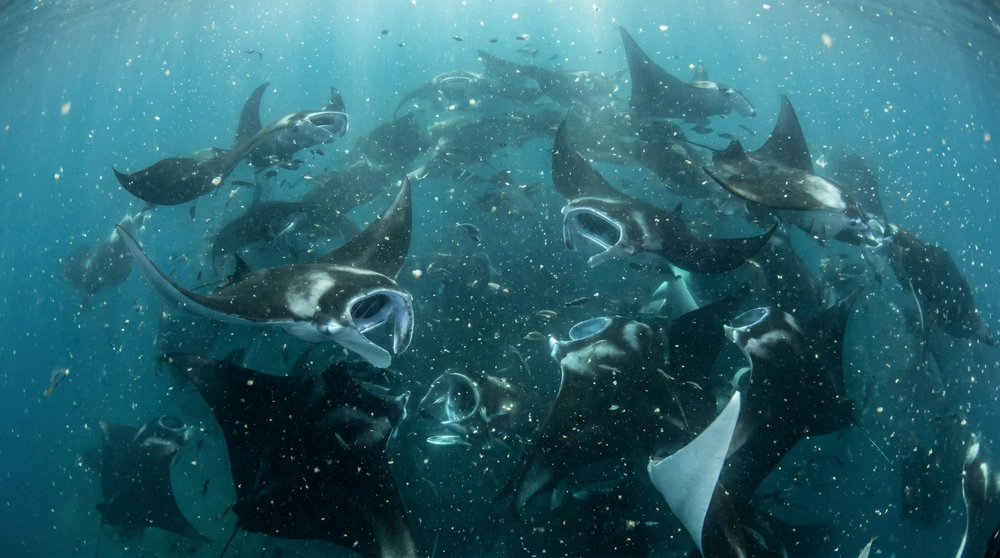
Another reliable location is Mudhdhoo Island, in the Baa Atoll, which sits inside a UNESCO Biosphere Reserve. Often marketed interchangeably with Vaadhoo by tour operators, Mudhdhoo's nutrient-rich lagoons frequently concentrate the glowing organisms, and its beaches tend to be quieter than the better-known sites. If you are already in this region for the manta season, the same trip can put you in the right place after dark, which is why many travelers pair it with a visit to Hanifaru Bay; you can read more about swimming with manta rays in Hanifaru Bay before you go.
Resorts in South Ari Atoll, Lhaviyani Atoll and North Malé Atoll also report occasional displays, so the glow is not limited to two islands. The two names above simply offer the best odds. This kind of single-purpose chase pairs well with a couples trip, and the glowing shoreline is a frequent highlight on a Maldives honeymoon.
Best Time to See the Glowing Beach
Timing matters more than location. Because the phenomenon depends entirely on living organisms, you have to align your visit with their peak season and with the darkest possible nights.
The best window runs from June to October, when the southwest monsoon brings warmer water and shifting currents. This creates ideal conditions for the marine microbes to gather in dense concentrations near the shoreline. July and August tend to produce the most intense displays. While the official peak ends in October, local fishermen regularly report strong showings into December as long as the coastal water stays warm.
If you are still deciding when to come, the season for the glow overlaps with several other reasons to visit, and our guide to the best time to visit the Maldives breaks down weather and wildlife month by month.
Why the Moon Phase Matters
Even during peak months, a bright moon can ruin the experience. Your eyes need time to adjust to the dark before the faint blue sparks become visible, so both artificial light and strong moonlight wash the glow out completely.
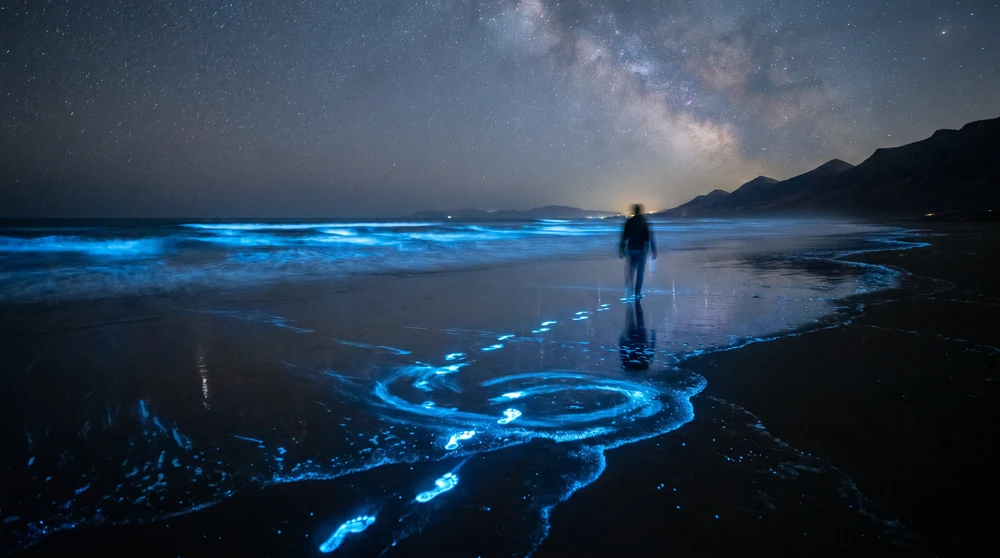
For the clearest view, plan your beach walks around a new moon, or at least five days after a full moon. On the darkest nights, the contrast makes the bioluminescent waves look far more vivid. One realistic caveat worth setting early: the glow you see with your own eyes is usually softer than the viral long-exposure photos, which collect light over several seconds that your eyes cannot. The display is real, but the most dramatic images are the result of long-exposure photography, not what the naked eye registers.
How to Get to Vaadhoo Island
Because Vaadhoo sits well north of the capital, reaching it takes some planning. The transport options largely mirror how you reach any remote atoll, and our guide to getting around the Maldives covers seaplane and speedboat logistics in more detail.
By seaplane, the fastest and most scenic route is a scheduled flight from Velana International Airport in Malé to a nearby resort in the Raa Atoll, followed by a short speedboat ride to Vaadhoo. Once you settle on an atoll, you can Compare nearby island stays to base yourself within reach of the glow.
By domestic flight and speedboat, you can fly to Ifuru Airport in Raa Atoll, then charter a speedboat to the island's coastline.
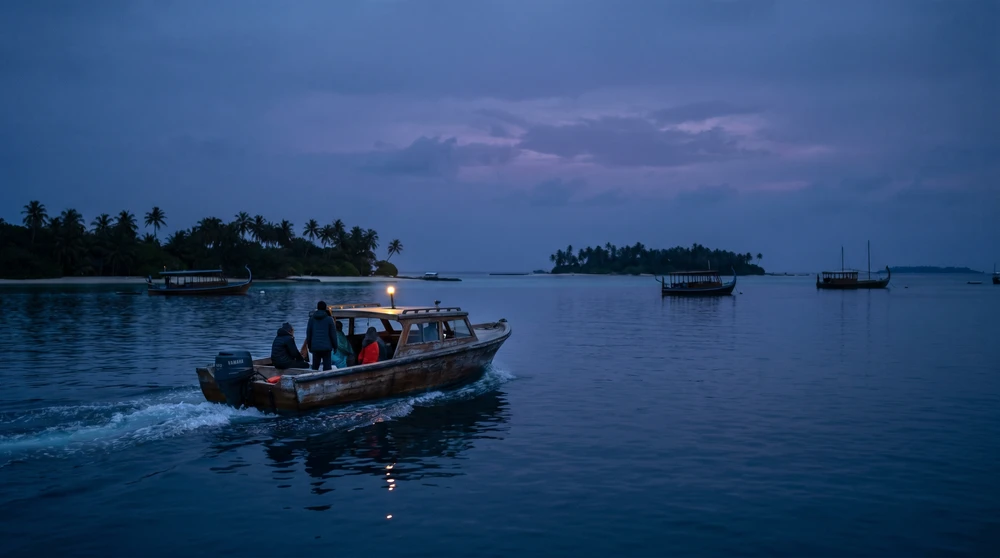
By traditional dhoni, many multi-day island-hopping safaris on wooden Maldivian boats include an overnight anchor near Vaadhoo specifically for night-time beach walks. If you want to stay close to the glow rather than commute to it, you can search for islands and resorts known for frequent sightings before you book.
How to Spot the Sea of Stars
To improve your odds, rely on the habits of local fishermen and wildlife photographers who have tracked this phenomenon for years.
Look for red algae by day. Heavy concentrations of plankton can tint the water near the shore a brownish-red during daylight. If you spot clumps of red algae, return to that exact spot after dark, because it is a strong sign that a display is likely.
Kill all artificial lights. Turn off your phone flashlight, camera screens and torches, then let your eyes adapt to the dark for at least 10 to 15 minutes.
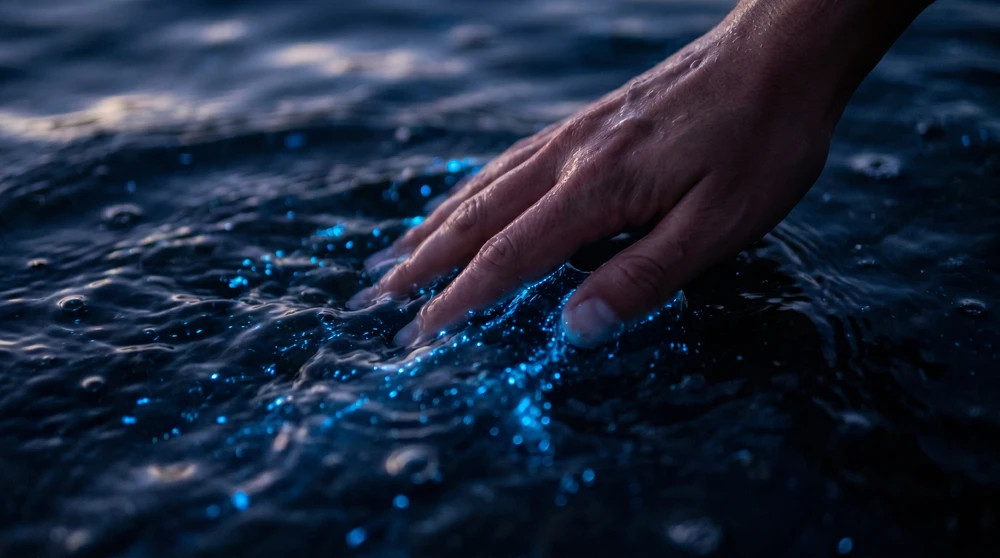
Agitate the water. The glow is a defense mechanism triggered by movement. If the sea is perfectly calm, the plankton stay dim. Toss a small pebble into the shallows, wade in, or walk along the wet sand, and your footprints will light up as glowing blue stamps.
Plan for long-exposure photography. A casual phone snapshot in auto mode will likely come out black. Bring a tripod and set your camera to a long exposure of 5 to 15 seconds with a wide aperture to capture the ambient blue and green light. The most reliable glow tends to appear after about 9 PM, once the sky is fully dark.
What Causes the Bioluminescence?
The effect feels supernatural, but the cause is straightforward biology. The blue light is produced by dinoflagellates, a type of single-celled phytoplankton drifting in the Maldivian currents.
When these organisms are disturbed by crashing waves, shifting tides or passing predators, they trigger an internal chemical reaction. A specialized enzyme called luciferase interacts with a protein called luciferin in the presence of oxygen.
The reaction releases energy almost entirely as cold light, meaning very little of it is lost as heat. For the plankton, this brilliant blue glow startles and disorients predators. For visitors lucky enough to catch it on a dark night, it produces one of the most striking natural spectacles on the planet.