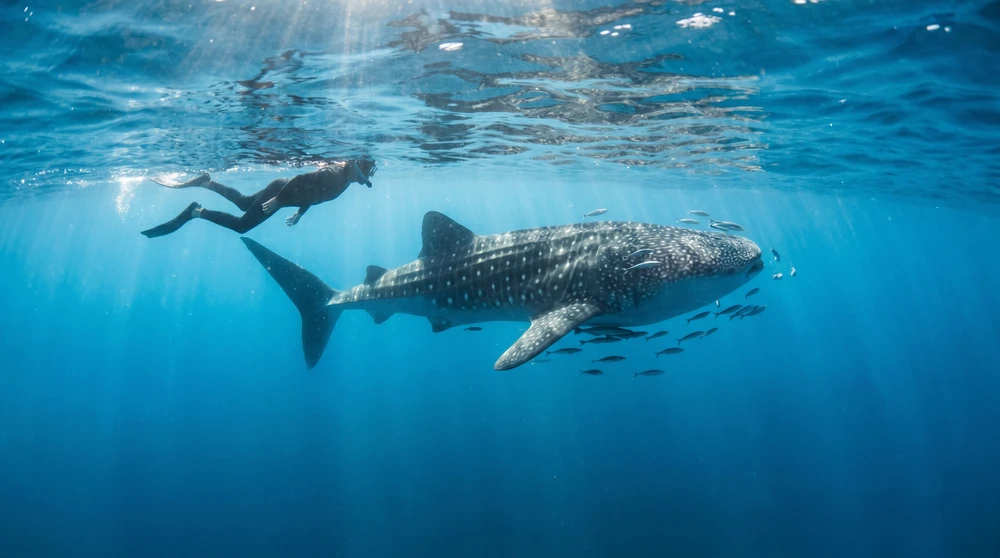
Planning a trip to the Maldives often comes with a mix of intense excitement and quiet anxiety. As a destination synonymous with overwater villas, glassy lagoons, and pristine white sand, it represents a significant financial and emotional investment. Naturally, the most pressing question for any traveler is simple: when should you go? Traditional brochures tell you to visit exclusively during the dry winter months, but the real answer is far more nuanced. The ideal window for your getaway depends on what you want to experience, your tolerance for tropical showers, and your budget.
Whether you are chasing sun-drenched beach days, world-class surfing, lower resort rates, or the bucket-list thrill of swimming alongside manta rays, this guide breaks down the Maldivian calendar so you can pick the perfect dates.
Understanding the Maldives Weather Seasons
The Maldives enjoys a warm, tropical climate year-round, with air temperatures sitting consistently between 25°C and 31°C (77F to 88F). The water is just as inviting, rarely dropping below 25°C. The archipelago runs on two monsoon seasons that locals have named for centuries: the Northeast Monsoon, known as Iruvai, and the Southwest Monsoon, known as Hulhangu. Everything from your room rate to the marine life you will see is shaped by which of these is blowing.
The Dry Season: Northeast Monsoon, December to April
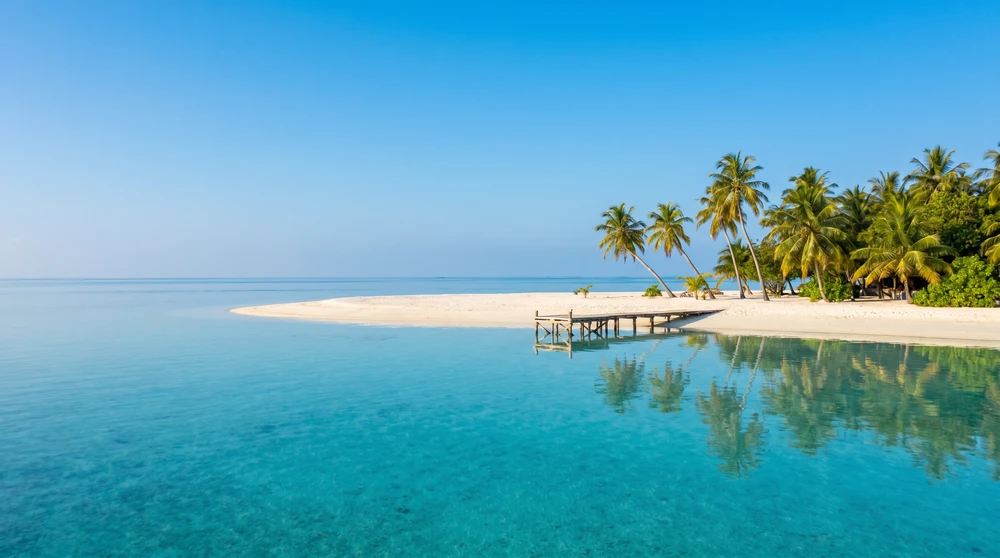
Running from December through April, the Northeast Monsoon (Iruvai) brings the postcard weather most travelers picture. Humidity drops, blue skies dominate, and the islands see an average of eight to nine hours of sunshine a day.
The perk is the water. Exceptionally calm seas and underwater visibility that routinely exceeds 30 meters, and on the clearest days approaches 50 meters. This makes it the prime window for diving and snorkeling. Gentle swells and easy house-reef access make it the most beginner-friendly time to get in the water.
The caveat is cost. This is the most expensive season to visit, and demand for winter sun pushes airfares and room rates to their annual peak, especially around Christmas and New Year.
The Wet Season: Southwest Monsoon, May to November
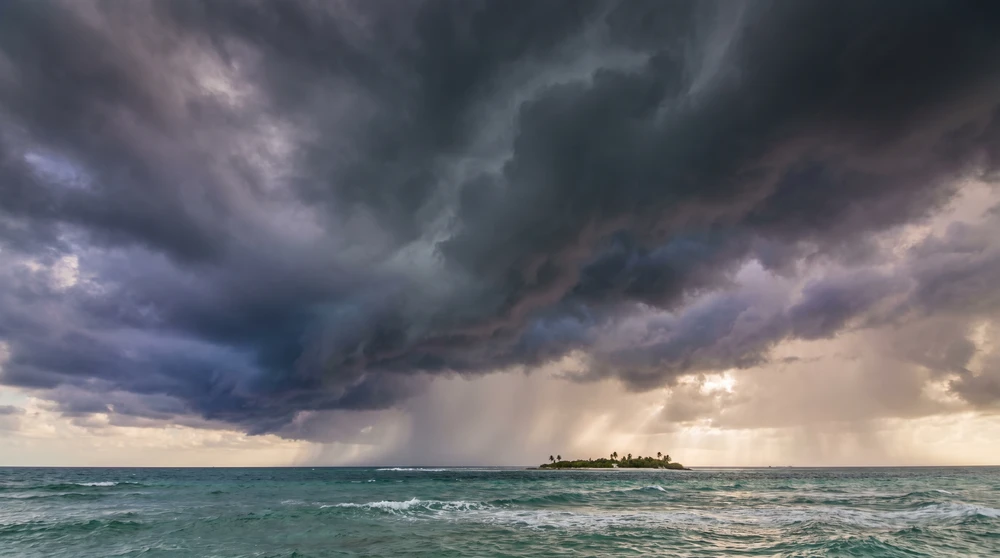
The Southwest Monsoon (Hulhangu) officially begins in May and runs through November. Traveling in these months does not mean having a washed-out holiday. Maldivian rain usually arrives as short, heavy bursts that pass quickly and often leave clear, refreshed skies behind. Many wet-season days stay largely sunny, with rain bunched into an hour or two rather than spread across the day.
The perk is value. This is the ultimate window for budget-conscious luxury, with resorts offering steep discounts, complimentary room upgrades, and generous meal-plan perks. It is also the best stretch of the year for marine megafauna and serious surf.
The caveat is the trade-off underwater. Humidity climbs, passing storms are possible, and visibility softens to roughly 15 to 25 meters as plankton fills the water, though that same plankton is exactly what draws the giants in.
Best Time for Specific Island Experiences
To get the trip you actually want, align your dates with the activity you care about most rather than the generic peak season.
Swimming with Manta Rays and Whale Sharks
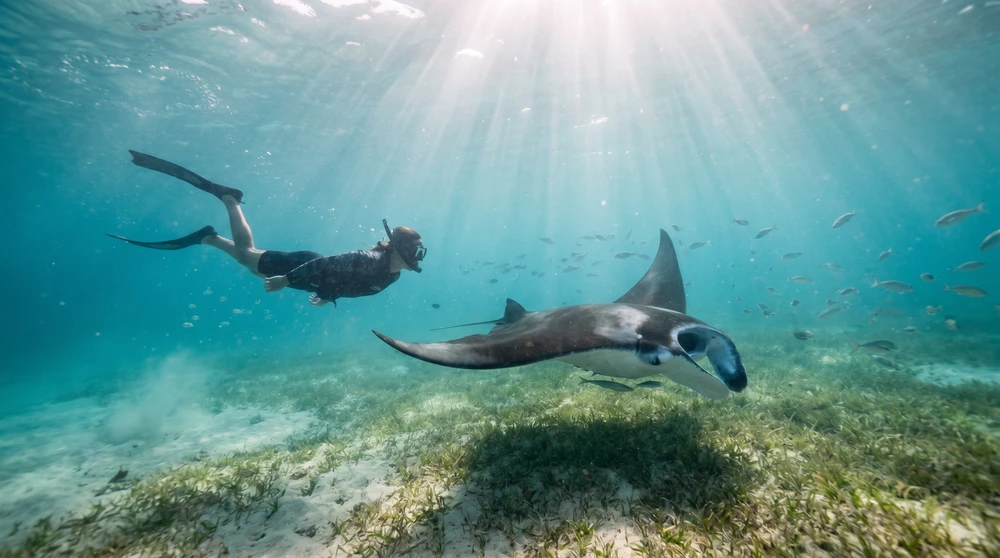
If your dream is to meet the ocean's gentle giants, the wet season is your friend. From June to October, shifting monsoon currents flood the lagoons with nutrient-rich plankton, and the animals follow their food.
The crown jewel is Hanifaru Bay in the Baa Atoll, a protected UNESCO Biosphere Reserve where peak manta activity runs from June through October. During the strongest feeding events, the bay can hold up to 200 manta rays funneling through a single channel, alongside seasonal whale sharks. The Raa Atoll is another standout for high manta numbers, and resorts like the InterContinental Maldives Maamunagau partner with The Manta Trust to run conservation-minded excursions.
There is a quiet rule worth knowing before you book a specific island. Mantas and whale sharks chase the plankton from one side of the atoll to the other as the wind reverses: look to the western side of the atolls during the dry Iruvai season, and the eastern side during the wet Hulhangu season. In the South Ari Atoll, whale sharks are found year-round near Dhigurah, drifting east in the wet months and west in the dry ones, so the right side of the island matters as much as the right month. If a guaranteed encounter is the point of your trip, a guided boat trip is the surest way to reach the active side of the atoll on any given day. Book a guided manta and whale shark tour
Best Months for Surfing the Atolls
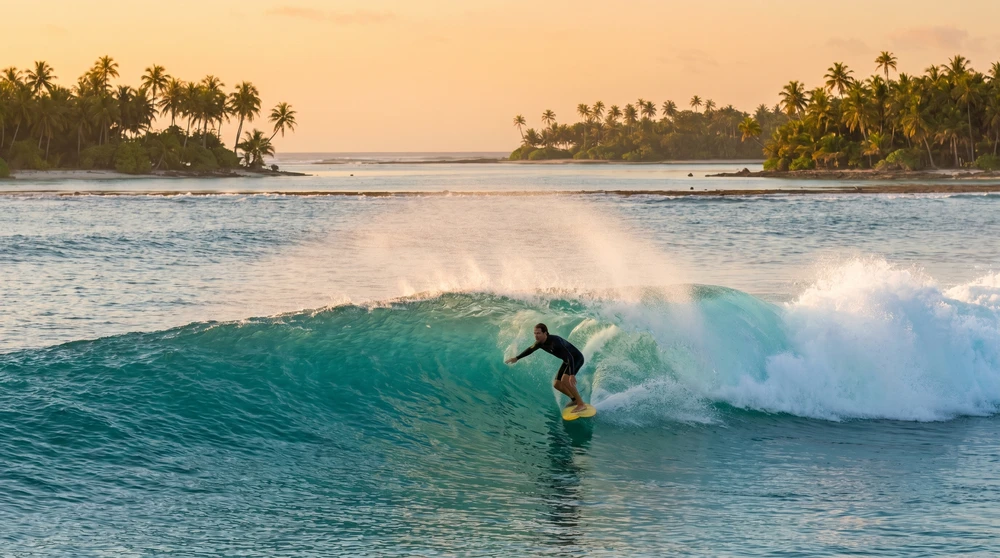
The Maldives has become a premier surf destination, but the waves need specific conditions. The season opens in March and runs through October, with June, July, and August delivering the highest and most consistent swells. Beginners are better served by the calmer shoulders of the season, while experienced surfers chasing hollow reef breaks should aim for the heart of the Southwest Monsoon.
The northern and central atolls hold the best breaks. If surfing is the priority, look at the Laamu Atoll, where resorts like Six Senses Laamu run full surf schools with direct access to world-class reef passes.
Finding Quieter, Better-Value Resort Stays
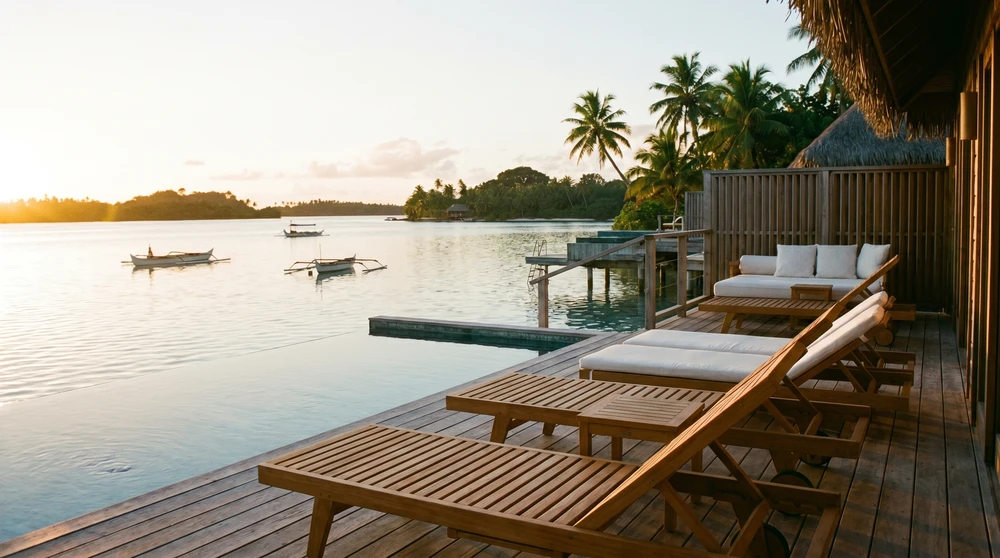
If you want an overwater villa without peak pricing, target the transitional and low-season months. May to August sees the sharpest drop in room rates, often 30 to 50 percent below winter prices, while the shoulder months of April and November still trim 25 to 40 percent off peak rates while keeping much of the good weather. Christmas and New Year are the opposite extreme, frequently running 50 to 100 percent above the standard peak rate.
To offset the cost of internal travel during these months, consider a resort in the North or South Malé Atoll that you can reach by speedboat rather than seaplane. Boat transfers are cheaper, often bundled into the package, and far less likely to be delayed by weather. Comparing villa categories and meal plans across a few resorts before you commit is the easiest way to lock in a low-season deal. Compare Maldives resort deals
Is the Maldives Safe During Monsoon Season?
A common worry is whether the wet season brings the risk of hurricanes or tsunamis.
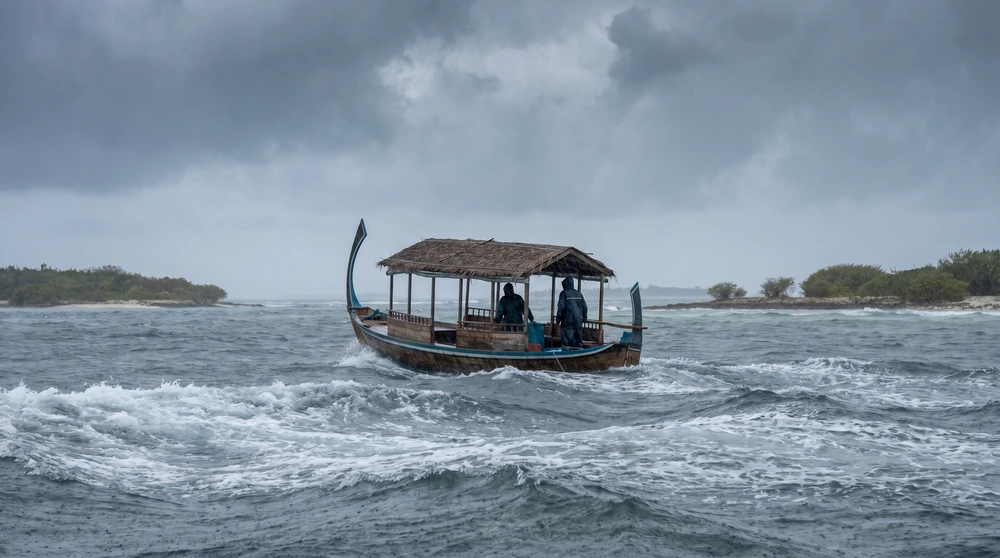
Geographically, the Maldives sits directly on the equator, which places it entirely outside the global hurricane and typhoon belt. The islands can feel the distant tails of cyclones forming near Sri Lanka, such as Cyclone Tauktae in May 2021, which brought heavy wind and rain, but direct, destructive cyclone strikes do not occur in the region's recorded climate history.
Tsunamis are equally rare. The archipelago lies in a seismically stable zone, far from active tectonic boundaries. The devastating 2004 Indian Ocean tsunami did reach the islands after an unprecedented earthquake near Sumatra, but events on that scale are exceptional. The atolls also carry a natural defense: their steep, coral-walled underwater slopes absorb and redirect deep-sea wave energy before it reaches the low-lying islands. Today, resorts and the government maintain early-warning systems, mandatory safety protocols, and trained staff, so monsoon-season travel is considered very safe. Travel insurance that covers weather disruption and medical evacuation is still worth carrying for any island trip this remote. Get travel insurance for the Maldives
Month-by-Month Maldives Travel Breakdown
January
Weather: excellent, hot, sunny, and very low humidity.
Marine life: high visibility, with exceptional diving in North Malé Atoll sites like Lion's Head, where reef sharks and stingrays are common.
Verdict: peak season, so booking well in advance is essential.
February
Weather: the driest month of the year, with around 10 hours of sunshine a day and less than 70mm of rain.
Marine life: pristine visibility, ideal for crystal-clear snorkeling photos.
Verdict: arguably the best overall weather month, and prices reflect it.
March
Weather: temperatures climb to a warm 31°C (88F).
Marine life: visibility stays high, and this month marks the official start of the surf season.
Verdict: perfect for beach purists and early-season surfers.
April
Weather: hot, though humidity begins to rise as the dry season winds down, with mid-month transition showers common.
Marine life: excellent visibility for reef diving.
Verdict: a strong shoulder month before the heavier rains arrive.
May
Weather: the official start of the wet season, with a higher chance of afternoon thunderstorms.
Marine life: plankton begins to gather, softening visibility slightly but drawing the first mantas.
Verdict: prices drop sharply, great for a luxury stay on a budget.
June
Weather: a high chance of rain and wind.
Marine life: a superb month, as large schools of manta rays and whale sharks arrive to feed in the Baa Atoll.
Verdict: ideal for wildlife lovers chasing low-season deals.
July
Weather: hot and humid with short, sharp downpours.
Marine life: manta sightings peak, and high swells create optimal surf.
Verdict: a vibrant month. July 26th is Maldives Independence Day, a chance to catch local parades and traditional dishes.
August
Weather: similar to July, humid with around 7 hours of sunshine between heavy showers.
Marine life: great odds for pelagic life around the central atolls.
Verdict: a popular low-season month, especially for families on summer holidays.
September
Weather: one of the wettest months, with brief but intense downpours.
Marine life: plankton is at its highest, making it prime time for whale sharks.
Verdict: best for adventurous travelers focused on marine megafauna.
October
Weather: historically the wettest month, with high humidity.
Marine life: the final stretch of the high-density manta season and the close of the surf season.
Verdict: excellent value if you enjoy the spa and resort amenities as much as the beach.
November
Weather: the wet season draws to a close, and showers pass quickly as the dry monsoon wind shifts in.
Marine life: visibility begins to clear noticeably.
Verdict: a fantastic shoulder month, with strong pre-winter deals before peak pricing returns.
December
Weather: mostly hot and dry, though early to mid-month can still see passing showers.
Marine life: reef visibility returns to its world-class standard.
Verdict: hugely popular for winter sun, but Christmas and New Year need booking months ahead and often carry minimum-stay rules.