Planning a dive in Nauru means preparing for an environment with zero shallow training waters and immediate exposure to a 500-meter vertical drop-off into the open Pacific Ocean. Bringing your own thoroughly serviced gear is the only way to dive here safely, as the island lacks dedicated, fully equipped commercial dive centers to support casual visitors.
- Water Temperature: Warm year-round (average 28°C / 82°F)
- Visibility: Consistently clear, often exceeding 30 meters
- Currents: Strong and unpredictable open-ocean swells
- Required Experience: Advanced Open Water or higher recommended
- Infrastructure: Extremely limited; independent gear setup required
- Best Season: May to October for most stable conditions and peak visibility; full monthly breakdown in the best time to visit Nauru guide
The Reality of Diving in Nauru
The island of Nauru is essentially a solitary rock thrusting upwards from the deep ocean floor. Just beyond the narrow fringing tidal reef, the underwater landscape vanishes into a dramatic, endless vertical wall. This isn't a sheltered lagoon environment. You are diving on the edge of the abyss, requiring rigorous buoyancy control and constant depth monitoring. Since the water is incredibly clear, the surface remains highly visible even from 40 meters down, making it deceptively easy to lose track of your actual depth.
Not every section of the reef is a sheer vertical face. On the northern and southern sides, sections slope more gently, with small sandy shelves dropping away every 18 to 25 meters. The western side around the Boat Harbour and the Cantilevers is the steepest, featuring a near-vertical 27-meter coral wall that drops before sloping outward onto a narrow shelf.
Top Dive Sites Around Nauru
The Cantilevers, West Coast
Two massive steel cantilever structures loom over the western coastline, originally built to load phosphate onto cargo ships. The older structure collapsed into the reef years ago, creating a colossal artificial reef made of twisted steel girders. Exploring these submerged industrial ruins offers a highly unusual wreck-diving experience. The structural debris provides shelter for lobsters, moray eels, and resting whitetip reef sharks. Navigating this steel maze during a night dive presents an entirely different, high-adrenaline environment due to the active nocturnal marine life.
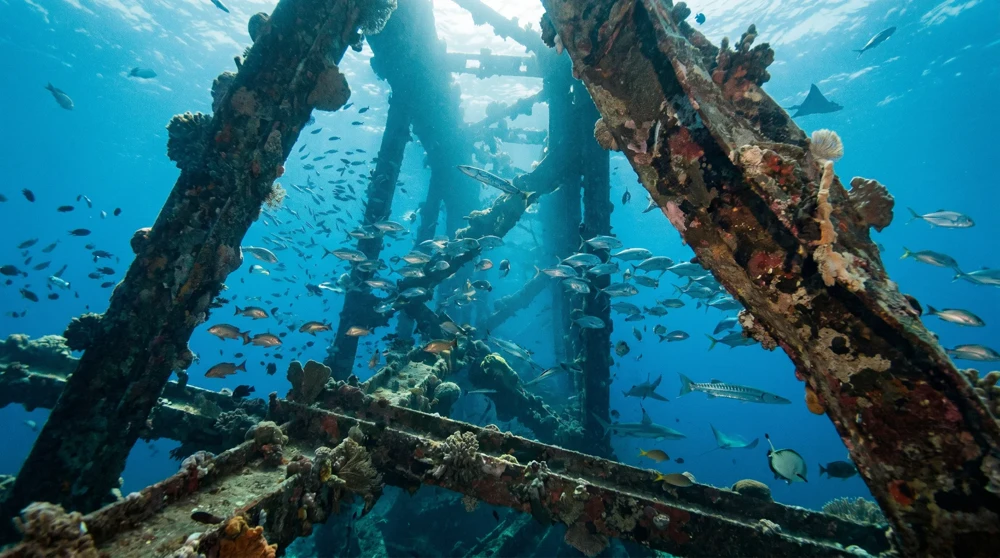
Stingrays are also commonly spotted resting among the debris.
Anibare Bay Coral Pinnacles
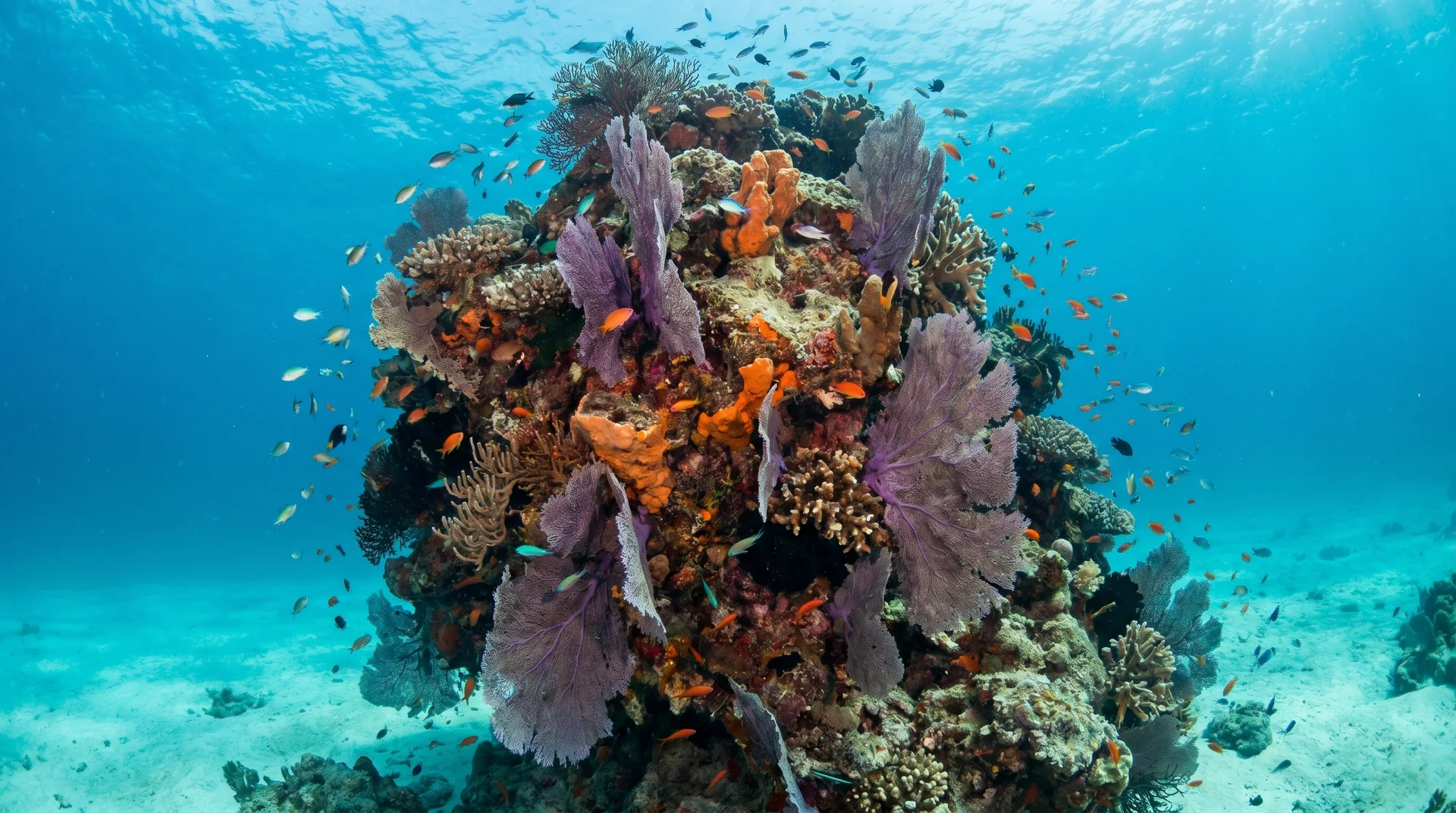
The eastern side of the island breaks the monotony of the steep walls with the Anibare Bay district. Just offshore, towering coral pinnacles rise from the seabed, completely encrusted with vibrant hard and soft corals. The topography here features more sandy patches between the structures, making the dive profile slightly more forgiving than the sheer western drop-offs. These pinnacles act as natural cleaning stations and gathering points for dense schools of reef fish. The site is considered accessible for divers of varying skill levels compared to the more demanding western wall.
Meneng Point
Heading towards the southern and northern extremities of the island, the extreme vertical walls transition into slightly gentler, sloping reefs. Meneng Point features rugged underwater rock formations combined with healthy coral ecosystems. Because these points stick out directly into the open ocean currents, they serve as perfect vantage points for spotting large pelagic species. Expect to encounter passing tuna, eagle rays, and various species of ocean-going sharks patrolling the blue water.
Where to Snorkel in Nauru
The constant line of crashing white breakers on the reef edge makes snorkeling in the open ocean around Nauru exceptionally hazardous. The powerful rip tides and the complete lack of protected shallow lagoons limit safe snorkeling spots severely. The enclosed basin of the Anibare boat harbor provides the only consistently secure water for casual snorkeling. This artificial enclosure blocks the heavy ocean swell while still allowing clear water and small reef fish to circulate freely inside the basin.
Marine Life in Nauru
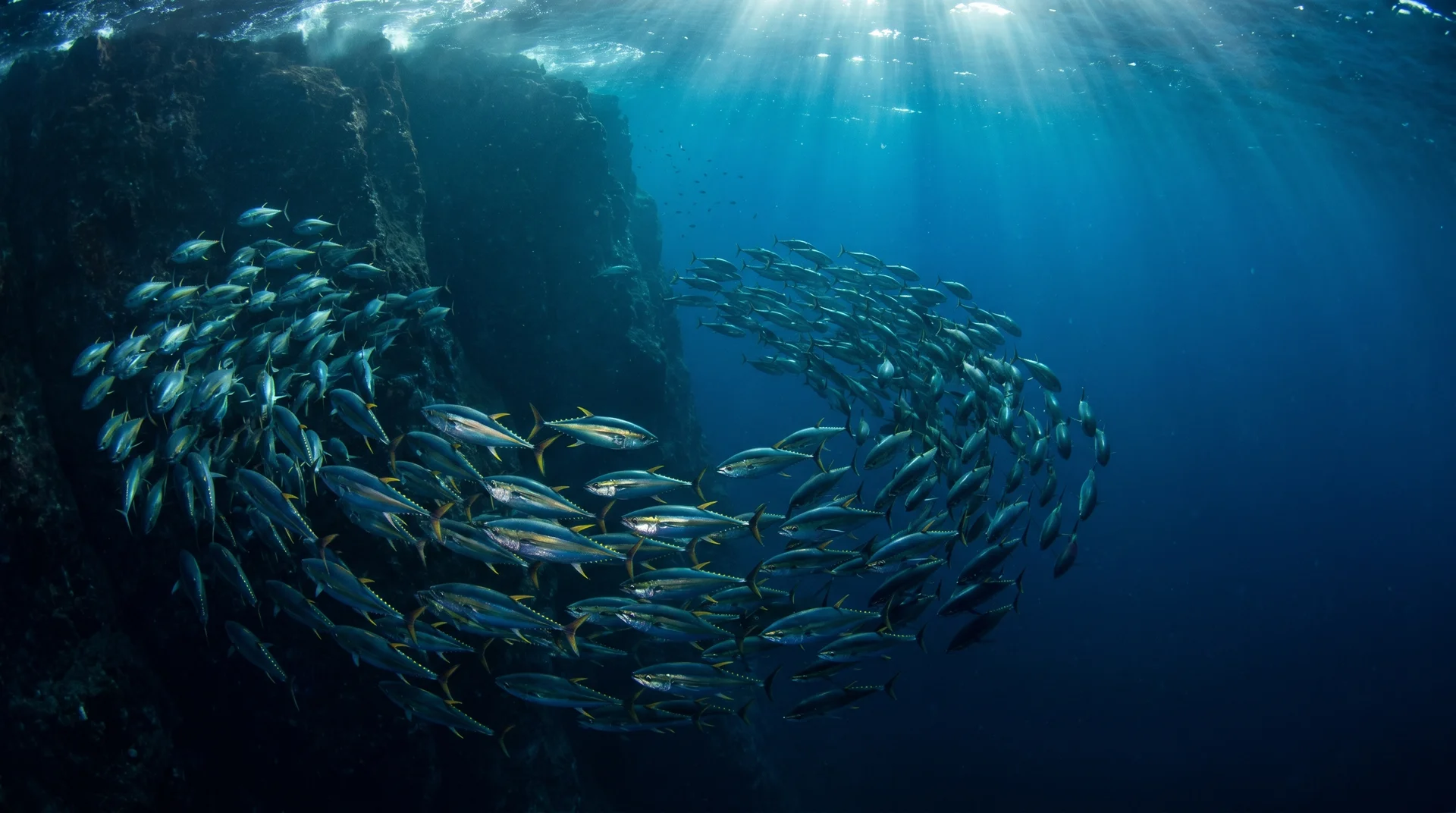
The lack of sheltered waters means the marine life surviving around Nauru is built for a high-energy, open-ocean environment. The shallows host octopus, redfish, and trumpet fish darting among the hard corals, with large angelfish also visible on shallower dives. Dropping down below 30 meters, the visual landscape changes drastically. Huge schools of yellowtail, dawa (unicornfish), and dogtooth tuna move in synchronized formations along the deep walls. The constant oceanic currents also bring in larger transient predators, making shark encounters a regular part of the underwater landscape rather than a rare event.
Logistics and Safety
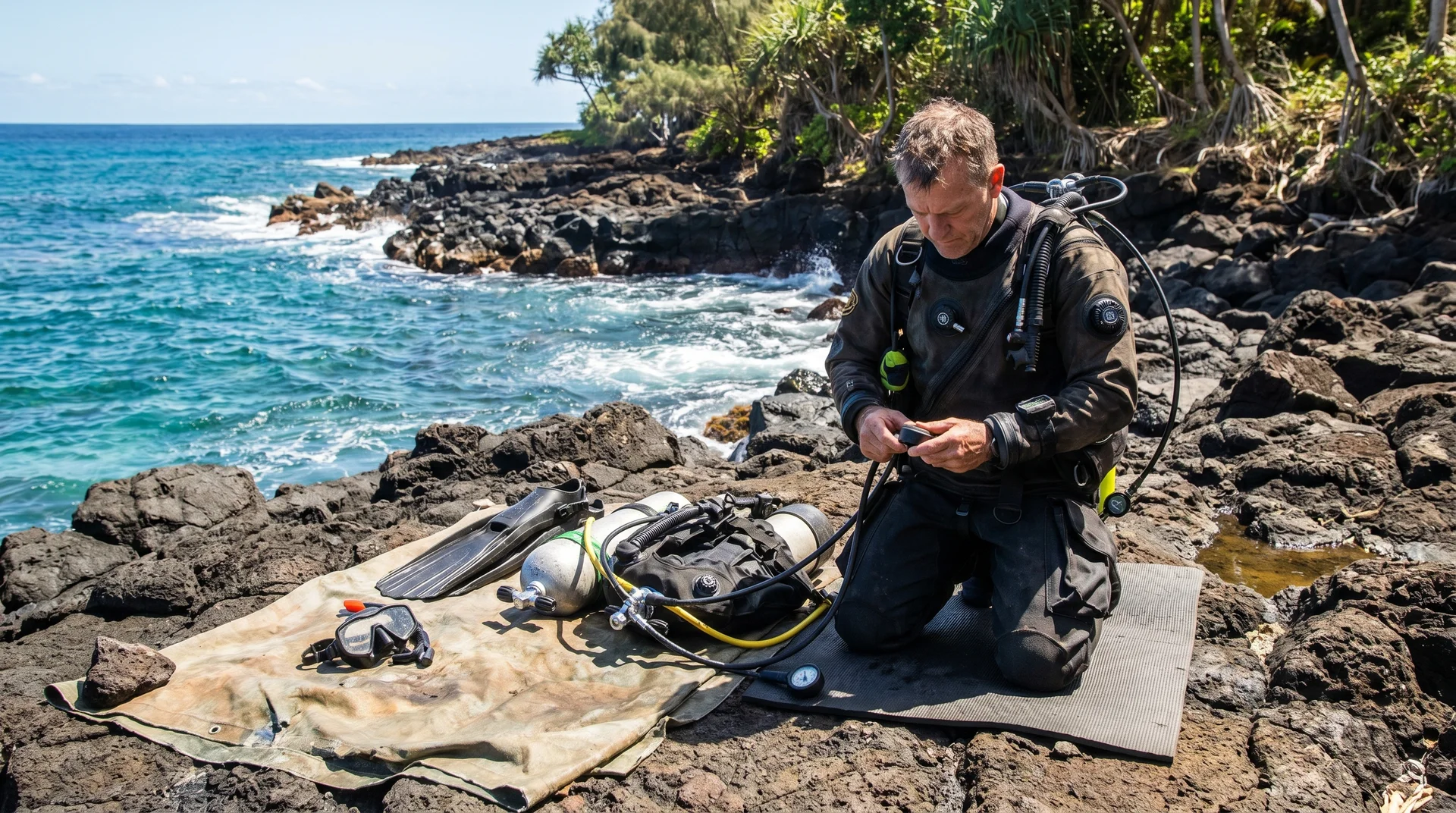
Arriving on the island without prior logistical planning is a critical mistake. The visiting Nauru overview covers transport, connectivity, and what to sort before you land. Nauru has virtually no commercial scuba infrastructure, and relying on renting well-maintained regulators or dive computers on arrival is highly unrealistic. You must pack your complete primary and backup gear setup. The extreme depths directly off the reef require strict adherence to conservative dive profiles and no-decompression limits. Deep wall diving combined with total isolation means any decompression sickness emergency becomes life-threatening instantly, as rapid medical evacuation options are nonexistent. There are no hyperbaric chambers anywhere on the island.
If you want help connecting with knowledgeable local contacts before your trip, Find local dive guides who operate in the region and can advise on current conditions and logistics.