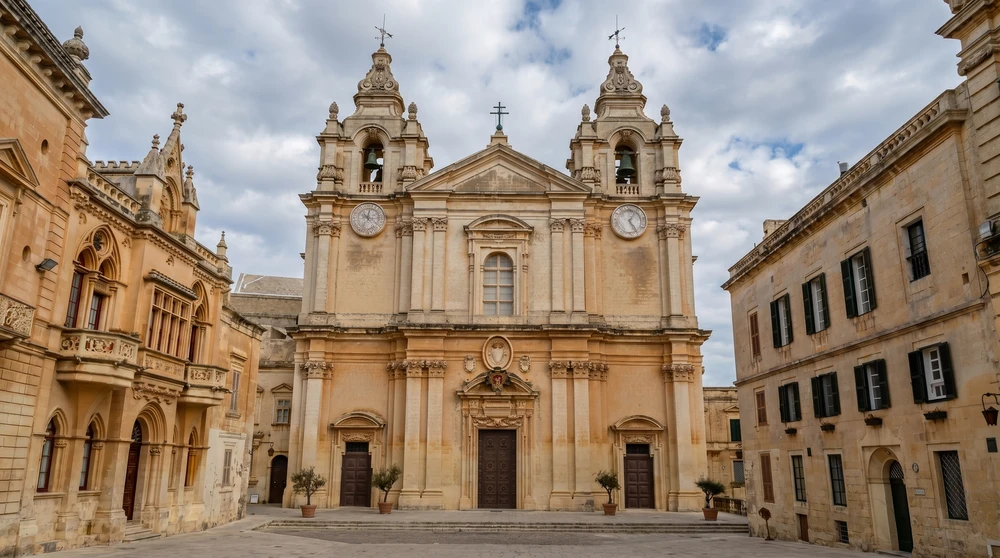
Arriving at Valletta's most famous church without a pre-booked ticket or a proper cover-up usually means losing the first 45 minutes of your visit to a slow-moving queue on Republic Street. Securing your entry online and knowing exactly what the door staff check for changes the whole experience. The two rules that trip up most first-timers are the strict ban on liquids and the requirement to wear backpacks on your chest.
How to Skip the Queues and Buy Tickets
Buying a ticket at the door in high season is a rookie mistake. The line often stretches around the corner, heavily fed by the large cruise ship tour groups that arrive between 10:30 and 14:00. Booking your ticket online in advance lets you bypass that crowd and use the much shorter dedicated fast-track lane.
If you value a quiet atmosphere, the 09:00 opening slot is your best option. The interior light barely depends on the sun because the windows are small, so an early visit gives you the exact same visual brilliance with a fraction of the crowd. If you cannot make the opening, the lull after 14:30 is the next best window once the day-trip groups thin out. For broader planning, our things to do in Valletta guide pairs the co-cathedral with the rest of the capital.
Standard Entrance Fee vs the Bell Room Tour
The standard adult ticket of €15 gives you full access to the main nave, the lateral chapels, the crypt, and the Oratory holding the famous Caravaggio paintings. Seniors and students pay €12, and children under 12 enter free. There is also a relatively new add-on that many visitors overlook.
For an extra €5 you can book the Bell Room Tour. The climb is exactly 99 steps, but it is manageable because the guide breaks it into three stops to explain how the bells worked. The real reward at the top is the unique elevated view straight down the main nave of the co-cathedral.
Tours run roughly hourly and wrap up around 15:00, and group sizes are limited, so book early. If you are weighing this against other paid sites, the Heritage Malta pass and discount card comparison helps you decide what is worth bundling.
Strict Rules You Need to Know Before Entering
The security check at the entrance is thorough and non-negotiable. Knowing the rules in advance saves you from being turned away or having to leave belongings unattended outside.
The Dress Code: Shoulders, Knees, and Shoes
Both men and women must cover their shoulders and knees before passing the checkpoint. If you forget, staff will hand you a disposable paper shawl, which is functional but far from ideal for photos.
The floor consists entirely of delicate marble tombstones. Because of this, sharp-heeled shoes and stilettos are strictly forbidden. If your footwear poses a risk to the 400-year-old marble, you will be asked to wear the slippers provided at the door.
Security Checks: Backpacks and Liquids
You cannot bring any liquids inside, so finish your bottled water before you reach the scanner. If you are carrying a backpack, the guards will instruct you to wear it on your front. This prevents accidental scrapes against the gilded walls and discourages pickpockets in the crowded aisles. There are no public lockers or cloakroom, so leave bulky items at your accommodation or use a luggage storage service in Valletta first.
Audio Guide Tips: Bring Your Own Earbuds
The entrance fee includes a detailed audio guide that you access by scanning QR codes scattered through the chapels. You can hold the phone to your ear, but the background noise makes it hard to focus.
Bring your own wired or Bluetooth earbuds instead. It frees your hands for photos and lets you comfortably look up at the ceiling while you listen. Flash photography is banned throughout, and some areas may restrict photography entirely depending on current preservation policy.
What to See Inside St John's Co-Cathedral
The facade designed by Girolamo Cassar is deliberately austere, resembling a military fortress more than a place of worship. Stepping through the doors delivers an immediate visual shock. The interior is an explosion of High Baroque drama, carved limestone, and pure gold leaf.
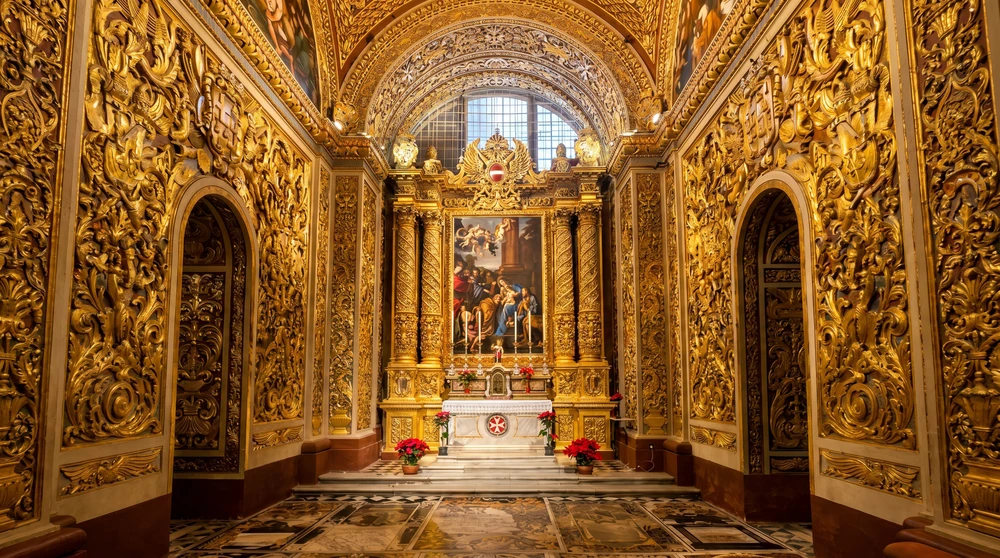
Caravaggio's Masterpieces in the Oratory
The Oratory is the main reason art lovers flock here. It houses The Beheading of Saint John the Baptist, the largest canvas Michelangelo Merisi da Caravaggio ever painted. It is also the only surviving work bearing his signature, which he painted directly into the blood pooling from the Baptist's neck.
Right next to it hangs St Jerome Writing, a smaller but equally intense study of light and shadow. Before viewing the paintings, step into the adjacent room for the short docu-drama. It gives excellent context on Caravaggio's turbulent 14 months in Malta and his dramatic escape from Fort St Angelo. Access to the Oratory is included in the standard ticket with no separate booking.
The Marble Floor of the Knights
Do not spend the whole visit looking up. The nave floor is a breathtaking patchwork of nearly 400 inlaid marble tombstones belonging to the Knights of the Order of St John. Each slab is a colourful, macabre masterpiece of skeletons, coats of arms, and symbols of military triumph. Walk slowly and study the craftsmanship under your feet; to understand who is buried here, our guide on the Knights of Malta history and sites fills in the background.
Mattia Preti's Vaulted Ceiling
The ceiling is a continuous cinematic fresco by Mattia Preti. It illustrates episodes from the life of St John the Baptist with theatrical lighting and muscular figures. The three-dimensional illusion he created with clever shadow work is genuinely mind-bending.
The Grand Masters' Crypt
Located near the main altar, this small underground space is deeply atmospheric. It holds the remains of twelve Grand Masters, including Jean Parisot de Valette, the hero of the Great Siege of Malta in 1565. Only a few people can enter at a time, making it a quiet, intimate contrast to the busy nave above.
Visiting on a Sunday: The Mass Loophole
The co-cathedral is officially closed to tourists on Sundays and public holidays. However, it still functions as an active parish, and if you attend a Sunday mass, entry is completely free.
This is a rare chance to experience the building as it was meant to be used, filled with the sound of the organ and choral music. Keep in mind that wandering around, taking photos, or treating the space like a museum during the service is highly disrespectful. If your time in the capital is limited, the Valletta cruise port in 6 hours itinerary shows how to slot the co-cathedral around a tight schedule.