Rolling into Slab City without your own water supply and a full tank of gas is the fastest way to turn a curious desert detour into a dangerous survival situation. This off-grid community operates strictly outside the safety nets of modern society, meaning your preparation is the only thing standing between a fascinating visit and an absolute emergency.
What Is Slab City Exactly?
The physical foundation of this settlement comes from Camp Dunlap, a former military base that was dismantled after World War II. What was left behind were the concrete slabs that give the area its name. People park their RVs, pitch tents, or build makeshift shelters directly on these barren foundations in the Sonoran Desert of Imperial County, about four miles east of Niland.
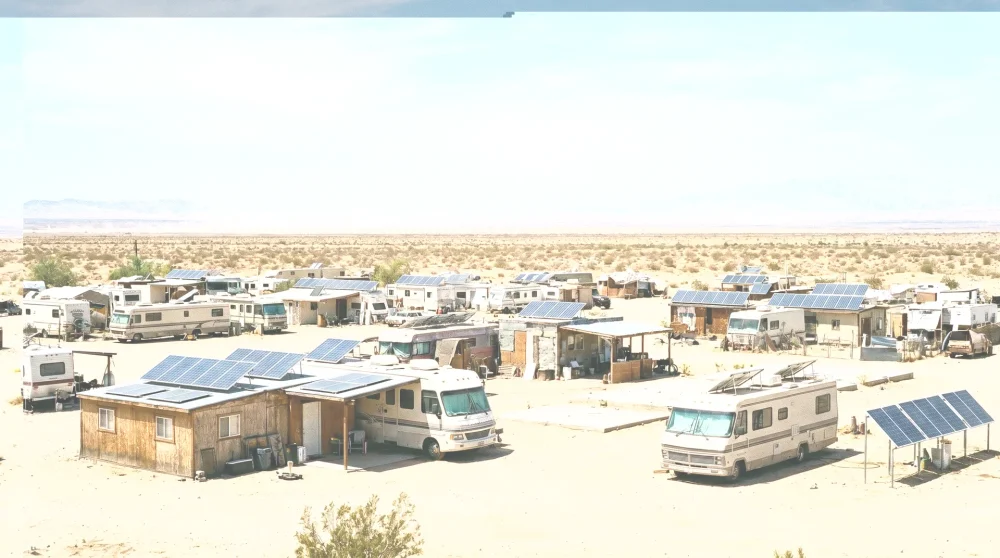
The environment is extreme and the sun unforgiving. You will see a sprawling, chaotic mix of solar panels, scrap metal structures, and improvised art installations stretching across the desert floor. This is not a tourist attraction with guided paths and safety rails.
Many residents live here out of sheer necessity, finding refuge from the high costs of conventional society. Others actively choose the harsh conditions to escape government oversight and societal norms.
Is Slab City Safe for Visitors?
The nickname "The Last Lawless Place" creates a highly exaggerated image of constant danger. Federal and state laws still apply here, and Imperial County Sheriff deputies patrol the dusty roads regularly.
However, freedom in the desert comes with a sharp edge. The lack of formal municipal structure means you must rely entirely on your own situational awareness.
The Unspoken Rules of the Community
Respecting personal boundaries is the single most critical rule. What looks like a random pile of debris or an abandoned trailer is very likely someone's private home. Never walk into a camp uninvited.
Keep your camera tucked away unless you have explicit permission. Treating residents like zoo exhibits or snapping unsolicited photos is deeply offensive and will provoke hostility. Ask politely, accept no for an answer, and move on.
Crime and Police Presence
Violent crime is relatively rare, but petty theft is a daily reality. Desperation drives some individuals to look for easy targets. Keep your vehicle locked at all times and never leave valuables visible through your windows.
Emergency response times are very slow out here. If you face a medical crisis or a security threat, help will not arrive quickly. This is worth factoring into your decision to stay overnight.
Essential Logistics for Your Visit
Do not expect any convenience store or rest stop to save you. Niland is the last reliable stop - get fuel, groceries, and use the restroom there before heading out.
Water, Power, and Restrooms
There are no public restrooms anywhere in Slab City. Handle everything in Niland before you drive out.
Hydration is a matter of life and death here. Bring a minimum of 5 gallons of water per person per day during cooler months - more in summer. The community survives on solar generators and bartered resources, so do not count on charging your phone at a random outlet.
When to Visit
Visit between October and April only. Winter months draw thousands of RV campers and the community comes alive with events, open mic nights at The Range, and a genuinely welcoming atmosphere.
Summer temperatures regularly exceed 115°F (46°C) with zero shade infrastructure, no water access, and no emergency services nearby. Visiting in summer is genuinely dangerous - people have died here from heat exposure.
Getting There
Fill your gas tank completely in Brawley or Calipatria before heading north, or at minimum in Niland itself. From Niland, turn east onto Main Street, which eventually becomes Beal Road. Follow this road straight out into the open desert. The pavement degrades into sand and gravel - drive slowly and watch for deep potholes.
Download offline maps before you leave - signal drops dramatically once you leave the highway. It is also worth reviewing traffic rules in the USA if you are driving on unfamiliar desert roads.
Internet and Cell Phone Reception
Signal strength drops drastically the moment you leave the paved highway. A makeshift solar-powered internet cafe exists within the camp, but it is a local hangout rather than a reliable workspace.
Bring the right travel apps loaded and ready before you arrive.
Key Locations Inside the Slabs
While the residential areas demand extreme privacy, a few specific spots actively welcome respectful visitors. These locations showcase the surreal creativity born from absolute isolation.
Salvation Mountain
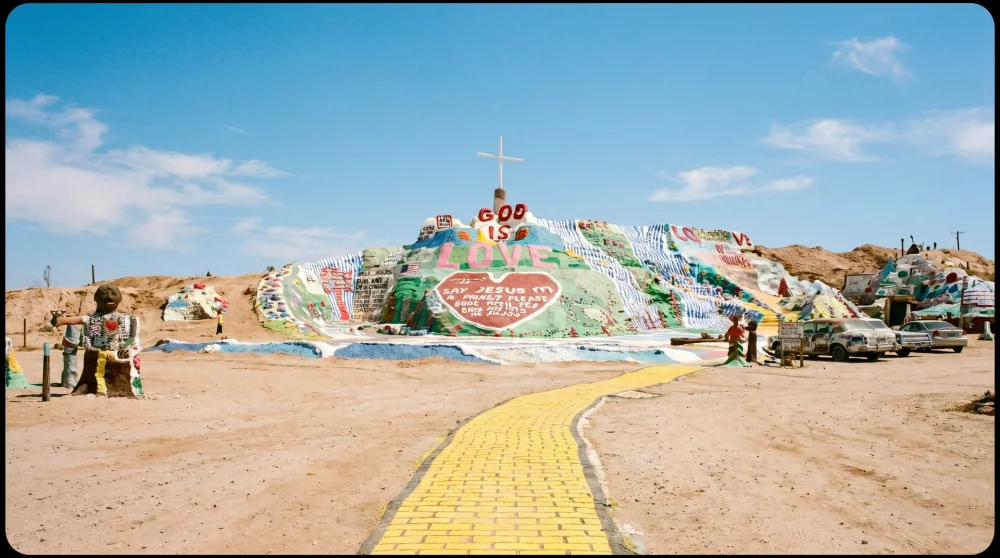
This massive, colorful installation marks the unofficial entrance to the community. Leonard Knight spent decades building this sprawling tribute to his faith using adobe clay, straw, and countless gallons of donated paint. There is no entrance fee, though donations are appreciated.
The structure is fragile and the pathways narrow. Stick strictly to the designated yellow brick road painted on the surface to avoid damaging the brittle clay. Arriving at sunrise or sunset gives you the best light and the fewest crowds.
East Jesus Art Collective
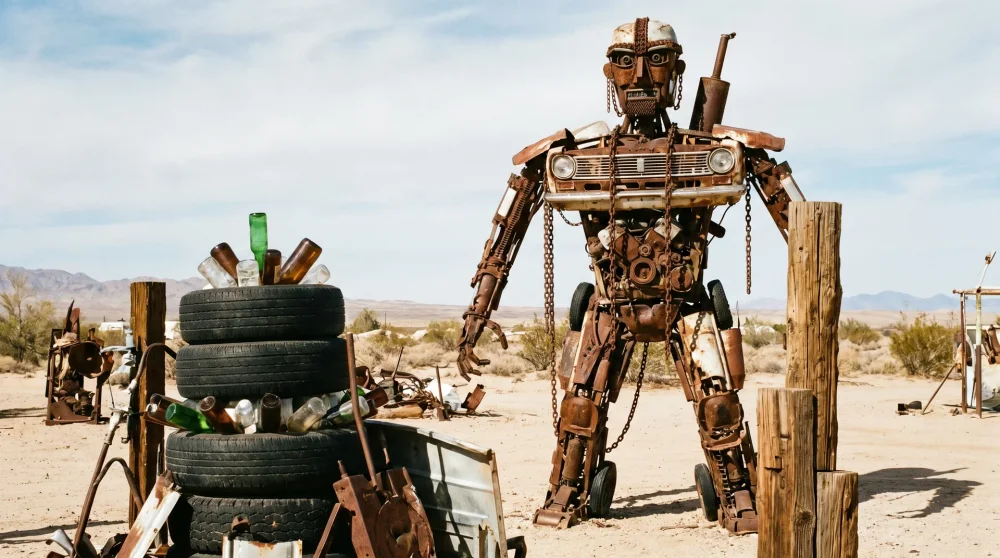
Drive deeper into the slabs to find this ever-evolving experimental art garden. The creators build stunning, provocative sculptures entirely from recycled trash, broken electronics, and abandoned cars.
East Jesus is free for daytime visitors who respect the space. If you want to camp here overnight, contact them via their Facebook page at least 24 hours in advance - overnight stays require prior approval and a cash donation. Do not arrive after dark without prior arrangement. The artwork is interactive but sharp, rusty, and completely unregulated. Watch your step.
The Range
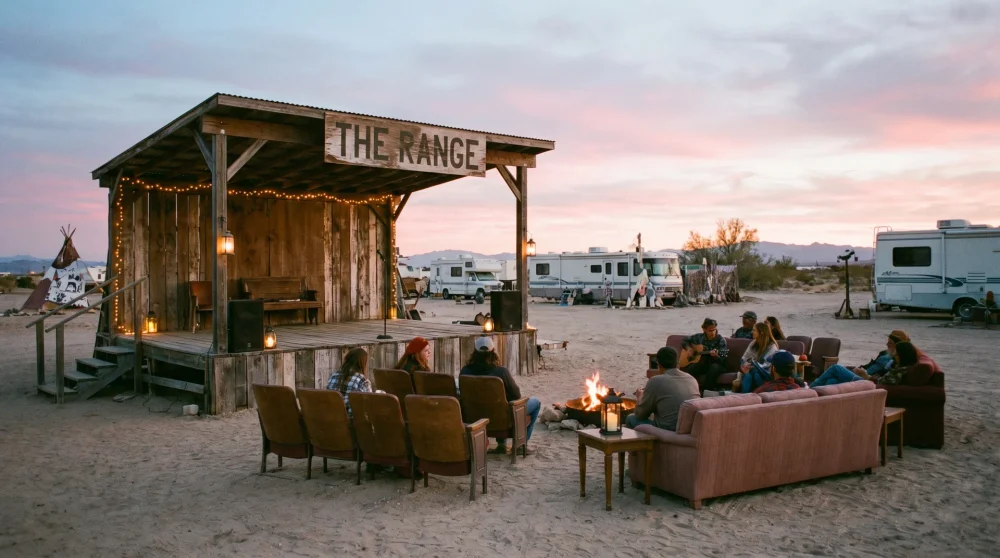
This open-air music venue is the cultural heart of the settlement. Built from salvaged timber and old theater seats, it hosts community talent shows and live music as the sun goes down during the cooler months. If you stay until dusk, finding a seat here offers a rare glimpse into the true communal spirit of the residents. Entry is by donation.
Camping at Slab City
Camping is completely free on state-owned land at Slab City. You can park and stay overnight as long as you do not encroach on established residential camps or private art installations. Most travelers choose open desert areas just past Salvation Mountain.
You must be entirely self-sufficient: bring your own water, generate your own power, and pack out everything you bring in. There are no dumpsters and no trash collection. The closest dump station is a public rest area about 10 miles away.
For those who want more structure, a Slab City Hostel operates in the area and the California Ponderosa offers breakfast and books via Airbnb.
If you are planning an extended desert road trip, pairing this with a visit to Big Bend National Park gives you a complete picture of the American Southwest. For cold-night camping survival tips applicable to desert conditions, staying warm in a sleeping bag covers the essentials. You can also check warmest US states in winter if you are planning your desert visit timing around weather.
For other unique California experiences, the La Jolla tide pools make a worthwhile complement on any Southern California road trip.