Waking up at 3 AM with uncontrollable shivers completely ruins the next day of your backcountry trip, and the culprit is rarely a defective sleeping bag. Mastering your sleep system architecture prevents the ground from draining your core heat and turns a miserable freezing night into a deeply restorative sleep.
- Crucial metric: Pad R-value matters exactly as much as your sleeping bag temperature rating.
- Heat source: Your body generates the heat; the bag only traps it.
- Ground insulation: Conductive heat loss to the frozen ground is three times faster than convective loss to the air.
- Golden rule: Never sleep in the damp layers you wore on the trail.
The Core Problem: Why Your Sleeping Bag Isn't Enough
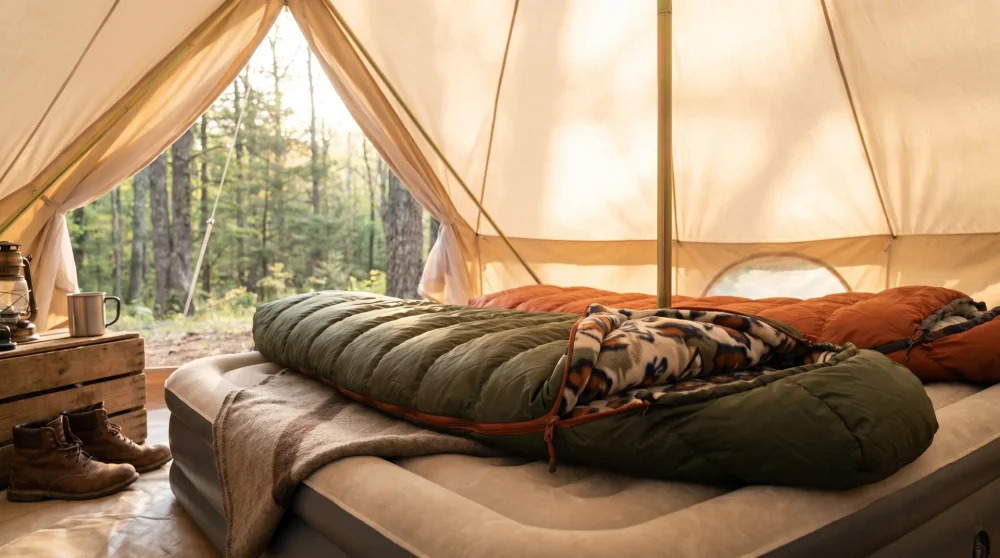
Your sleeping bag does not function like an electric blanket. It acts entirely as a passive insulator designed to capture the thermal energy radiating from your core. Relying solely on the loft of your bag while ignoring the surrounding environment guarantees a rapid drop in your body temperature.
The Critical Role of Your Sleeping Pad (R-Value Explained)
The cold ground absorbs your body heat significantly faster than the air inside your tent. Even the most advanced winter sleeping bag fails immediately if you place it on a flimsy summer mat. You need a sleeping pad with a certified ASTM F3340-18 R-value to create an impenetrable thermal barrier. For cold weather camping, an R-value of 4 or higher acts as a robust shield against the frozen earth beneath you.
Decoding Temperature Ratings (ISO 23537 Comfort vs. Limit)
Many campers mistakenly rely on the extreme or lower limit ratings printed boldly on their gear. The ISO 23537 Comfort rating is the only metric you should trust for a full night of uninterrupted rest. This specific number indicates the temperature at which a standard sleeper remains comfortable without curling into a fetal position to conserve heat. Always build a thermal buffer by choosing a bag rated slightly warmer than the absolute lowest temperature you expect to encounter.
Before Bed: Preparing Your Body's Furnace
Insulation only works when there is actual heat to trap. You must actively prime your internal metabolism and eliminate any moisture before sliding into your tent for the night.
Change into Dry Base Layers (Debunking the Sleep Naked Myth)
Forget the outdated trail advice claiming you sleep warmer naked. Bare skin transfers heat poorly to the sleeping bag baffles, and invisible sweat residue from your hiking day actively cools your core. Strip off your daytime gear completely and switch to dedicated, bone-dry merino wool base layers. These garments wick away imperceptible night sweats and add an immediate layer of insulation. Always put on fresh, dry socks - not the pair you wore all day.
Fuel Up on Complex Carbs and Fats
Your digestion acts as the internal engine keeping your extremities warm in the dark. Consuming a high-calorie snack rich in fats and complex carbohydrates right before sleep provides sustained, slow-burning fuel for this engine. Pack a thick chunk of cheese, some mixed nuts, or a peanut butter bar to keep your internal furnace burning until dawn.
The Nalgene Hot Water Bottle Trick
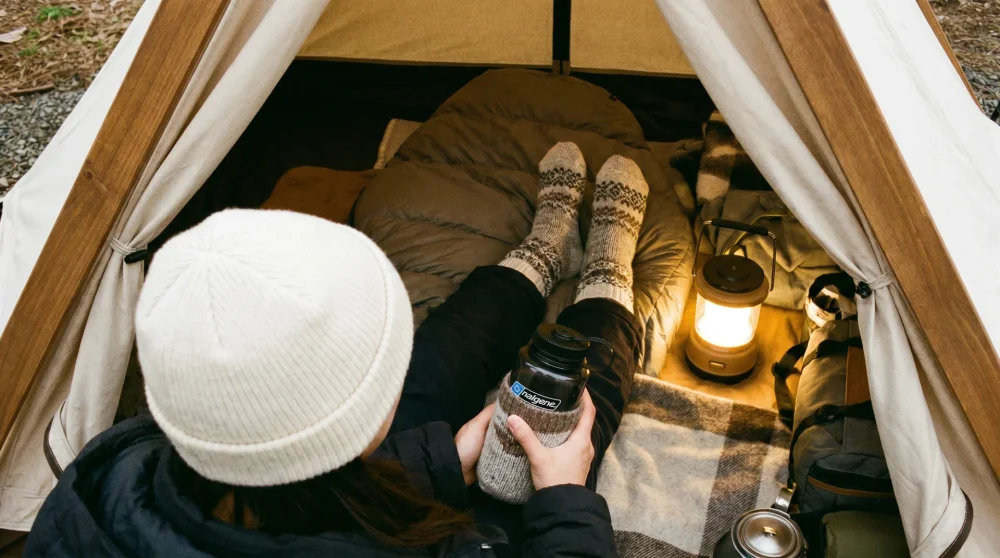
Pouring boiling water into a durable, hard-plastic bottle creates an effective portable heater. Wrap the hot bottle tightly in a spare wool sock to prevent skin burns and drop it deep into the footbox of your bag 15 minutes before you climb in. Place it near your feet or between your legs where it can warm blood flowing through your femoral arteries. It pre-heats the coldest zone of your sleep system and stays warm for hours.
Empty Your Bladder (Why You Shouldn't Hold It)
Lying awake and resisting the urge to go outside forces your body to burn valuable calories just to keep a full bladder warm. Step out of the tent and relieve yourself, no matter how harsh the wind feels. The momentary chill pays off immediately with a boost in overall thermal efficiency once you zip back inside the bag.
Inside the Tent: Trapping Heat Effectively
Every tiny gap in your sleep system serves as an escape route for the warm air you worked hard to generate. Sealing off these micro-leaks makes a significant difference in sub-zero conditions.
Wear a Beanie and Merino Neck Gaiter
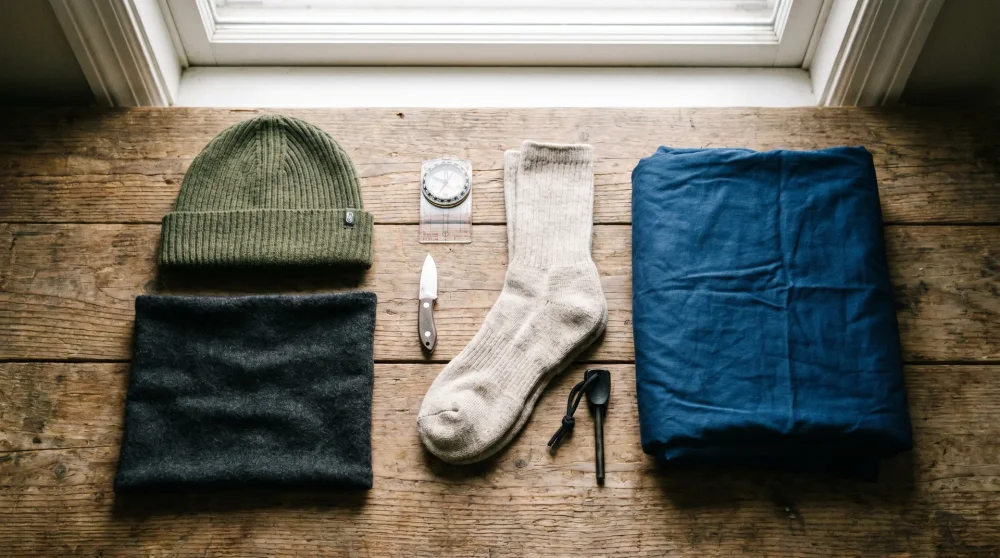
A significant volume of trapped warm air escapes right through the hood opening every time you shift your shoulders. Cinching down the internal draft collar helps, but wearing a thick beanie and a tight-fitting merino neck gaiter seals off the leaks completely. This fabric combination locks the warm air around your torso and prevents freezing external drafts from reaching your bare chest. Never breathe inside the bag - exhaled moisture will dampen the insulation and make you colder.
Fill the Dead Space in Your Footbox
A sleeping bag that is too long forces your feet to heat a large cavern of empty air. Stuff your dry spare clothing, a puffy down jacket, or even your empty backpack down at the very bottom of the bag to eliminate this dead space. Reducing the total internal volume allows your body heat to warm the remaining area much faster.
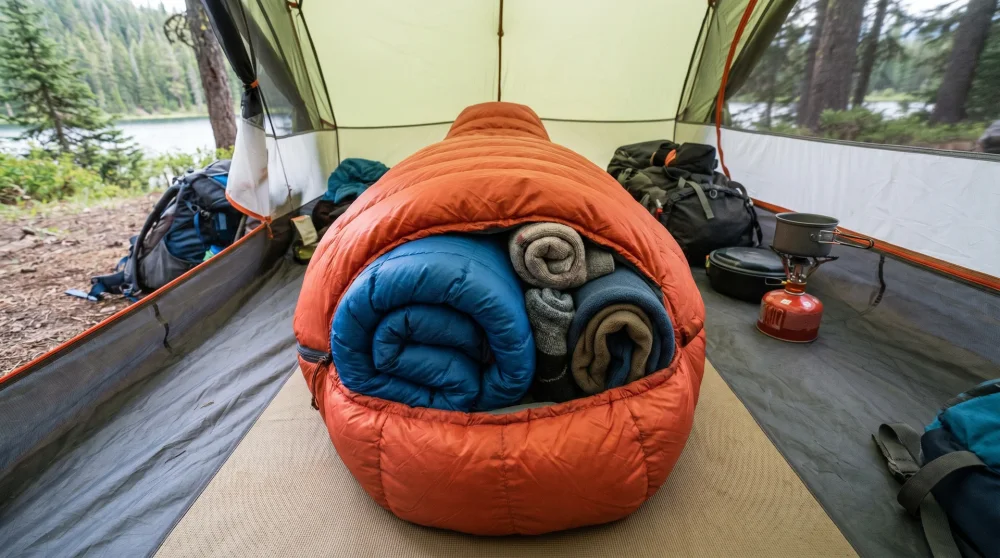
Add a Thermal Sleeping Bag Liner
Slipping a technical thermal liner inside your main bag instantly boosts its temperature rating. These lightweight additions trap an extra layer of still air directly against your skin and block internal drafts. They also protect the down clusters from your natural body oils, preserving the loft and extending the lifespan of your gear.
Troubleshooting: What to Do If You Wake Up Cold
Waking up shivering requires immediate action rather than waiting miserably for sunrise. Grab the emergency high-fat snack you stashed in your tent pocket to reignite your digestion. Do a rapid series of isometric exercises, flexing your large leg and abdominal muscles repeatedly without unzipping the bag, to generate friction heat. If the cold persists, drape your waterproof shell jacket completely over the foot section to block external condensation and trap the last bits of escaping warmth.