Showing up at the Velana seaplane terminal with 30kg of dive gear only to face massive excess baggage fees is a rookie mistake that ruins day one of your Maldives trip. Choosing between the central atolls for classic reef dives or heading to the deep south for tiger sharks means knowing exactly how Maldivian logistics, seasonal monsoons, and ocean currents work before you ever zip up a wetsuit.
- Water temperature: 27C to 30C (80F to 86F) year-round.
- Visibility: 15 to 40+ meters, peaking during the dry season.
- Best time to dive: January to April for maximum visibility, August to November for dense manta and whale shark encounters.
- Recommended certifications: Advanced Open Water and Nitrox, since many top sites require deep descents and comfort in strong currents.
- Mandatory gear: a Surface Marker Buoy and a dive computer are required by Maldivian law.
Liveaboard vs Resort: Which Is Better for Diving?
Deciding how to explore the Maldives shapes your entire underwater experience. Staying on a local island or luxury resort limits your reach to the surrounding atoll, while liveaboards chase the best conditions across multiple regions in a single week.
A classic central liveaboard route lets you log up to three or four dives a day, including night dives, and covers North Male, South Ari, and Vaavu in one trip. Diving, food, and accommodation are bundled, which usually makes the per-dive cost more efficient than resort diving. The trade-off is a rigid schedule that is not ideal for a non-diving partner.
Resort and land-based diving, such as a stay on Dhigurah, typically gives you two morning dives plus an optional afternoon dive, restricted to a one- to two-hour boat radius. Rasdhoo, a tiny atoll reachable by public ferry or speedboat from Male, is one of the most convenient local-island dive bases, and the centers there often bundle your guesthouse and transfer into the same booking.
Its signature site, Madivaru Corner, runs a reliable channel current that draws grey reef sharks at around 18 meters, silvertips, eagle rays, and napoleon wrasse, with occasional hammerheads, while a nearby cleaning station delivers dependable reef manta encounters. Luxury resorts charge premium per-dive rates while local islands offer budget packages, and the setup is far more flexible if you want to combine diving with spa days or remote beach relaxation.
On a local island, a ten-dive package often works out to roughly USD 50 to 60 per dive, though night dives and marine-park excursions usually sit outside the package and cost extra. If you want to lock in your underwater time before you arrive, you can Book a guided dive package and pair it with whichever base suits your group.
Best Atolls for Scuba Diving in the Maldives
The Maldivian archipelago features 26 natural atolls, each with a distinct underwater topography. The marine life you encounter depends heavily on the specific atoll you choose to base yourself in.
South Ari Atoll (Whale Sharks & Manta Rays)
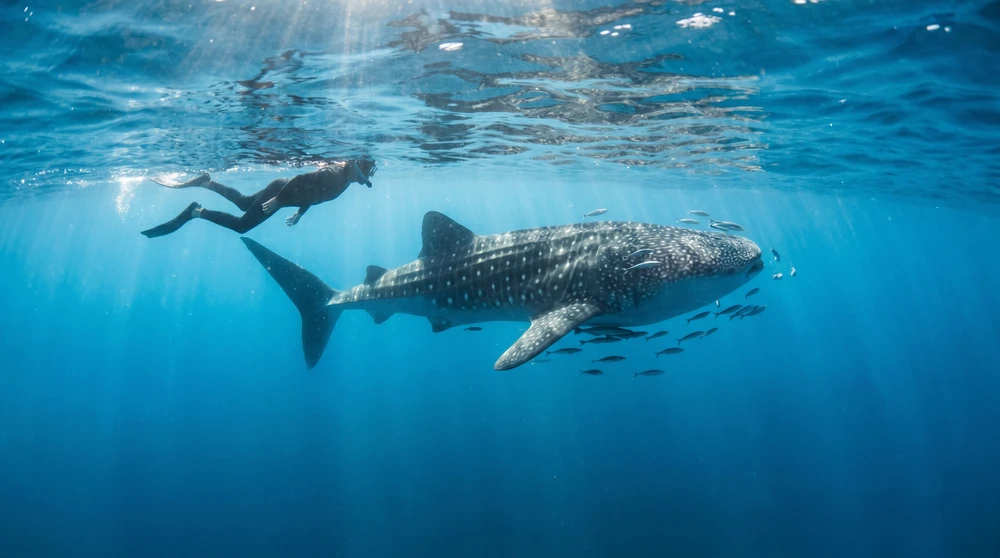
South Ari Atoll is the undisputed capital for big pelagic encounters. The outer reef along the southern edge, particularly near Maamigili, acts as a natural funnel for whale sharks cruising through the shallows year-round.
Inside the atoll, cleaning stations like Dhonkalo and Rangali Madivaru attract dozens of reef manta rays. The currents here range from mild to moderate, which makes South Ari one of the most accessible atolls for newly certified divers as well as seasoned underwater photographers looking for close-up encounters.
Baa Atoll & Hanifaru Bay (Snorkeling Only)
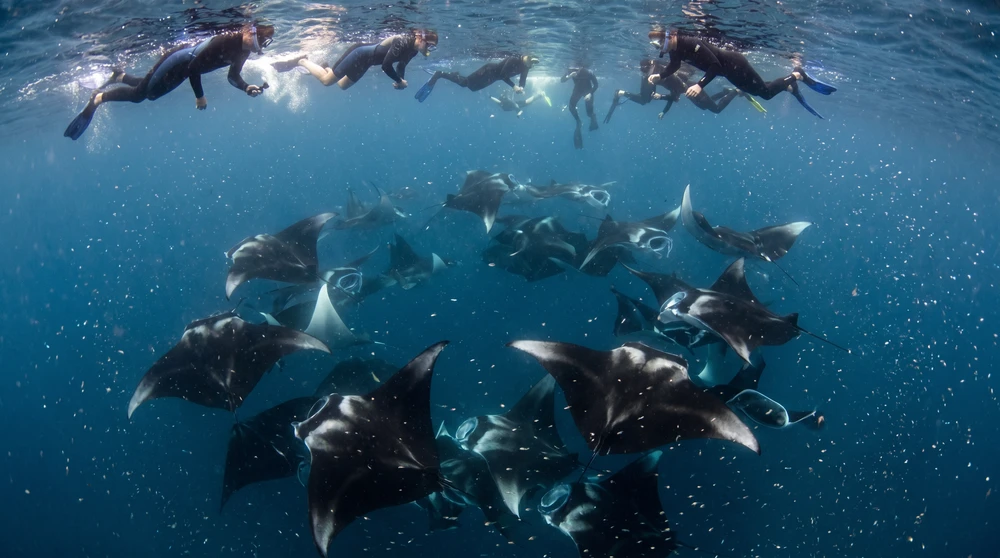
Baa Atoll holds UNESCO Biosphere Reserve status, housing one of the largest coral reef diversities in the Indian Ocean. The main draw here is Hanifaru Bay.
During the Southwest Monsoon, plankton gets trapped in the bay, triggering a massive feeding frenzy of hundreds of manta rays and the occasional whale shark. Hanifaru Bay is snorkel-only, with scuba diving strictly prohibited to protect the animals. Access is controlled by rangers under a paid permit that usually runs around USD 20 to 30 per person, limits you to a single 45-minute session per day, and funds local conservation.
Watching the cyclone-style feeding behavior from the surface is still an unparalleled experience. That snorkel-only rule applies to Hanifaru Bay itself, not the wider atoll: the surrounding thilas such as Dhonfanu, Dharavandhoo, and Anga reward divers with manta cleaning stations and dense reef life, most sitting at an average depth of 20 to 25 meters. Because those depths eat into bottom time, many Baa Atoll dive centers include free nitrox for certified divers, which is worth confirming when you compare operators.
Fuvahmulah Atoll (Tiger Sharks & Pelagics)
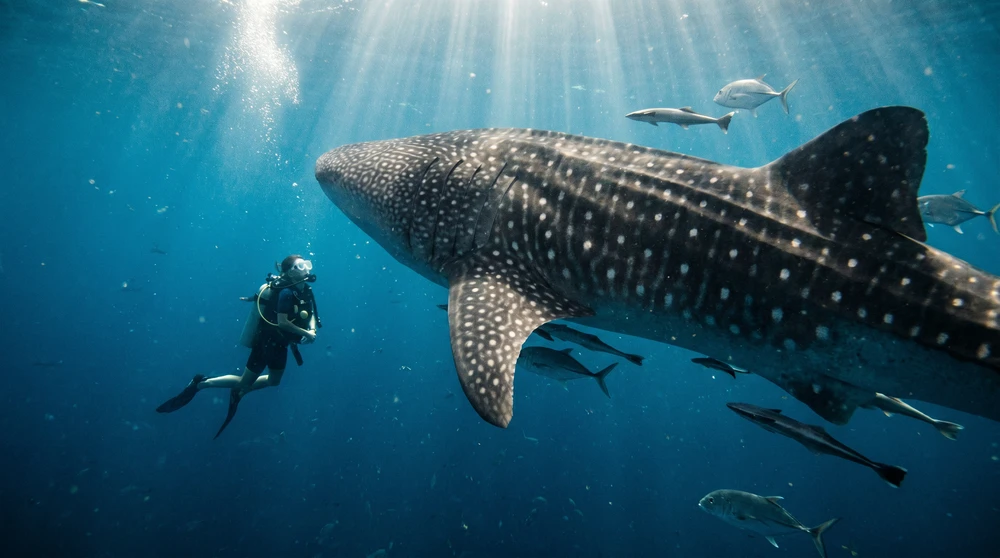
Fuvahmulah is an isolated seamount rising from the deep ocean in the far south, located just below the equator. The topography here is radically different from the central atolls.
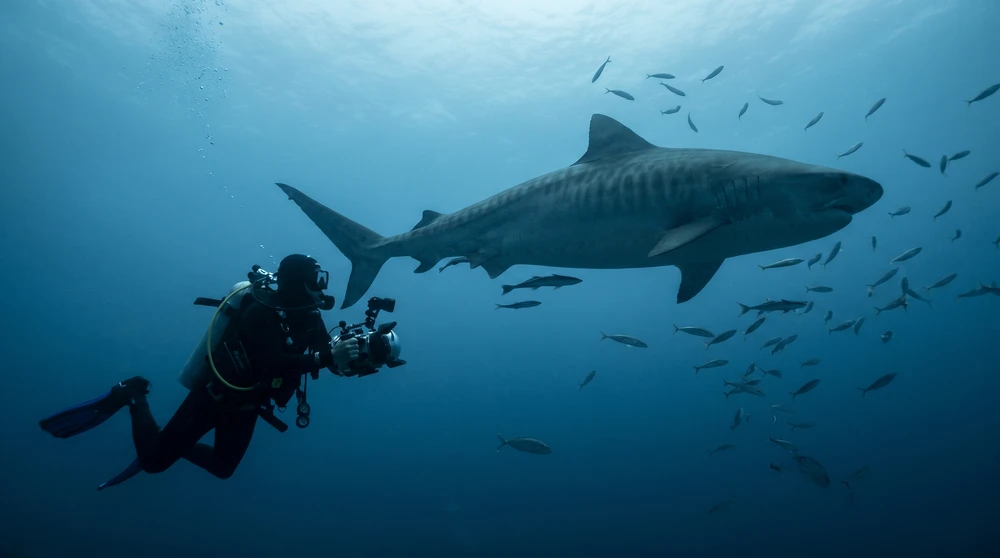
This is the only place in the Maldives where you can reliably dive with tiger sharks year-round, and the Tiger Zoo dive site is famous for these close encounters. The deep waters also bring in thresher sharks, oceanic mantas, and the occasional hammerhead. Divers regularly log several shark species in a single week here. The conditions are rugged and the currents relentless, so only experienced advanced divers should tackle these waters.
Vaavu Atoll (Channel Dives & Overhangs)
Vaavu Atoll boasts the largest unbroken barrier reef in the country. It is famous for its kandu, or channel, dives, where the open ocean forces massive volumes of water into the inner atoll.
These incoming currents bring thick schools of grey reef sharks, eagle rays, and dogtooth tuna. The channel walls feature deep overhangs and swim-throughs draped in vibrant yellow and blue soft corals. Diving here requires a quick negative entry and confident use of a reef hook to stay stationary in the rushing water.
Top Dive Sites You Cannot Miss
Maaya Thila (Night Diving)
Located in North Ari Atoll, Maaya Thila is a 30-meter wide submerged pinnacle that completely transforms after sunset. It is widely regarded as one of the best night dives in the world.
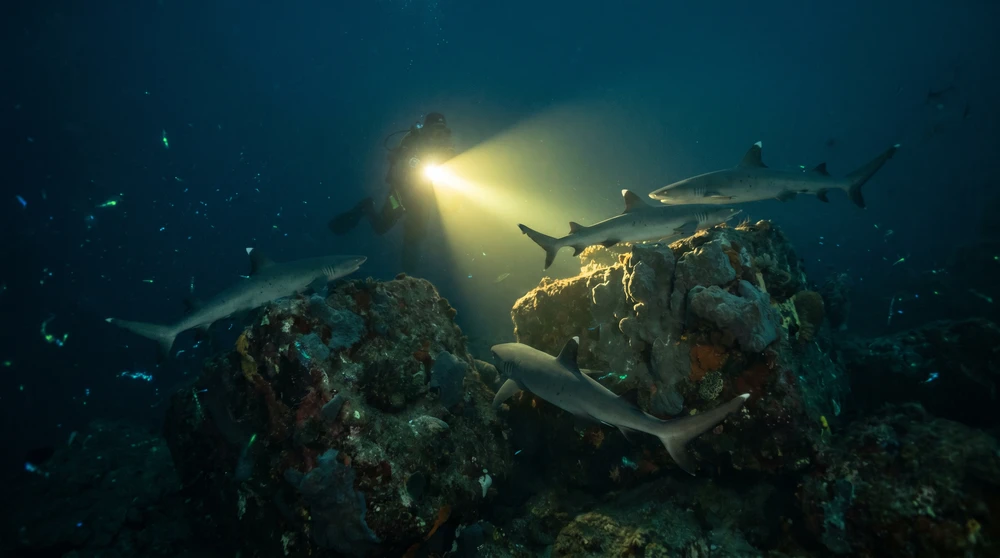
When darkness falls, the reef goes into a feeding frenzy. You find yourself surrounded by actively hunting whitetip reef sharks, giant moray eels free-swimming across the coral blocks, and massive marble rays gliding just above your head.
Kandooma Thila (Jack Corner)
This 300-meter-long teardrop-shaped pinnacle in South Male Atoll offers intense action, and the highlight is the west side, aptly named Jack Corner.
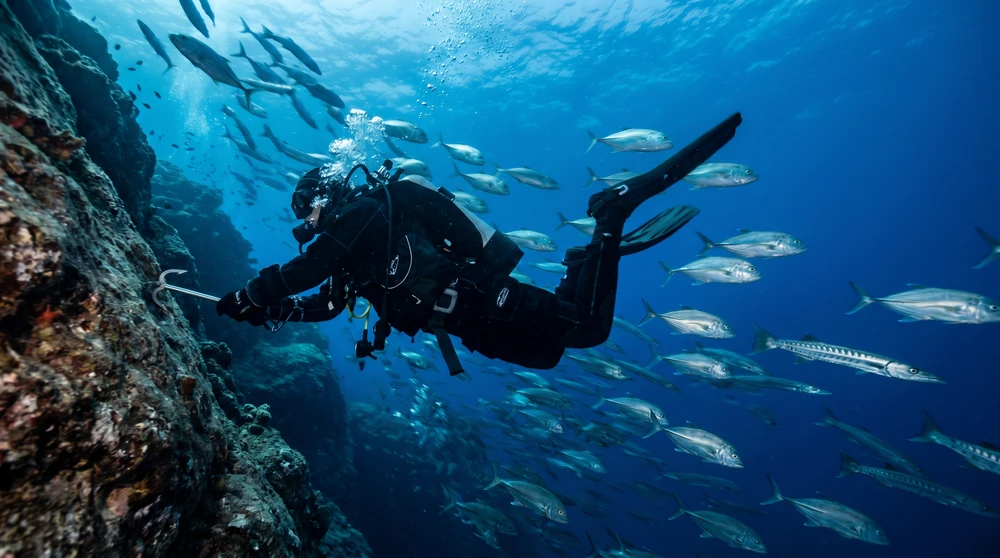
You start with a negative descent straight down to 30 meters. Once hooked in on the current side, you watch a wall of bigeye trevally, barracuda, and grey reef sharks facing into the blue. As you slowly ascend the pinnacle, green sea turtles frequently join you for your safety stop.
Fotteyo Kandu (Strong Currents)
Fotteyo Kandu in Vaavu Atoll is a photographer's dream, featuring an intricate network of small caves and swim-throughs. The overhangs are densely packed with delicate black coral bushes and bright yellow soft corals.
The current here is exceptionally strong, so you navigate the channel edge by hooking in, watching potato groupers and titan triggerfish battle the flow, before unhooking and drifting swiftly into the shallow inner reef. Sites at this level are best booked through an operator who knows the channel, and you can Reserve an advanced channel dive trip once you know your dates.
Best Time to Dive in the Maldives
The Maldives offers fantastic diving year-round, but the two main monsoons drastically change the underwater conditions.
From January to April, the Northeast Monsoon brings dry weather, calm seas, and outstanding visibility often exceeding 30 meters. This is the peak season for classic reef and channel diving.
From May to November, the Southwest Monsoon shifts the winds and brings more rain. The currents reverse, pulling nutrient-rich water from the deep. Visibility drops due to thick plankton blooms, but that is exactly what attracts the highest concentration of manta rays and whale sharks.
Essential Logistics: Getting Around with Dive Gear
Seaplanes vs Domestic Flights (Baggage Rules)
Getting to your dive resort or liveaboard usually involves a seaplane or a domestic flight from Male. Seaplanes operate strictly during daylight hours and have notoriously tight baggage limits.
You are generally allowed 20kg of checked luggage and 5kg of hand luggage on a seaplane. Dive gear easily pushes you over this limit, and excess baggage fees run high per kilo. Pack your heavy, fragile gear, like your regulator, dive computer, and mask, in your carry-on. If you are flying domestically to Gan or Fuvahmulah on Maldivian, you can usually pre-purchase extra sports baggage allowance online at a significant discount.
Water Temperature and Required Scuba Gear
The Indian Ocean feels like bathwater, hovering around 28C to 30C. However, diving in just a rash guard leaves you exposed, so a 3mm full wetsuit is highly recommended to protect your skin from stinging hydroids, rogue jellyfish tentacles, and accidental scrapes against the reef in strong currents.
- Reef hook: absolutely essential for channel dives to hold your position without damaging the coral or exhausting your air supply.
- Surface Marker Buoy: mandatory for every diver, since currents can sweep you away from the reef and boat traffic is heavy.
- Nautilus Lifeline or GPS unit: highly recommended if you are diving the deep south or doing aggressive drift dives.
- Reef-safe sunscreen: chemical sunscreens contribute heavily to coral bleaching, so bring mineral-based, reef-safe options, as they are expensive and hard to find on local islands.
Because currents, boat traffic, and remote evacuation distances all raise the stakes here, dive-inclusive travel cover is worth lining up before you go, and you can Compare dive-friendly travel insurance that includes scuba and emergency evacuation.