Reaching the status of the world's second-richest nation only to strip-mine your own island into an uninhabitable moonscape is the ultimate cautionary tale in resource management. Nauru today is a tiny landmass grappling with ecological ruin, yet the actual mechanisms of its collapse and its current recovery strategies go far beyond the standard resource curse narrative. Understanding what happened here, and what comes next, tells you something important about every economy built on a single finite commodity.
The Rise and Fall of Pleasant Island
German colonizers who encountered Nauru in the late 19th century called it Pleasant Island. The name felt appropriate: a fertile raised coral atoll in the Central Pacific, 21 square kilometers in total area, sitting northeast of Australia with a population of a few thousand who had lived off its resources for centuries.
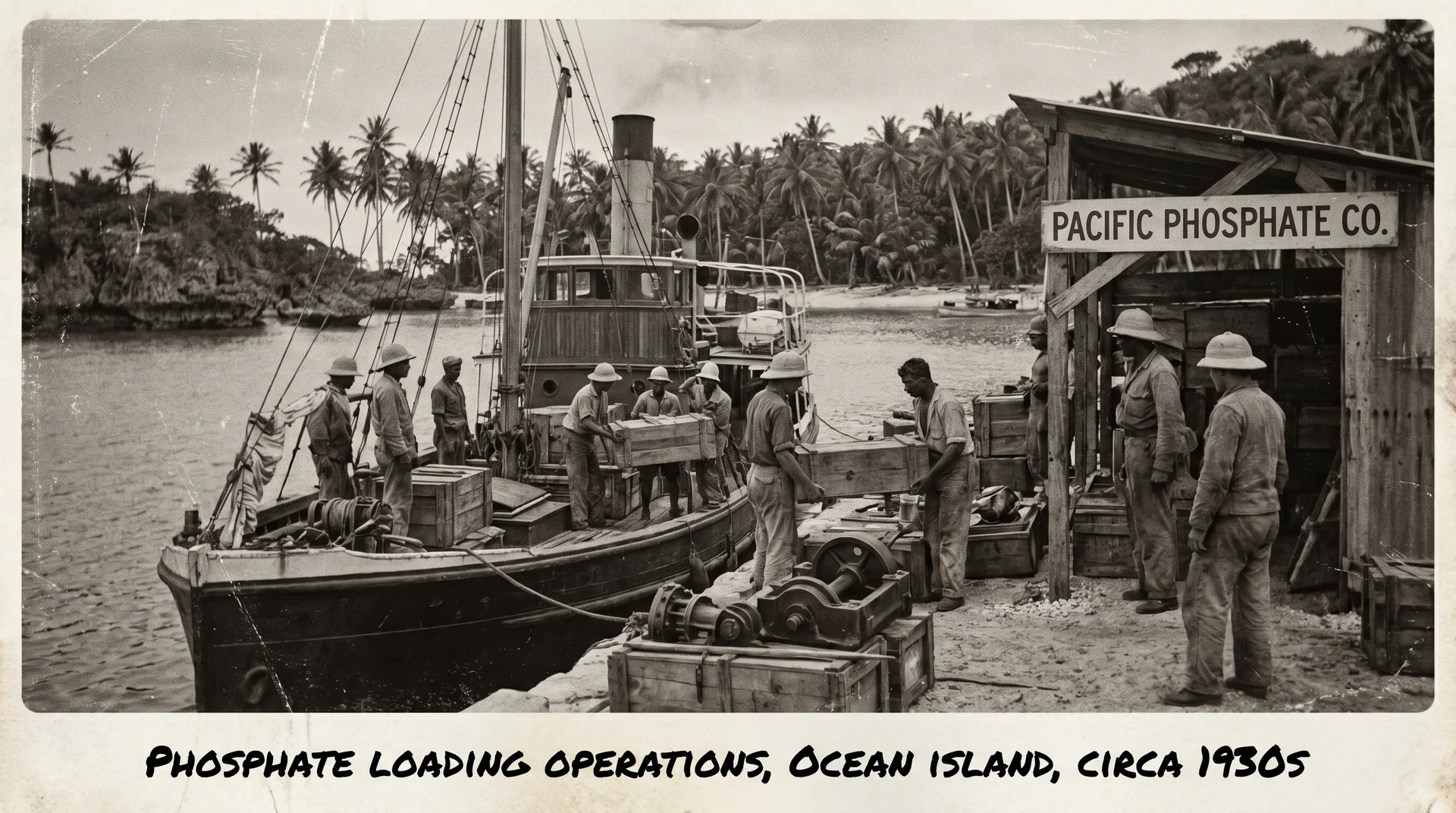
The discovery of phosphate in 1906 changed everything. High-grade phosphate rock is a critical ingredient in agricultural fertilizers, and Nauru's central plateau sat on one of the densest deposits on Earth. Colonial administrators under Germany and then Australia began industrial extraction almost immediately, and by the early 1920s the island was exporting around 200,000 tonnes of phosphate per year.
By the time Nauru gained independence in 1968, more than 35 million metric tons had already left its shores under foreign management. Independence brought Nauruan control over the remaining reserves, and what followed was a period of extraordinary wealth. With phosphate prices peaking through the 1970s, Nauru's GDP per capita hit approximately $50,000 in 1975, making it second only to Saudi Arabia globally. The New York Times proclaimed it the "world's richest little isle" in 1982.
The population of roughly 10,000 people received free healthcare, free education, and no income taxes. The government imported virtually everything, including food and workers, because nobody needed to work in the traditional sense. Phosphate royalties funded a lifestyle that the island's physical environment could not actually support.
The Economic Boom and the Phosphate Trap
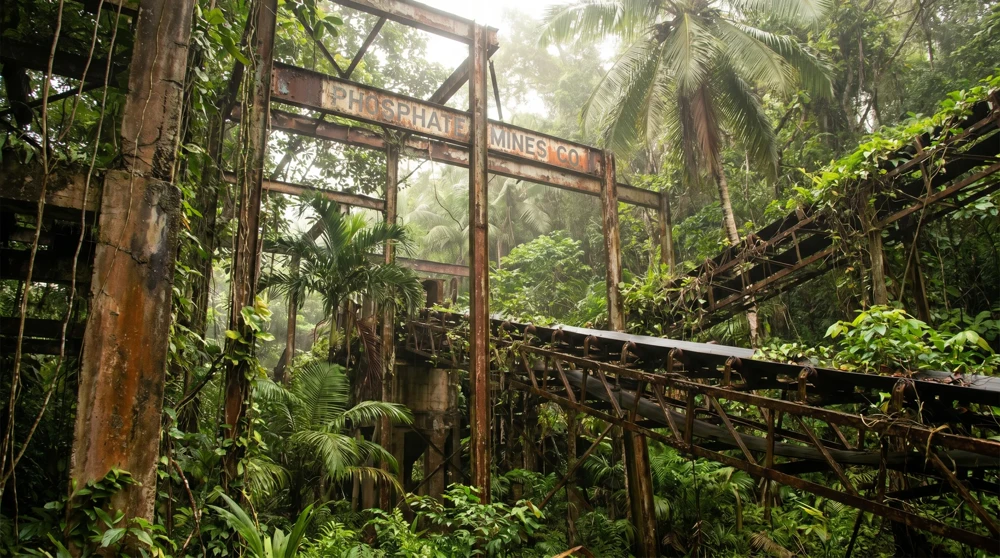
The core problem was structural. The entire business model relied on liquidating finite natural capital without building any sustainable domestic industries. Foreign financial advisors mismanaged the sovereign wealth, channeling funds into speculative property deals in Melbourne and famously a West End musical in London that flopped commercially. When the prime phosphate veins began running dry, the national treasury was effectively empty.
Total gross phosphate production from 1968 through exhaustion reached approximately 43 million tonnes. By the late 1990s, extraction rates were collapsing. The deposits were virtually exhausted by 2000. Unemployment surged to roughly 90 percent by 2004, and the government struggled to pay basic salaries.
The best time to visit Nauru depends heavily on understanding this economic context: the island today is a functioning country rebuilding itself, not the wealthy destination it once was, and visitor expectations need to adjust accordingly.
Topside Devastation and Environmental Collapse
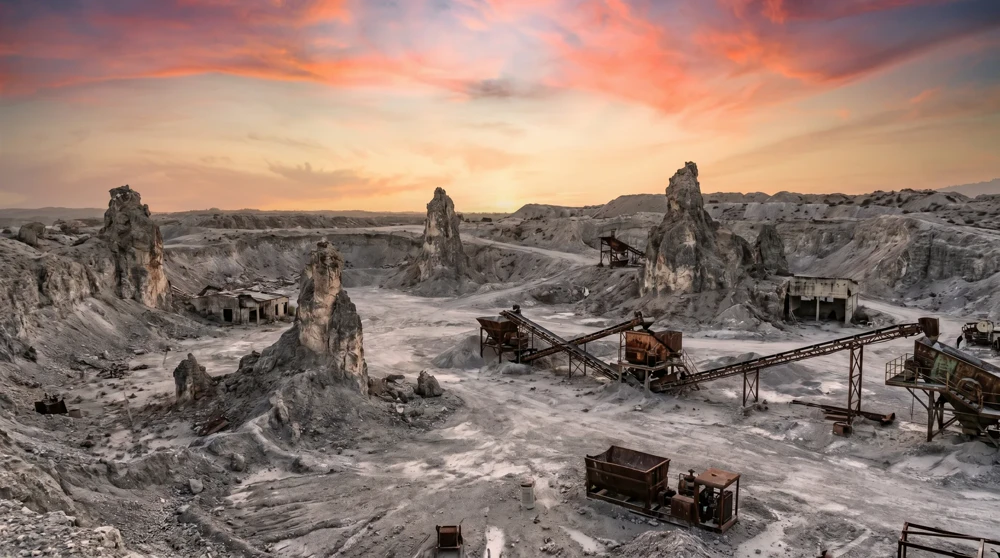
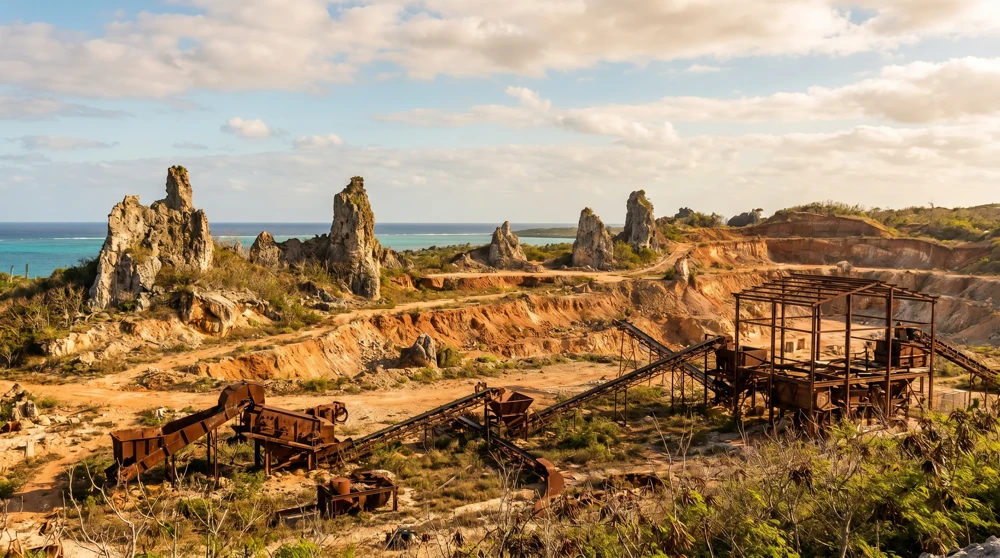
Extracting that wealth meant physically dismantling the island from the inside out. Mining operations hollowed out the central plateau, known locally as Topside. The process stripped away all topsoil and left behind a jagged, barren landscape of tall limestone pinnacles that now covers roughly 80 percent of the island's landmass.
The terrain is harsh and completely unusable. This extreme ecological degradation pushed the entire population to a narrow coastal fringe, the only habitable portion of a country that is already barely larger than an average suburban neighborhood. Agriculture became physically impossible on the degraded bedrock. Natural habitats were permanently altered. Rainwater runoff that once filtered through soil now cascades off bare rock, carrying dust and debris toward the coast.
Anibare Bay on the island's eastern coast offers a striking visual contrast between the coastal strip where Nauruans live and the bleak pinnacled interior visible just inland. The scale of the transformation is genuinely difficult to process when you see it in person.
The Resource Curse and Gastrocolonialism
Destroying the island's interior did more than ruin the topography. It completely erased traditional Nauruan food systems. Root crops, native fruits, and accessible near-shore seafood disappeared as the land degraded and the fishing grounds were disrupted. The population became entirely dependent on imported processed foods.
This dietary shift represents a severe case of gastrocolonialism. Foreign aid and trade channels replaced local, sustainable sustenance with canned meats, instant noodles, and high-calorie packaged goods. The direct result is visible in the nation's health metrics today. Nauru consistently ranks among the highest countries globally for obesity rates and type 2 diabetes prevalence, a direct biological consequence of forced dietary dependency and rapid environmental loss.
The Command Ridge viewpoint sits at the island's highest accessible point and provides the clearest panoramic view of Topside, where the scale of what was lost becomes tangible. The Japanese communications tower and World War II remnants at the summit add a further layer of historical displacement to the site.
Nauru's 3-Phase Economic Recovery Strategy
The recovery plan that Nauru is implementing, with support from Australia, New Zealand, and the Asian Development Bank, operates in three broad phases. None of them are quick fixes.
Phase 1: Maximizing Remaining Phosphate and Deep-Sea Mining
The island still holds secondary phosphate reserves embedded among the limestone pillars. Extracting this remaining material serves as a necessary first step to clear terrain for any future rehabilitation. In 2021, Nauru produced an estimated 260,000 tonnes of phosphate rock (gross weight), representing a 30 percent increase over 2020 output, reflecting renewed extraction investment.
Beyond the immediate coastline, the government is pursuing deep-sea mining in surrounding Pacific waters. This controversial move targets seabed minerals, particularly polymetallic nodules rich in cobalt, nickel, and manganese that are critical for green energy battery technology. Nauru was the first country in the world to formally trigger the International Seabed Authority's two-year rule in 2021, which forced the ISA to establish regulations for commercial deep-sea mining even without fully developed environmental safeguards.
The move balances urgent sovereign revenue needs against the severe risk of creating a new environmental sacrifice zone on the ocean floor, essentially repeating the island's onshore catastrophe underwater.
Phase 2: Exporting Limestone Pinnacles
The jagged limestone pillars covering Topside historically represent nothing but toxic mining waste and a visual reminder of environmental catastrophe. They are, however, a massive physical resource. Engineers can quarry and process this high-quality dolomite and limestone into premium building materials including paving slabs, construction aggregate, and polished stone for kitchen countertops and architectural use.
Marketing these products with an island provenance story allows Nauru to fund its ecological rehabilitation while simultaneously clearing the terrain for the next step. Once the pinnacle fields are leveled, the flat ground becomes usable for drought-resistant agricultural experiments, nitrogen-fixing plant restoration programs, smart water-capture systems, and expansive solar energy farms. The island receives enough equatorial sunshine to theoretically power itself several times over on solar alone.
Phase 3: The Intergenerational Trust Fund
The most critical lesson from the initial economic crash is the absolute necessity of strict, independent financial oversight. The Intergenerational Trust Fund for the People of the Republic of Nauru was established on November 6, 2015, co-funded by Australia, New Zealand, and the Asian Development Bank. It operates under rigid international auditing rules and prevents government withdrawals until a post-2035 build-up period is complete.
The fund has surpassed 420 million Australian dollars and is designed to generate investment earnings that replace phosphate royalty revenue. Bilateral partnerships seed and monitor this financial safety net, a direct response to the mismanagement of the original Nauru Phosphate Royalties Trust, which at its peak reportedly held assets exceeding 1 billion Australian dollars before catastrophic losses.
The withdrawal lock-up structure is deliberate. The trust's architects specifically designed it to prevent the political pressure that drained the original fund, ensuring that current revenues finally translate into lasting economic stability rather than a second cycle of fleeting luxury.
Where Nauru Stands Today
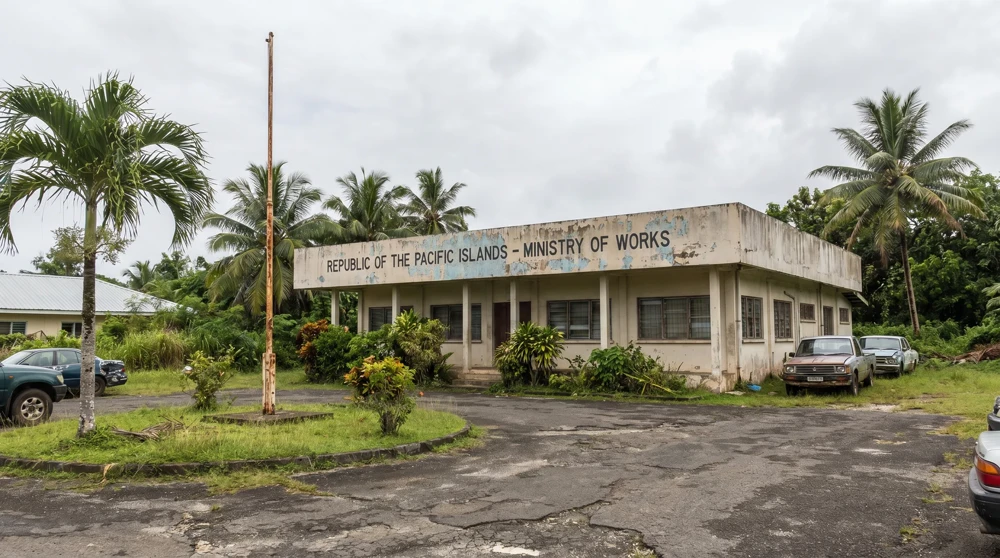
The Nauru of 2026 is a country of approximately 11,200 people with a total economy of roughly $160 million, driven primarily by fishing license fees from its vast exclusive economic zone and revenue from the Regional Processing Centre that houses asylum seekers under Australia's offshore detention policy. The RPC funding is politically contentious and subject to bilateral negotiations, making it an unreliable long-term foundation.
The country faces a peculiar additional challenge: it is now classified as a high-income economy by international standards, meaning it is losing eligibility for Official Development Assistance despite still struggling with inadequate housing, water infrastructure, and healthcare. The classification reflects phosphate-era income levels that no longer correspond to present-day reality.
Buada Lagoon, the only freshwater body on the island, sits in a small valley that escaped the worst of the mining. The lagoon and its surrounding vegetation represent a glimpse of what the interior once looked like, and it is one of the few places on Nauru where the ecological baseline feels recoverable rather than simply lost.
The rehabilitation path is long. Only the Pit 6 area has seen substantial land restoration work to date. But the policy architecture is sounder than it has ever been, and the trust fund's growth trajectory provides a genuine buffer that the original phosphate boom never bothered to build.