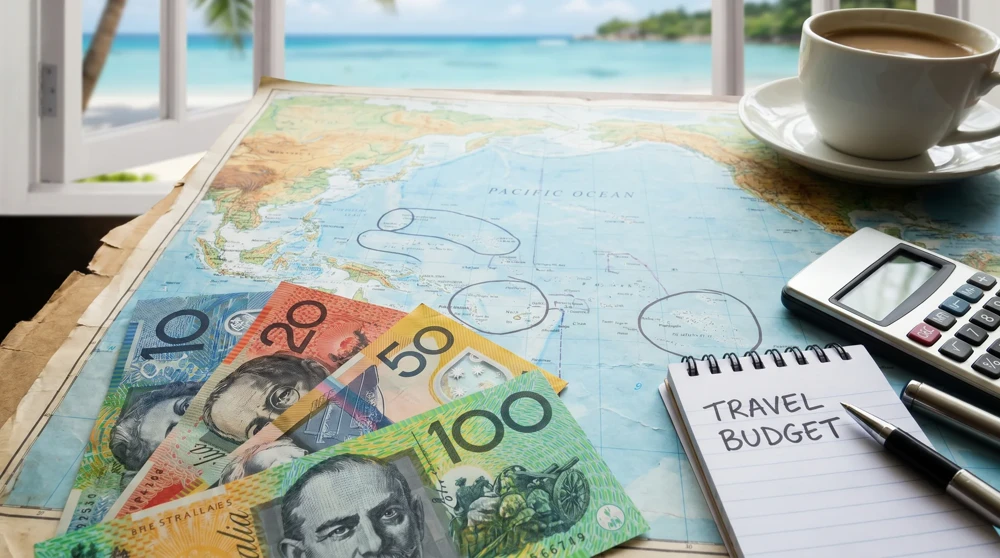
Visiting Nauru means accepting a financial reality that applies to almost no other destination on earth. A single airline controls all flights, nearly every product sold on the island arrives by cargo ship, and the tourism infrastructure is thin enough that even basic decisions require advance planning. None of this means the trip is impossible to budget for, but it does mean the numbers look very different from a typical Pacific island holiday.
- Currency: Australian Dollar (AUD), cash only for most transactions
- Visa fee: AU$50 for a standard 30-day visitor entry (2026)
- Flights: controlled by a single carrier with no fare competition; no budget airlines operate this route
- Accommodation: a handful of properties, all consistently priced
- ATMs: four on the island, frequently out of service or out of cash
Why Nauru Is Expensive to Visit
The entire economy runs on imports. There is no meaningful agriculture, no domestic manufacturing, and no tourism-scale supply chain. Every tin of food, every bottle of cooking oil, and every roll of toilet paper arrives after a long ocean voyage, with freight costs baked into every price tag you encounter.
The aviation monopoly compounds this. Because getting to Nauru involves exactly one airline operating a limited weekly schedule, flights simply cost what the airline charges. A fare that would buy you a return ticket to Europe from Australia barely covers the return leg to this remote Pacific island.
For travelers coming from the country collectors community, the high cost is a known factor baked into the itinerary. For everyone else, the sticker shock at the booking stage is real and worth confronting early.
Getting There: The Biggest Single Cost
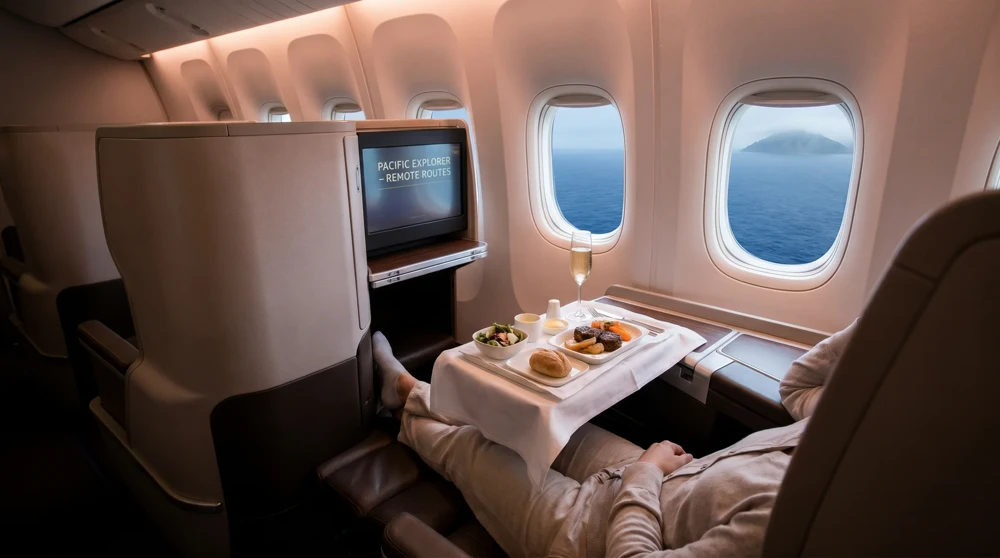
Flights represent the dominant expense of any Nauru trip. Nauru Airlines operates the sole scheduled service, running routes that cycle through Brisbane and various Pacific hubs including Kiribati, the Marshall Islands, and the Federated States of Micronesia.
Because the airline sets fares without competitive pressure, prices stay elevated regardless of booking timing. Booking further in advance can sometimes secure marginally lower fares, but the structural floor is high. Flexibility is not a luxury here; it is a budget tool. If your schedule permits travel during periods when fewer contractors are flying in and out, prices may ease slightly.
One frequently overlooked cost: Nauru Airlines cancellations and schedule changes are more common than on mainline carriers. Budget for at least one night of unplanned accommodation at your departure hub, whether Brisbane, Nadi, or elsewhere, because rebooking on a weekly service can push your return home by seven days.
Visa Costs and Application Requirements
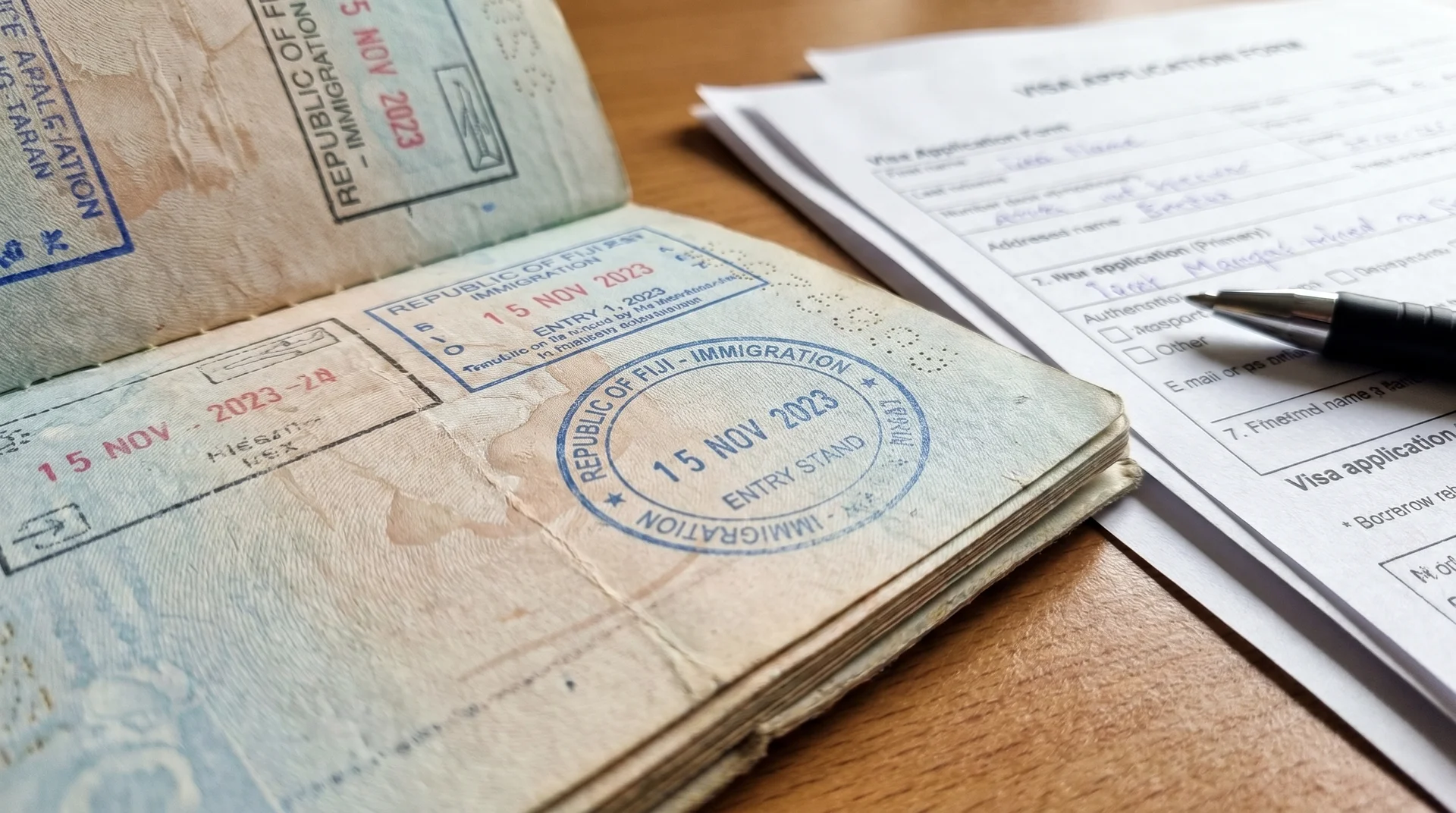
Visiting Nauru requires a tourist visa obtained in advance. The standard single-entry visitor visa for a stay of up to 30 days carries an official government fee of AU$50 (2026), paid by international bank transfer to the Nauru Revenue Office when you submit your application.
The application itself goes through Nauru's Department of Foreign Affairs via email, and requires:
- A copy of your passport bio page
- Confirmed hotel booking (immigration checks this against their records)
- Confirmed onward flight booking
- Proof of sufficient funds for your stay
- Employer letter or similar supporting documentation
Allow at least four weeks for processing, and complete this step before booking non-refundable flights. Extensions up to 90 days are possible through the Department of Home Affairs in the Aiwo district once you are on the island.
Factor in your bank's international wire transfer fee on top of the government visa charge when calculating the true upfront cost.
Accommodation: Limited Options, Consistent Prices
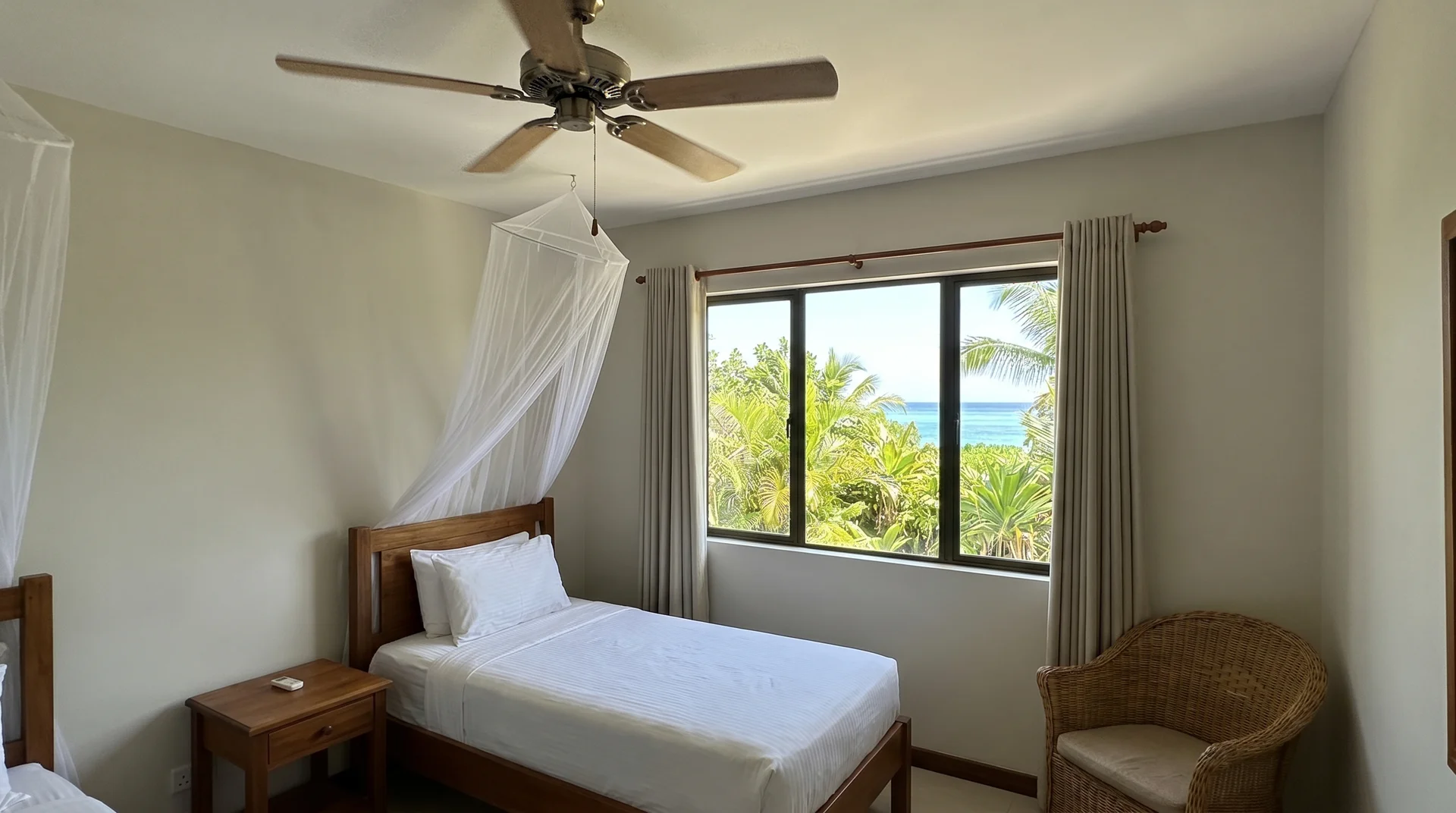
There are no hostels, no resort chains, and no camping options in Nauru. The island's lodging sector is made up of a small number of hotels and independent guesthouses, and prices across the board remain consistently high because demand from visiting government contractors and foreign workers keeps occupancy elevated year-round.
The largest and best-equipped property is the Menen Hotel, positioned on the island's east coast near Anibare Bay. Twin rooms come with televisions, fridges, and microwave ovens. The hotel is the only property on the island with reliable high-speed internet, available on a paid daily or weekly pass. It also houses one of the island's four ATMs, a convenience store, a bar, a restaurant, and a bottle shop. Staff can arrange vehicle or scooter rental, local guide services, and airport transfers.
Secure your room confirmation before applying for your visa, as immigration authorities verify the booking as part of their processing.
Independent guesthouses run by local families offer the closest thing to budget accommodation on the island. Expect basic but functional conditions. These properties rarely appear on international booking platforms; contact them directly through the tourism office or through traveler forums.
Daily Costs: Food, Transport, and Connectivity
Eating and Drinking
Every ingredient on the island arrives by ship. That supply chain reality sets a floor on all food prices that no amount of local bargaining can undercut.
The most cost-effective approach is eating at local Chinese restaurants and small Nauruan eateries, which cater primarily to contractors and residents rather than tourists. Meals at these spots are simple, filling, and cheaper than hotel dining. Hotel restaurants charge a premium that reflects the convenience of the setting rather than the quality of the food.
Supermarket prices are noticeably higher than you would pay in Australia for the same goods. Bottled water is essential (tap water is not safe to drink) and adds a daily cost that quickly accumulates.
Getting Around the Island
Nauru has no public transportation system and no regulated taxi network. The island's perimeter road runs just 19 kilometers, making it possible to circle the entire coastline on a bicycle. Renting a bicycle is the cheapest transport option and the best way to see the coastal areas, the cantilever ruins, and the rocky shoreline without spending money on fuel.
Vehicle and scooter rentals are available through the Menen Hotel and some guesthouses. Expect to pay a daily rental rate plus fuel. Given the island's small size, driving costs remain modest if you plan your day efficiently rather than making multiple trips.
Arranged rides with locals are common and generally offered on a goodwill basis, but do not build your schedule around hitching a lift, as it is a supplement to having your own transport, not a substitute.
Internet and Communication
Reliable internet access on Nauru is expensive and almost entirely hotel-dependent. The Menen Hotel charges a daily fee for its connection, which is the most stable option available. Mobile data through a local SIM card works across the island but can be slow and intermittent.
Download offline maps, your accommodation address, and all visa documentation before landing. Data costs accumulate quickly when streaming or using navigation apps, and connectivity gaps at critical moments create avoidable complications.
Managing Money: The Cash-Only Reality
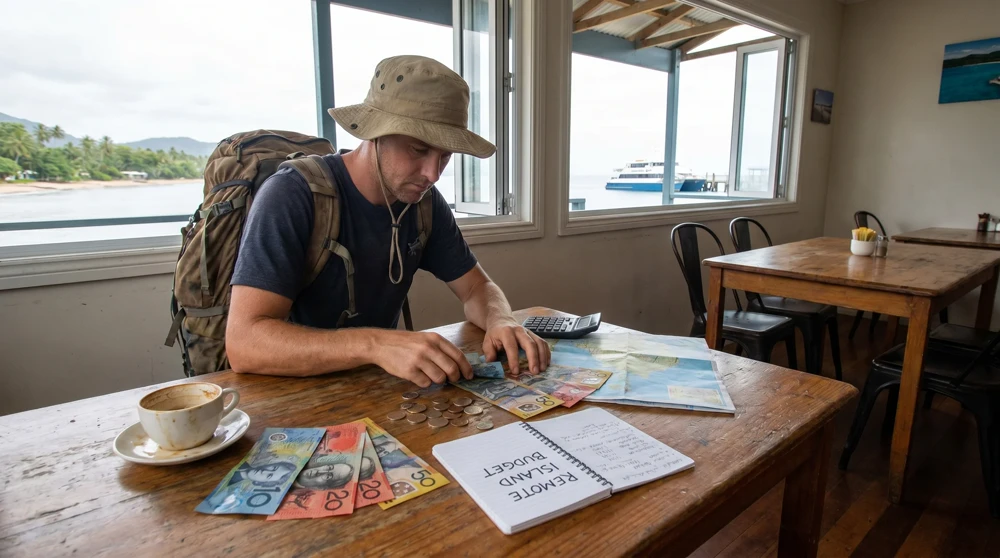
Running out of physical Australian Dollars in Nauru is a serious problem with no simple solution. There are four ATMs on the island (at the airport, the Menen Hotel, Bendigo Bank, and one other location), and all four are prone to running empty or going offline. The Bendigo Bank branch is the only formal banking institution, and it does not offer full international banking services for tourists.
Credit cards are accepted at the main hotel establishments, but do not count on card acceptance anywhere outside your hotel. Markets, smaller restaurants, local shops, and any arrangements for ground transport or guides operate on cash.
Calculate your complete projected spend before you leave home: accommodation for every night, meals, transport, any tour costs, emergency buffer, and visa bank transfer. Bring that full amount in physical AUD cash, in a mix of denominations, and keep it distributed across different pockets and bags in case of loss.
Traveler's checks and foreign currency exchange do not exist in Nauru. The Australian Dollar is the only functional currency.
Nauru in Context: Worth the Cost?
The best time to visit Nauru from a weather perspective is the dry season between May and October, when conditions are more predictable. Timing your visit during these months does not significantly change the cost picture, since there is no seasonal pricing; accommodation and most services remain constant year-round.
The honest cost profile of a Nauru trip places it at the high end of Pacific island travel by a substantial margin. For travelers making the journey as part of a broader Pacific routing or as a deliberate country-collector milestone, the economics are easier to justify when spread across a multi-destination trip.
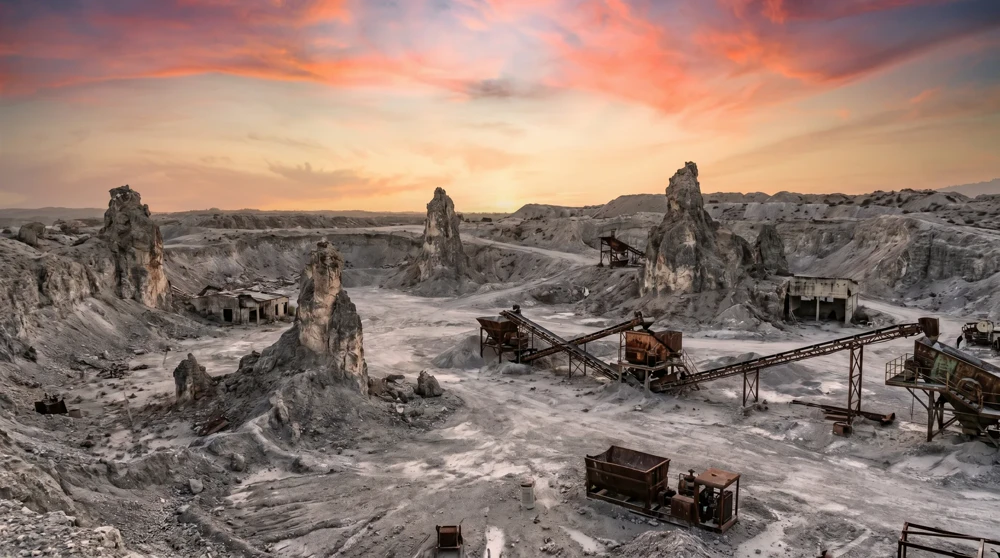
What Nauru offers is not luxury, or even comfort in the conventional sense. It is a genuine encounter with a place unlike any other: a phosphate-scarred landscape with a complicated history, a tiny community navigating an extraordinary economic position, and a remoteness that genuine wilderness travel rarely delivers anymore. For those who understand what they are buying, Travel insurance is not optional on a trip with this combination of isolation, limited medical facilities, and non-refundable flights.