Climbing the 74 steep, narrow steps to the Mosta Dome balcony without downloading the audio guide beforehand is a rookie mistake that will quickly drain both your mobile data and your energy. While most tourists just stare at the massive ceiling from the ground floor, the real experience lies in knowing exactly how to navigate this architectural marvel, locate the replica bomb, and find the somewhat hidden underground World War II shelters.
This single landmark folds wartime history, neoclassical architecture, and a genuinely surprising survival story into one 1.5 to 2 hour visit, and it sits right in the center of the island for easy access.
What Is the Mosta Dome Miracle?
On April 9, 1942, Malta was enduring some of the heaviest bombardments of World War II. Inside the Sanctuary Basilica of the Assumption of Our Lady, more than 300 parishioners were gathered for afternoon mass. Suddenly, a 500-kilogram German aerial bomb pierced straight through the massive dome, ricocheted off the wall, and skidded across the church floor.
It never detonated. Nobody was hurt, and the building remained standing.
Today, you can see a defused replica of this exact bomb kept in the sacristy at the back of the church. A fascinating layer to this story involves the origins of the explosive. Local legend suggests that anti-Nazi Czechoslovakian workers, forced into manufacturing weapons for the German military, secretly filled this specific metal shell with sand instead of explosives. Whether divine intervention or quiet rebellion, the survival of the church remains a powerful piece of Maltese history.
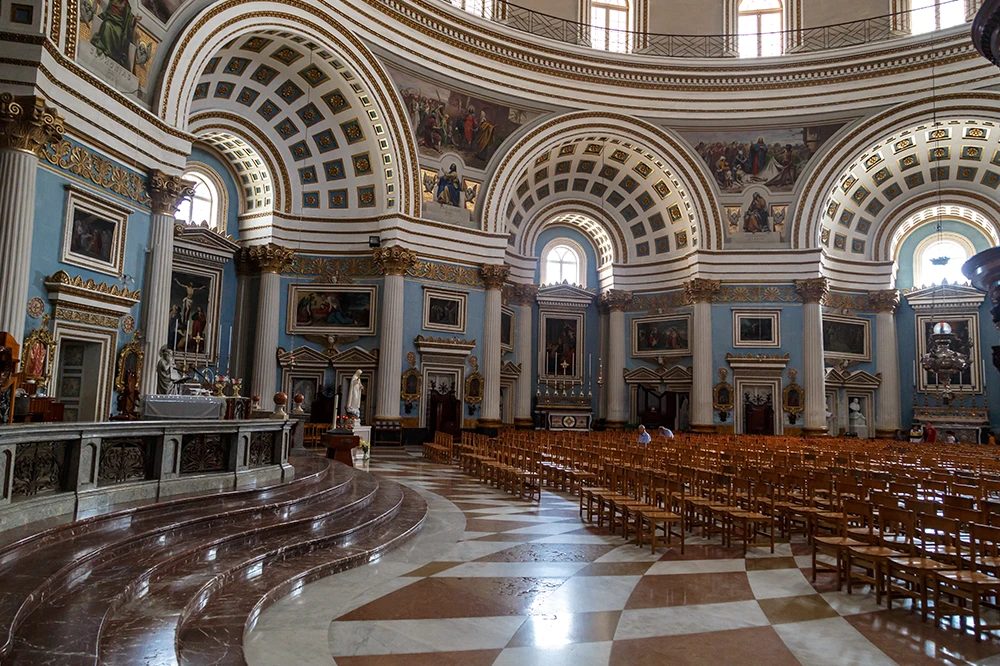
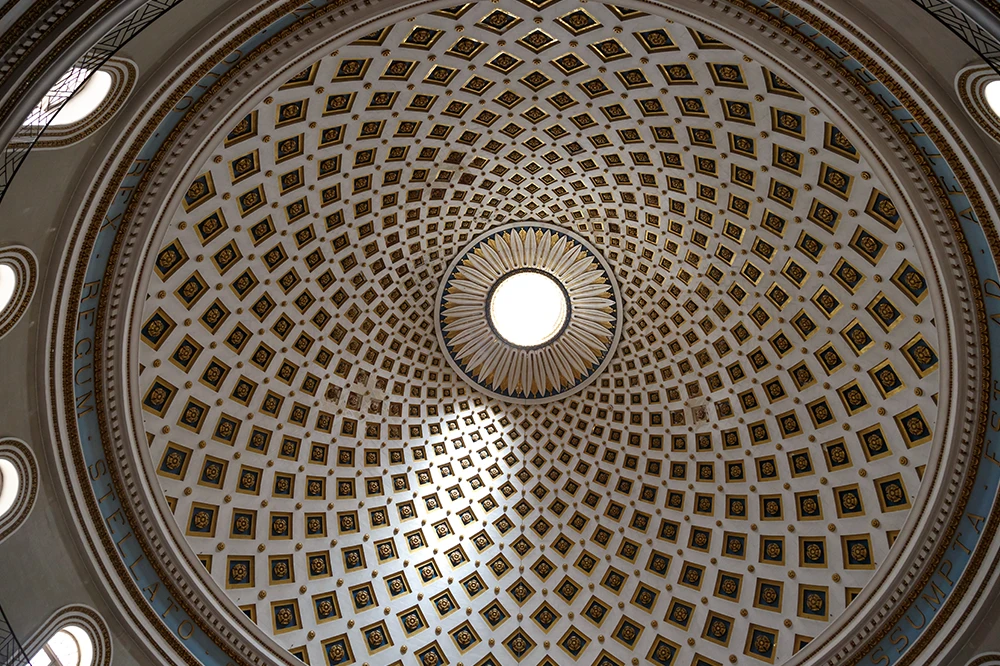
The basilica is also an architectural heavyweight. Modeled on the Pantheon in Rome, it holds the third-largest unsupported dome in the world and is the largest church in Malta, with an internal diameter of roughly 37 meters. If you are mapping out a wider cultural trip, it pairs naturally with the island's other historic sites covered in our things to do in Valletta rundown.
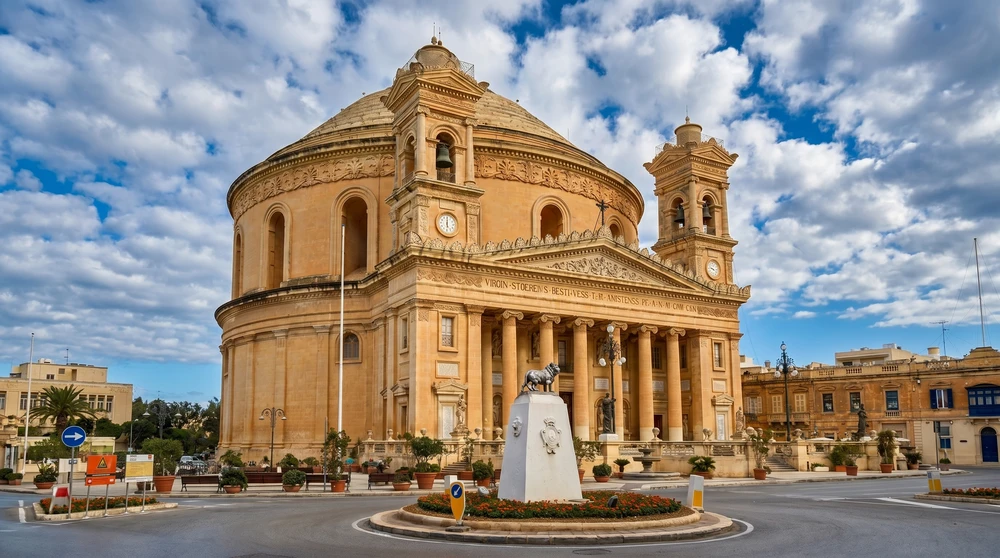
Mosta Dome Entrance Fee and Tickets
At just €5, the Mosta Dome ticket is one of the best cultural bargains on the island. You buy your ticket directly at the entrance. There is no need to book months in advance, and the line usually moves very quickly.
This single ticket grants you full access to the main basilica floor, the upper balcony viewing area, and the underground air-raid shelters. It also includes access to a multi-language audio guide via a mobile app. Occasionally, the ticket counter hands out a 10% discount voucher for the cafe located right by the exit, which is a great spot to grab a cold drink after the tour.
If you want to fold the visit into a wider day out with a knowledgeable guide, you can compare local options here.
Things to Know Before You Visit
The 74 Steps to the Balcony
Getting up close to the dome requires a bit of physical effort. You have to climb a narrow, stone spiral staircase consisting of 74 steep steps. It is not recommended for visitors with severe mobility issues.
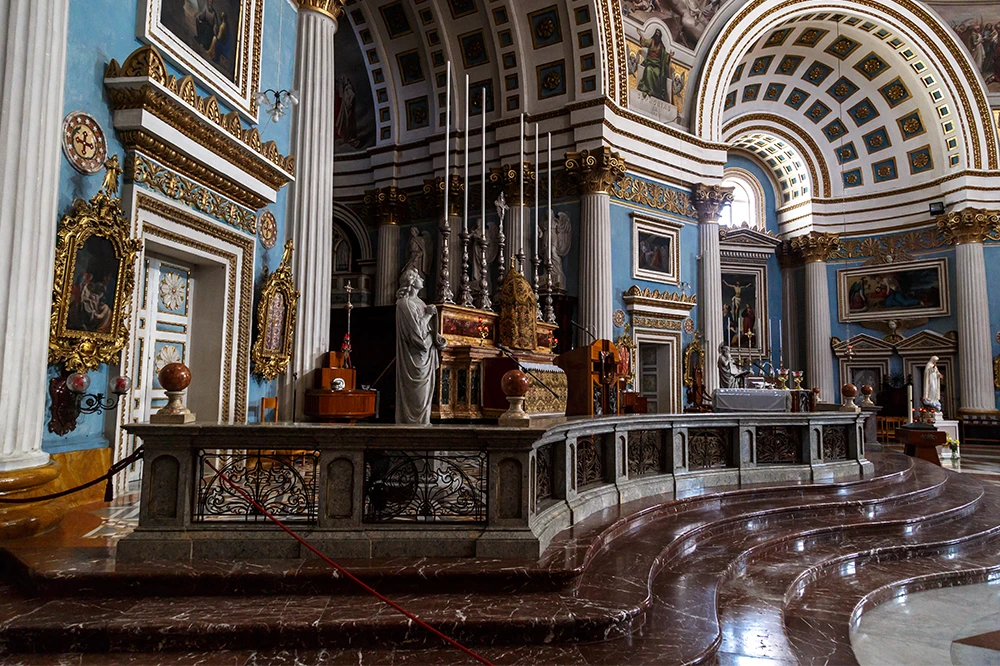
However, if you can manage the climb, the view from the inner gallery is spectacular. Looking down at the intricate marble flooring and getting a close-up perspective of Giuseppe Calì's frescoes is highly rewarding.
Audio Guide App and Wi-Fi Access
The audio guide is excellent and perfectly balanced, but there is a catch. There is no free Wi-Fi inside the church, and the thick stone walls heavily disrupt cellular signal. Downloading the official Mosta Dome app over a cellular network inside the church is frustrating and consumes unnecessary roaming data.
Do yourself a favor and download the app at your hotel before arriving. The staff is very helpful in setting it up, but having it pre-installed saves a lot of time.
Dress Code and Shoulder Covers
Like all active Catholic churches in Malta, a strict dress code applies. Shoulders and knees must be covered, so bare shoulders and short shorts are not permitted. If you arrive in a tank top after a hot day at the beach, do not worry.
The staff provides clean, reusable shawls and covers at the entrance at no extra charge. The same etiquette applies across the island's churches, something worth keeping in mind on a wider Malta and Gozo beaches itinerary where you may be moving straight from sand to sanctuary.
Opening Hours
The basilica is open Monday to Friday from 09:30 to 18:00, Saturday from 09:30 to 16:30, and Sunday from 12:00 to 17:00. Last entry is 30 minutes before closing, so plan to arrive with time to spare. Mornings tend to have the softest light pouring through the dome, which is ideal for photos.
Exploring the WWII Air Raid Shelters
Many visitors miss the air-raid shelters entirely because they look for them inside the church. The entrance is actually located outside, just beneath the front portico level near the cafe.
These underground tunnels were hand-dug into solid rock between 1940 and 1941 and offer a raw look into how Maltese civilians survived the relentless bombings. The shelter is cool, slightly damp, and filled with authentic wartime artifacts. Walking through these corridors adds a heavy, realistic contrast to the bright, gold-adorned beauty of the basilica above.
How to Get to Mosta Dome
Mosta is centrally located, making it incredibly easy to reach via public transport. If you are coming from Valletta, hop on an air-conditioned Tallinja bus (routes 41, 42, 44, 45, or 48). The ride takes about 30 to 40 minutes depending on traffic, and the bus stop is located less than 50 meters from the main doors. For a full breakdown of routes and tickets, getting around Malta by public transport maps out the network and fares.
If you decide to rent a car, be aware that parking directly in front of the rotunda is a challenge. You are much better off looking for a spot on the surrounding residential side streets. If you have not sorted wheels yet, it is worth checking rates before you arrive.
Because Mosta is quite small, pairing this visit with a trip to the nearby silent city of Mdina or the Dingli Cliffs makes for a perfectly balanced half-day itinerary.