Two of the Pacific's most legendary dive destinations sit within the same ocean basin, yet they could not be more different in what they demand from you. Palau rewards aggressive recreational divers with high-voltage drift dives and walls teeming with pelagic life.
The Marshall Islands - specifically Bikini Atoll - offers a silent, deep-water museum of nuclear-era naval history that only certified technical divers can access. Understanding these differences before you book will save you thousands of dollars and a genuinely disappointing trip.
| Feature | Palau | Marshall Islands (Bikini Atoll) |
|---|---|---|
| Primary Attraction | High-voltage drift dives, sharks, manta rays | Deep WWII and nuclear testing fleet wrecks |
| Required Certification | Advanced Open Water + Nitrox | Technical Diver (Decompression / Trimix) |
| Key Equipment | Reef hook, surface marker buoy | Double tanks, stage bottles, rebreather |
| Best Travel Season | November to April | May to October |
| Average Cost | $350 - $500 per day (land-based) | $5,000 - $7,000 per week (liveaboard only) |
The Core Difference: Wrecks vs Reefs
The geographic proximity of these two destinations hides completely incompatible diving styles. One focuses on dynamic marine life interactions; the other offers historical encapsulation at depths most divers will never reach.
Palau delivers pristine coral ecosystems sustained by massive oceanic currents. The underwater world here moves fast, demanding excellent buoyancy and real comfort in open water.
The Marshall Islands, specifically Bikini Atoll, operate as a deep-water museum of naval warfare. The target vessels sit far beyond recreational limits, surrounded by silent, blue water that looks deceivingly calm from the surface.
Palau Diving: High-Voltage Currents and Pelagic Life
The incoming tides push nutrient-rich water directly against the sheer drop-offs of the western barrier reef. This natural funnel creates some of the most intense predatory action in the Pacific.
Iconic Sites: Blue Corner and German Channel
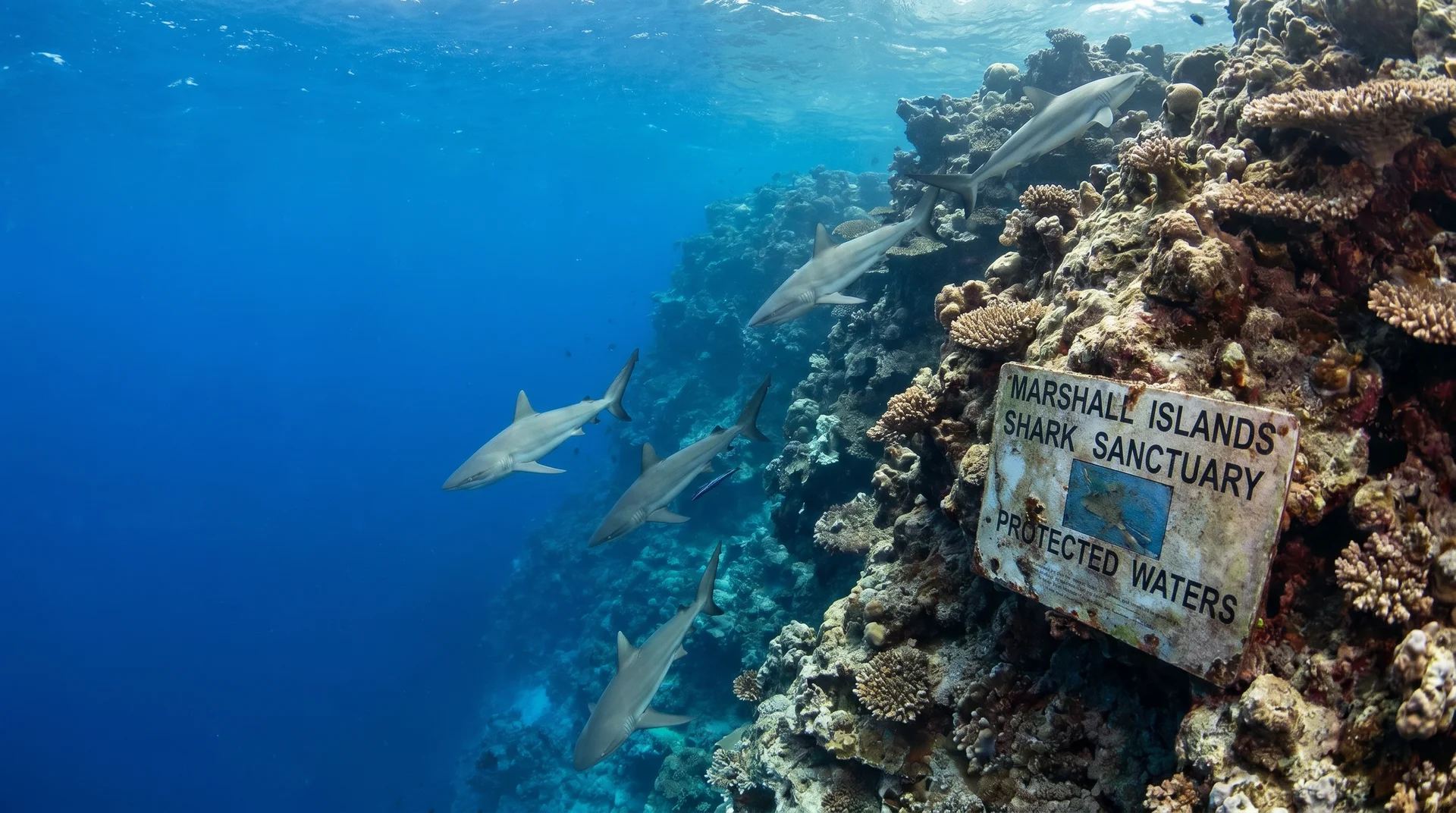
Blue Corner features a shallow plateau that drops instantly into a 300-meter abyss. Gray reef sharks, schools of jacks, and massive green sea turtles congregate right at the edge of the wall.
German Channel offers a completely different rhythm, serving as a shallow cleaning station for giant manta rays. The sand channel requires patience, static positioning, and minimal bubble disturbance to allow the rays to approach closely.
Skill Levels and Reef Hook Technique
Recreational divers with comfortable buoyancy control can handle the majority of Palau's signature sites. The environment still demands specialized equipment.
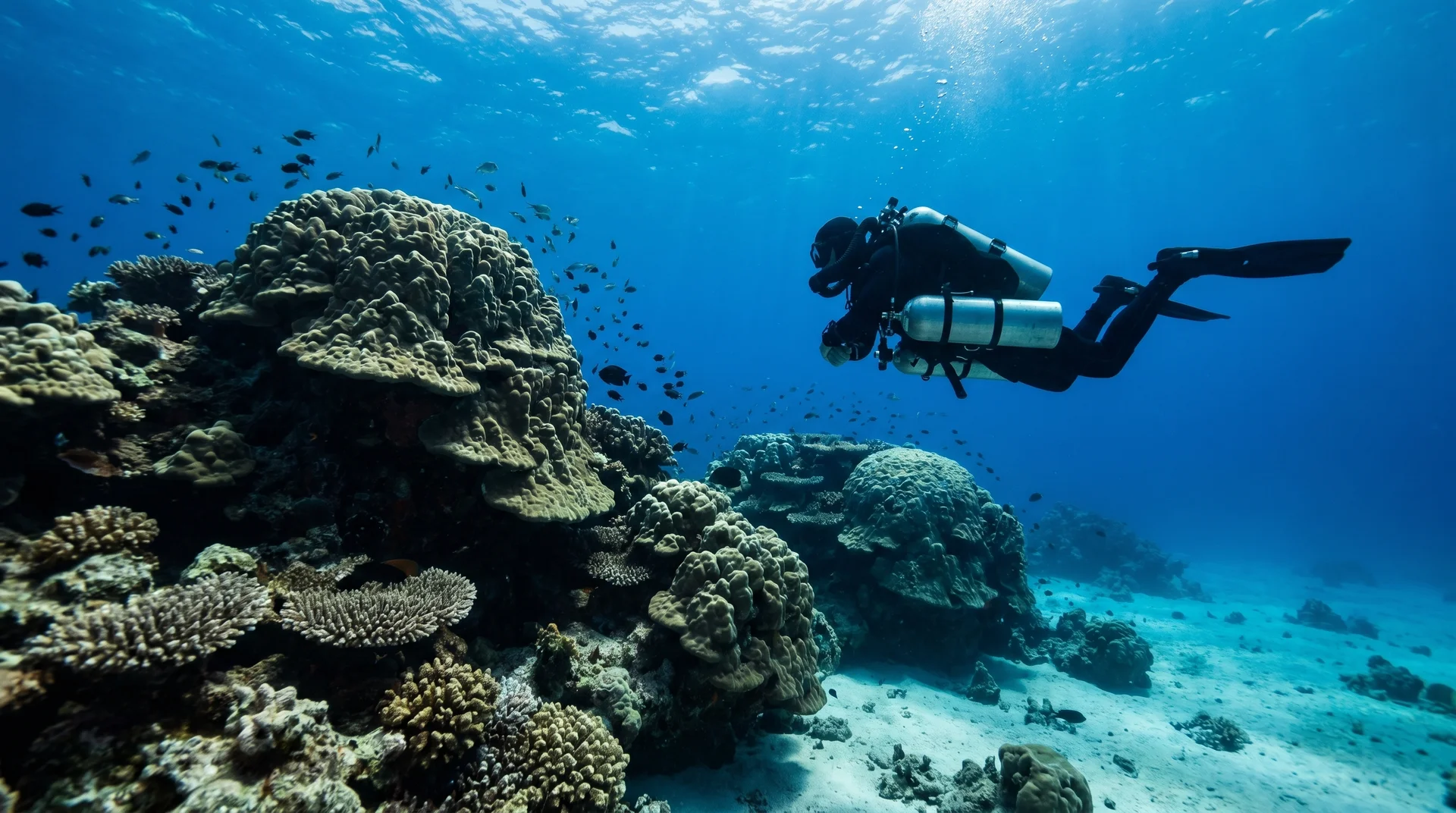
You must master the use of a reef hook.
Hooking into dead coral at the wall edge lets you float effortlessly in ripping currents like a kite on a string. This saves your gas supply, prevents coral damage, and gives you a front-row seat to the shark action.
Nitrox certification is highly beneficial here. Most land-based operators and liveaboards include pre-filled Nitrox tanks as part of their standard packages, letting you safely extend no-decompression limits across repetitive daily dives on the outer walls.
Marshall Islands Diving: The Ultimate Technical Wreck Experience
The legacy of Operation Crossroads left an entire fleet of warships at the bottom of a tropical lagoon. This is not a destination for casual vacationers or newly certified divers. For a broader overview of what diving in the Marshall Islands involves beyond Bikini Atoll, the contrast with Palau becomes even clearer.
Exploring Bikini Atoll and the Nuclear Fleet
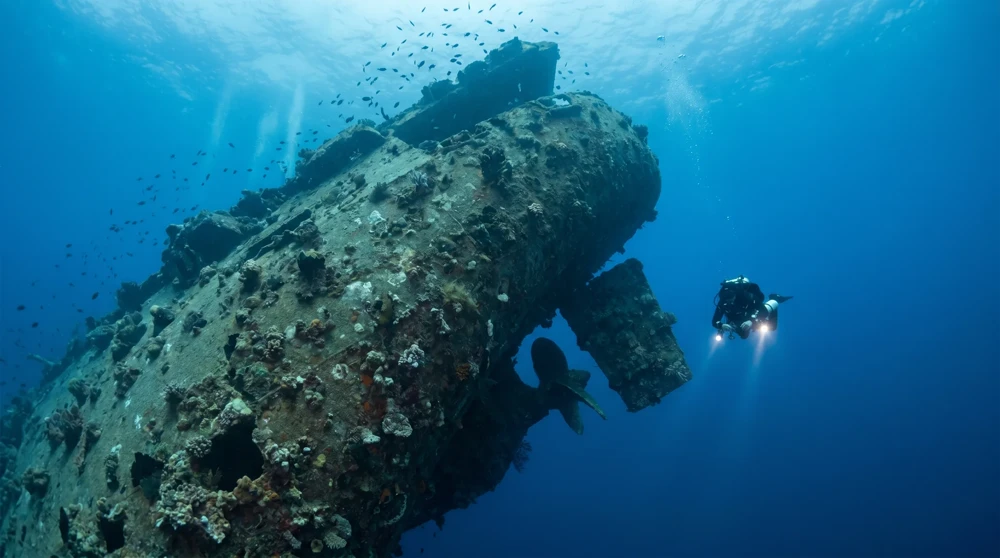
The USS Saratoga sits upright in 50 meters of water, her massive flight deck accessible at 27 meters. You can swim past intact Helldiver aircraft inside the forward hangars.
The battleship IJN Nagato rests completely upside down nearby. The massive hull and giant propellers require extensive dive lights and careful navigation due to silt accumulation.
Why You Need Technical Certifications Here
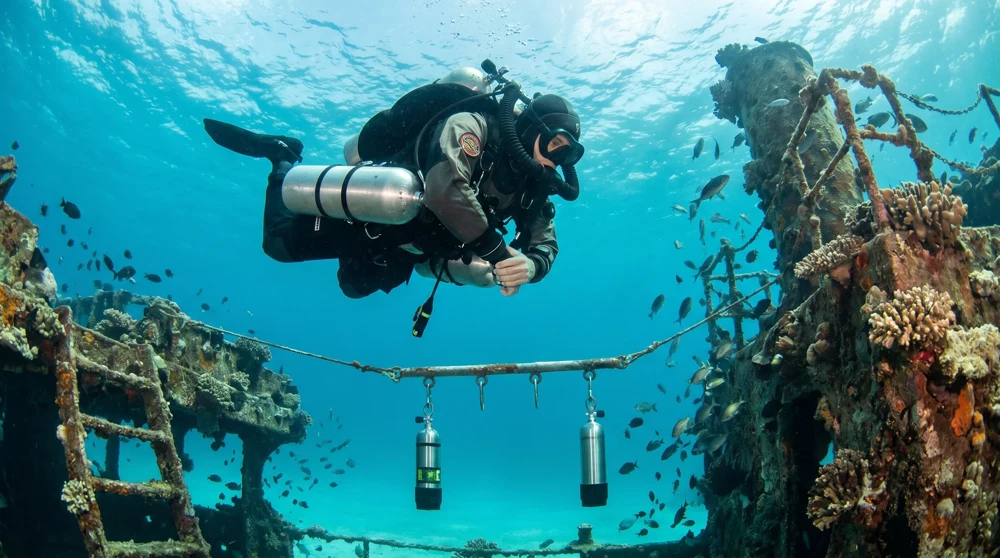
Every dive in Bikini Atoll involves mandatory decompression stops and careful depth management. Air diving is completely obsolete for these profiles.
You must hold full technical or rebreather certifications - such as TDI Advanced Nitrox and Decompression Procedures or an equivalent CCR rating.
The average deck depth hovers around 40 to 50 meters, requiring custom helium trimix blends and multiple decompression stages. Skipping proper planning here carries catastrophic physiological consequences.
Flight Logistics: How to Get to the Pacific
Reaching these isolated atolls requires precise itinerary planning and realistic expectations about transit times. Understanding how to get to the Marshall Islands is itself a significant planning exercise, particularly for technical divers shipping heavy gear.
Navigating the United Airlines Island Hopper
Flight 154 connects Honolulu to Guam via several tiny island stops. The journey takes over 14 hours of continuous flying on a Boeing 737.
Palau is accessed via a direct extension from Guam or Taipei. The Roman Tmetuchl International Airport receives regular night flights, making pre-arranged hotel transfers essential.
The Marshall Islands require disembarking at Majuro or Kwajalein before boarding chartered local vessels to Bikini. Luggage weight limits are strictly enforced on smaller inter-island aircraft, forcing technical divers to ship heavy gear weeks in advance.
Budget Breakdown: Liveaboard vs Land-Based
The isolation of the central Pacific drives up operational costs for every dive operator. Your accommodation choice directly dictates your daily dive schedule.
Palau offers excellent flexibility with both high-end land resorts in Koror and dedicated liveaboard vessels. Land-based operations run fast day-boats to reach outer reefs within 45 minutes, and daily costs typically run $350 to $500 including tanks, boat fees, and marine park permits.
The Marshall Islands require dedicated liveaboard bookings due to the total lack of tourism infrastructure on Bikini Atoll. These expeditions must be booked up to two years in advance due to highly limited seasonal permits, and weekly expedition costs typically run $5,000 to $7,000 per person.
Travel Insurance for Remote Pacific Diving
Both destinations sit far from advanced hyperbaric facilities. Given decompression diving profiles in the Marshall Islands and the remoteness of Palau's outer reefs, comprehensive travel and dive insurance is not optional.
Final Verdict: Which Destination Should You Book?
Your logbook and certification cards provide the clearest answer.
Choose Palau if you want high-energy drift dives, vibrant coral walls, and the option of luxury land-based resorts. The environment rewards active recreational divers who love pelagic encounters and can commit to solid buoyancy technique.
Book the Marshall Islands if you are a certified technical diver with a deep interest in military history and wreck penetration. The investment in logistics and cost yields access to the most exclusive maritime dive site on earth - one that very few divers will ever experience.